Call Us
 Schedule Consultation






A mini tummy tuck procedure is designed for a very specific abdominal concern. It focuses on the lower abdomen, where a small amount of loose skin or persistent fullness can remain even when the rest of the midsection is relatively firm.
The procedure gives Dr. Joseph T. Cruise a way to tighten and refine this area without extending the surgery across the entire abdomen.
For patients considering mini tummy tuck surgery in Orange County, choosing the right procedure begins with an honest look at where the laxity starts and stops. Dr. Cruise evaluates the skin, fat, abdominal wall, and belly button position before recommending a mini or full tummy tuck. A smaller operation works well when your anatomy truly supports it.

1 of 82

A More Precise Approach
A mini tummy tuck, also called mini abdominoplasty, is a surgical procedure that removes excess skin from the lower abdomen through a low incision. Dr. Cruise may also tighten the lower abdominal muscles and incorporate liposuction when a small pocket of excess fat affects the contour. The upper abdomen is left largely undisturbed.
The word “mini” refers to the area being treated, not necessarily a smaller or less invasive procedure. Surgical planning still requires careful incision placement, measured skin removal, and an assessment of the lower abdominal wall for muscle separation. Pulling too much tissue can distort the belly button or create tension along the scar. Removing too little can leave the original concern behind.
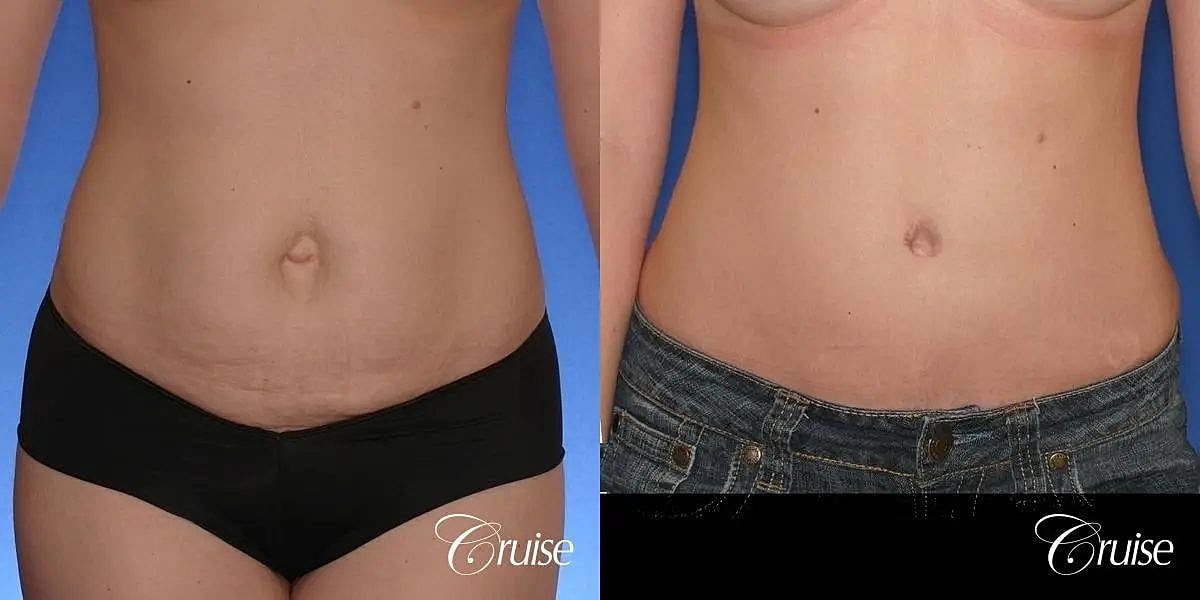
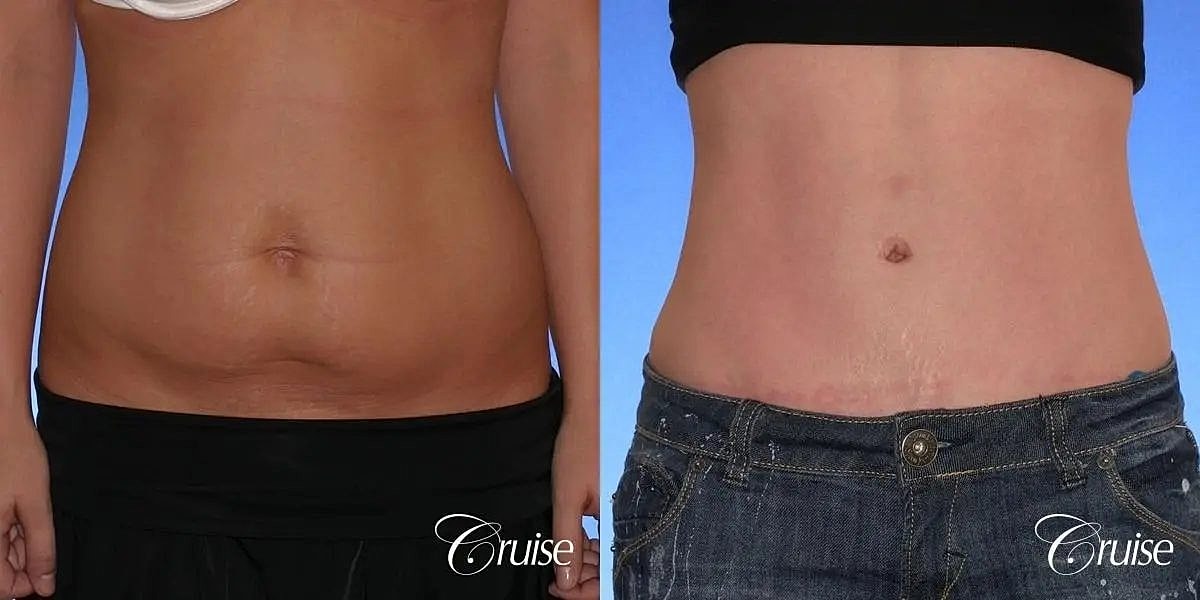
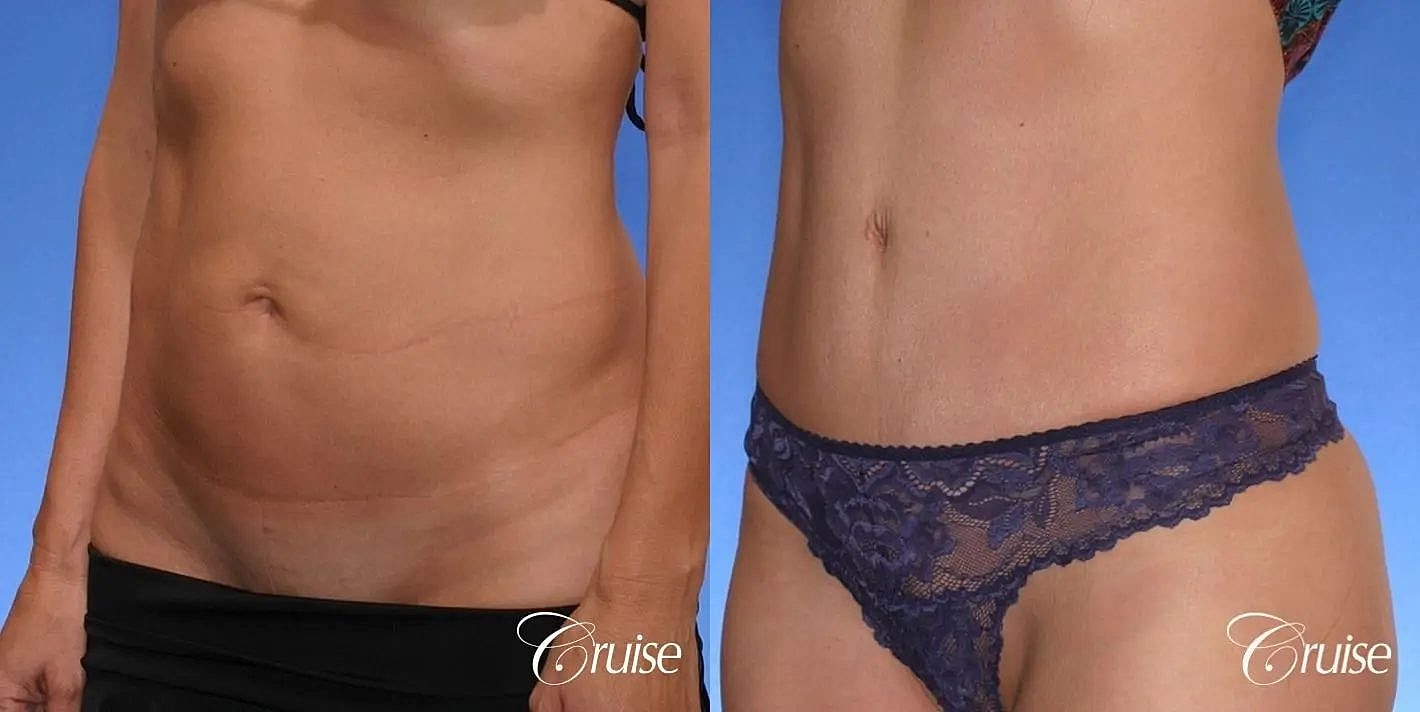
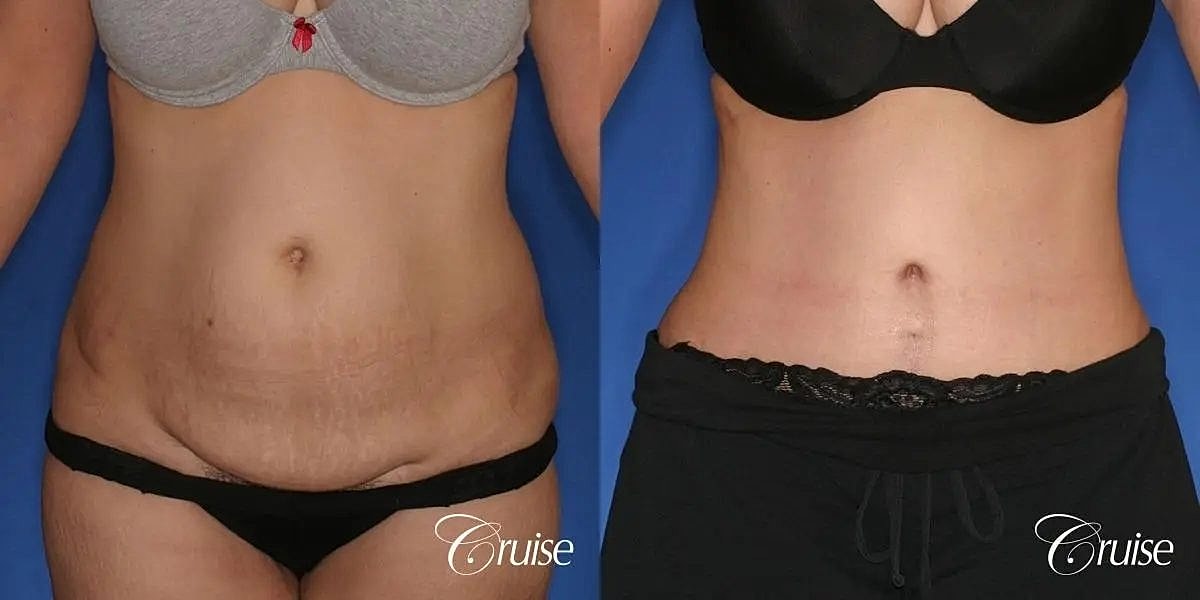
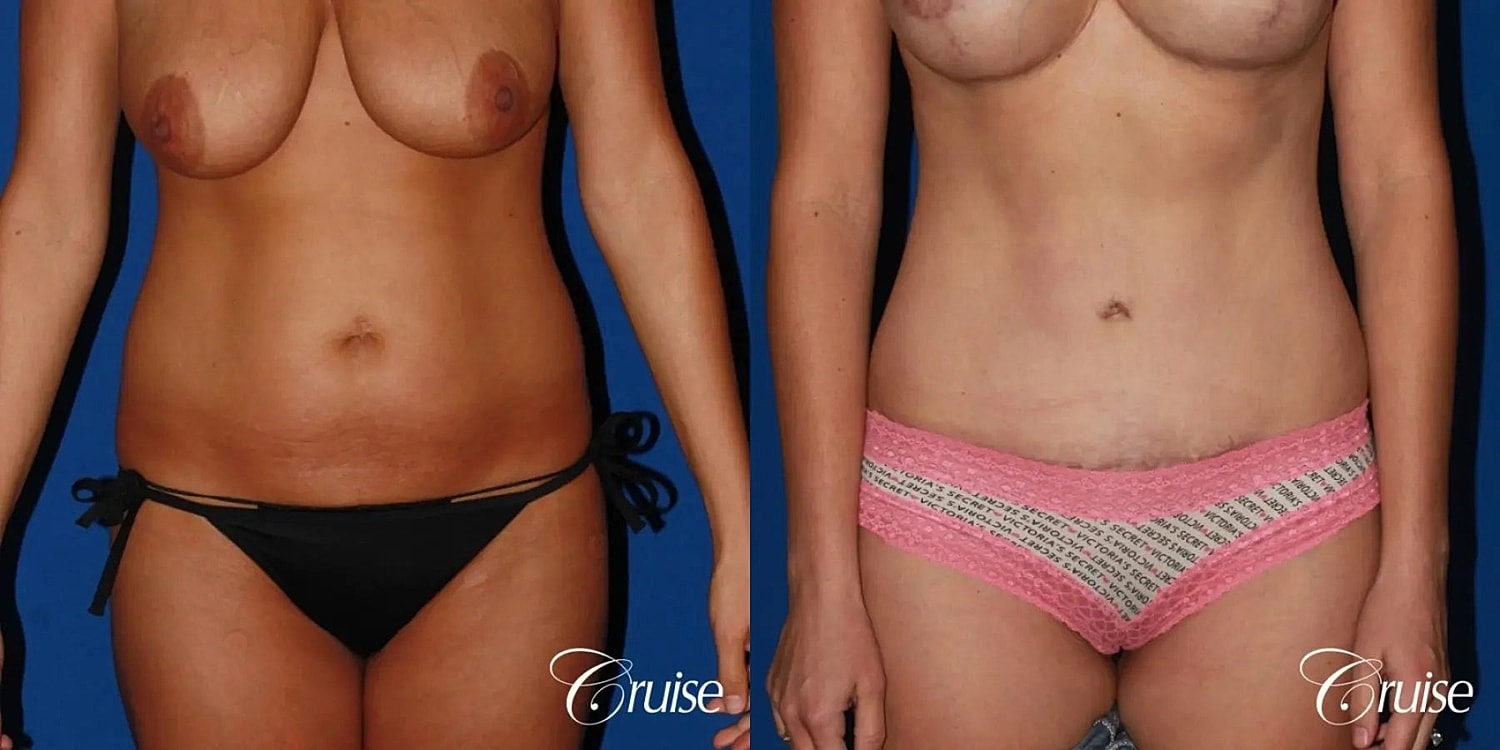
This procedure can improve a small lower-abdominal pooch, loose skin below the navel, mild muscle laxity, and limited stretch marks located on the skin being removed. It may also refine the transition between the lower abdomen and mons pubis.
Substantial sagging skin above the belly button, loose hanging skin, or broad abdominal muscle separation usually requires a standard or extended tummy tuck. Mini abdominoplasty is intended for contour refinement once body weight is close to a stable target.
The Difference Is Anatomical
The correct option depends on where the tissue changes are located. A mini tummy tuck treats the area below the belly button through a shorter horizontal incision. The belly button typically stays attached in its existing position, and muscle repair is limited to the lower abdominal wall when needed.
A full tummy tuck treats the upper and lower abdomen. It allows Dr. Cruise to remove more excess skin, repair separated abdominal muscles over a wider area, and reposition the belly button through the tightened skin. The scar is longer because a greater amount of tissue is addressed.
Choosing a mini procedure solely for the shorter scar can lead to an incomplete correction. During consultation, Dr. Cruise looks at skin laxity above and below the navel, the location of any diastasis recti, and the amount of fat surrounding the waist. Those findings determine how much access the surgery requires.
When the concern is limited to the lower abdomen, mini tummy tuck surgery may offer:

Good mini tummy tuck candidates have a small amount of excess skin and fat below the navel, reasonably firm skin across the upper abdomen, and limited muscle laxity. They are generally healthy, close to their ideal body weight, and able to follow the restrictions required for proper healing.
Skin quality is especially important. Liposuction can remove stubborn fat deposits, but it relies on the skin to contract afterward. Mini abdominoplasty is often a better choice when lower-abdominal skin will not tighten adequately on its own. Dr. Cruise may combine the two procedures when both excess fat and skin contribute to the contour.
When It Makes Sense to Wait
A full tummy tuck may be more appropriate if loose skin extends above the navel, the belly button has become stretched or distorted, or separated muscles affect the entire abdominal wall. Patients planning a pregnancy or significant weight loss are usually advised to postpone surgery because later changes can stretch the skin and muscles again.
Surgery may also need to wait until nicotine use has stopped and medical conditions that affect anesthesia or wound healing are well controlled. During the initial consultation, Dr. Cruise reviews medical history, medications, previous abdominal surgery, and weight stability before confirming candidacy.
Planning From Every Angle
Mini tummy tuck surgery is performed under general anesthesia at an accredited outpatient plastic surgery facility in Newport Beach.
Before surgery, Dr. Cruise marks the lower abdominal skin while considering the patient’s underwear and bathing-suit lines. The incision is placed just above the pubic area and kept as low as the anatomy safely allows.
Through this incision, he separates a limited section of skin and tissue from the abdominal wall. Lower abdominal muscles can be tightened with internal sutures if they have loosened or separated. Dr. Cruise then removes the planned amount of excess tissue, adjusts tension across the lower abdominal region, and closes the incision in layers.
Liposuction may be performed during the same operation to reduce excess fat in the abdomen or flanks and improve the transition into the waist. The amount and location of fat removal are planned carefully because a smooth contour depends on how the central abdomen, hips, and surrounding areas relate to one another. Drains may be used when needed to prevent excess fluid from collecting during early healing.
Every mini tummy tuck leaves a permanent horizontal scar. It is usually shorter than a full tummy tuck scar and positioned low enough to sit beneath most underwear or bathing suits. Its exact length depends on how much loose skin must be removed. More skin requires a longer incision to avoid bunching at the ends.
The scar will appear firm and pink or darker during early healing. It generally softens and fades over the following months, although it will not disappear completely. Genetics, skin tone, nicotine exposure, tension, and aftercare all influence scar quality. Dr. Cruise provides incision-care instructions and monitors healing during follow-up visits.
Because the belly button is not typically released from the surrounding skin, a mini tummy tuck usually avoids the circular navel scar associated with full abdominoplasty. Belly button height still matters, however. Tightening the lower skin can pull a low navel downward, which is one reason patient selection is so exacting.


Mini Tummy Tuck Recovery
Plan to rest at home during the first several days. Swelling, bruising, tightness, and soreness are expected, particularly when muscle repair or liposuction is included. You may initially walk with a slight bend at the waist to reduce tension on the incision. Short, frequent walks are encouraged to support circulation.
A compression garment helps control swelling and supports the healing process. If surgical drains are placed, the team will explain how to empty and record them until removal. Prescription pain medication may be used during the early recovery period.
Most patients begin light daily activity within five to seven days and return to desk-based work within one to two weeks. A friend or family member must drive you home and stay with you during the first 24 hours. Driving can resume once you are off prescription pain medication and can move comfortably enough to react safely. Heavy lifting, abdominal workouts, and strenuous exercise remain restricted until Dr. Cruise confirms that the repair can tolerate them.
Recovery varies with the amount of skin removal, muscle tightening, added liposuction, and individual healing. Dr. Cruise and his team provide detailed instructions and ongoing follow-up rather than treating recovery as a fixed calendar.
The lower abdomen will look flatter immediately, but swelling and protective posture can obscure the contour at first. A toned abdomen becomes more apparent as the tissues settle.
The shape becomes clearer over several weeks as swelling subsides and the tissues relax. Scar maturation and subtle changes in the abdominal contour continue for several months.
Removed skin and fat do not return. Remaining fat cells can enlarge, and the abdominal tissues can stretch with pregnancy or significant weight changes. Maintaining a stable weight and healthy lifestyle helps preserve the result.
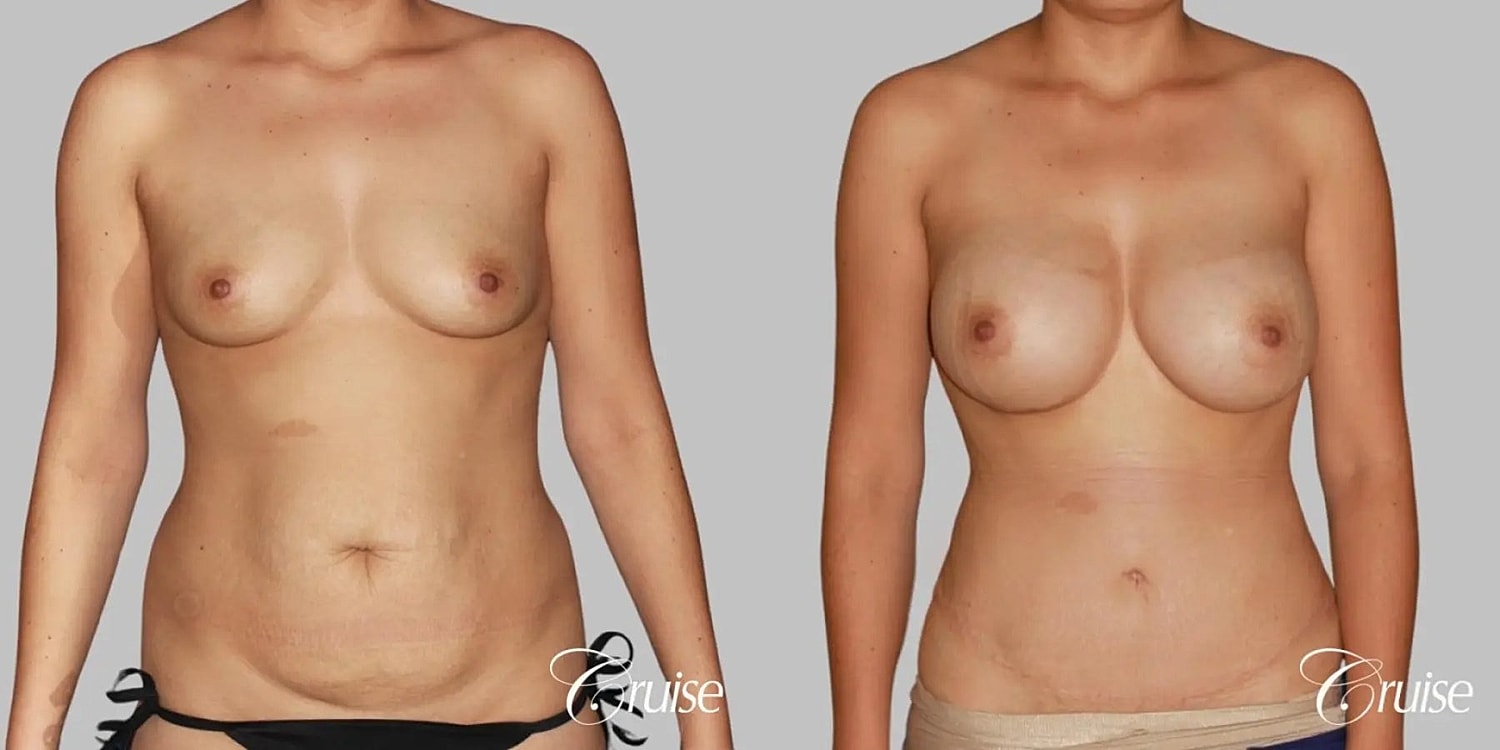
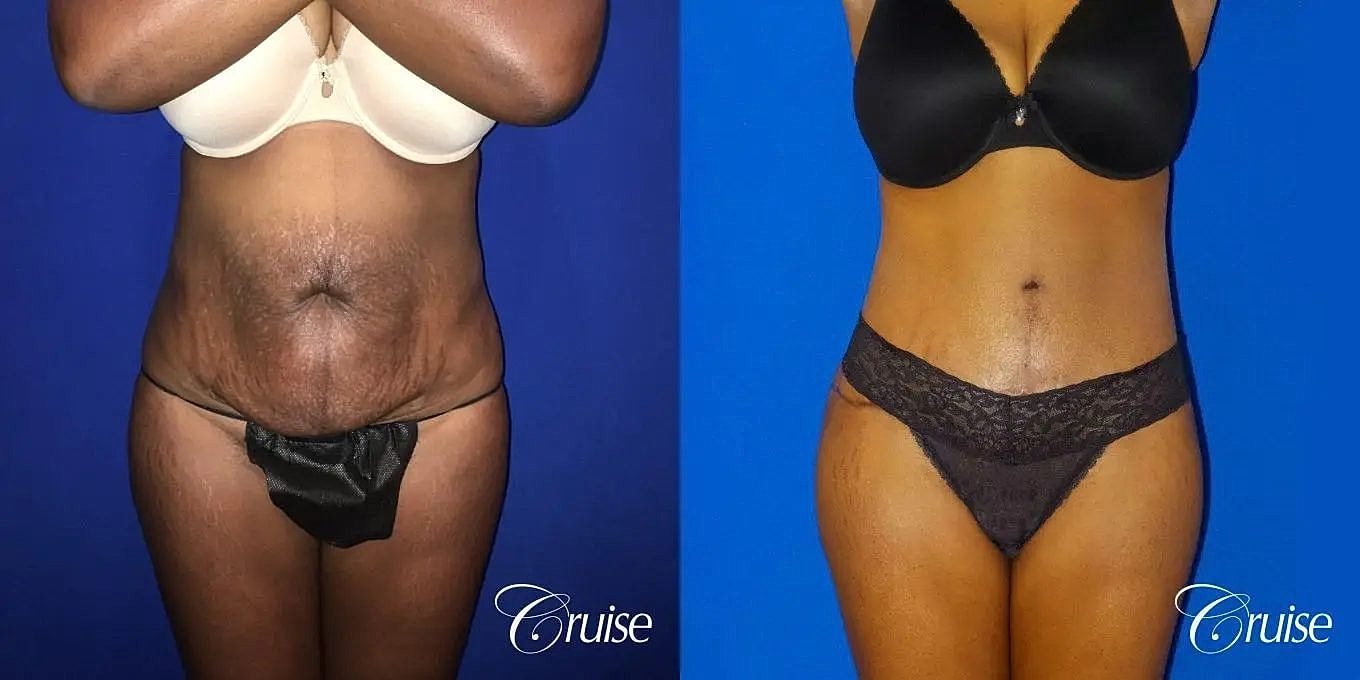
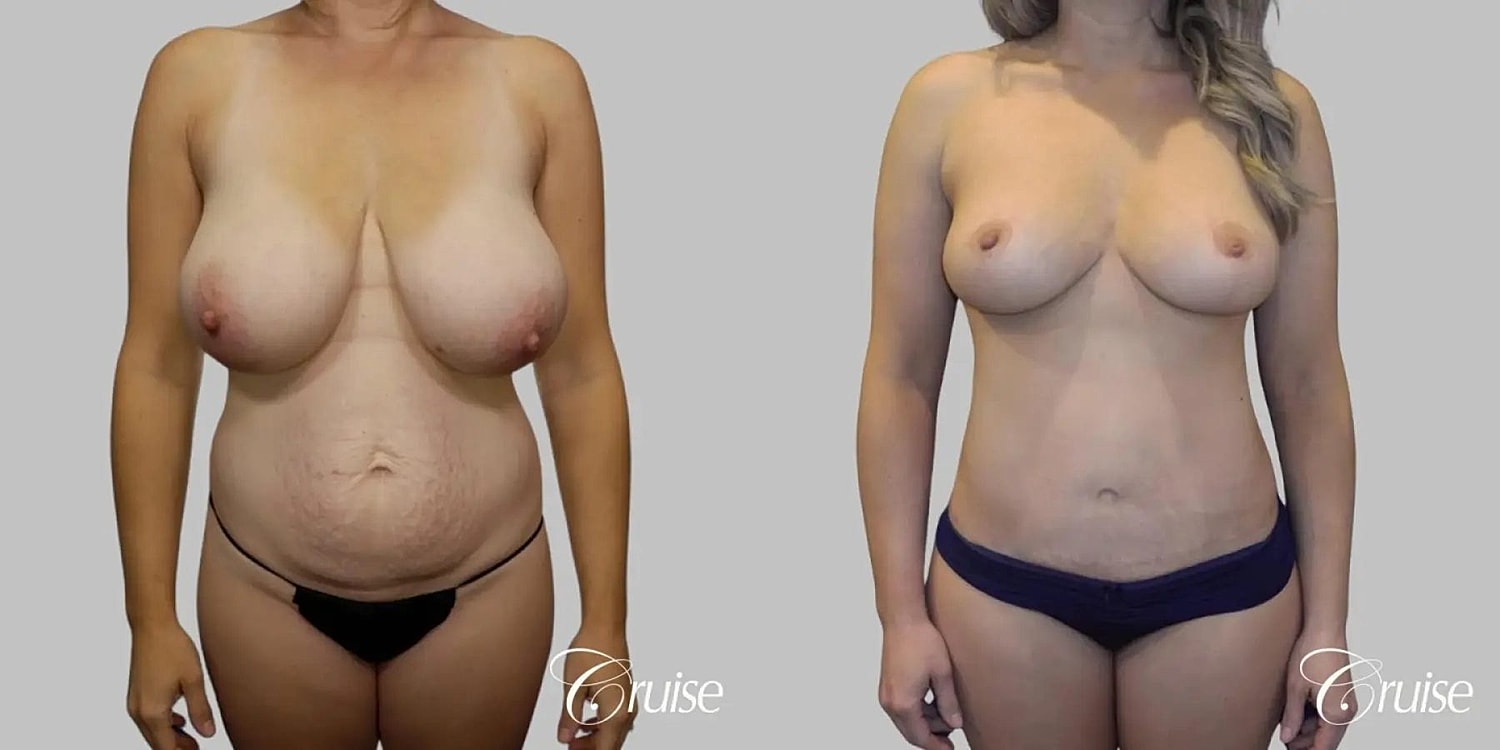
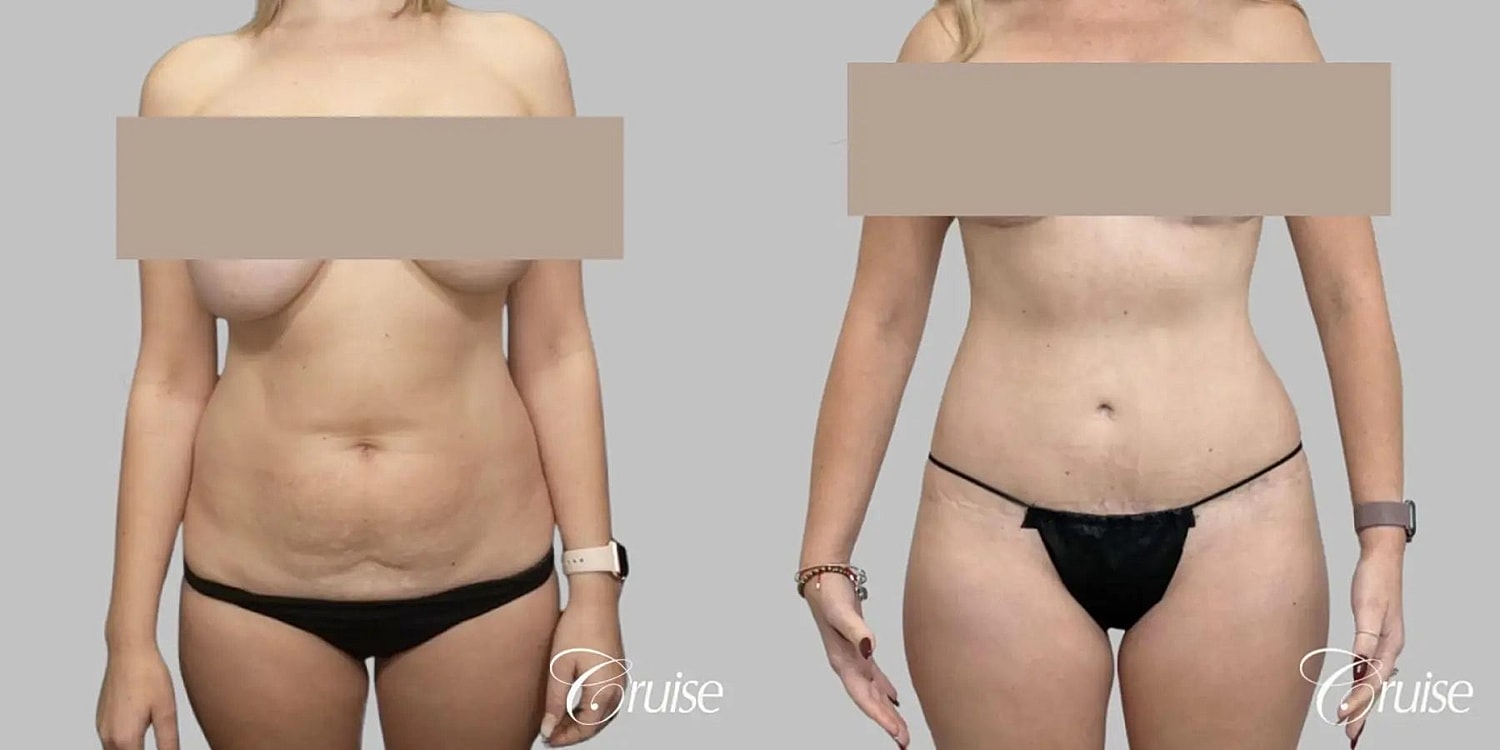
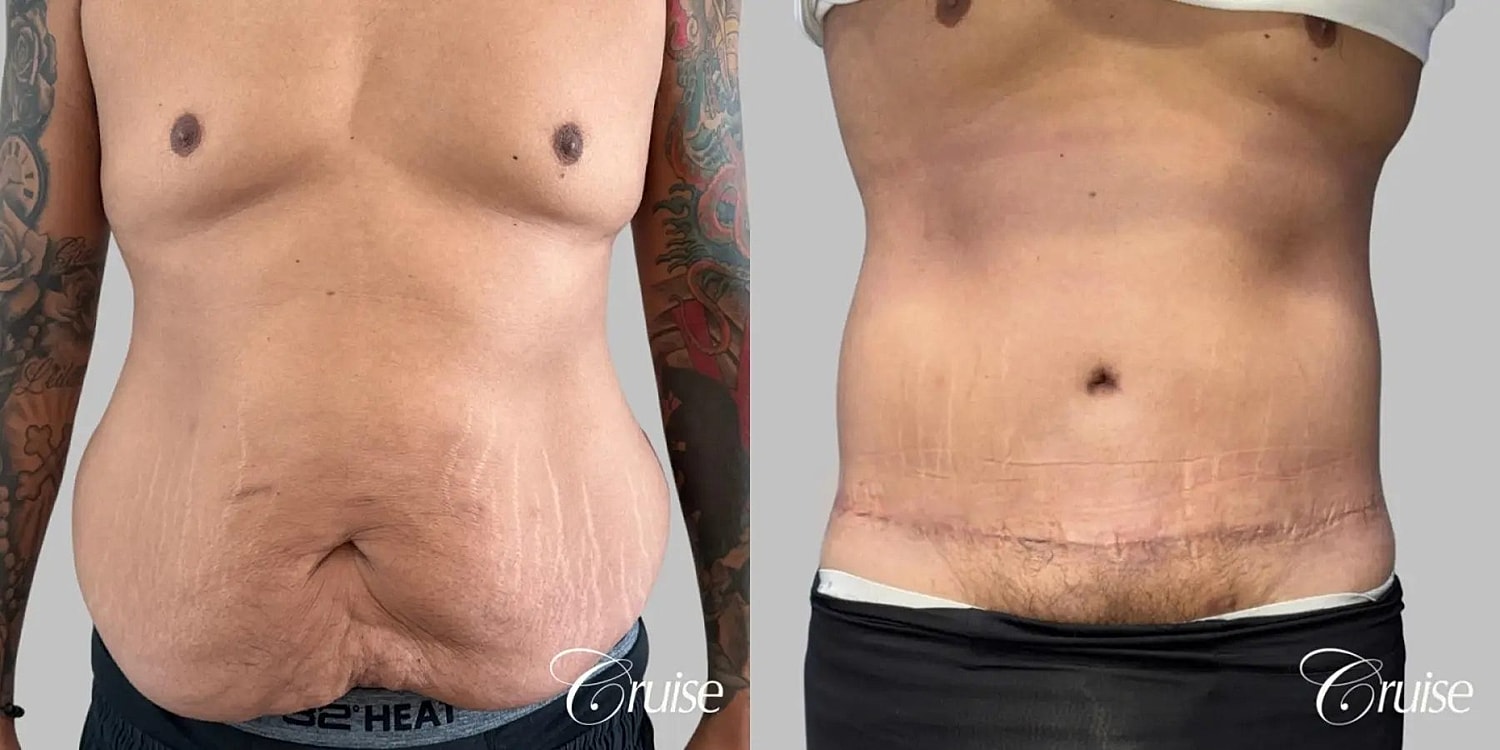
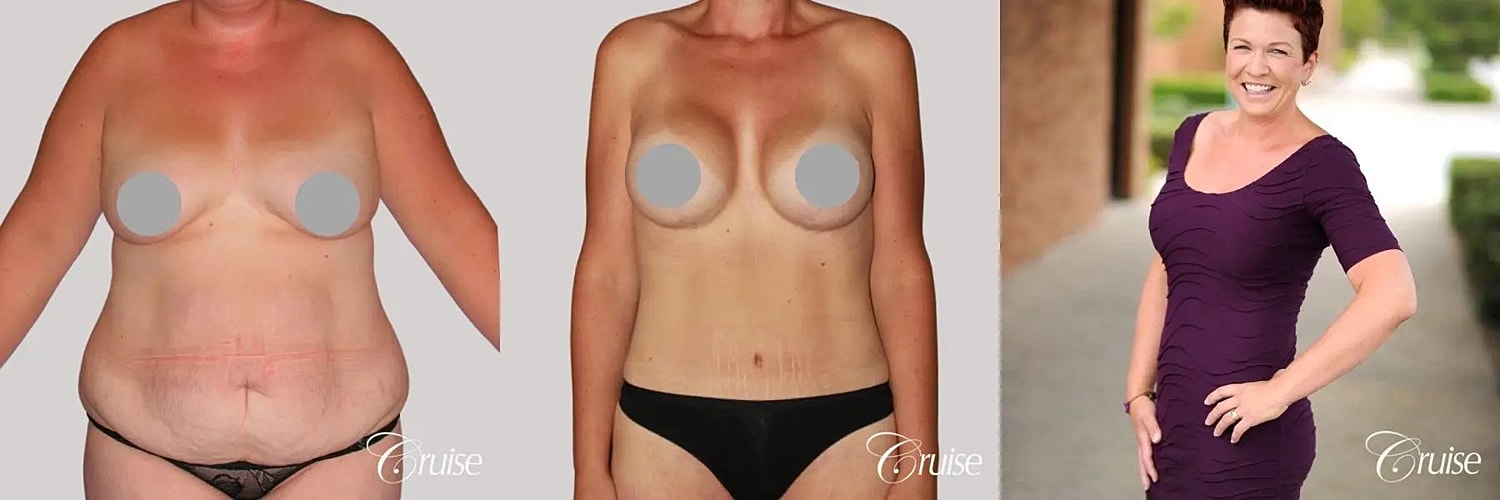
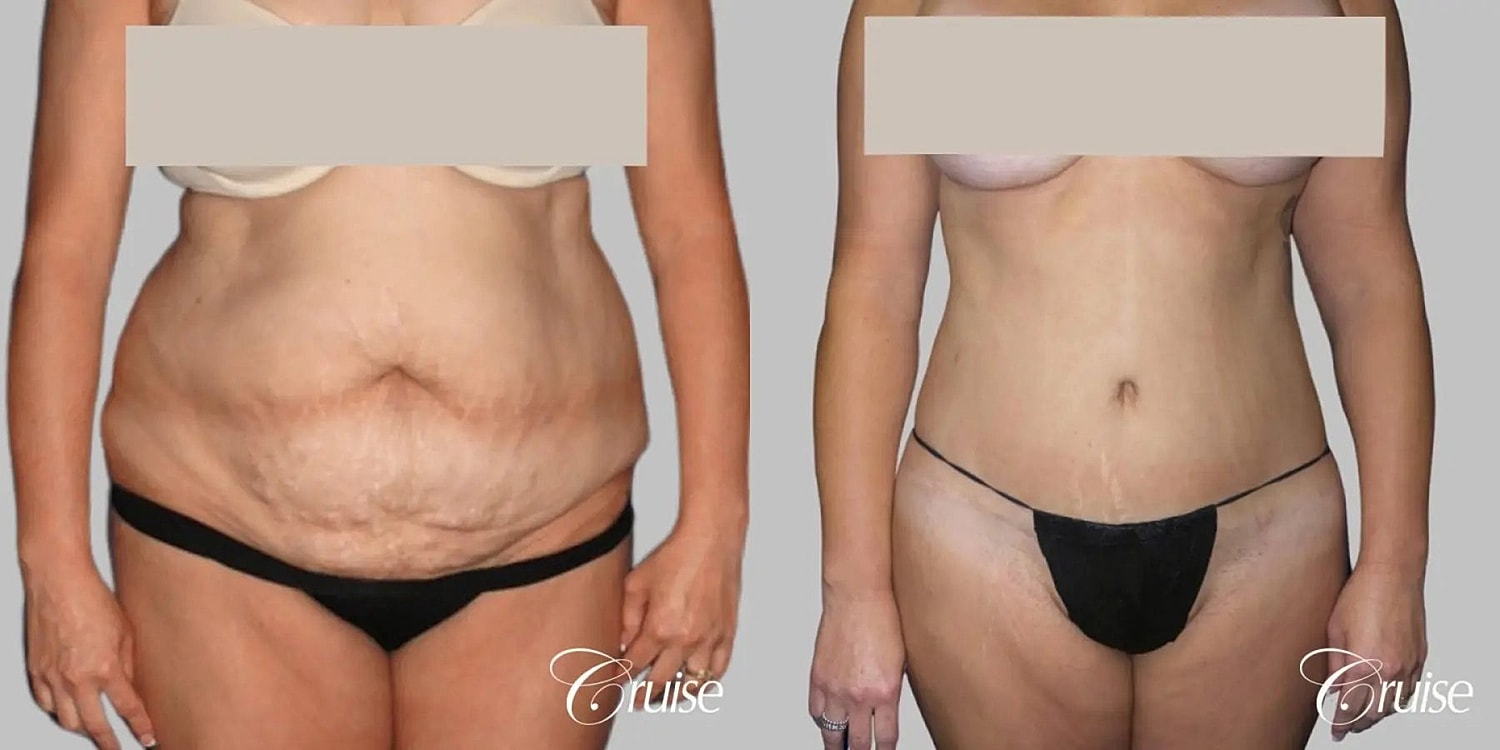
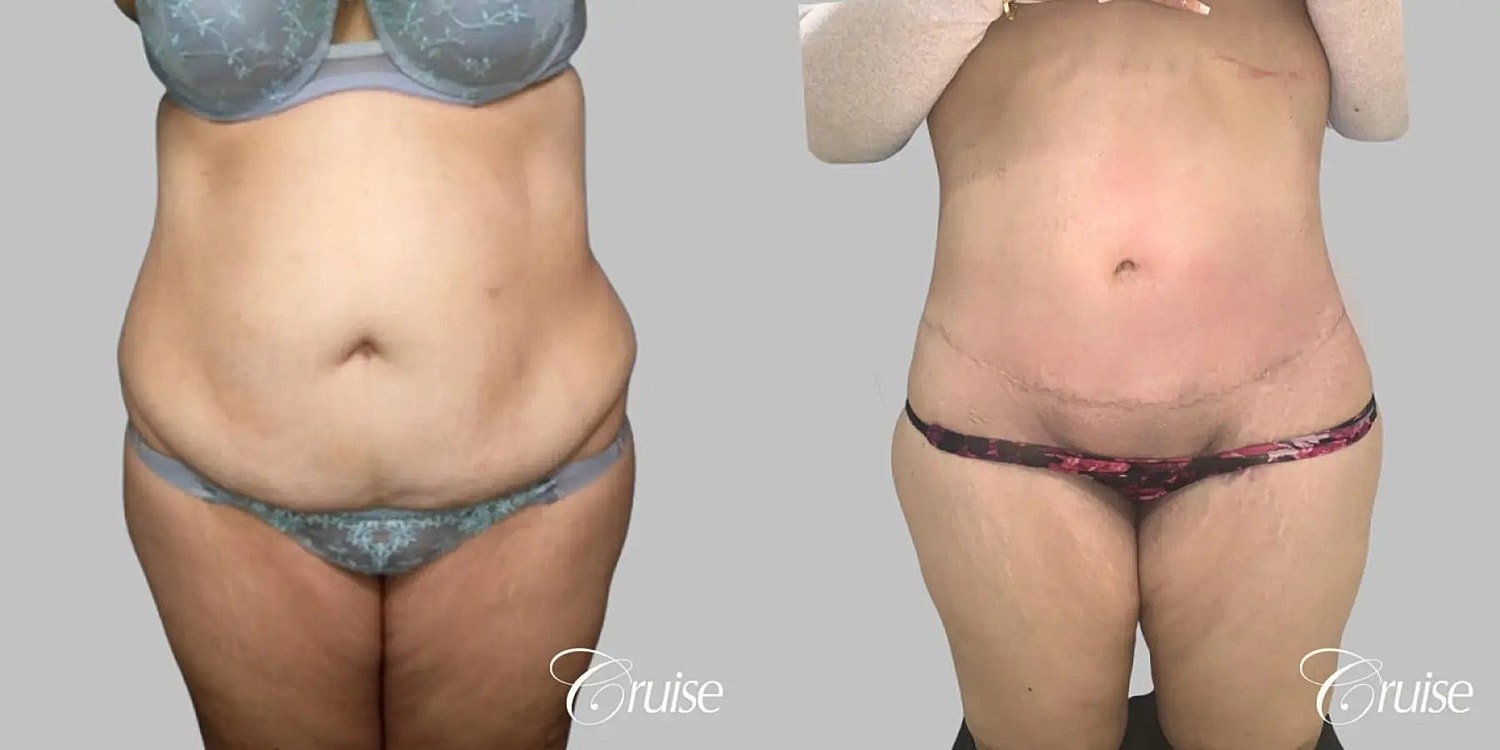
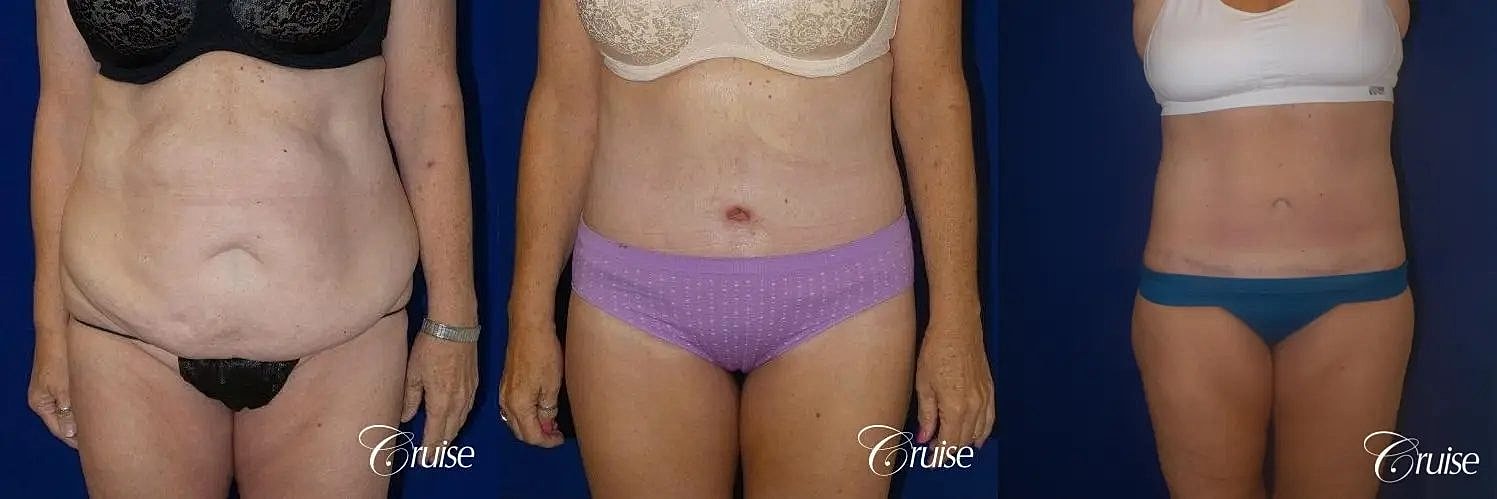
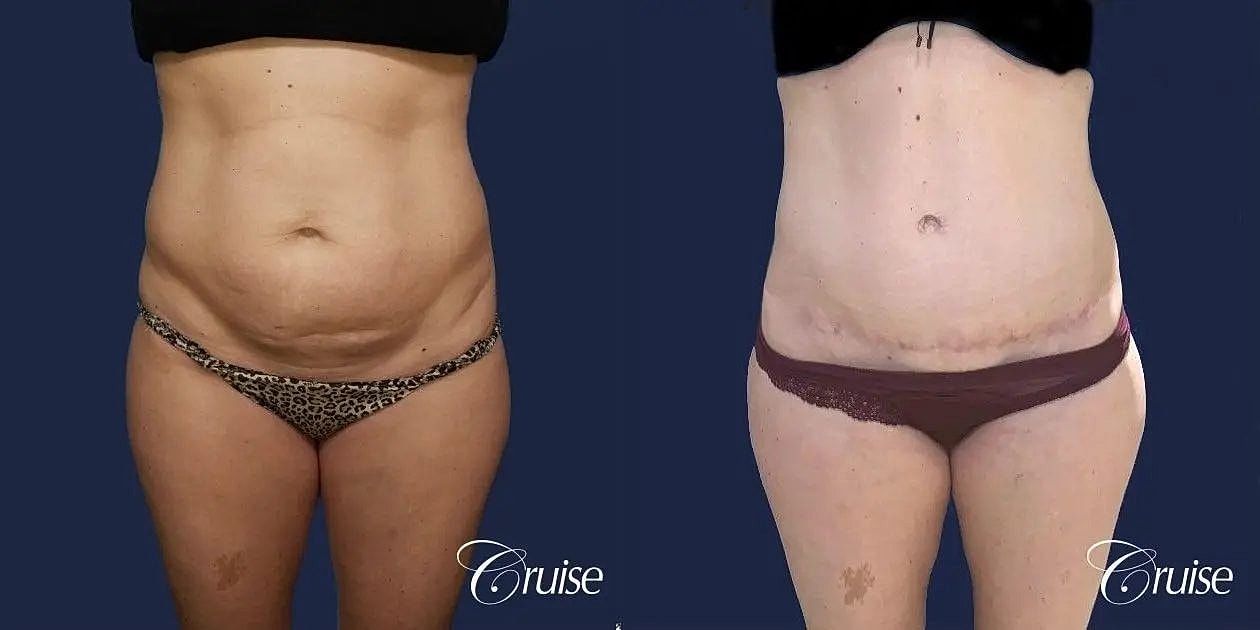
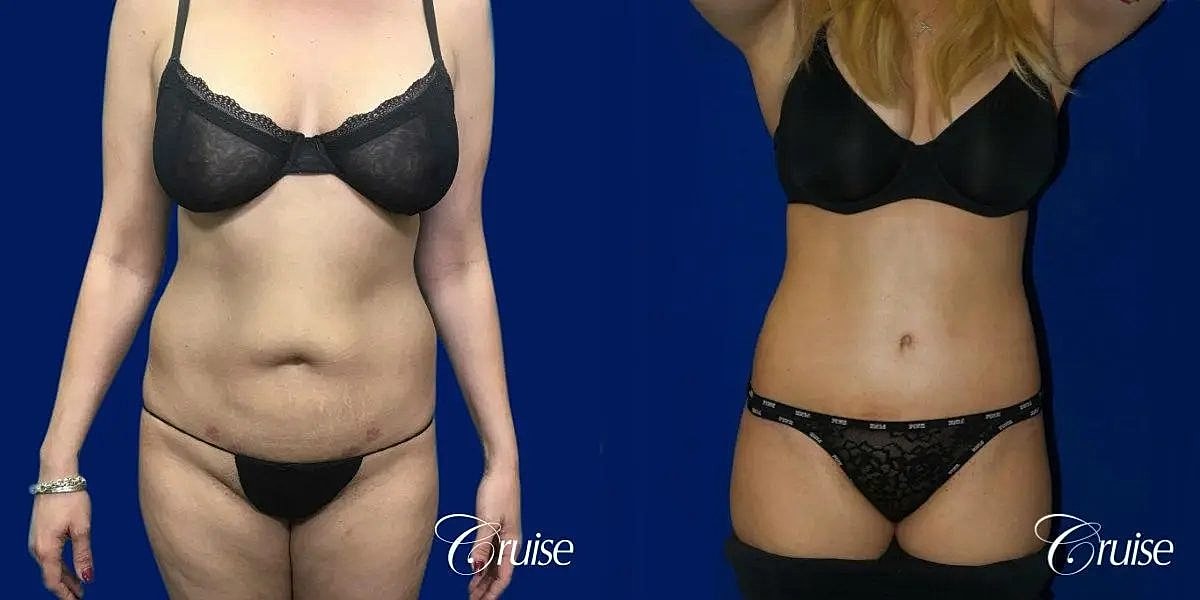
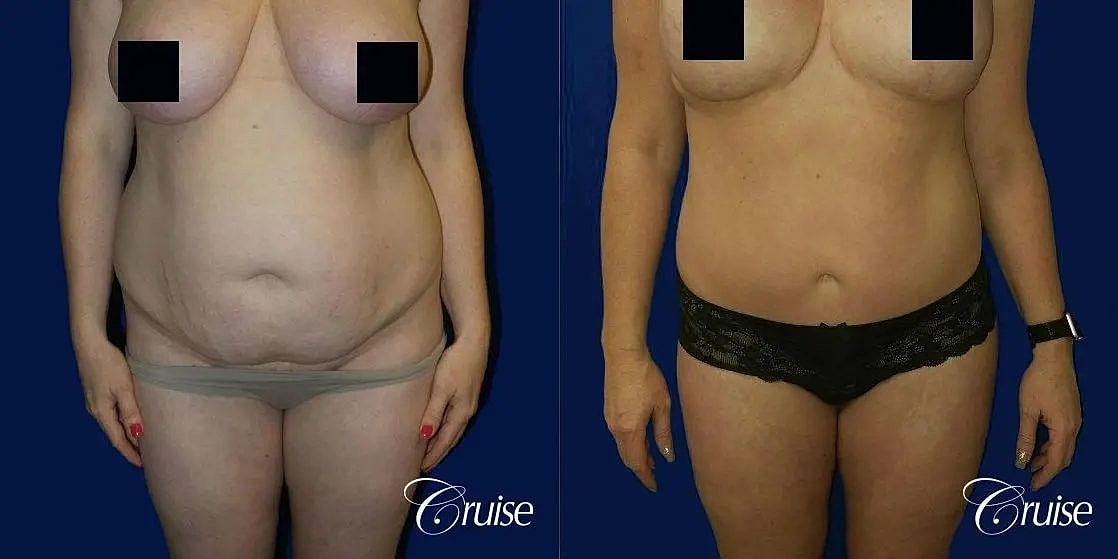
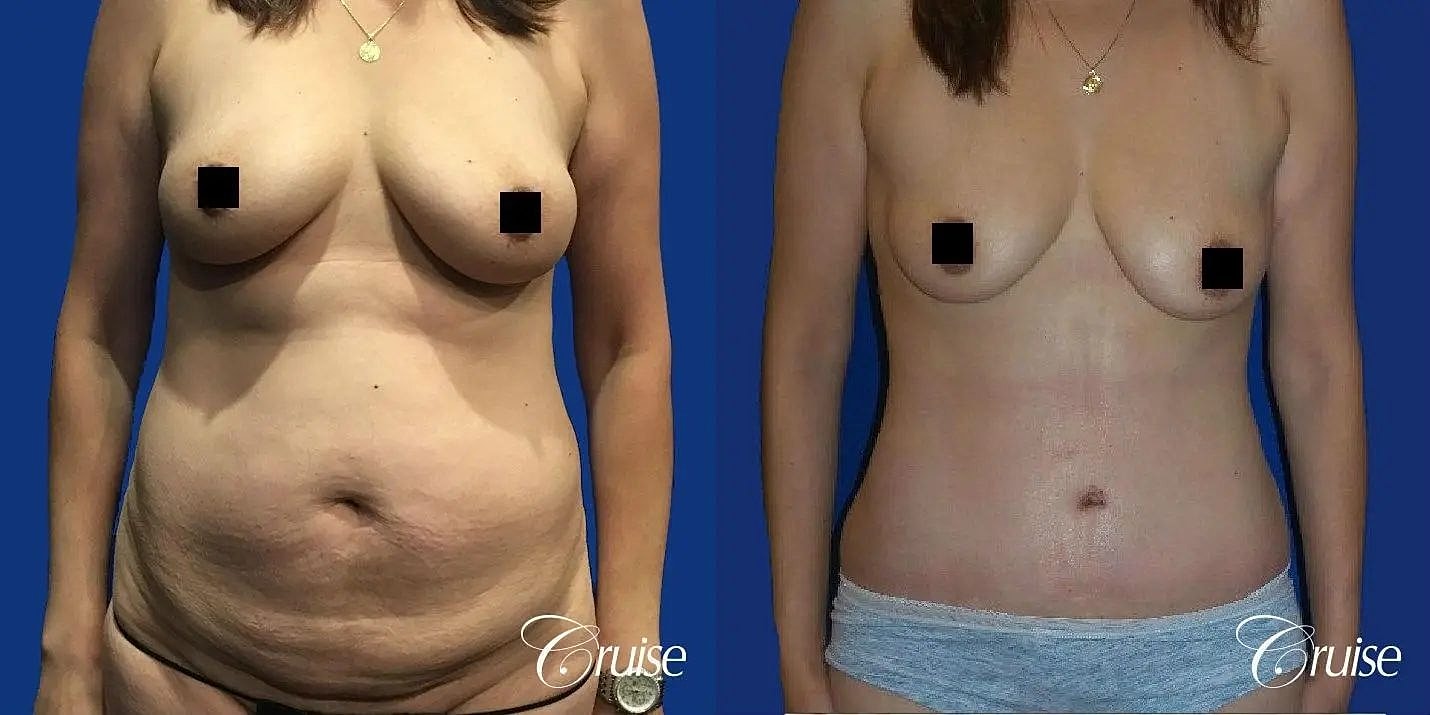
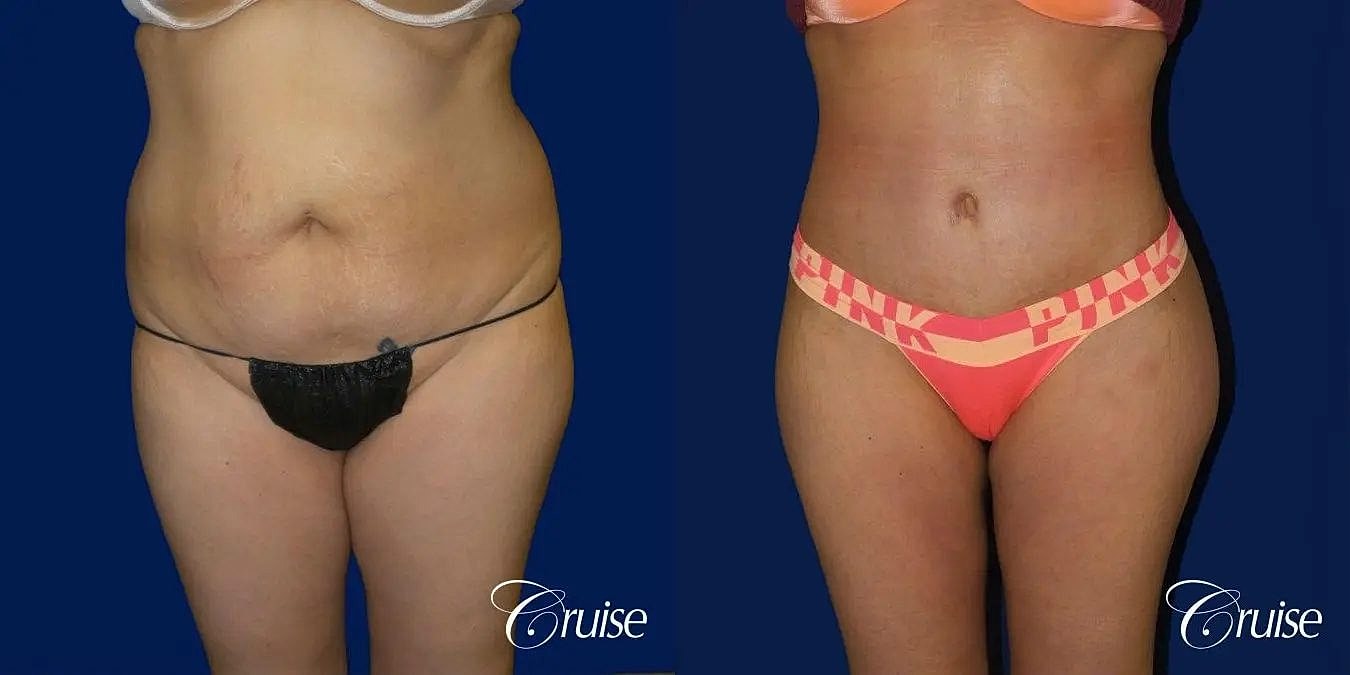
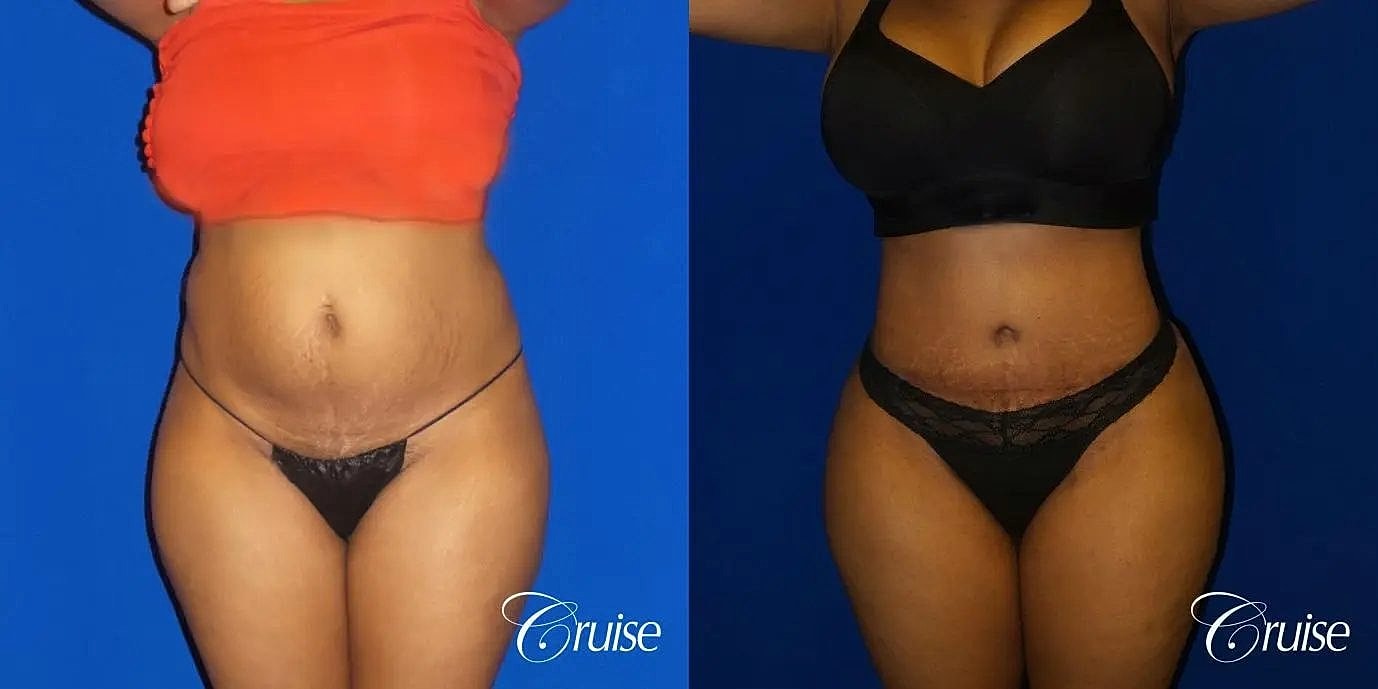
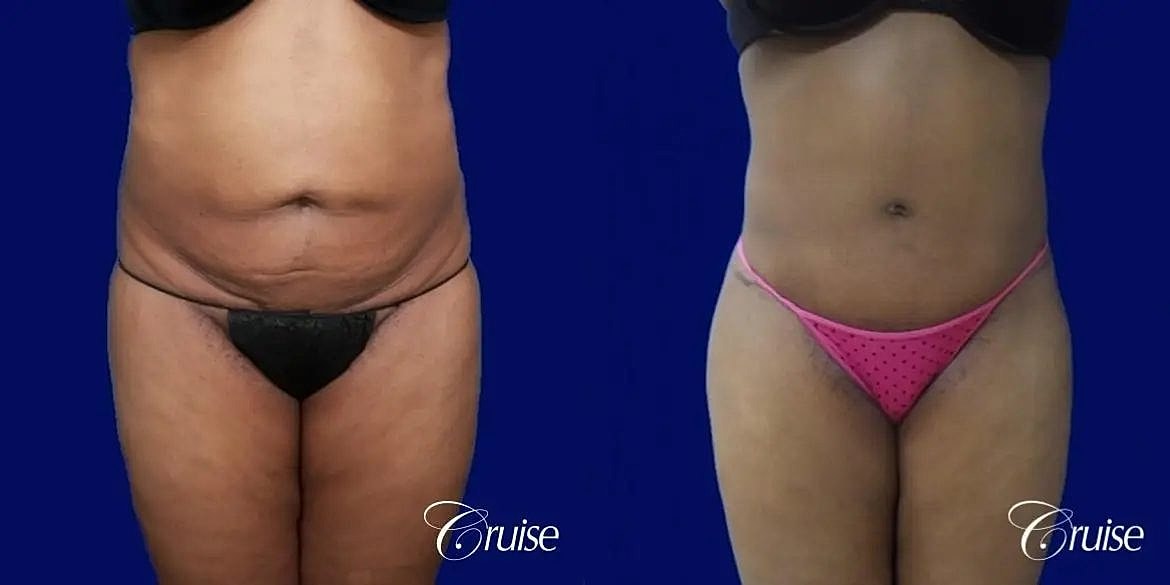
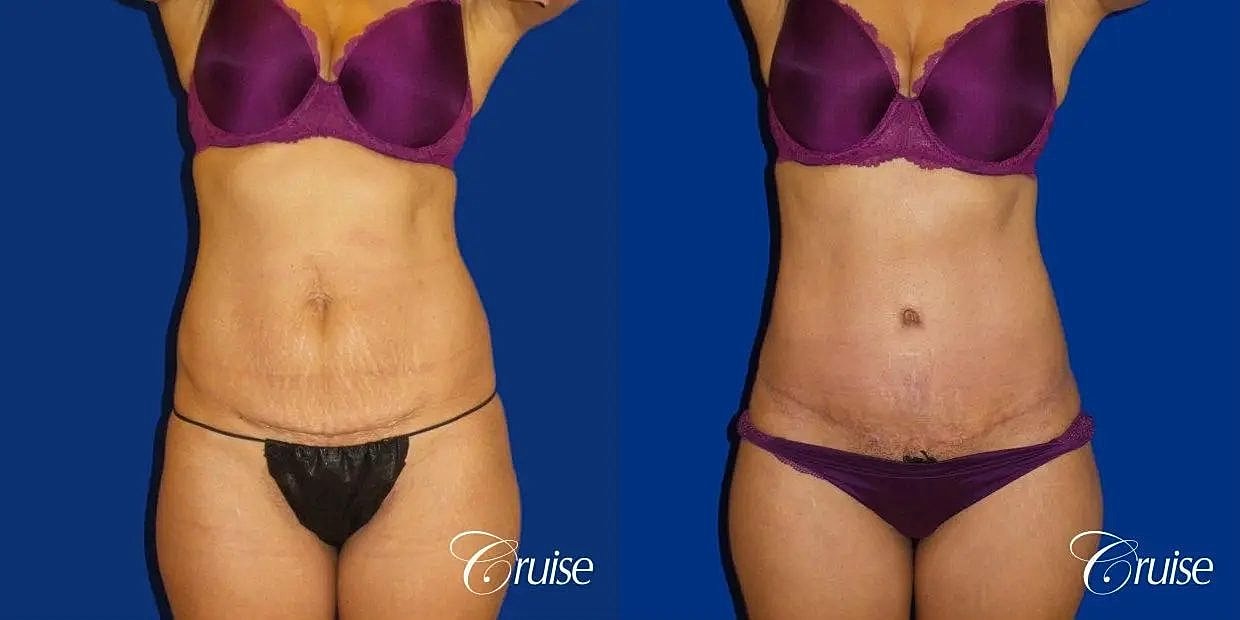
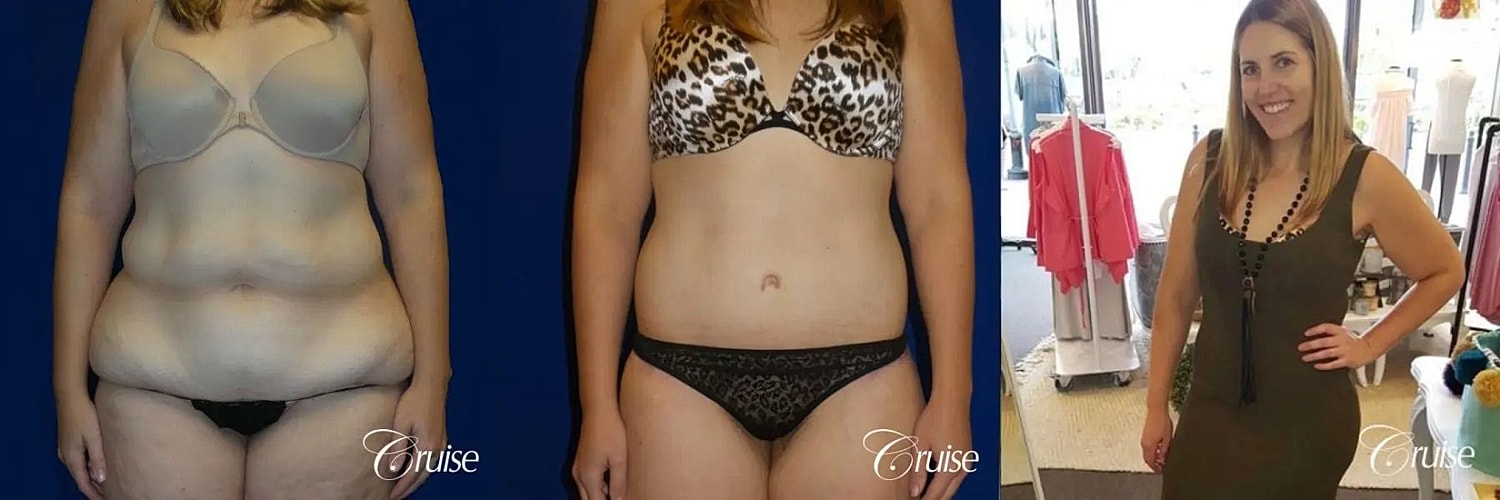
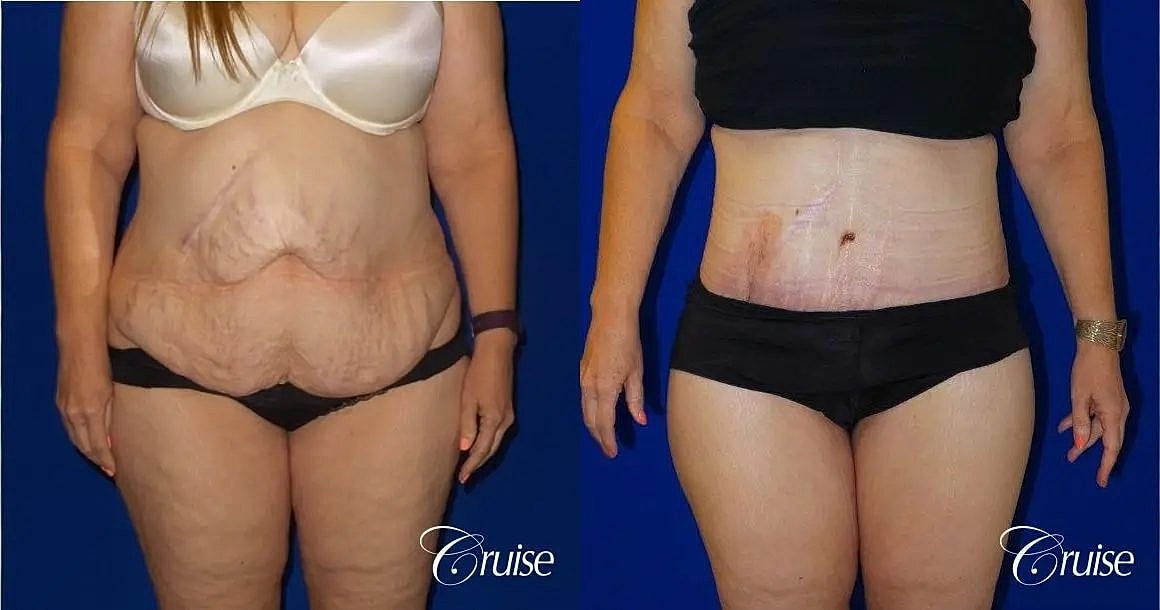
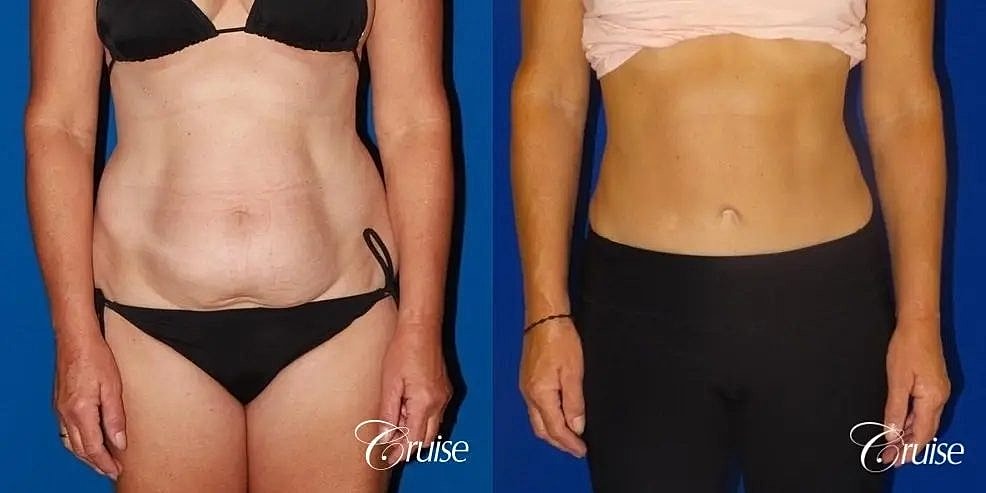
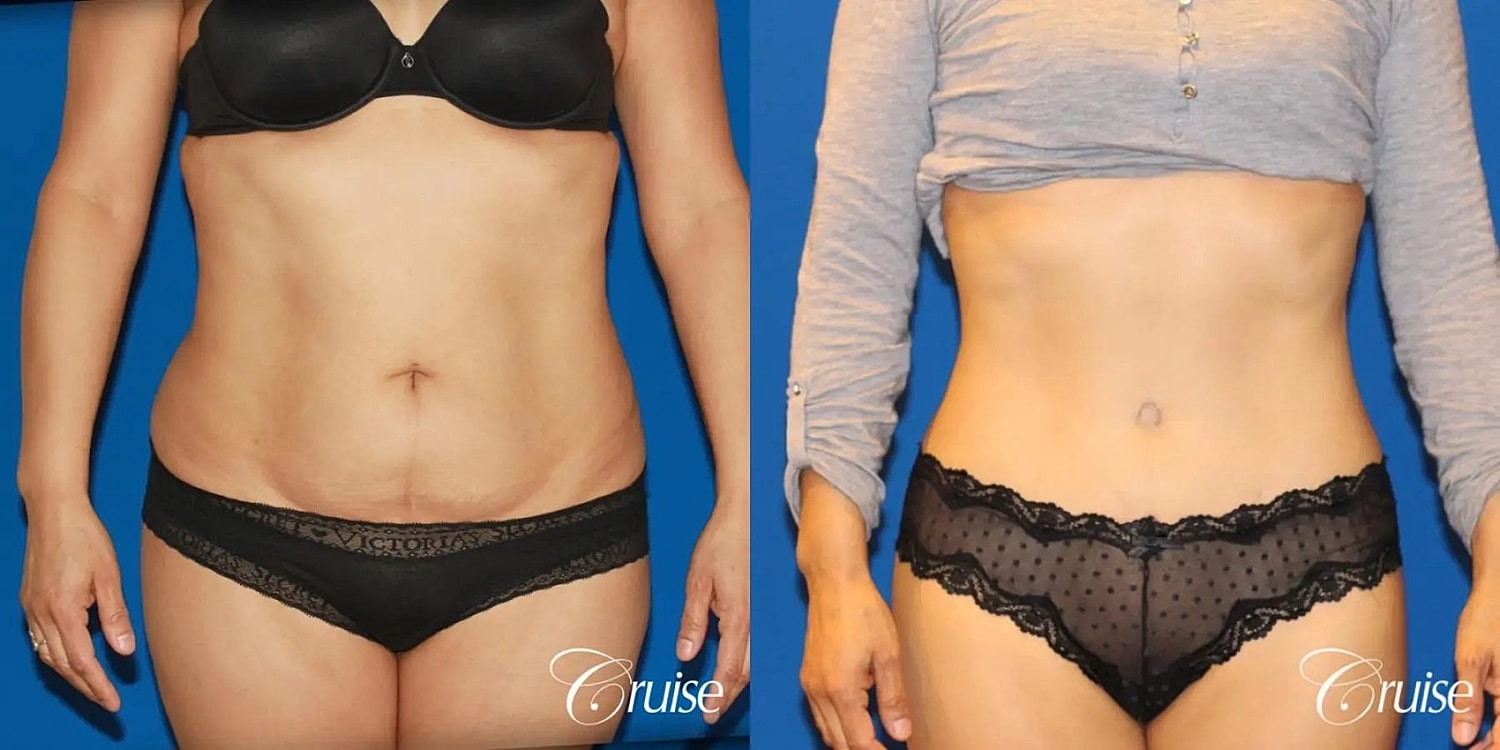
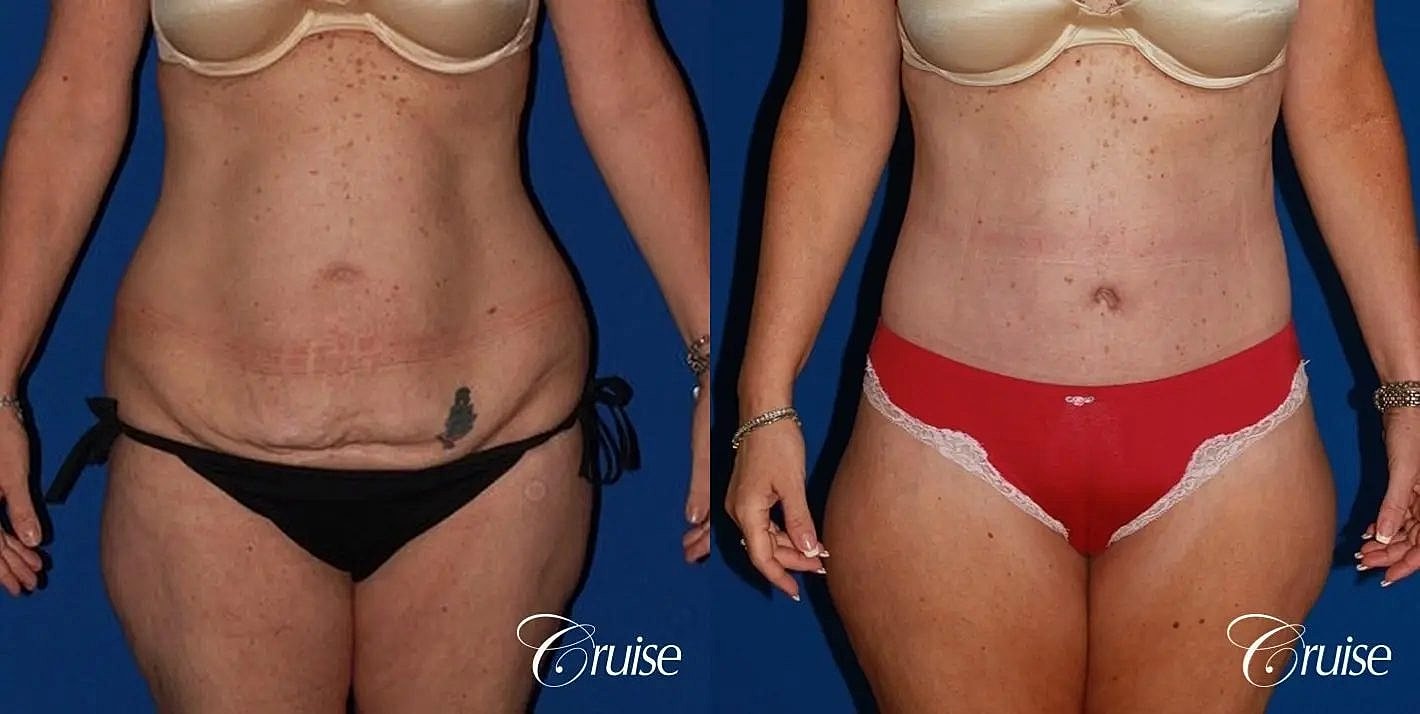
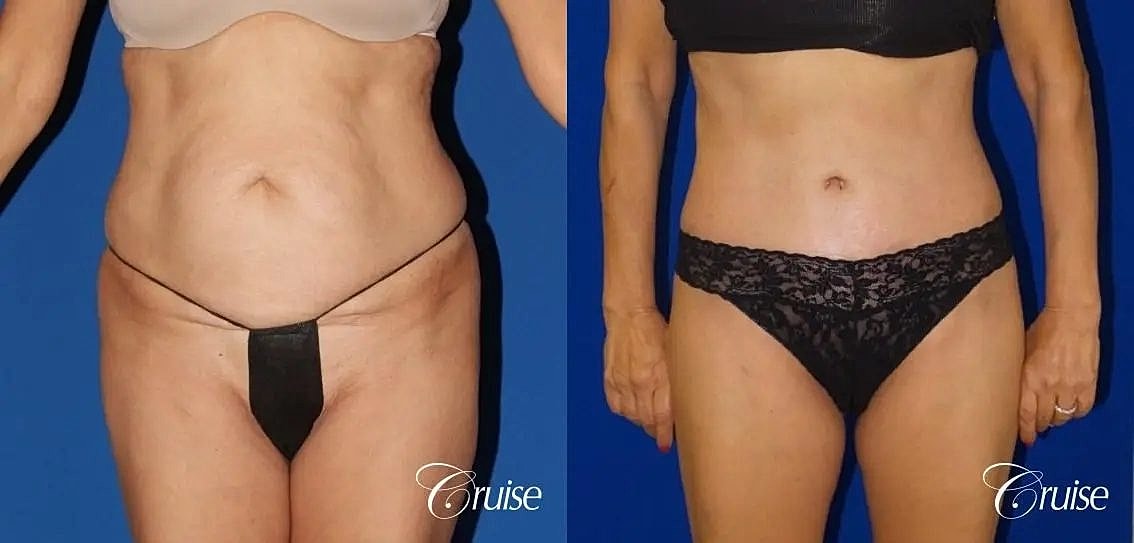
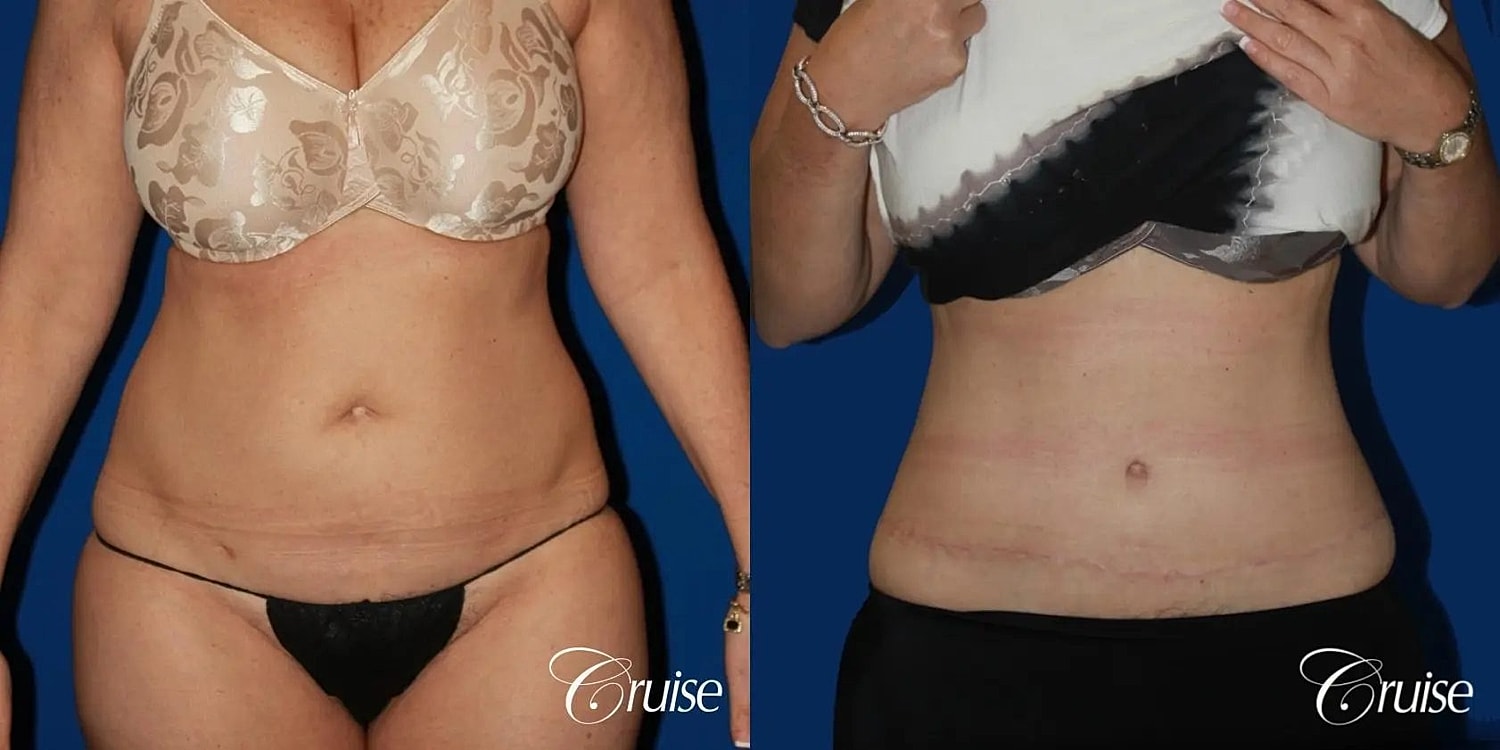
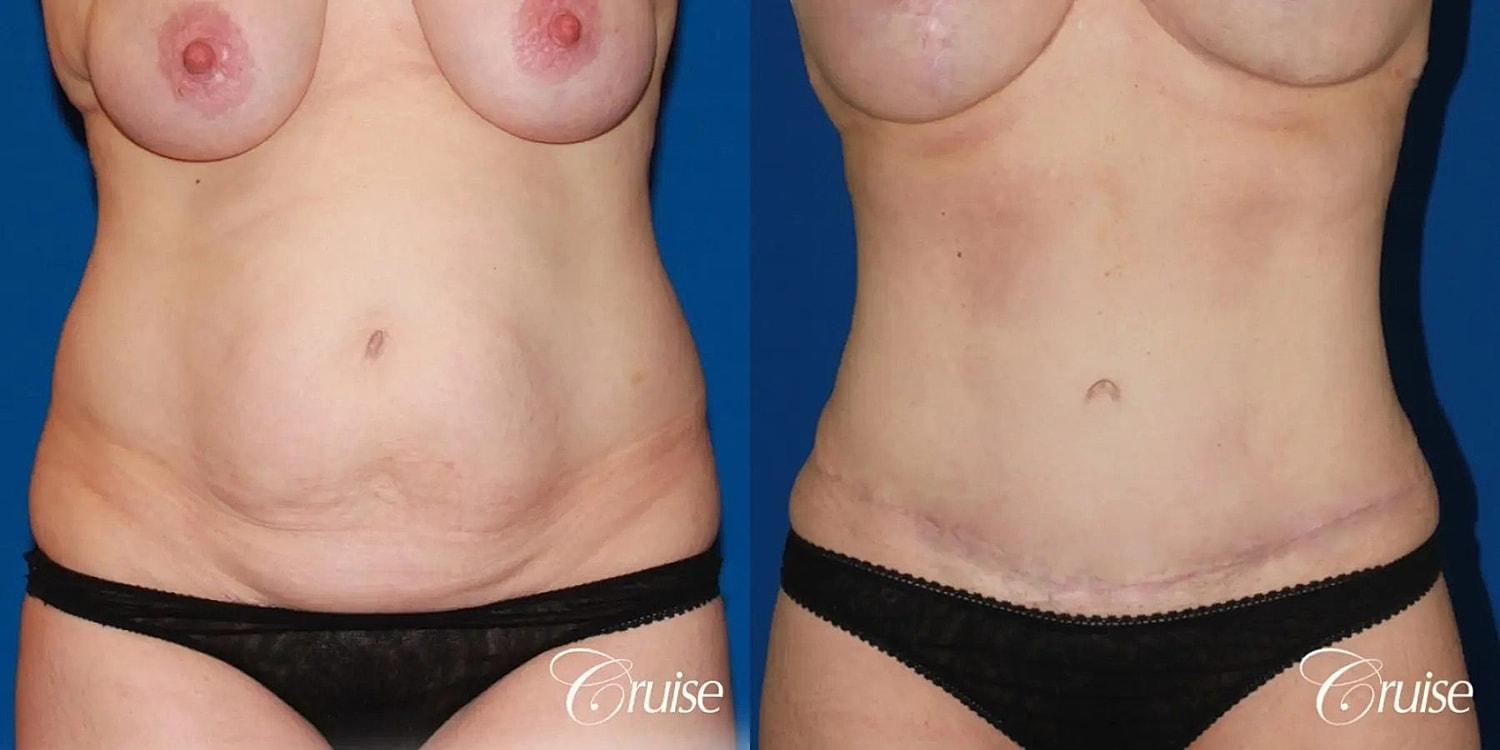
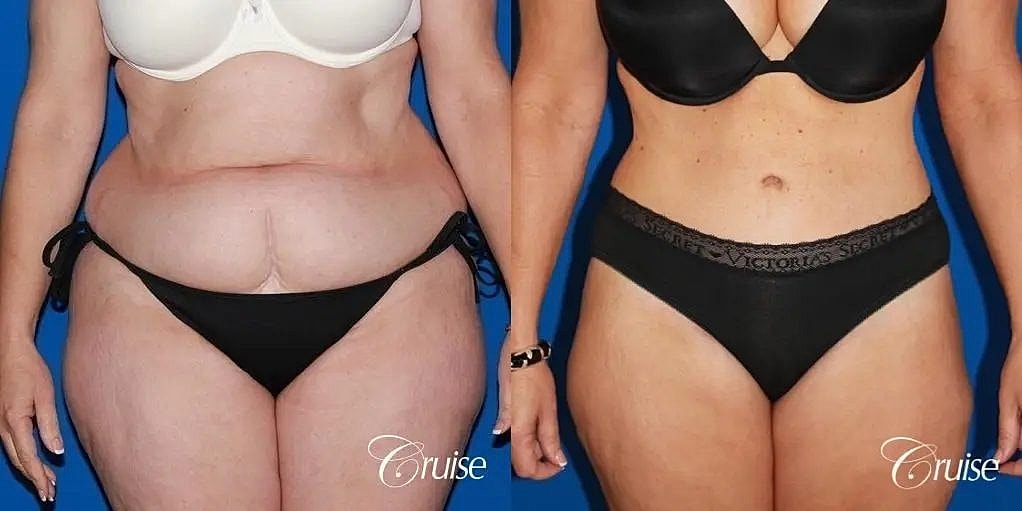
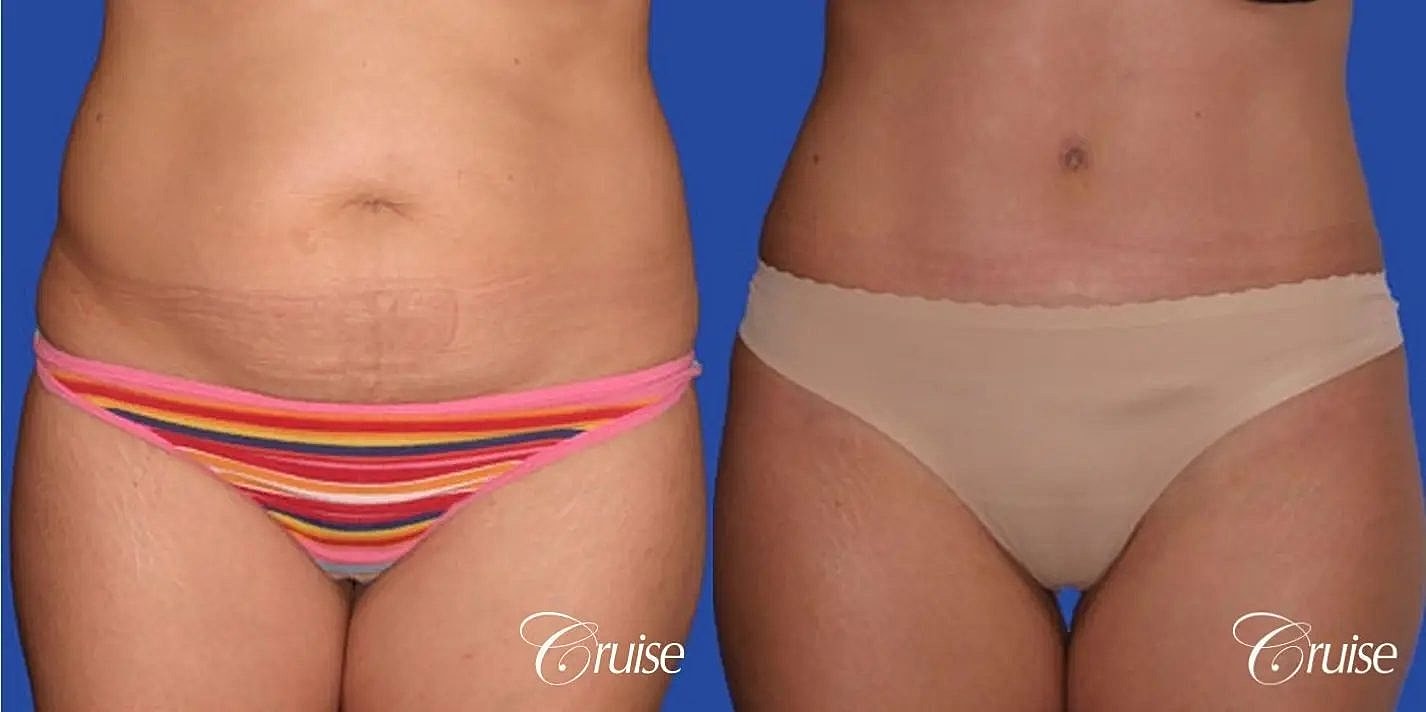
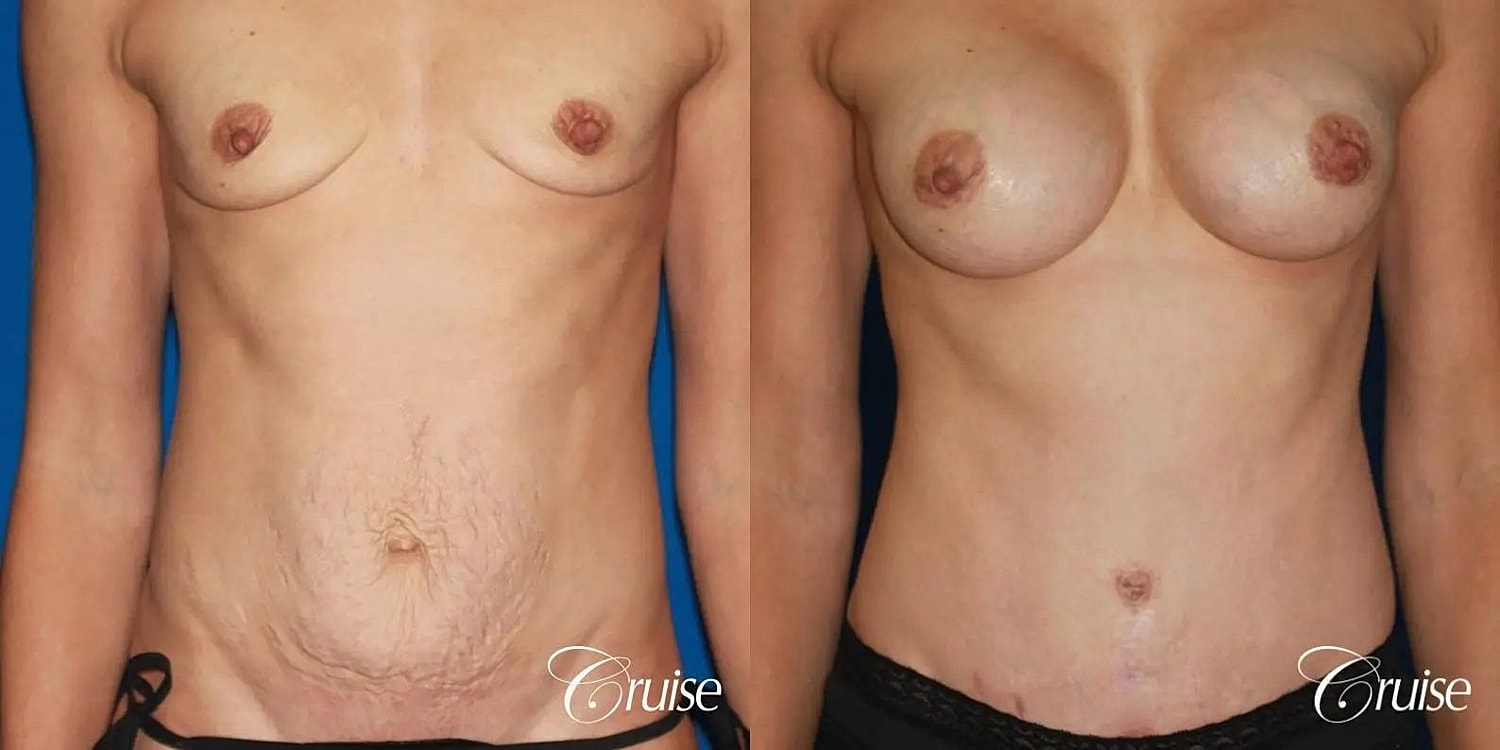
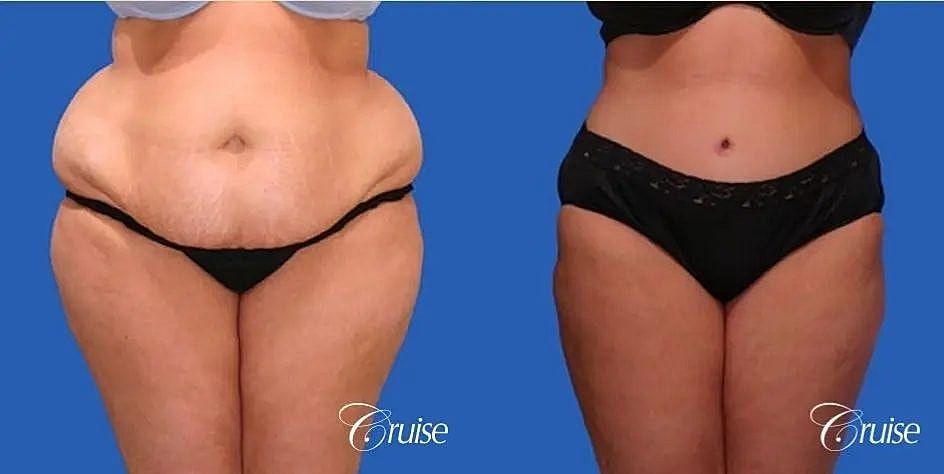
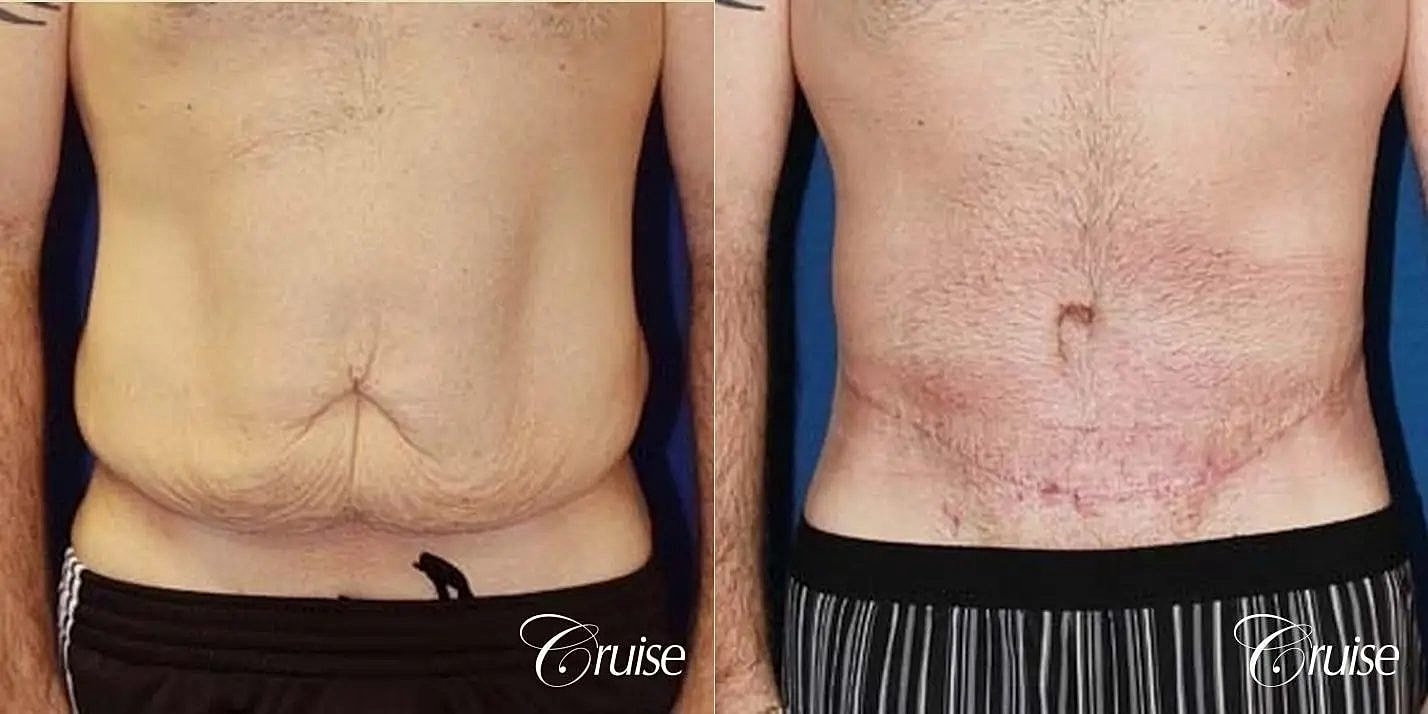
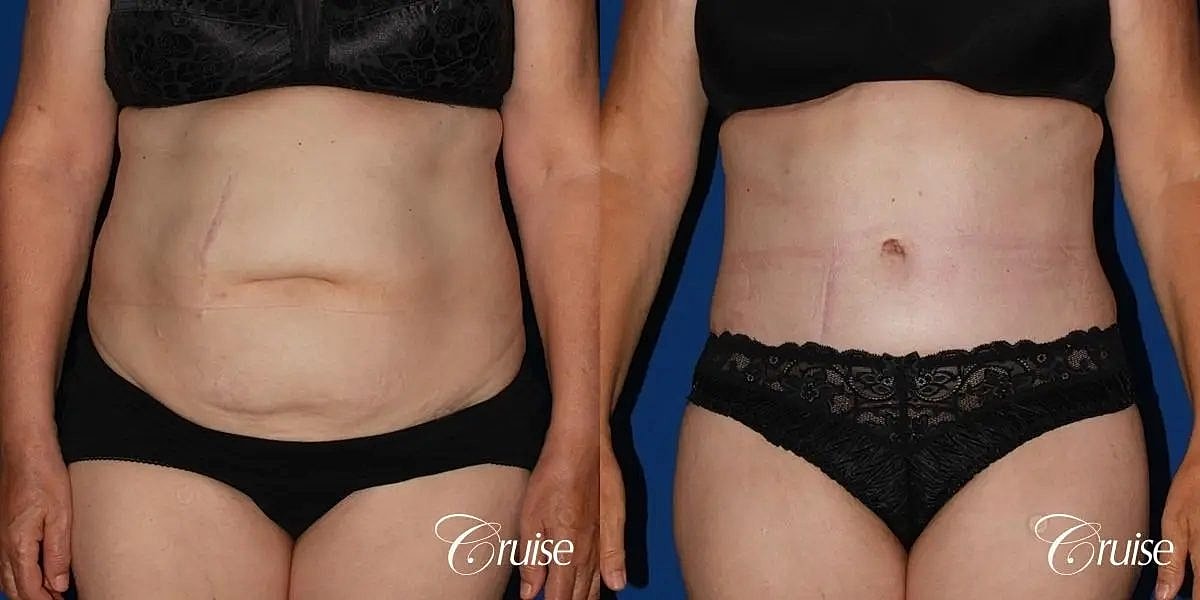
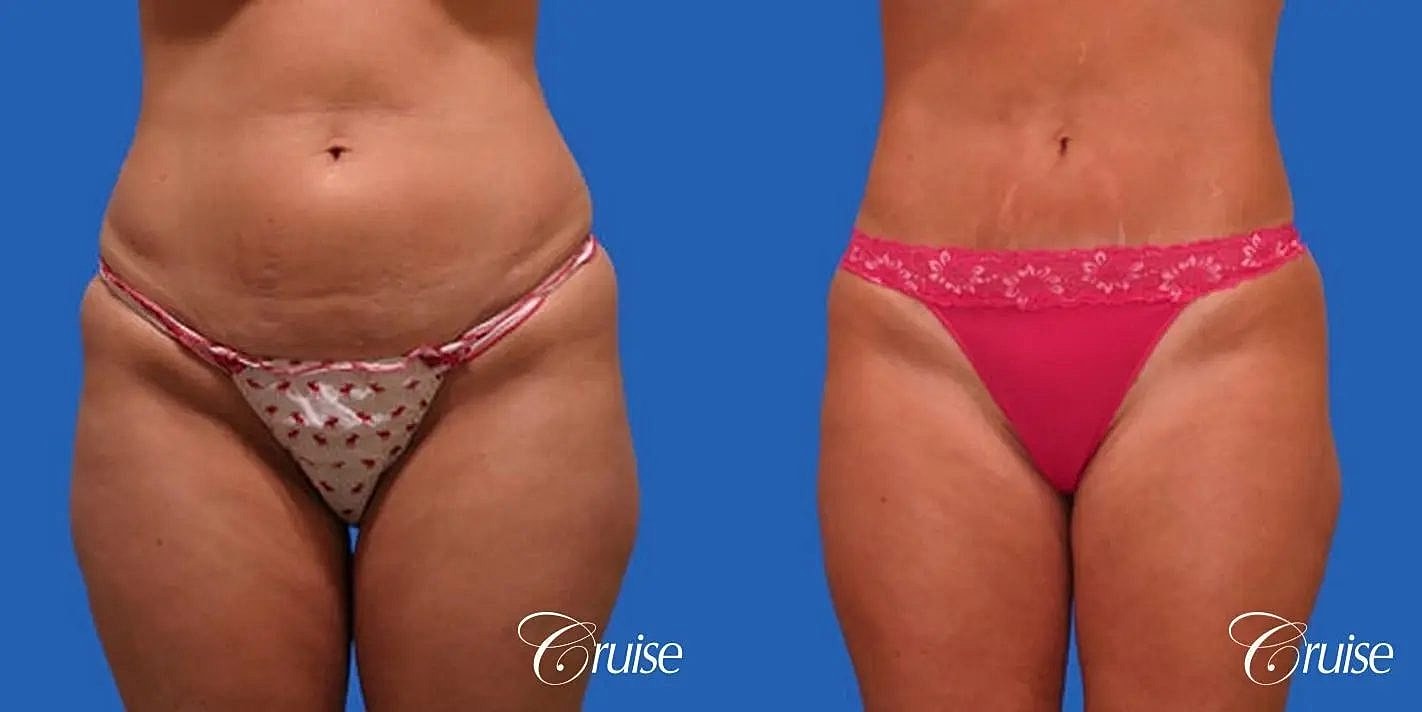
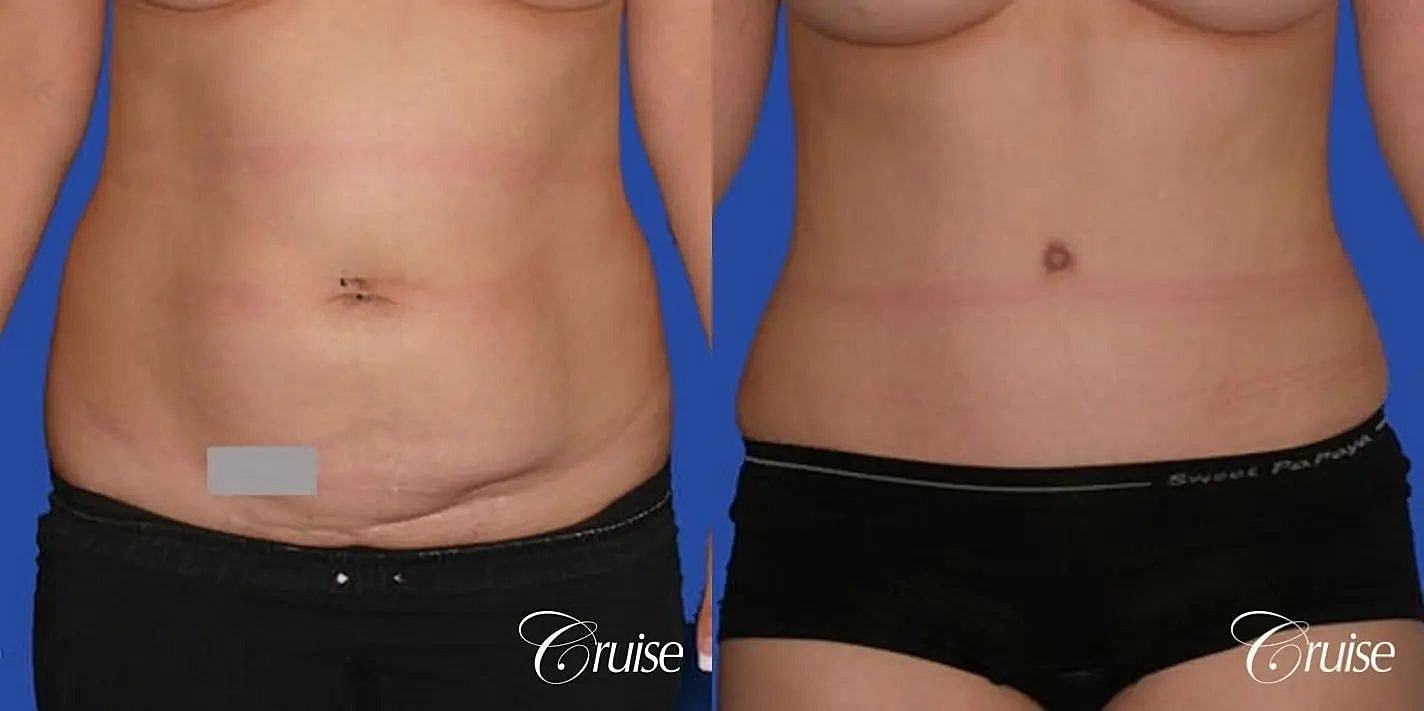
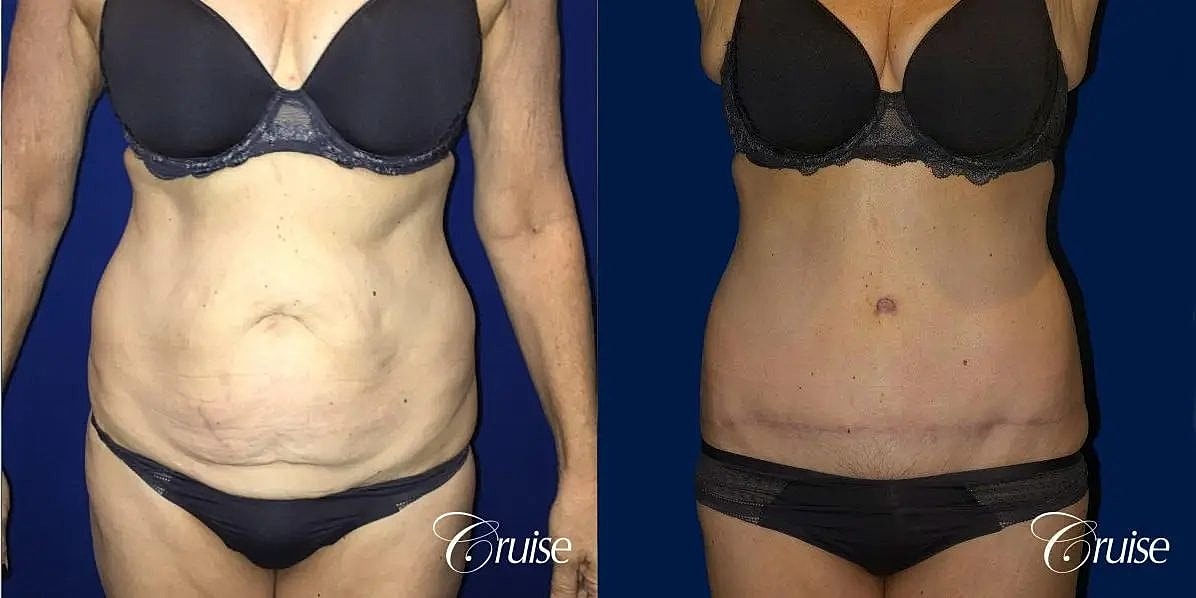
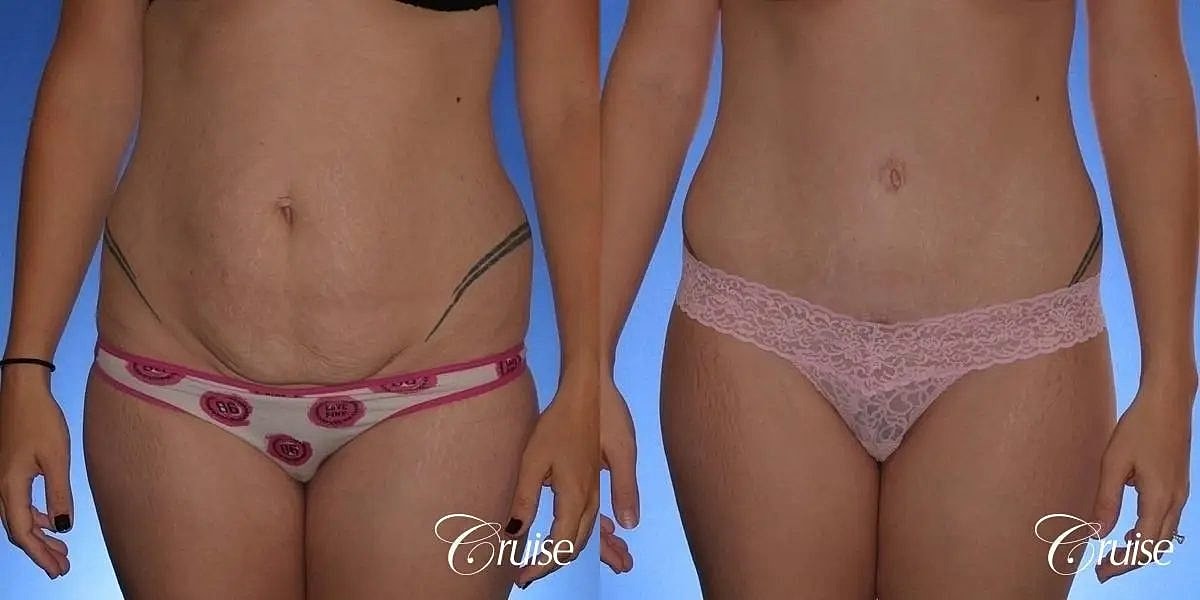
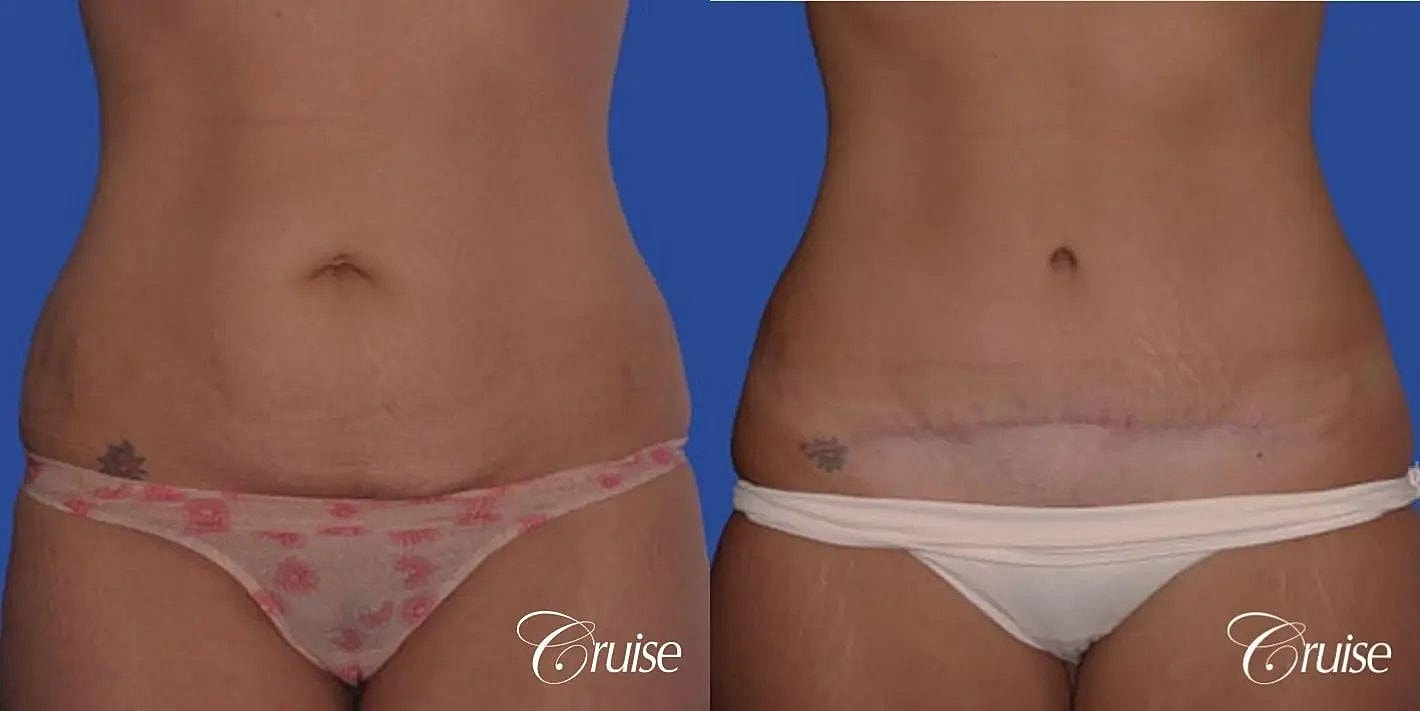
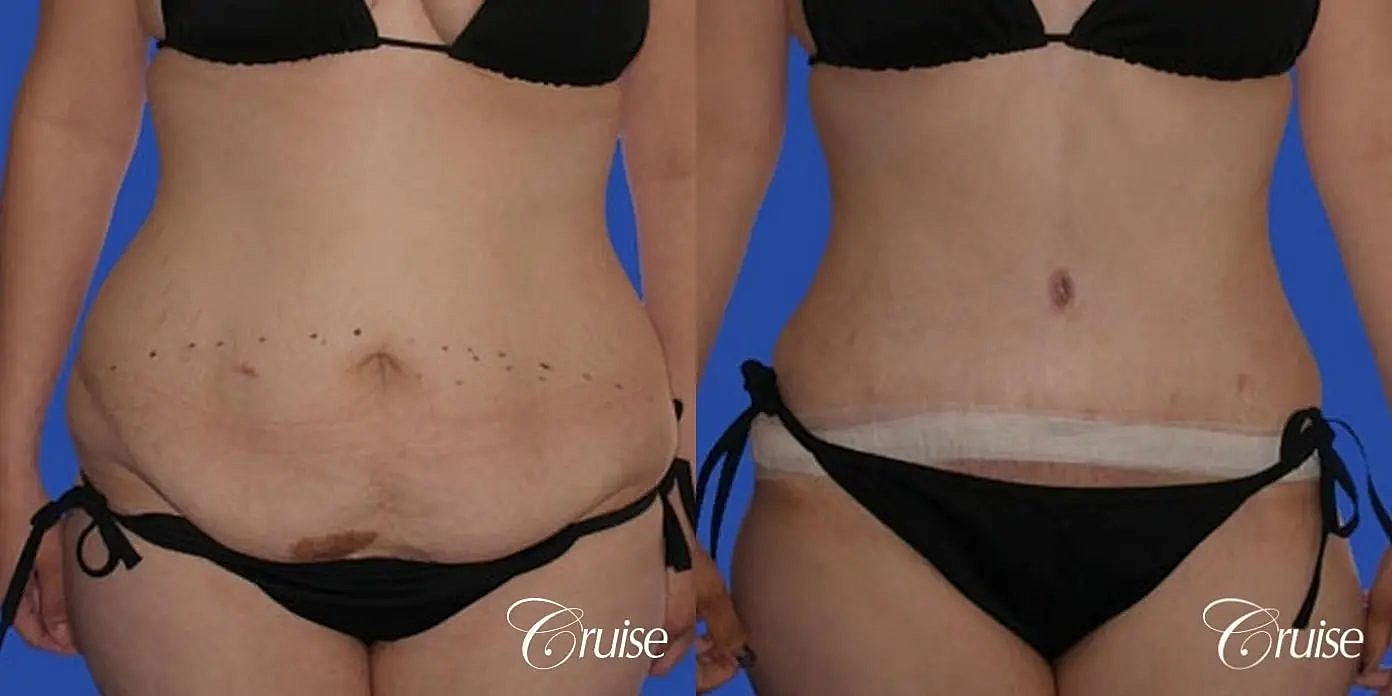
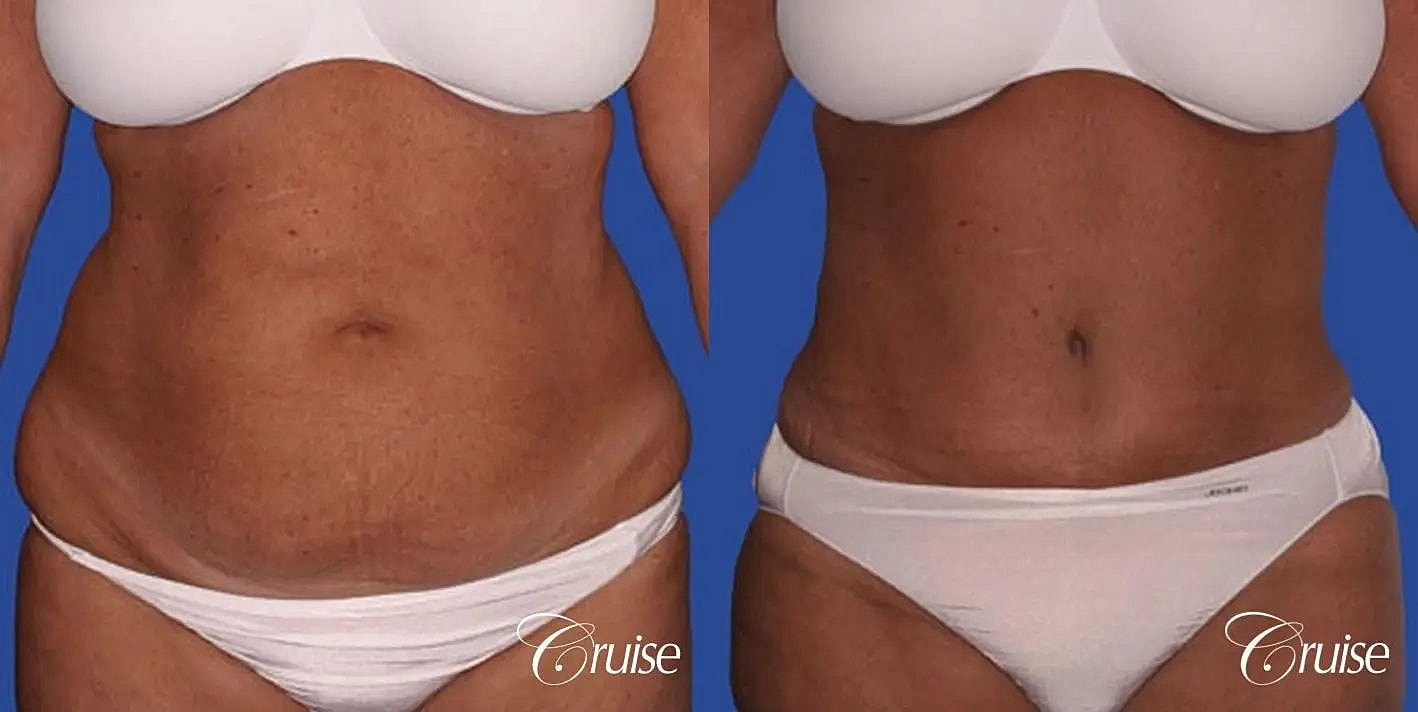
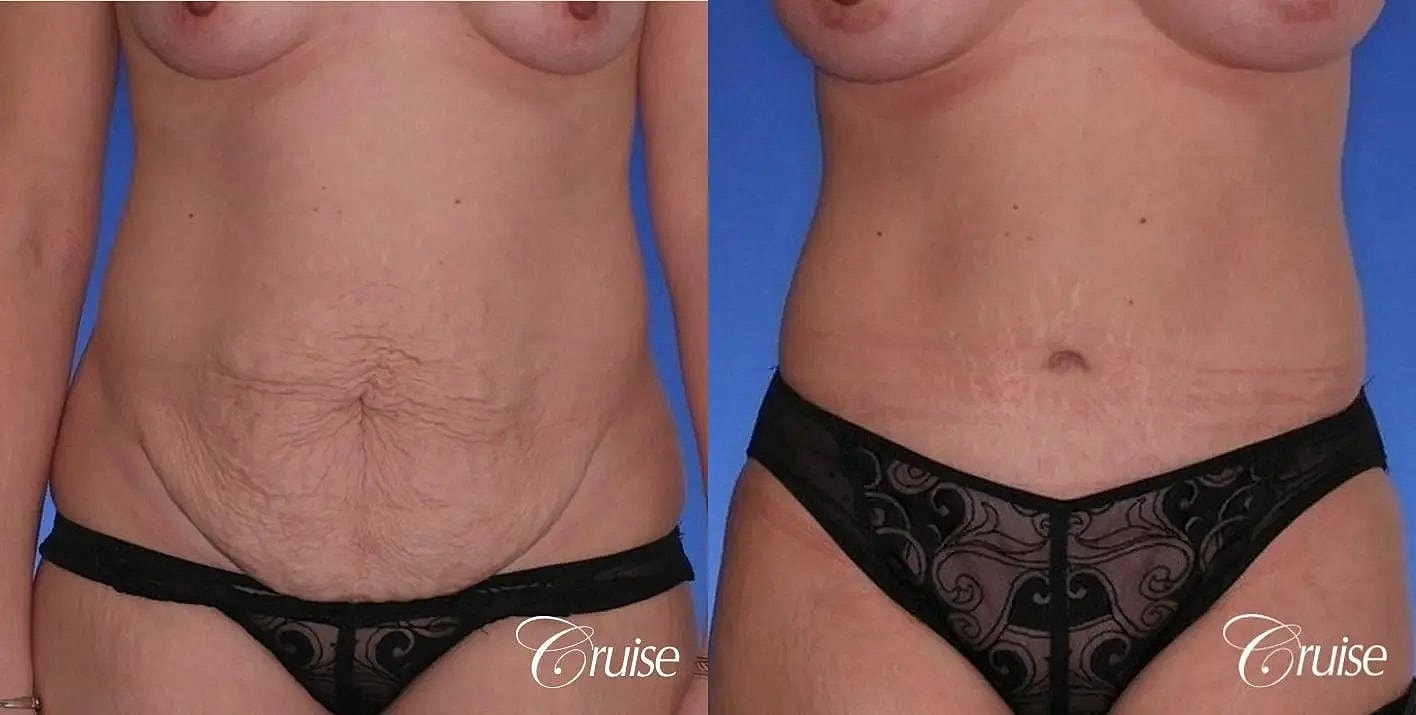
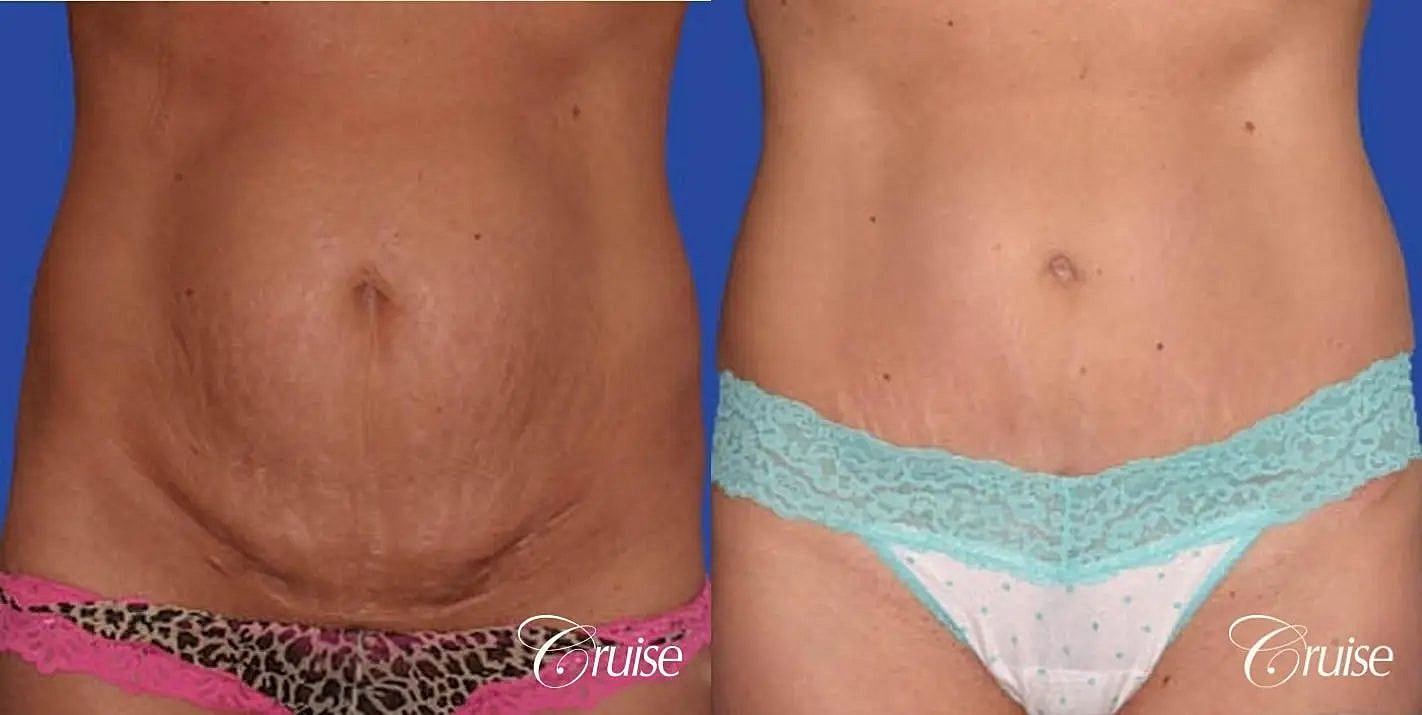
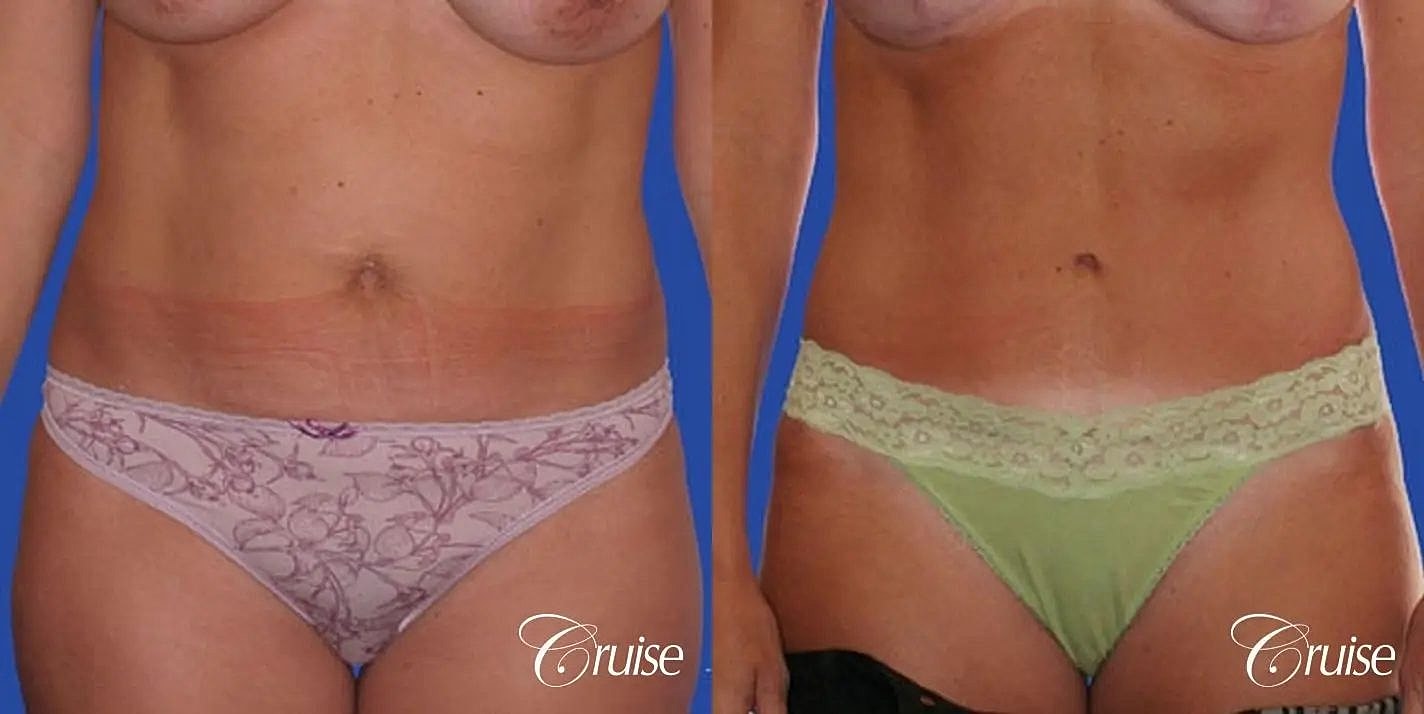
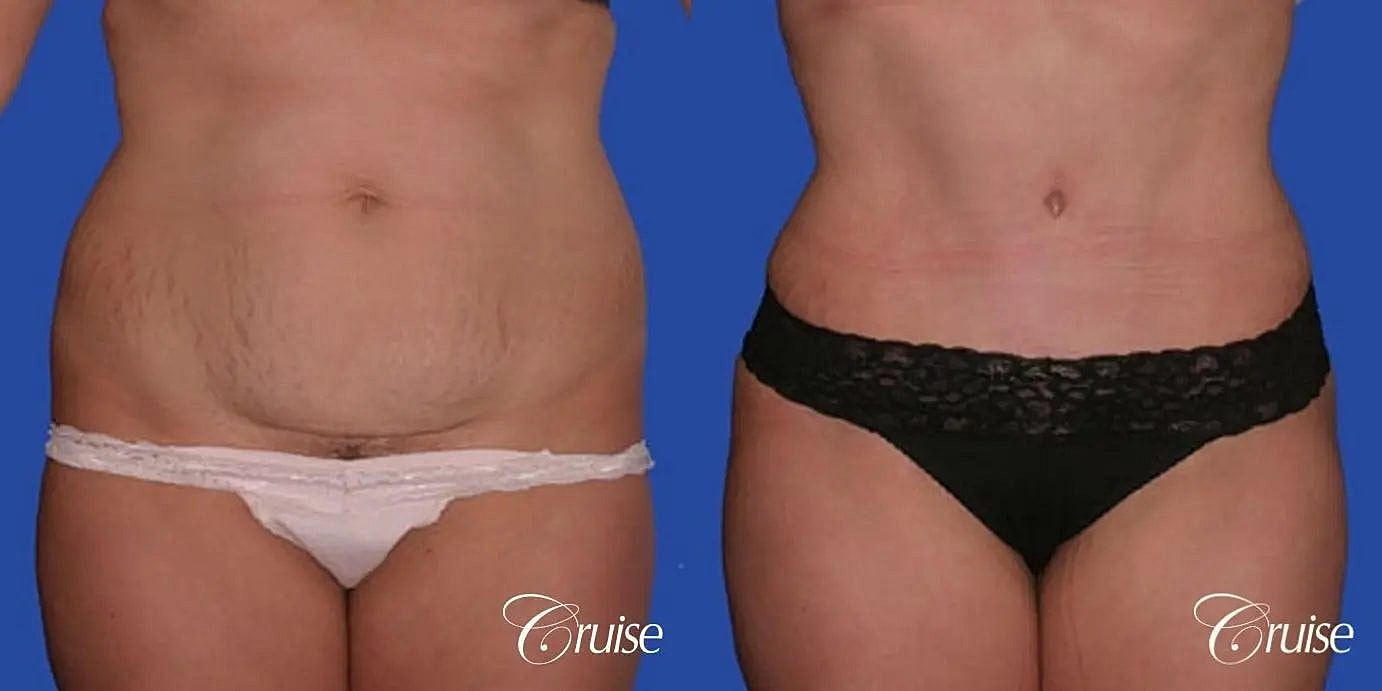
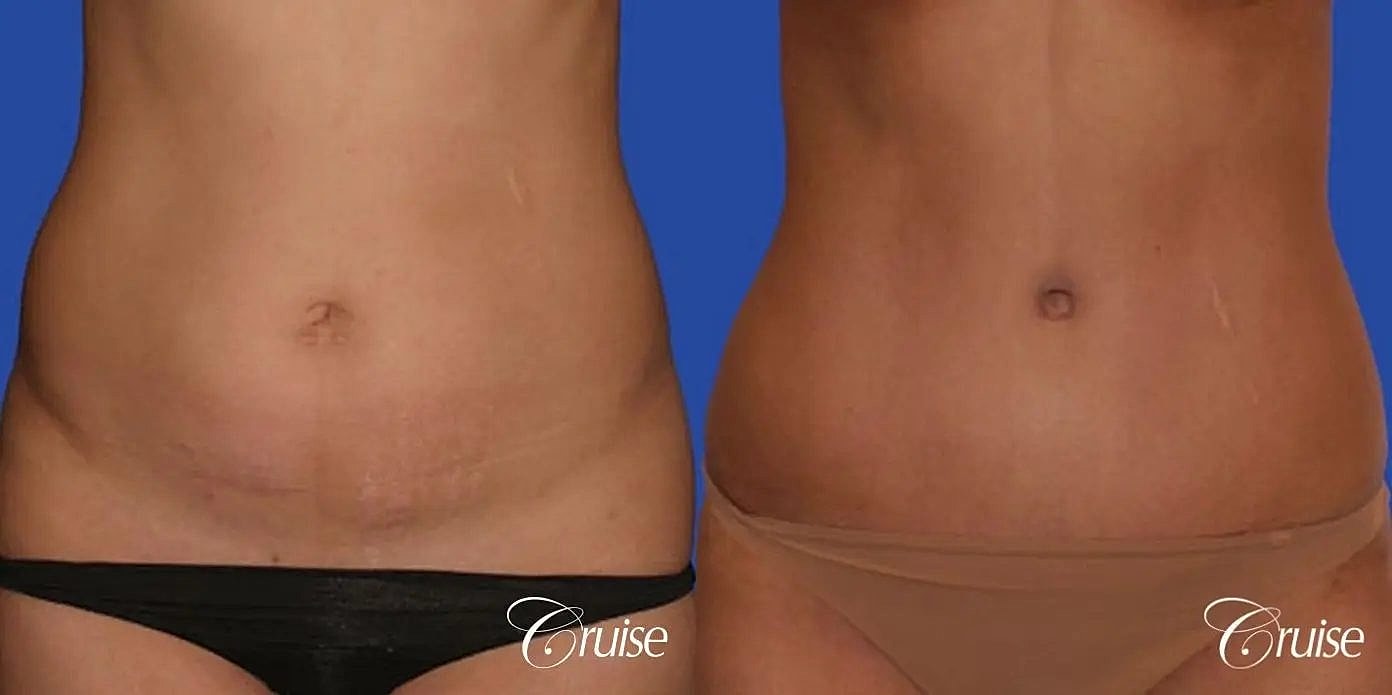
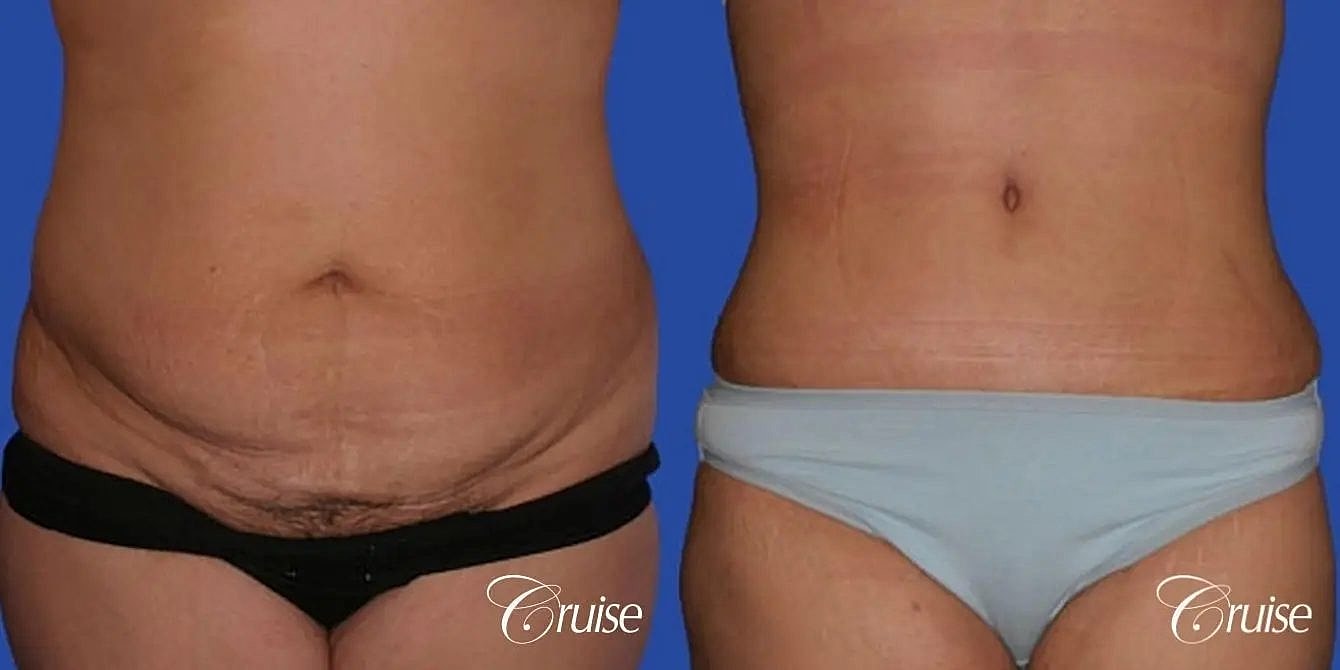
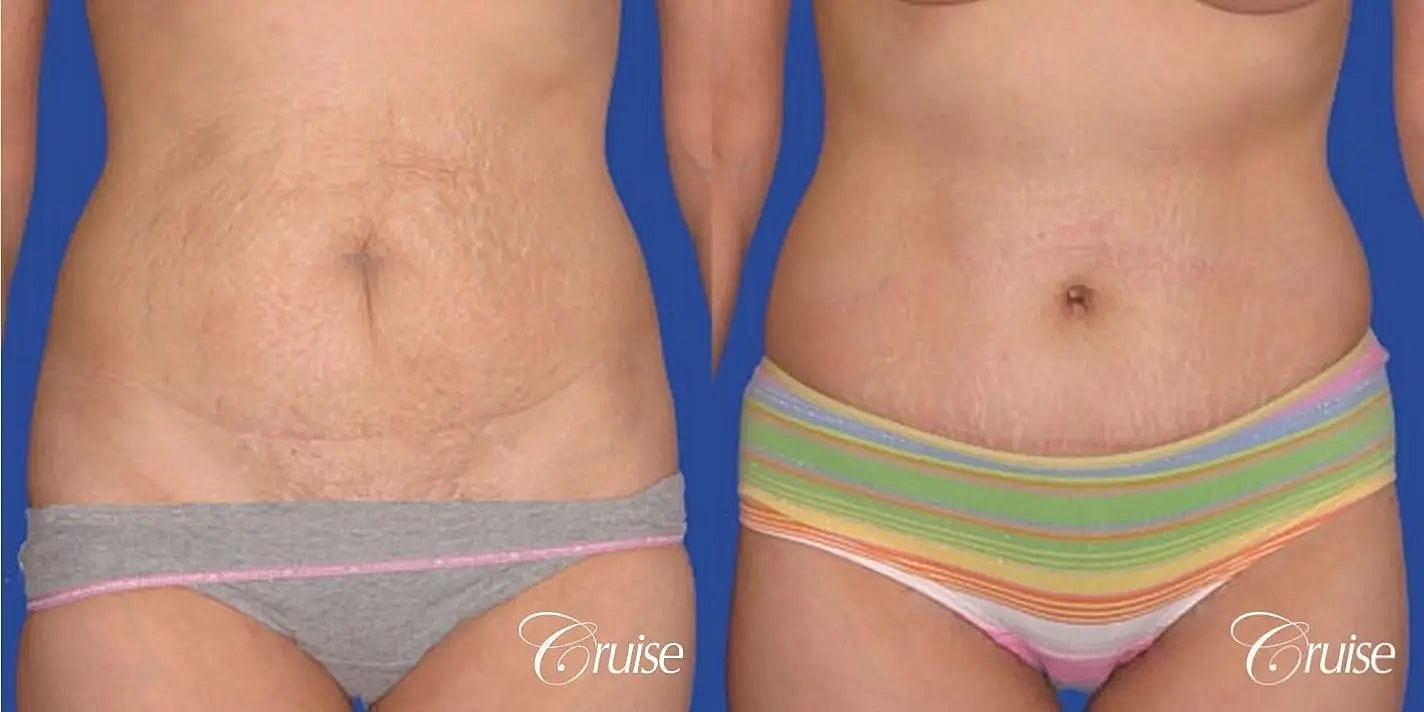
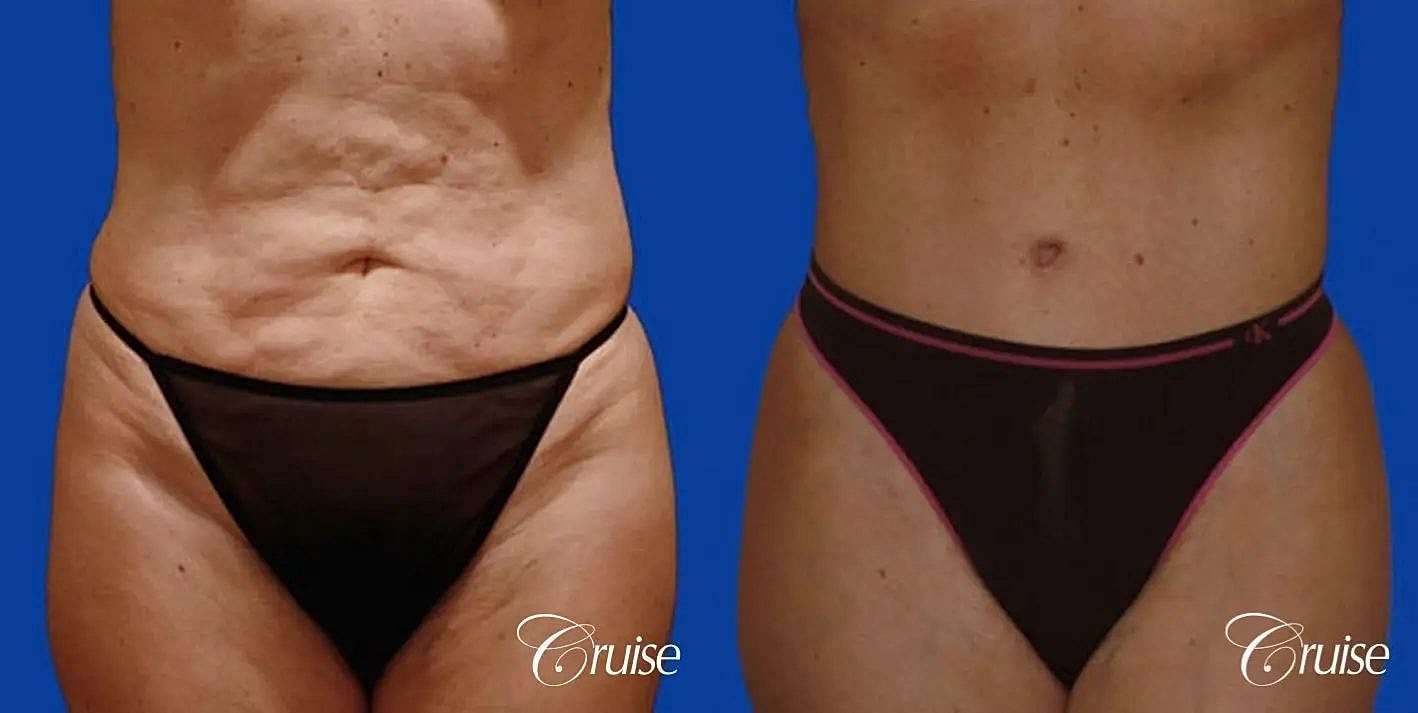
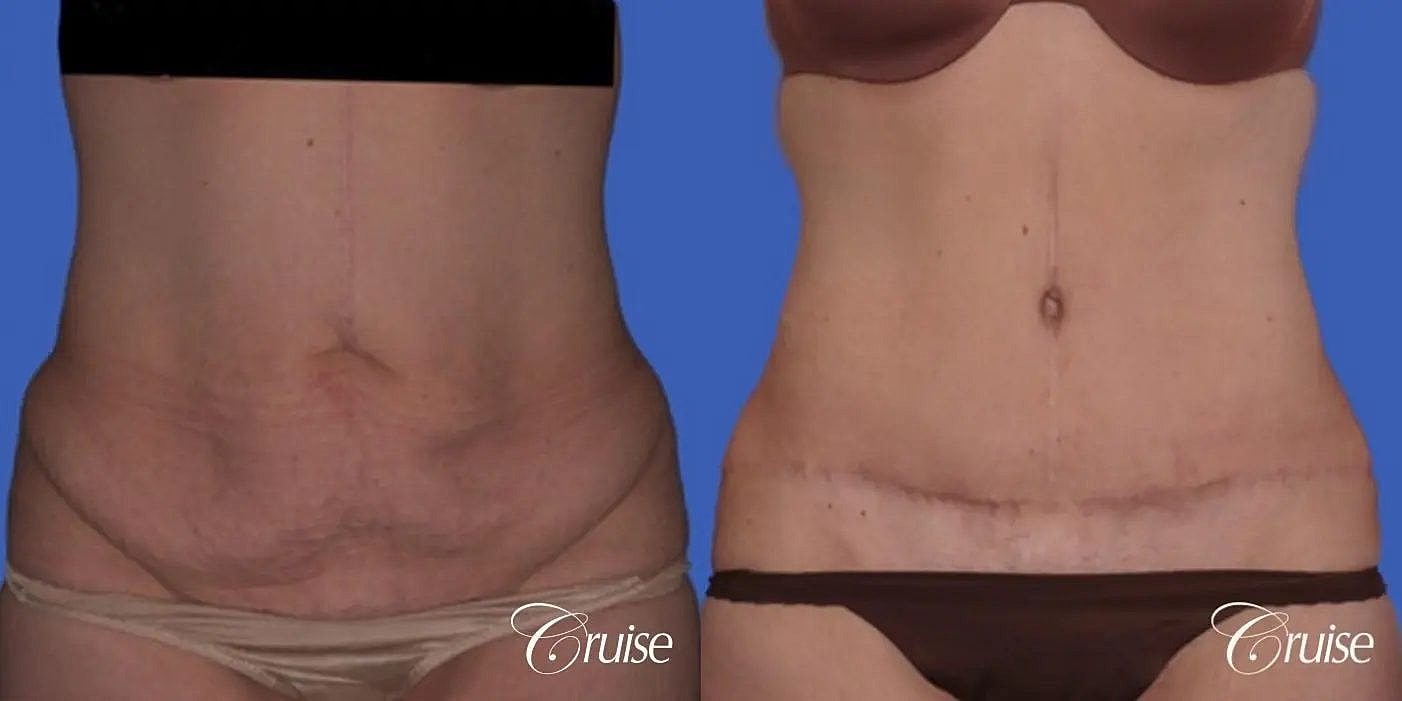
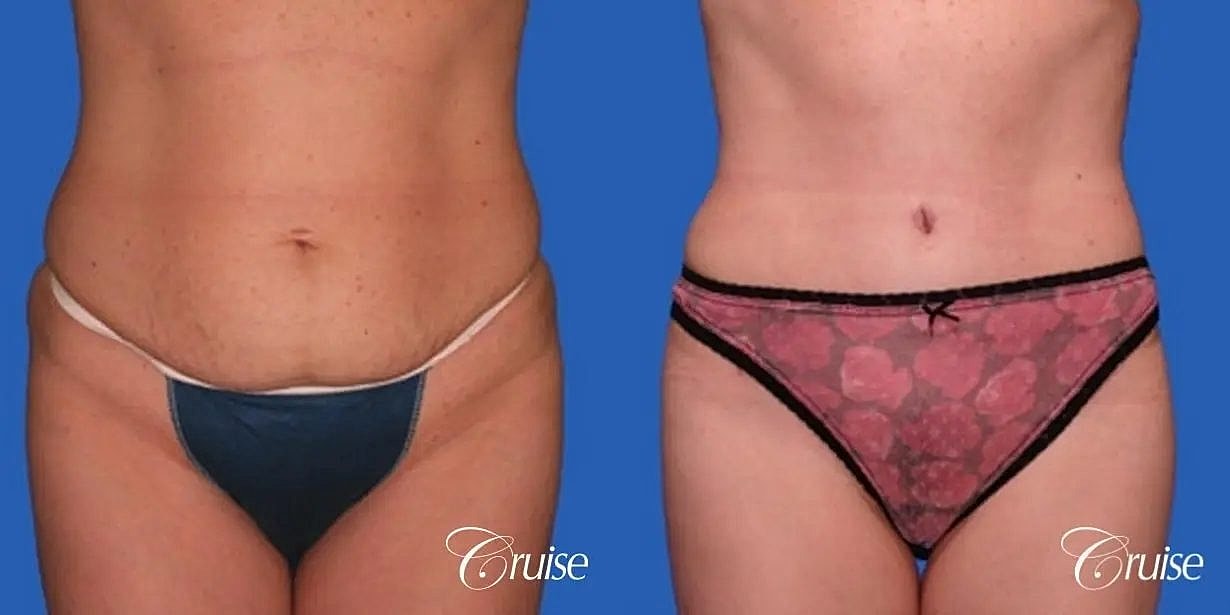
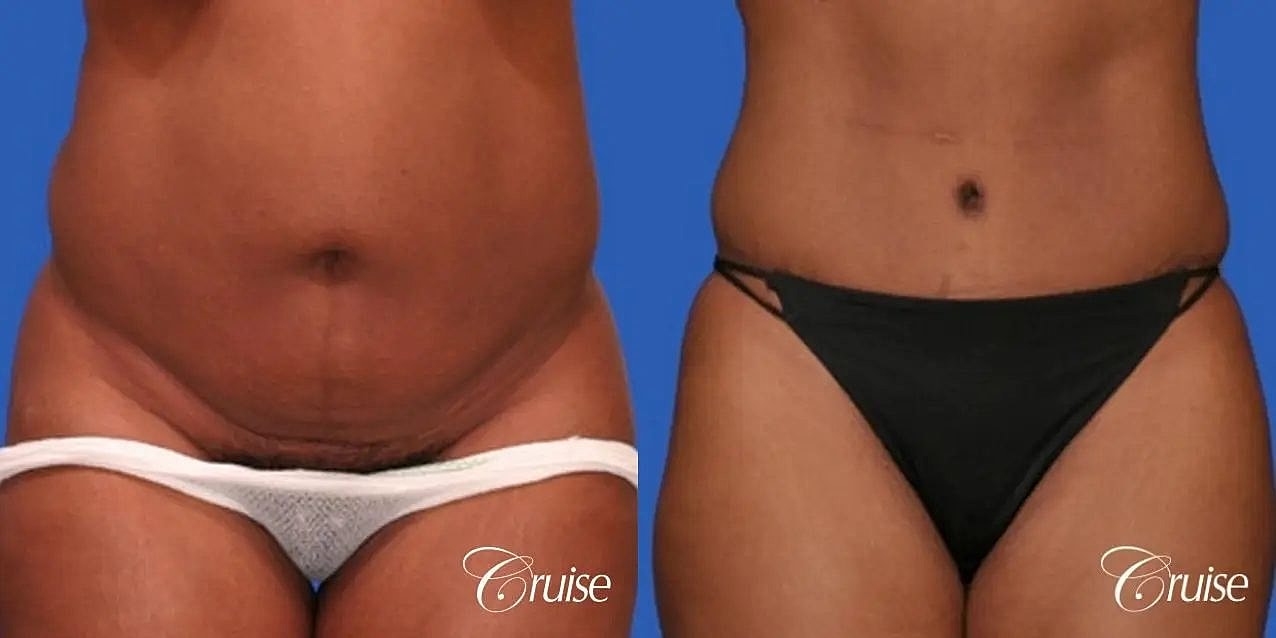
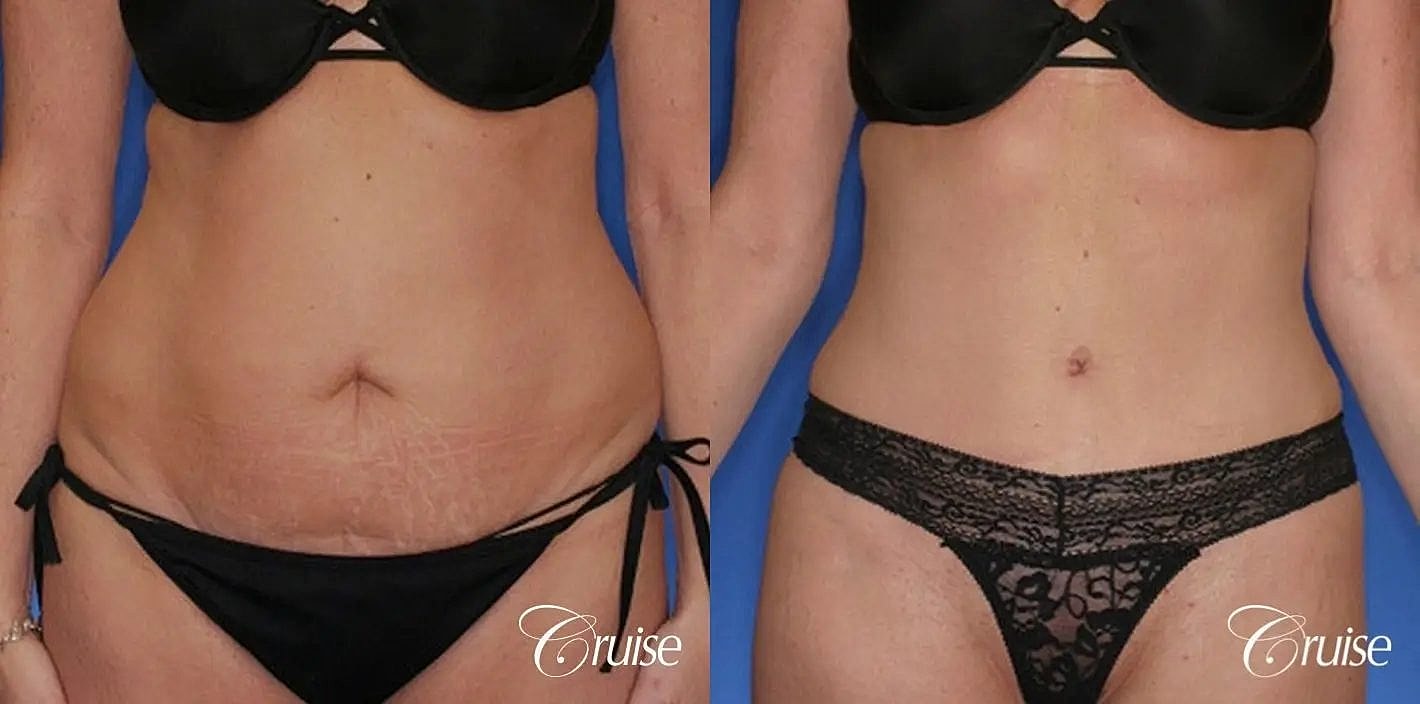
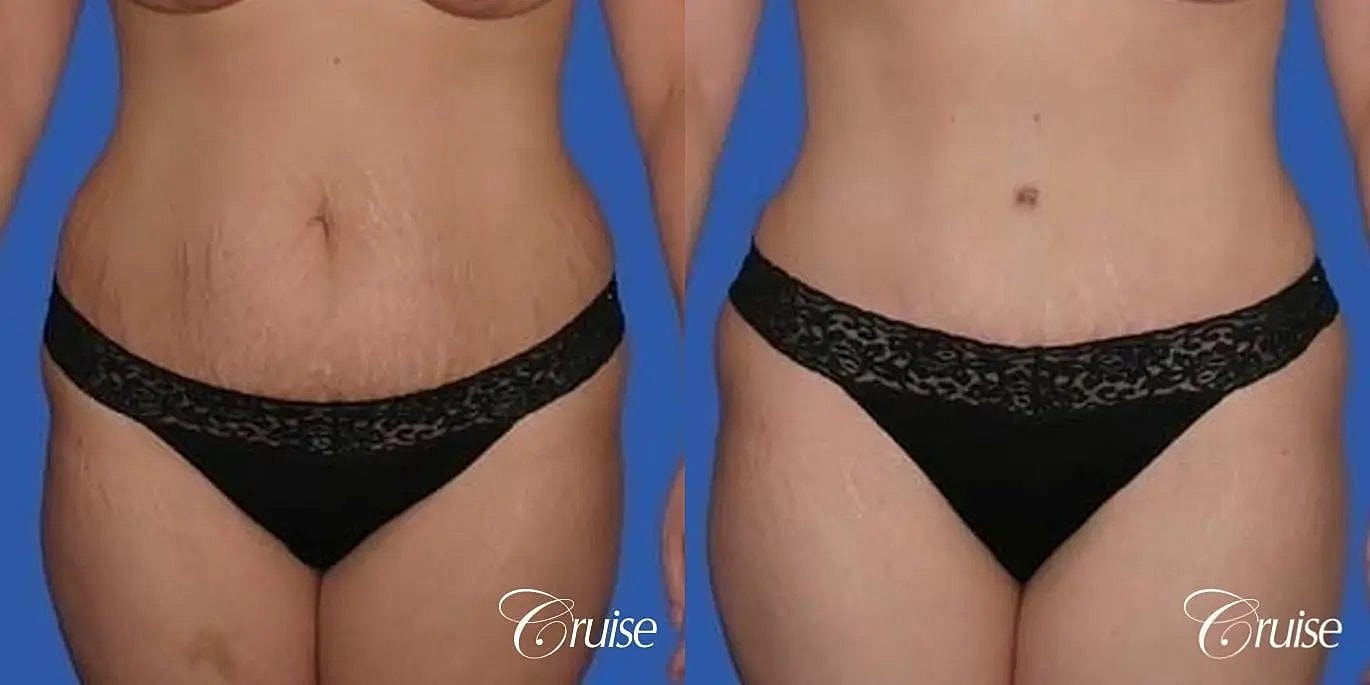
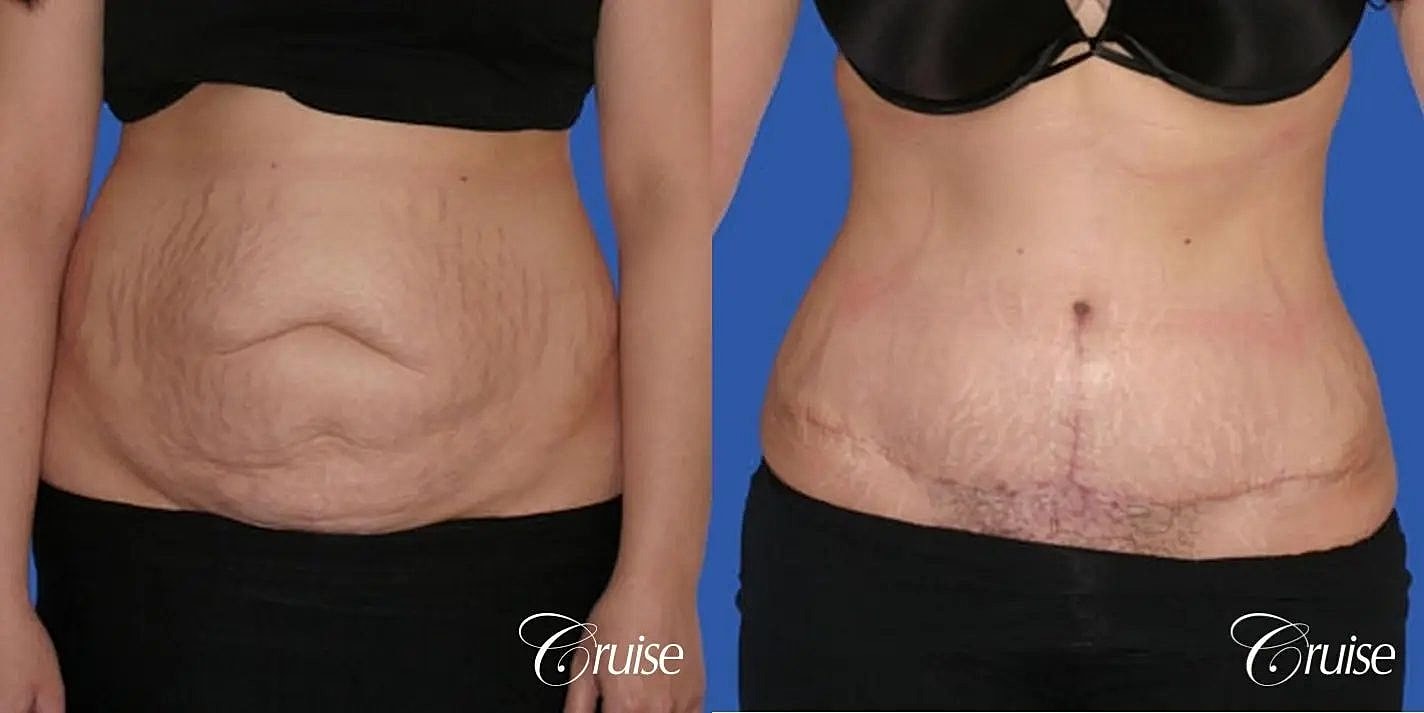
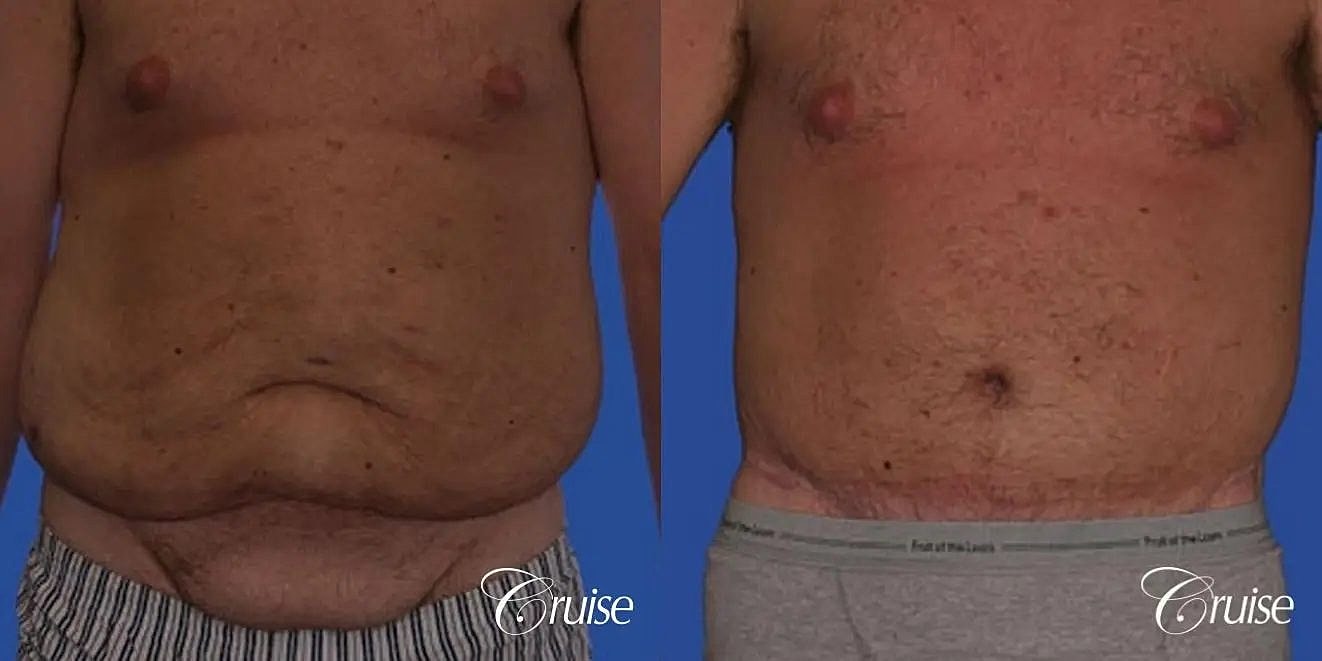
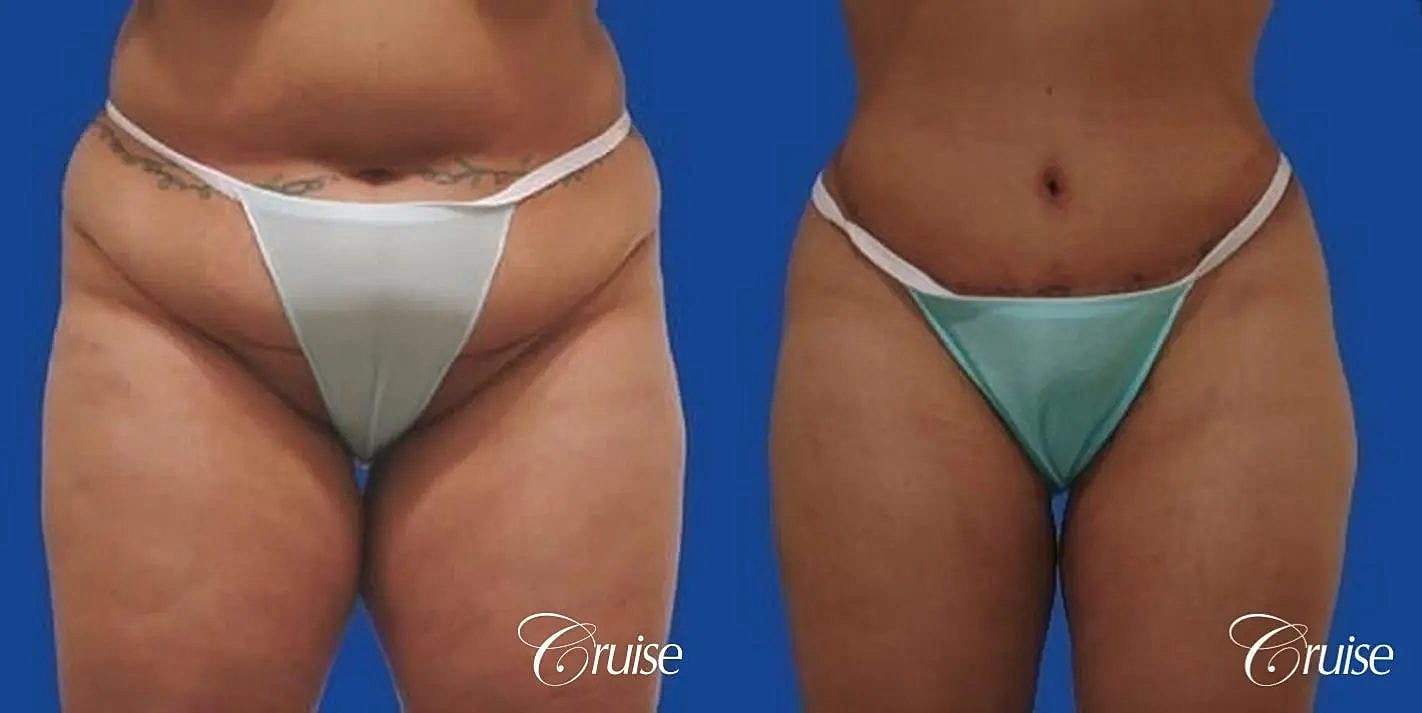
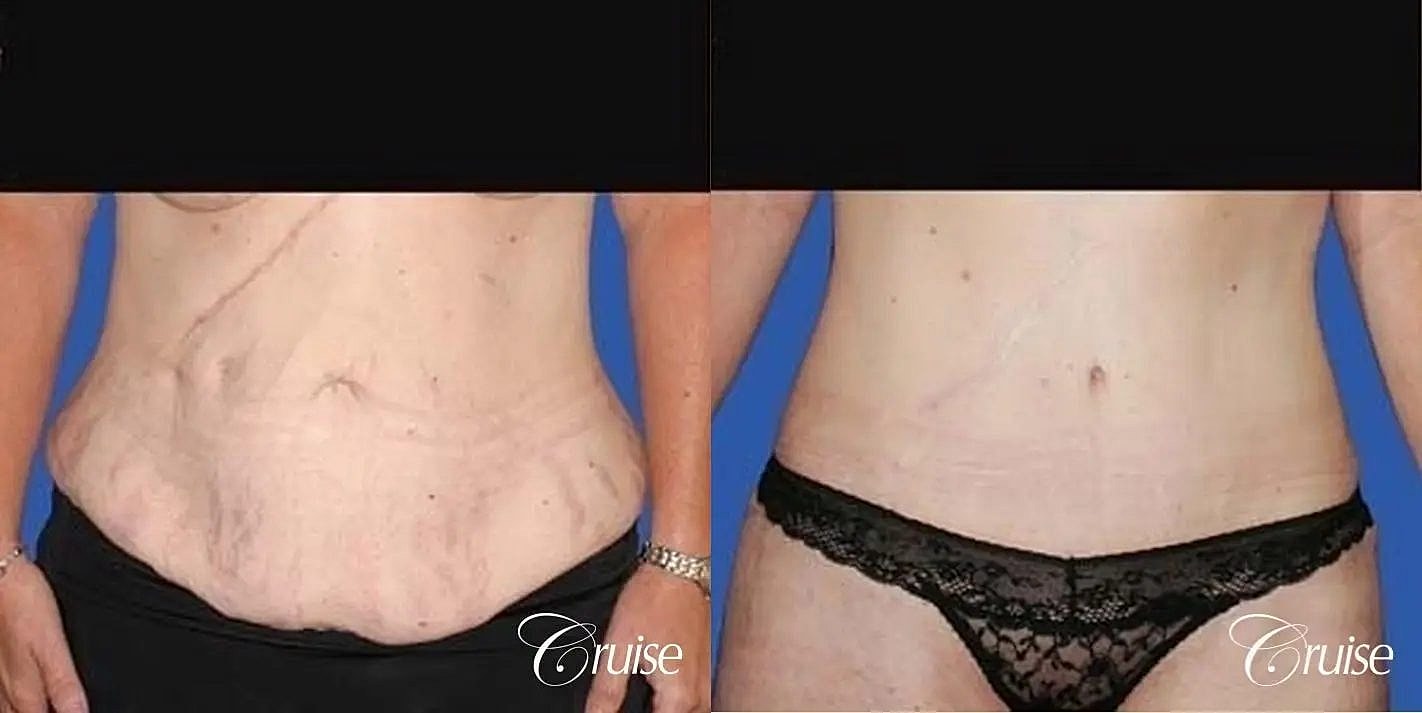
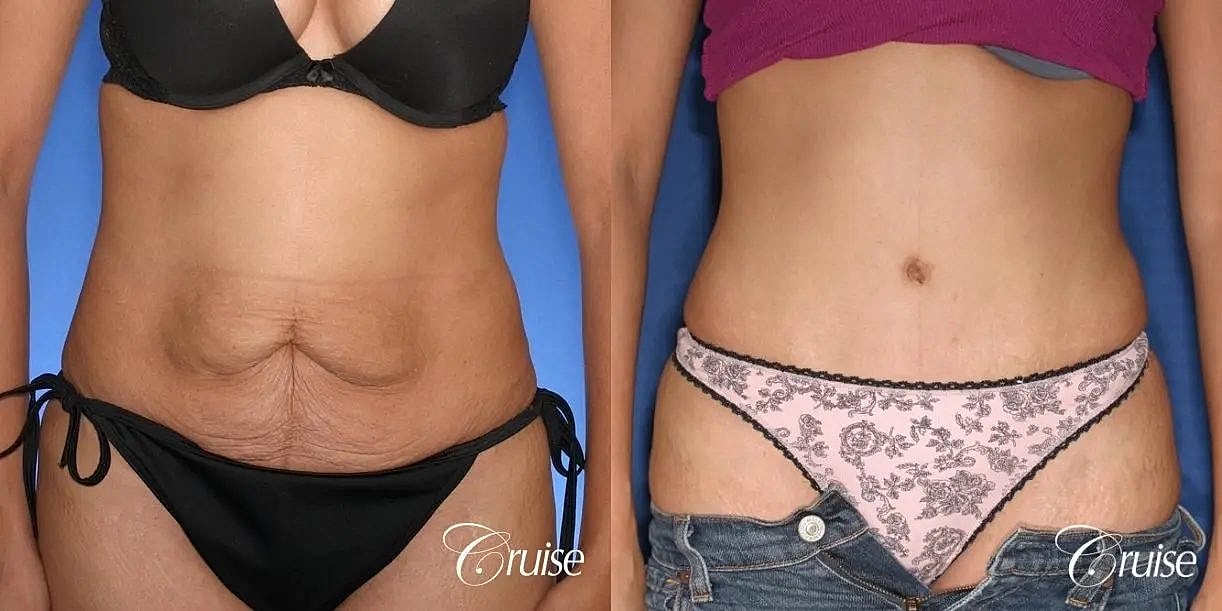
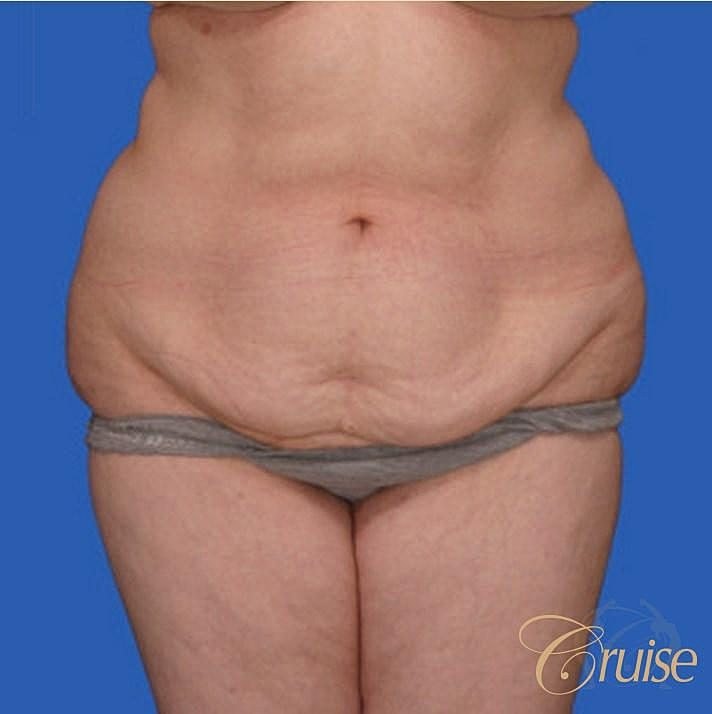
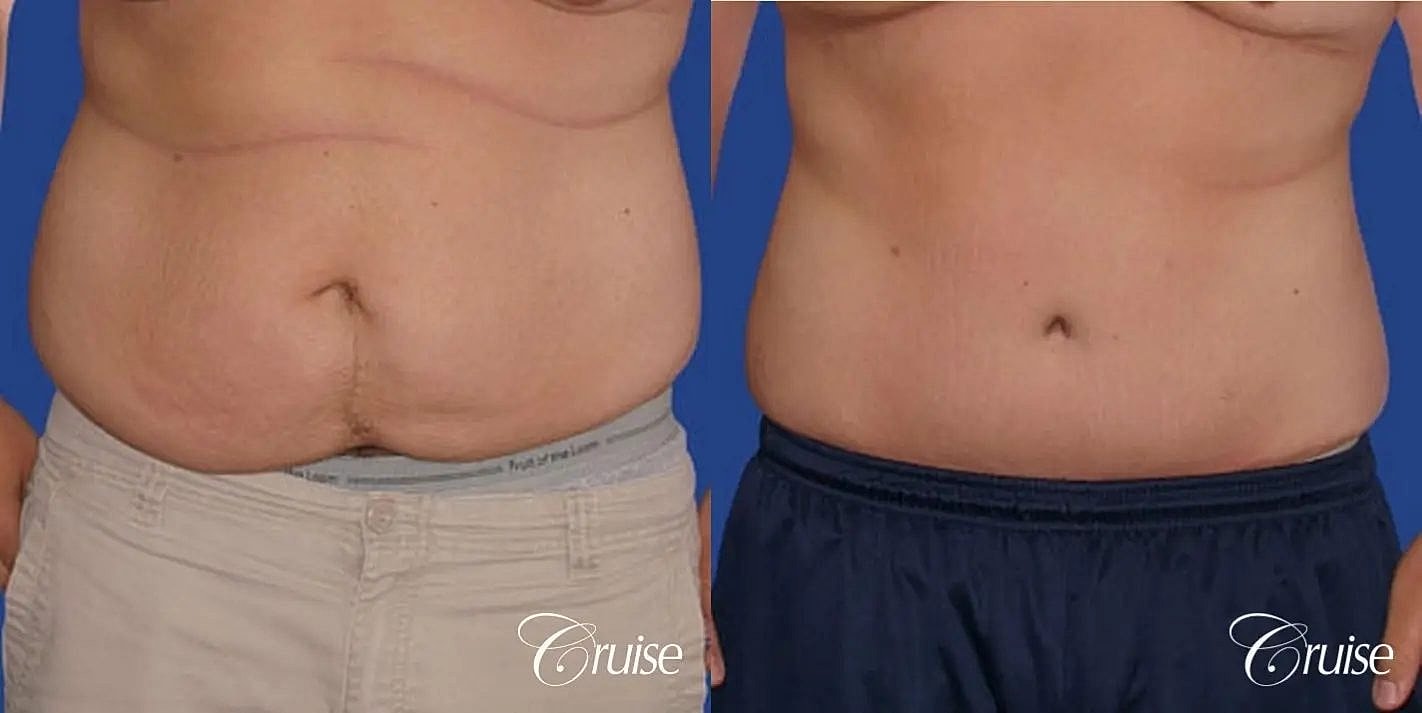
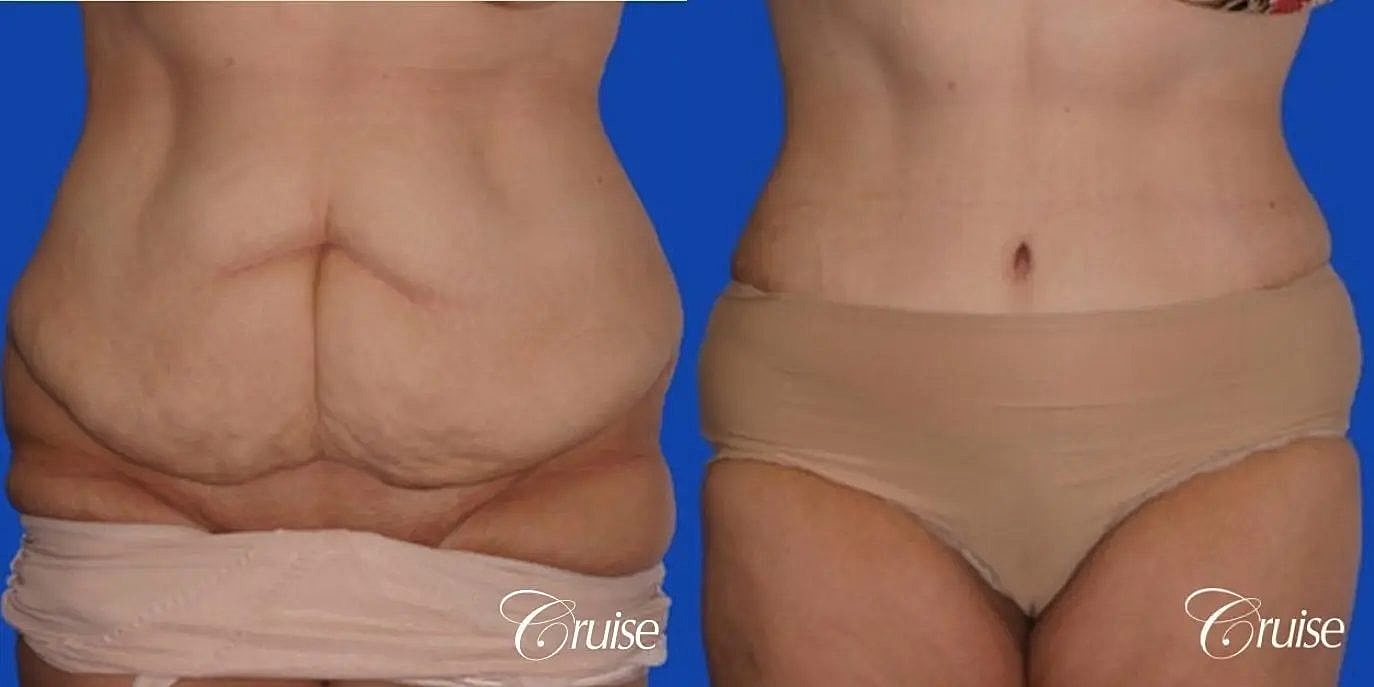
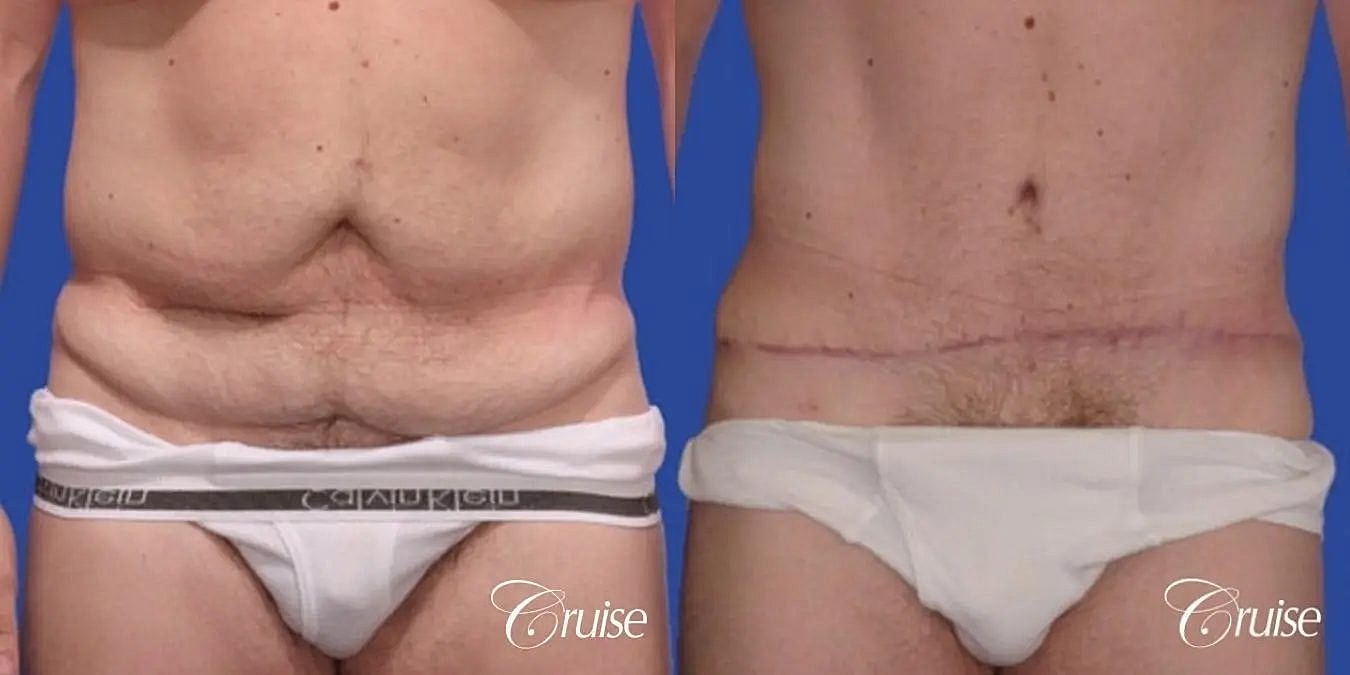
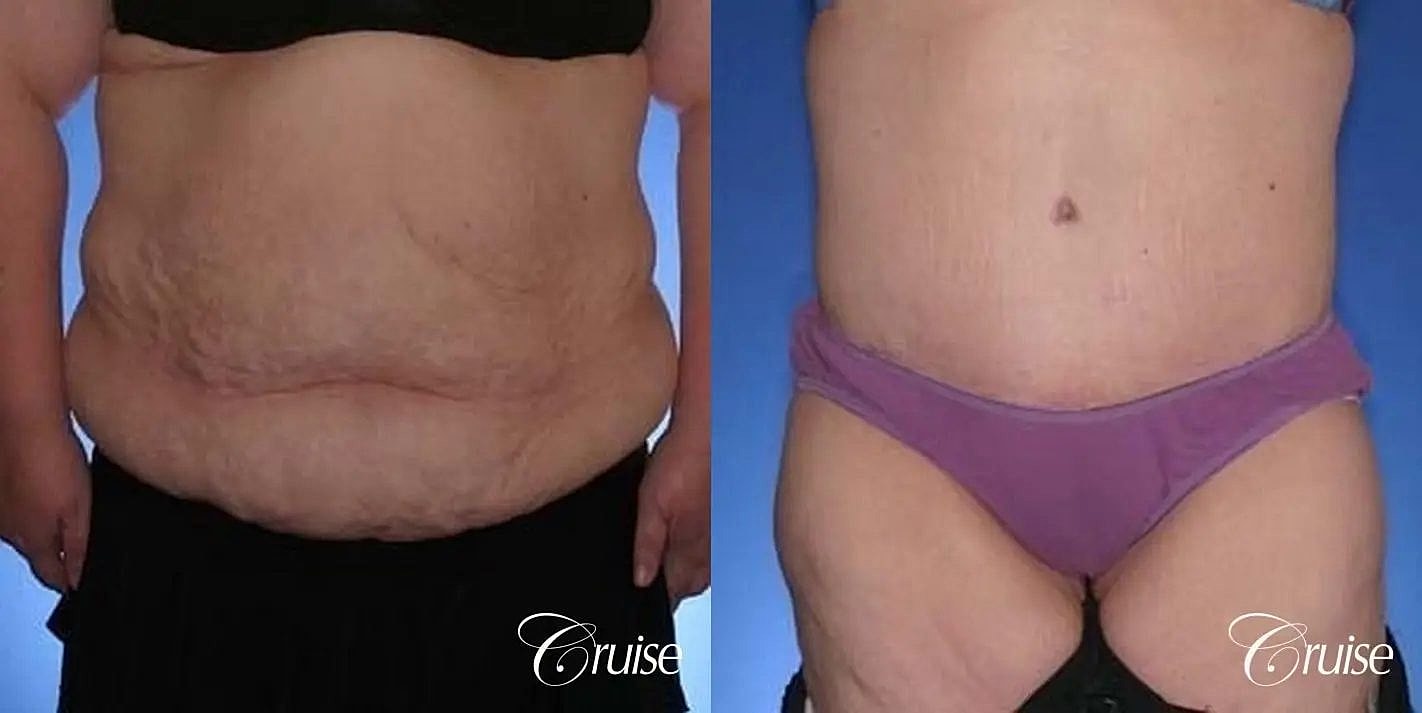
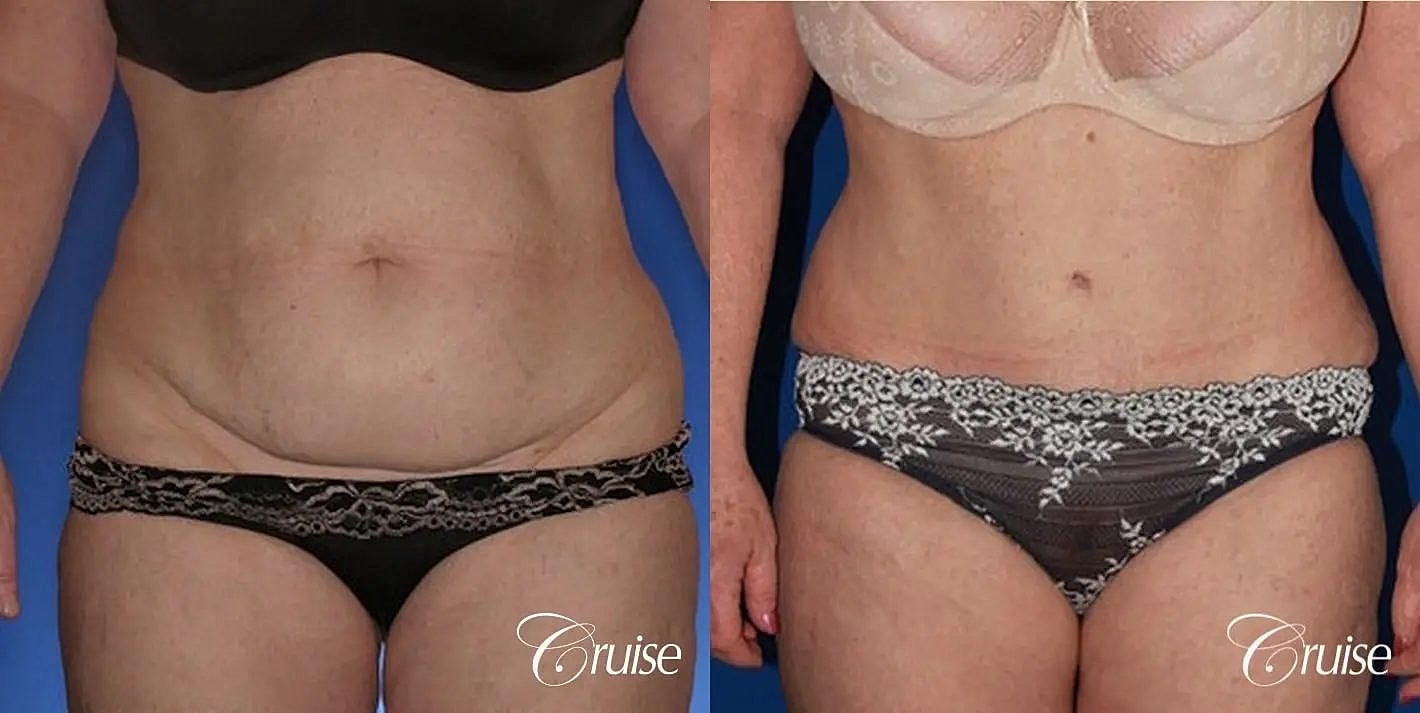
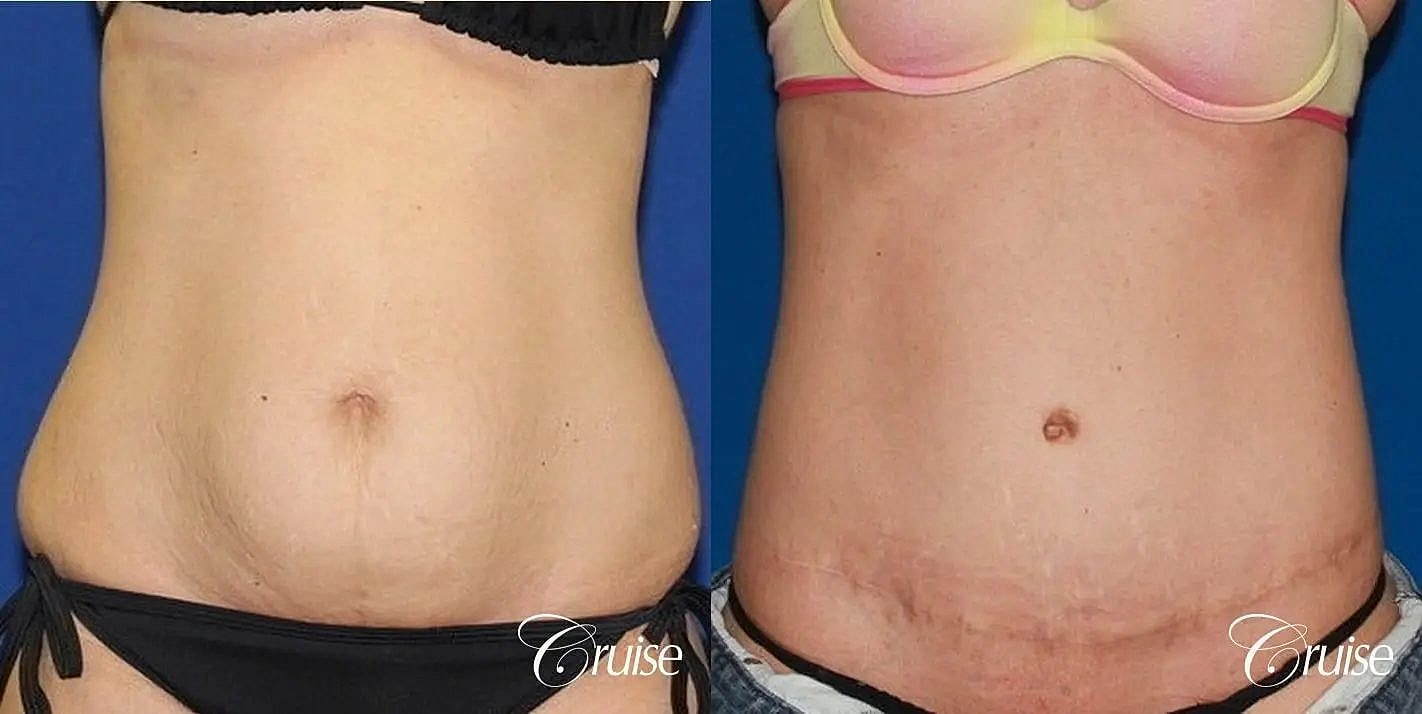
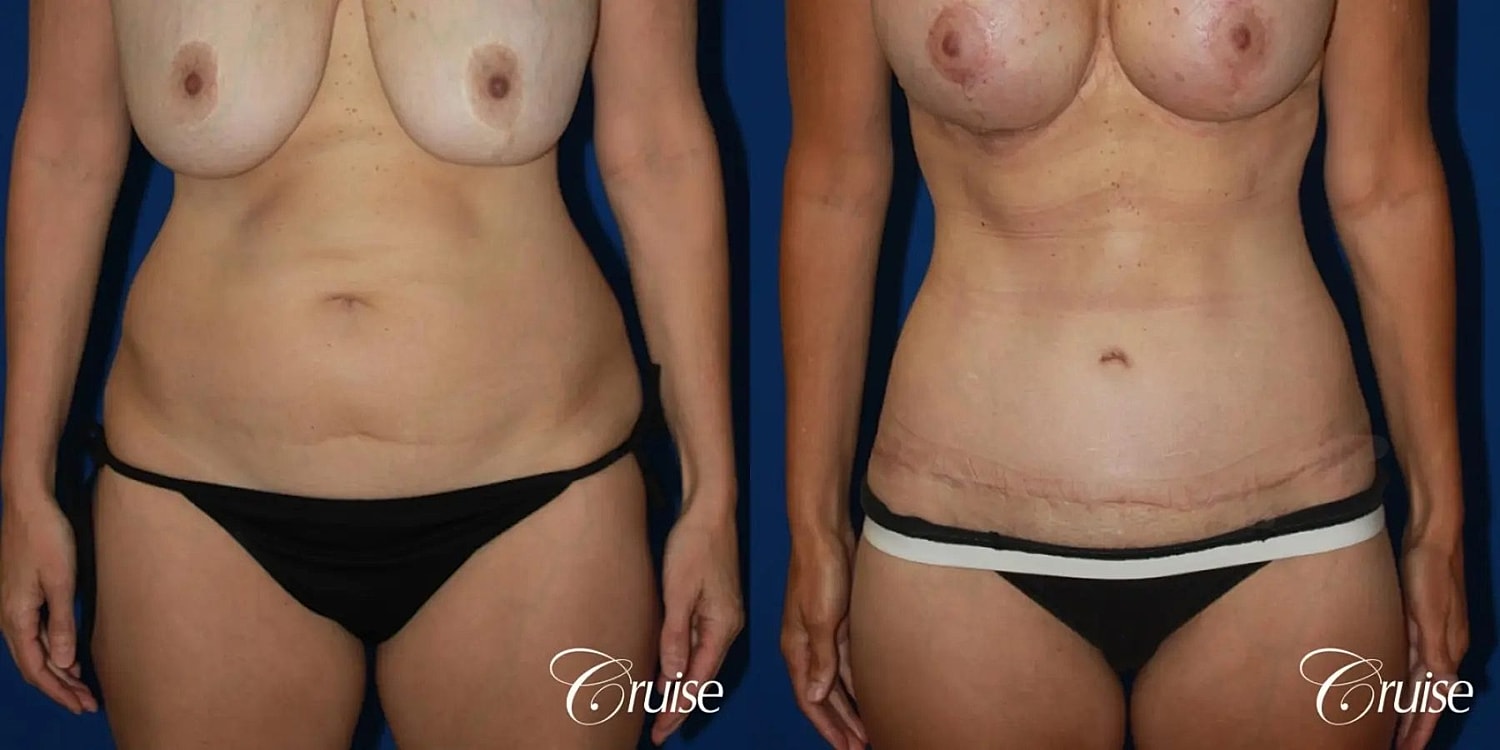
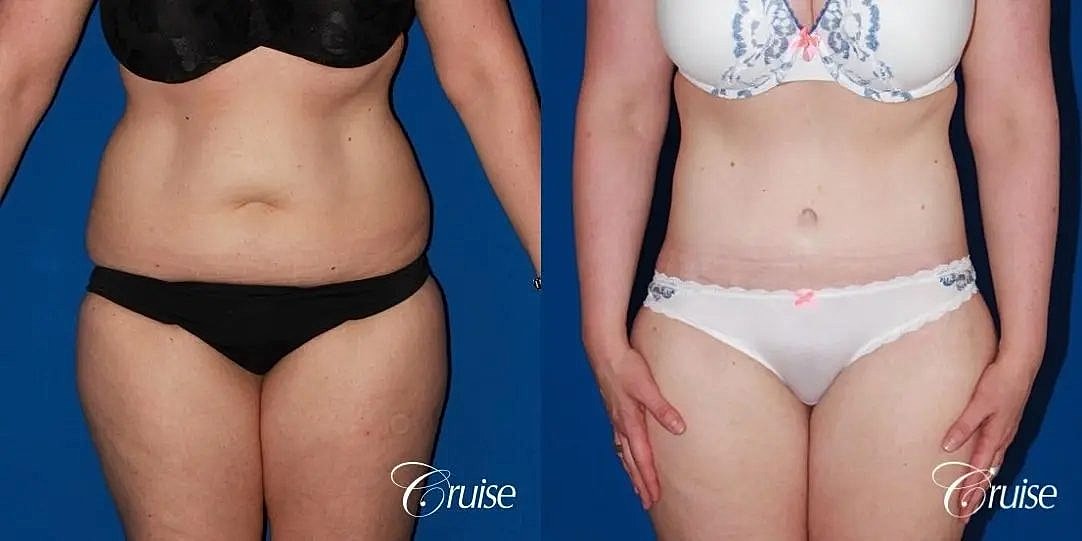
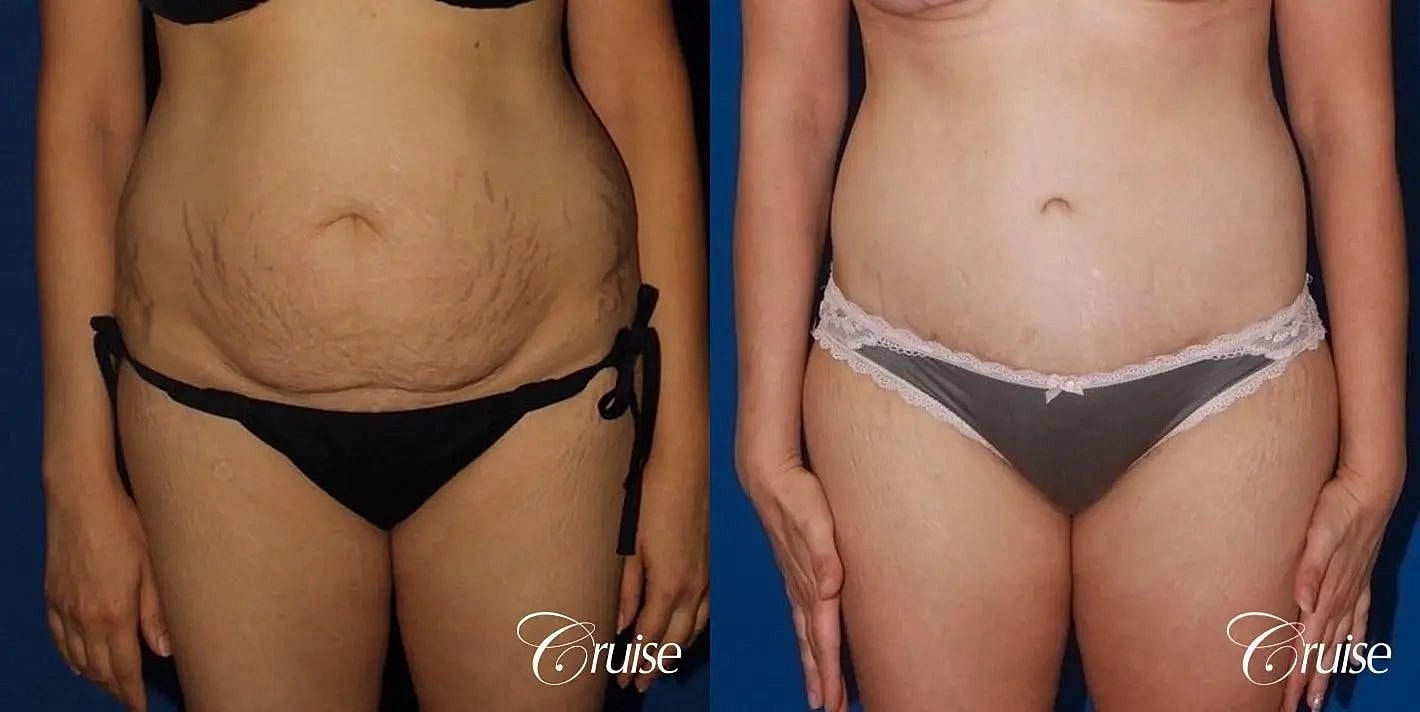
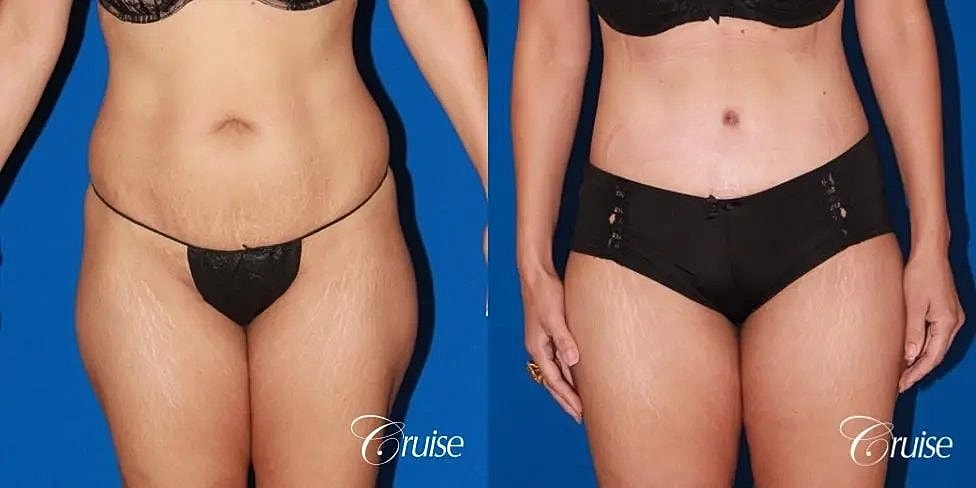
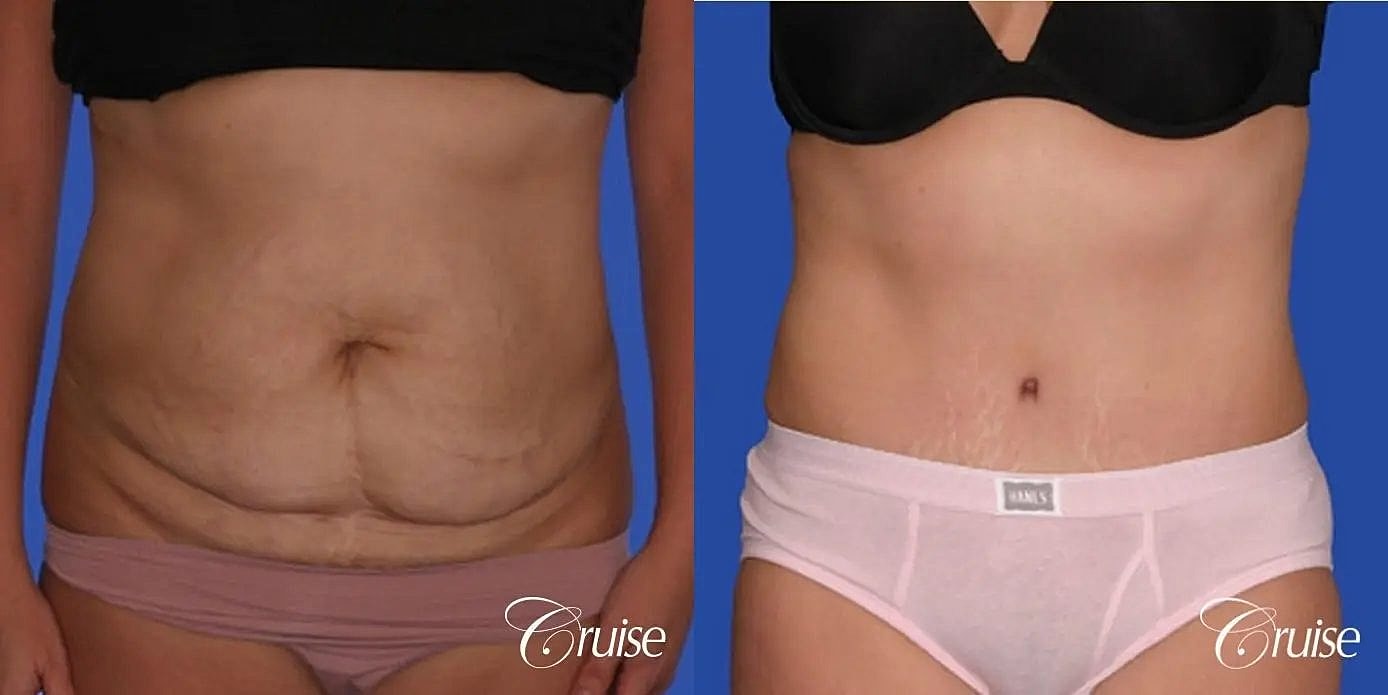
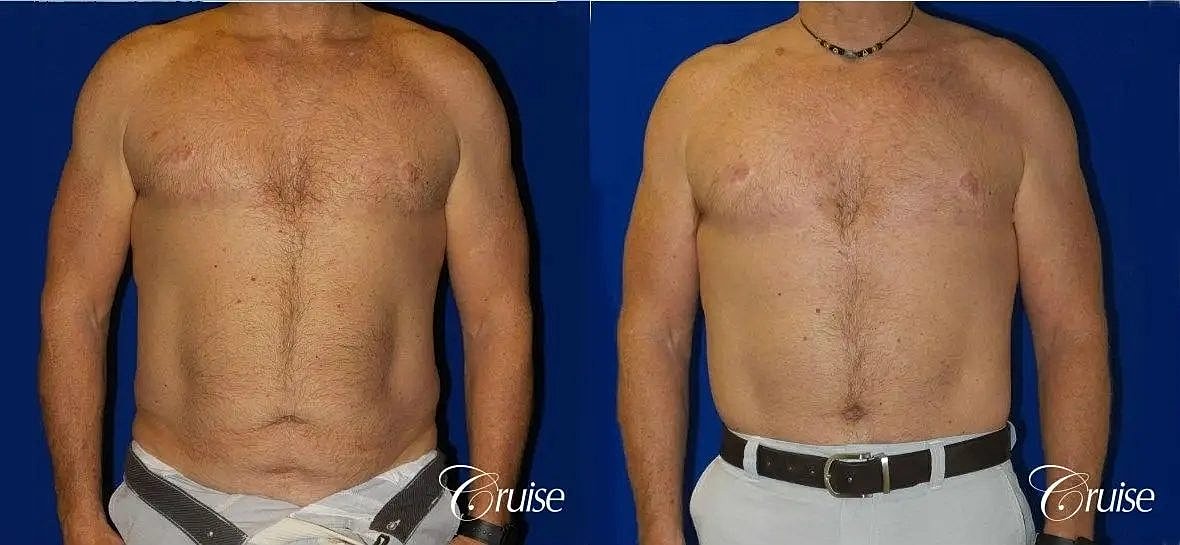
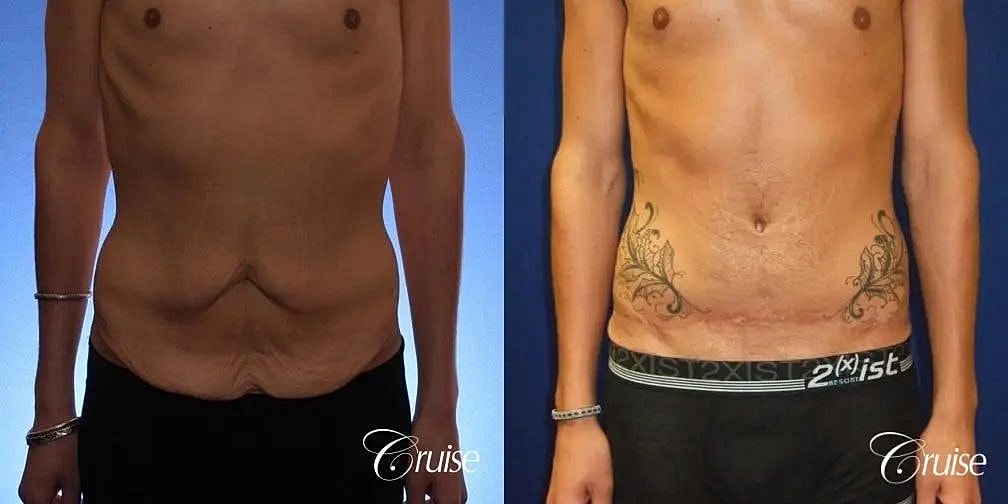
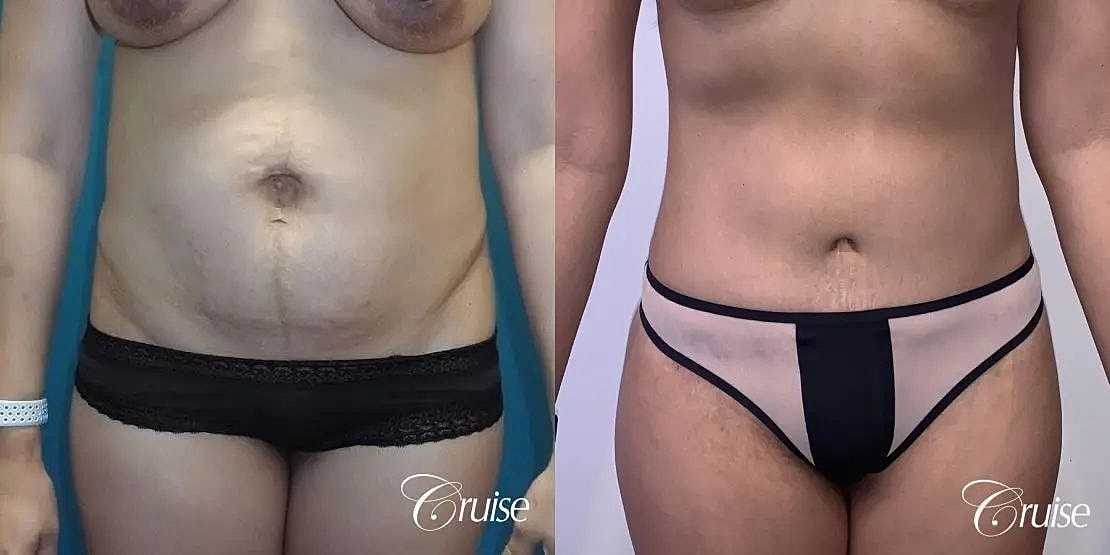
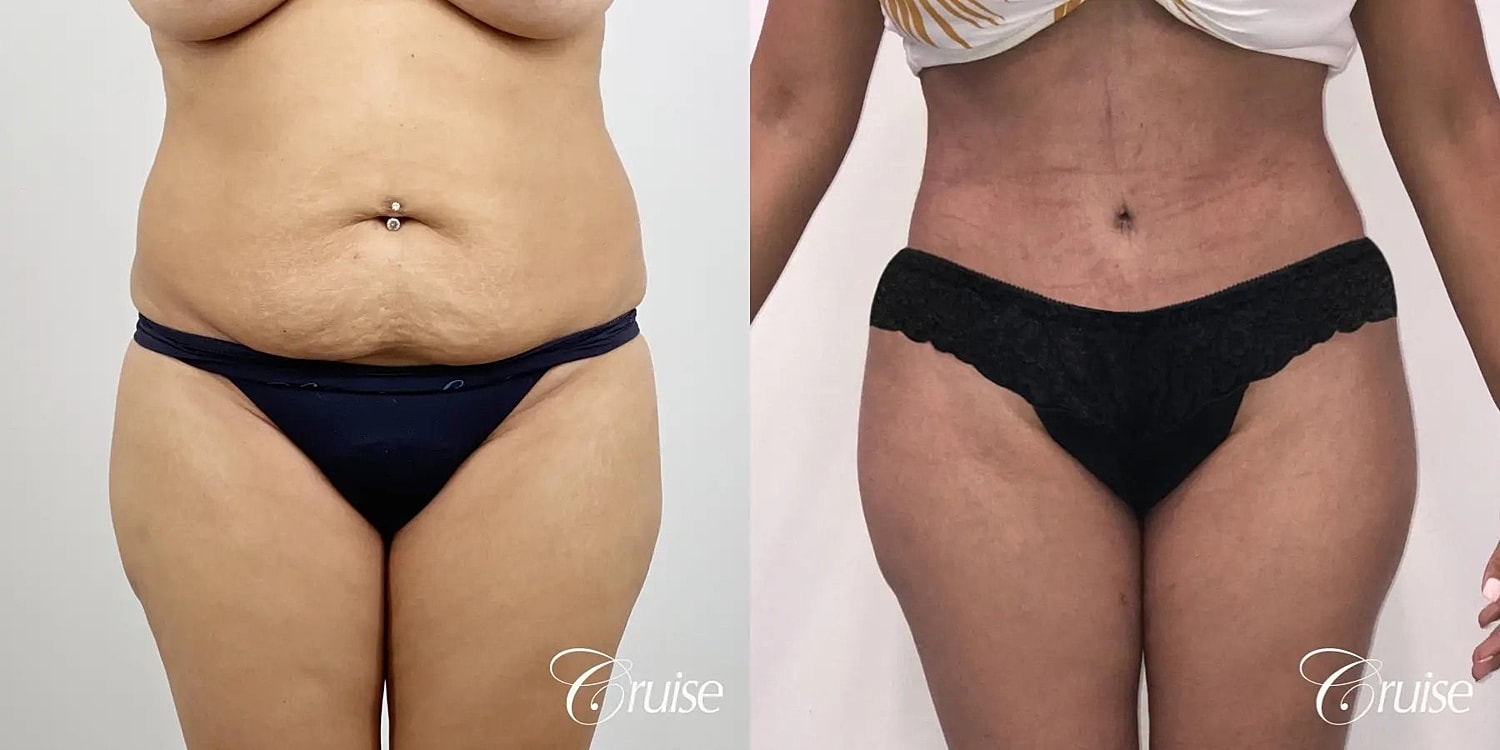
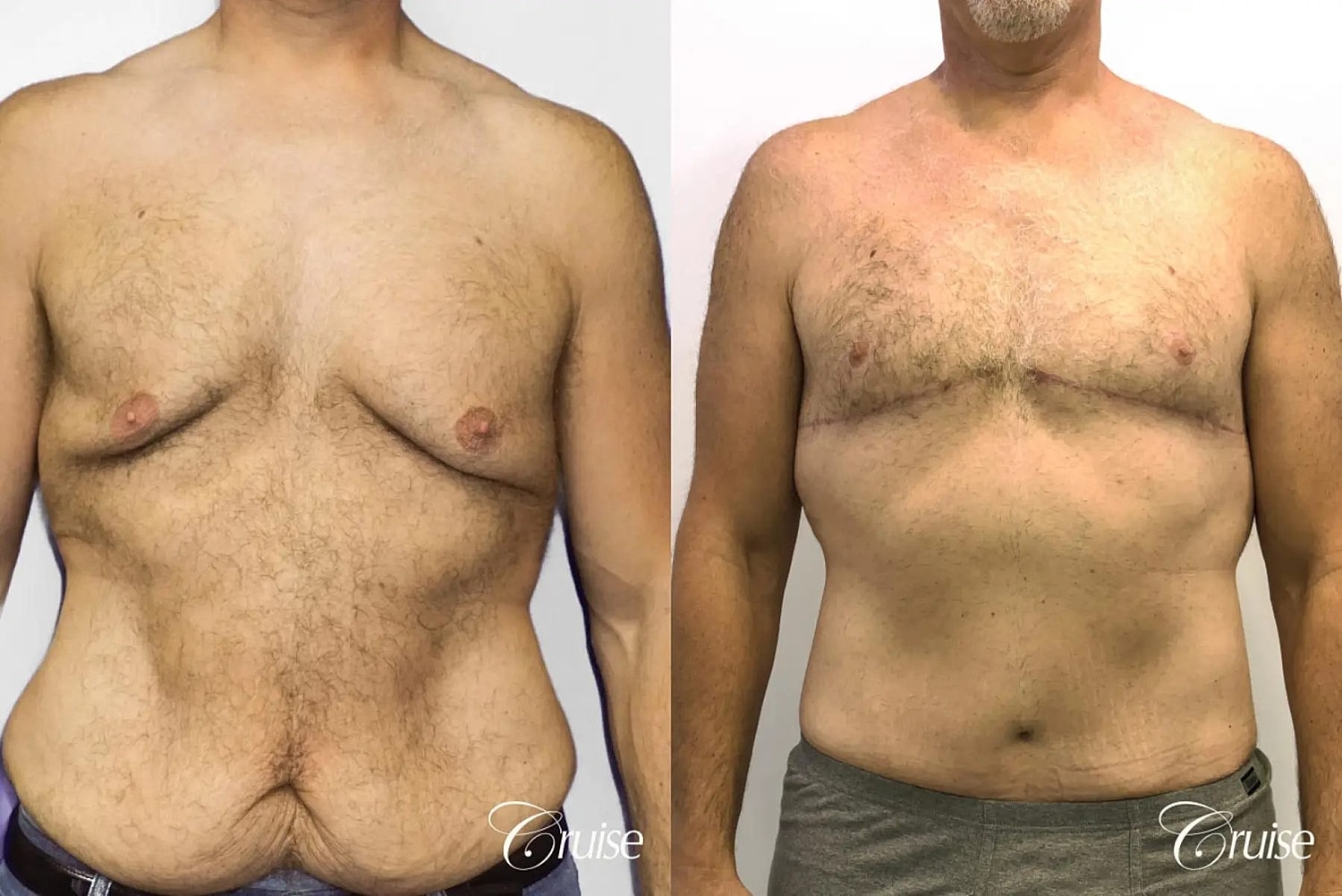
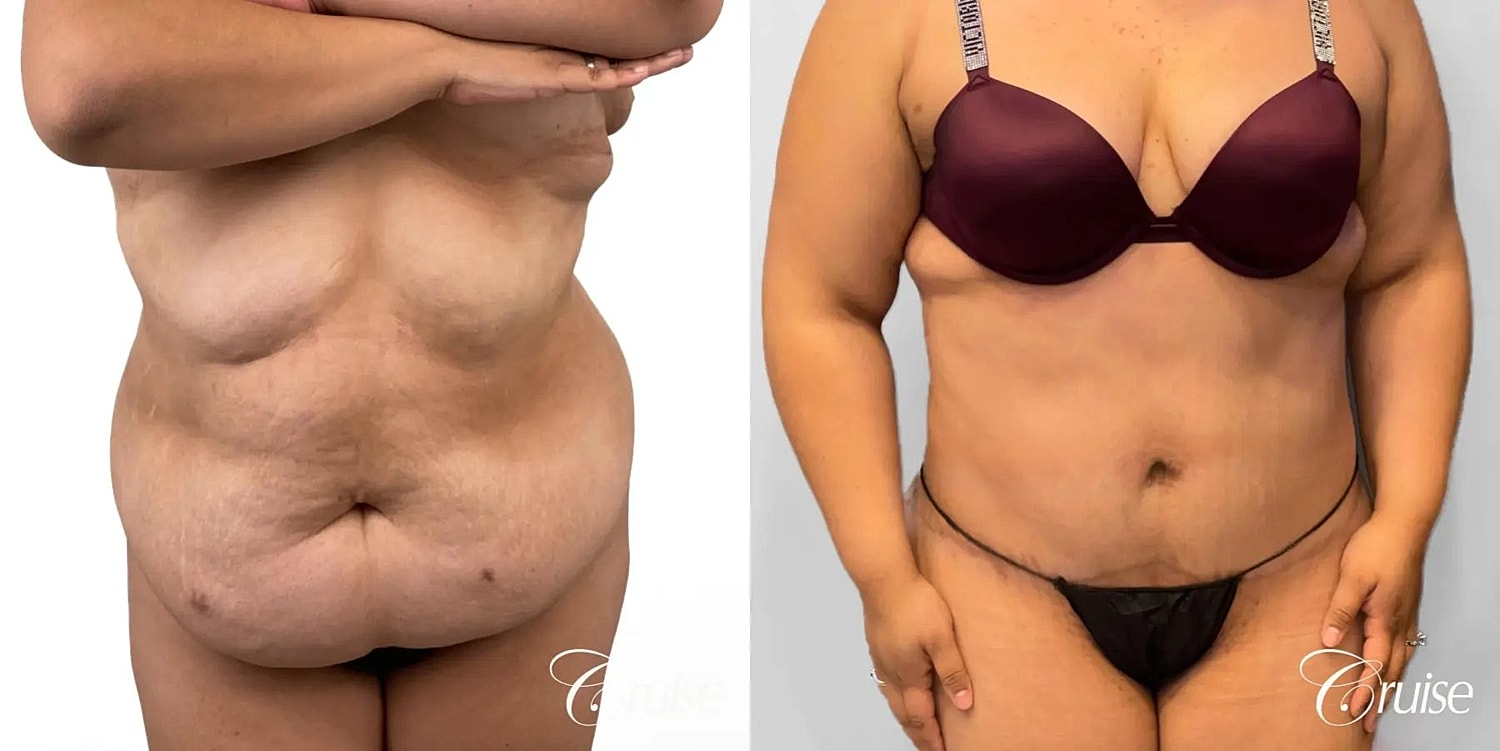
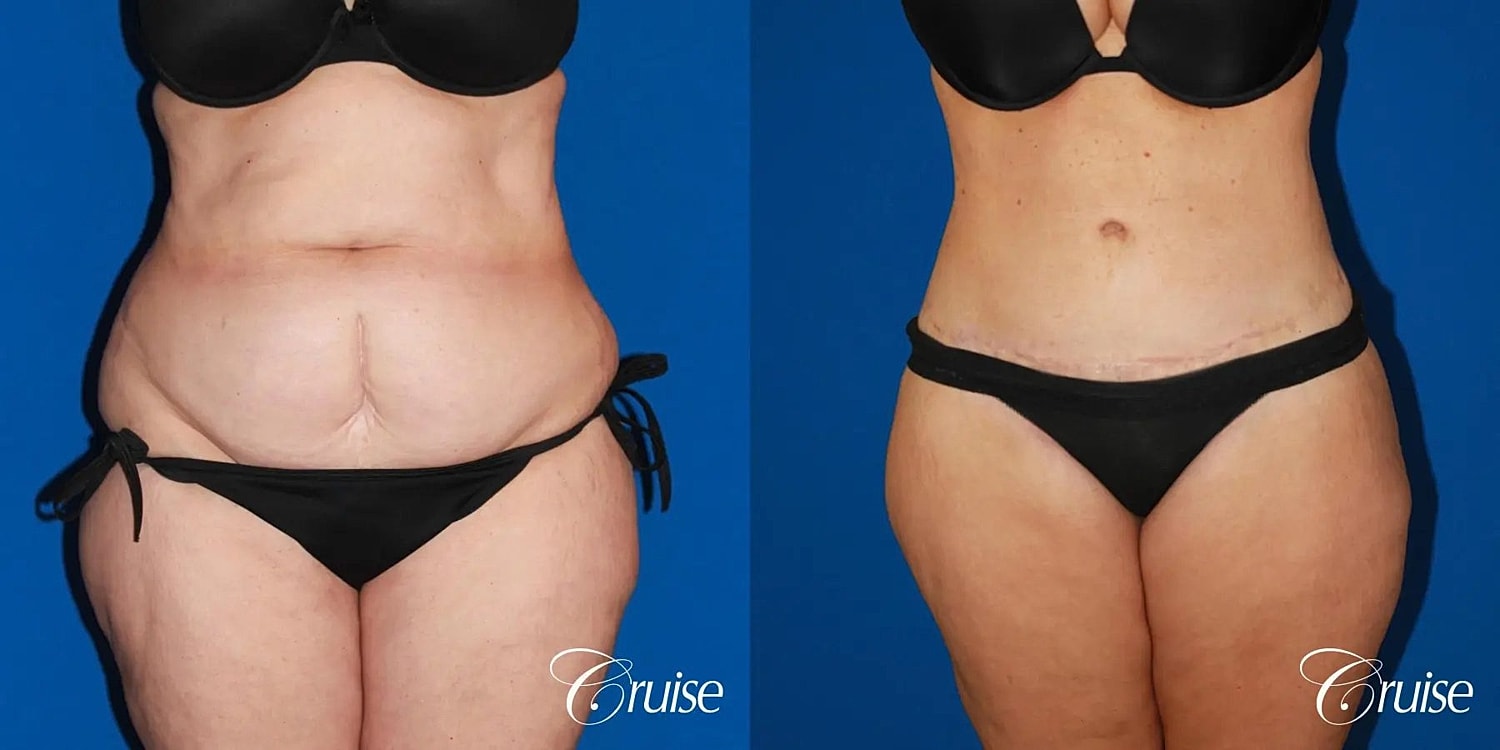
Reviewing Dr. Cruise’s tummy tuck before-and-after gallery can help you compare scars, belly button position, and abdominal contours across different body types. During consultation, he can identify examples with anatomy closer to your own.

Mini tummy tuck cost varies according to the amount of skin excision, the need for lower muscle repair, added liposuction, anesthesia, facility fees, and the complexity created by previous abdominal surgery. The practice provides an individualized quote after Dr. Cruise examines the abdomen and confirms the appropriate technique.
Current pricing information can be requested through our procedure pricing page. Qualified patients may also review available plastic surgery financing options.
A successful mini tummy tuck depends on knowing when a limited procedure will be enough.
Dr. Cruise examines the upper and lower abdomen separately, evaluates muscle laxity, and plans the incision around the amount of correction required. He will recommend a full tummy tuck when a shorter operation would leave untreated skin or muscle separation.
Dr. Cruise is a board-certified plastic surgeon with more than 20 years of plastic surgery and cosmetic surgery experience. He has extensive experience with mini, standard, extended, and circumferential tummy tuck procedures and is known for low abdominal incision placement and natural-looking belly button techniques. He was also named a 2026 Castle Connolly Top Doctor for the second consecutive year. Read more about Dr. Joseph T. Cruise and his surgical philosophy.
Your consultation establishes how much correction your abdomen needs and which incision provides safe access. Meet with Dr. Cruise in Newport Beach to compare mini and full tummy tuck options, discuss the role of liposuction, and receive a plan based on your skin, muscle support, and desired contour.
Contact Cruise Plastic Surgery to schedule your consultation.
It can tighten limited separation in the lower abdominal muscles. Diastasis that extends above the belly button usually requires the broader access provided by a full tummy tuck. Dr. Cruise evaluates the full abdominal wall before recommending muscle repair.
The procedures treat different tissues. Liposuction removes excess fat and works best when the skin can contract around the new contour. A mini tummy tuck removes loose lower-abdominal skin and can tighten muscle. Some patients benefit from combining both.
The belly button generally remains attached without a separate incision around it. Tightening the lower abdominal skin can shift it slightly downward, so its starting position is considered during surgical planning.
Stretch marks located on the lower skin that is excised may be removed. Marks outside that area will remain, although those immediately above the incision may sit lower after the skin is tightened.
Yes, appropriately selected patients may combine abdominal contouring with breast augmentation, a breast lift, or breast reduction as part of a mommy makeover. Combining procedures affects operating time and recovery, so Dr. Cruise will determine what can be performed safely.
Potential risks include bleeding, infection, fluid accumulation, blood clots, delayed wound healing at the incision site, numbness, asymmetry, contour irregularities, unfavorable scarring, and the possibility of revision surgery. Dr. Cruise reviews individual risk factors and prevention measures before consent.