Call Us
  Schedule Consultation

A More Precise Approach to Facial Rejuvenation
The true signs of facial aging don’t happen all at once, but there comes a point when your reflection simply no longer aligns with how you see yourself. The goal of facial rejuvenation surgery is never to change your fundamental identity, but to restore the clarity, energy, and presence you still feel inside. At its core, modern facelift surgery (also known as a rhytidectomy) is a highly personalized cosmetic procedure designed to gracefully rebuild the natural architecture of your face to achieve exactly that.
While an older, traditional facelift might attempt to improve appearance by simply pulling sagging skin tight, the quality and longevity of a true, natural result depend entirely on how the deeper facial tissue is handled. Dr. Joseph T. Cruise, a board-certified plastic surgeon with over 20 years of experience and more than 5,000 facial plastic surgery procedures performed, focuses exclusively on this foundational approach. By gently elevating the underlying connective tissue and muscles back to their original positions, often utilizing advanced techniques like a deep plane facelift, he creates a secure, lasting base.
This precise repositioning allows the facial skin to drape smoothly over your renewed, youthful contours without any artificial tension. Whether performed as a standalone treatment or seamlessly paired with a neck lift procedure, the result is a beautifully refreshed appearance that brings your outward reflection back into perfect alignment with your internal vitality.



When Are You Ready for a Facelift?
By the time most of our Orange County and Newport Beach facelift patients begin seriously considering a facelift, they have already explored less invasive options.
Neuromodulators soften facial wrinkles. Dermal fillers restore volume. Minor facial procedures address isolated concerns. But over time, many patients begin to notice that these treatments no longer create the same level of improvement, and in some cases, begin to work against the natural contours of the face.
This is a pattern I see consistently in my aesthetic plastic surgery practice.
The reason is structural. Facial aging is not simply a matter of skin or volume, it reflects a gradual descent of the deeper layers of the face, which cannot be meaningfully corrected with surface-level treatments alone. Over more than two decades of focused facial surgery and more than 5,000 facial rejuvenation procedures, two consistent signs of aging tend to indicate when a facelift procedure becomes the appropriate next step.
There is no single age or moment that defines the right time. Instead, it is a recognition.
For some, it occurs in their early 40s as structural changes begin. For others, it happens later, when the accumulation of changes creates a more noticeable disconnect.
The decision is not based on age, it is based on alignment.
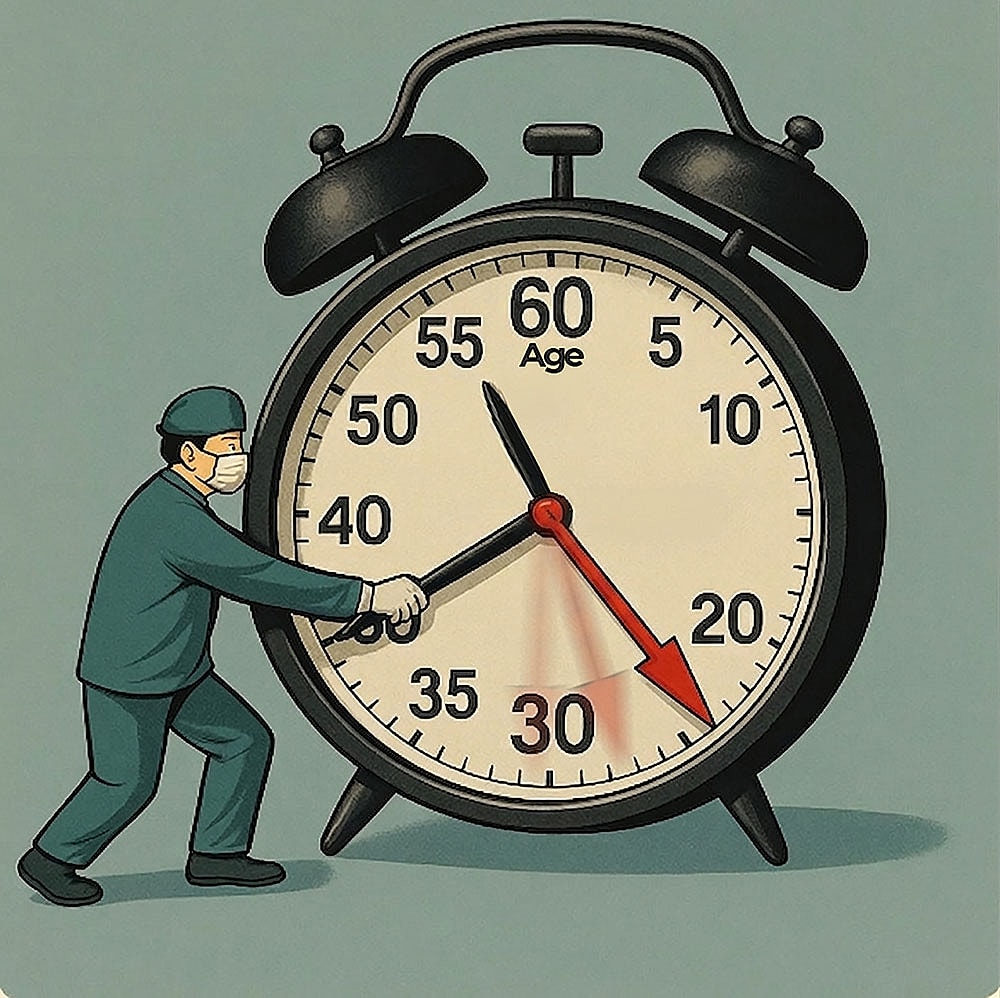
The decision becomes when to set the clock back.
When how you look begins to consistently feel out of sync with how you feel, it may be time to consider a more structural solution.
That recognition tends to show up in two very consistent ways.
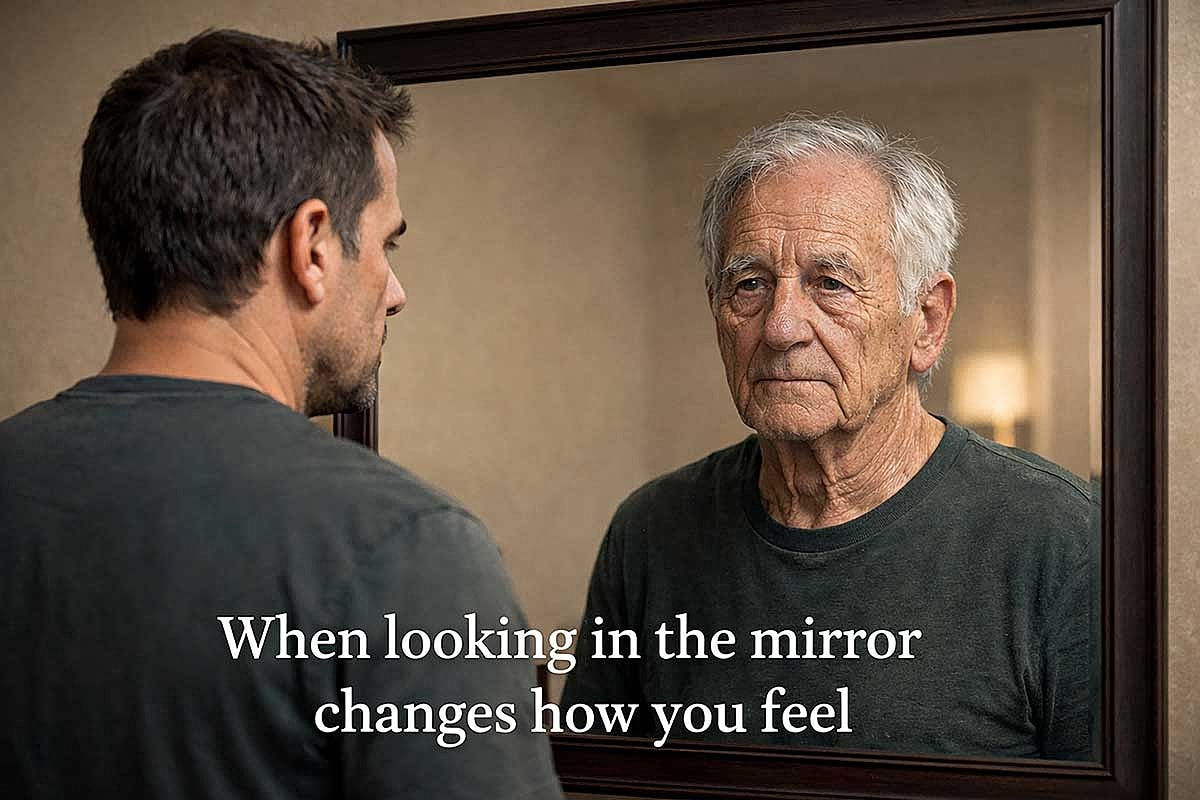
At first, it’s subtle.
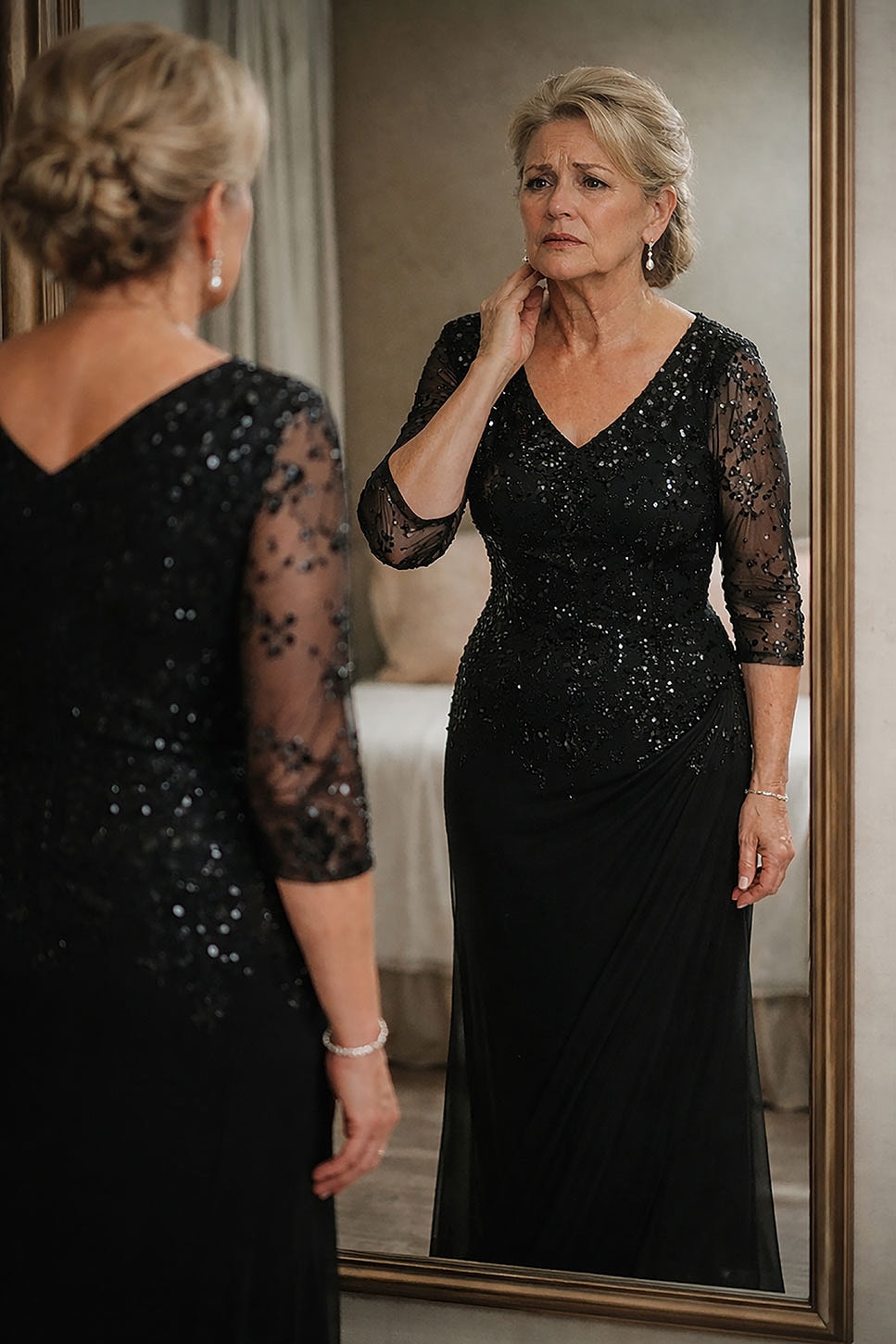
Patients often describe looking in the mirror a bit longer, or a bit more often, trying to understand what has changed. The difference is rarely dramatic. Instead, it is a quiet shift: the facial skin no longer reflects the same clarity, energy, or presence they still feel internally, often accompanied by the appearance of early sagging skin.
Over time, that awareness becomes more consistent, and importantly, they recognize that it is not improving.

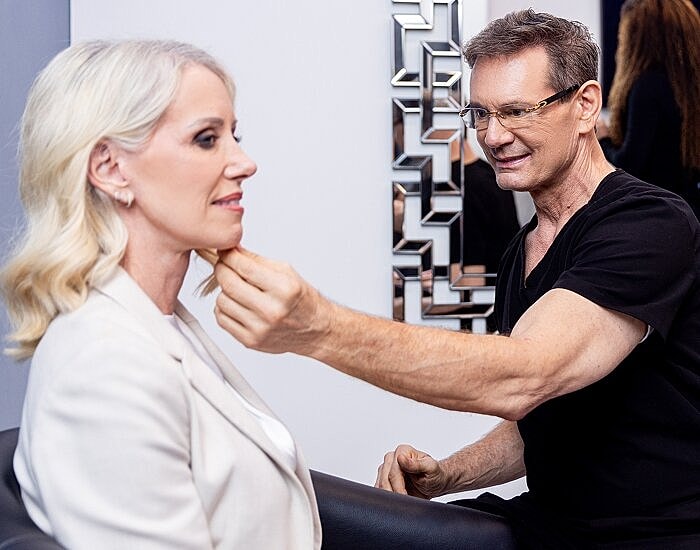
There is a simple, almost instinctive gesture many patients make, often before they ever step into a consultation.
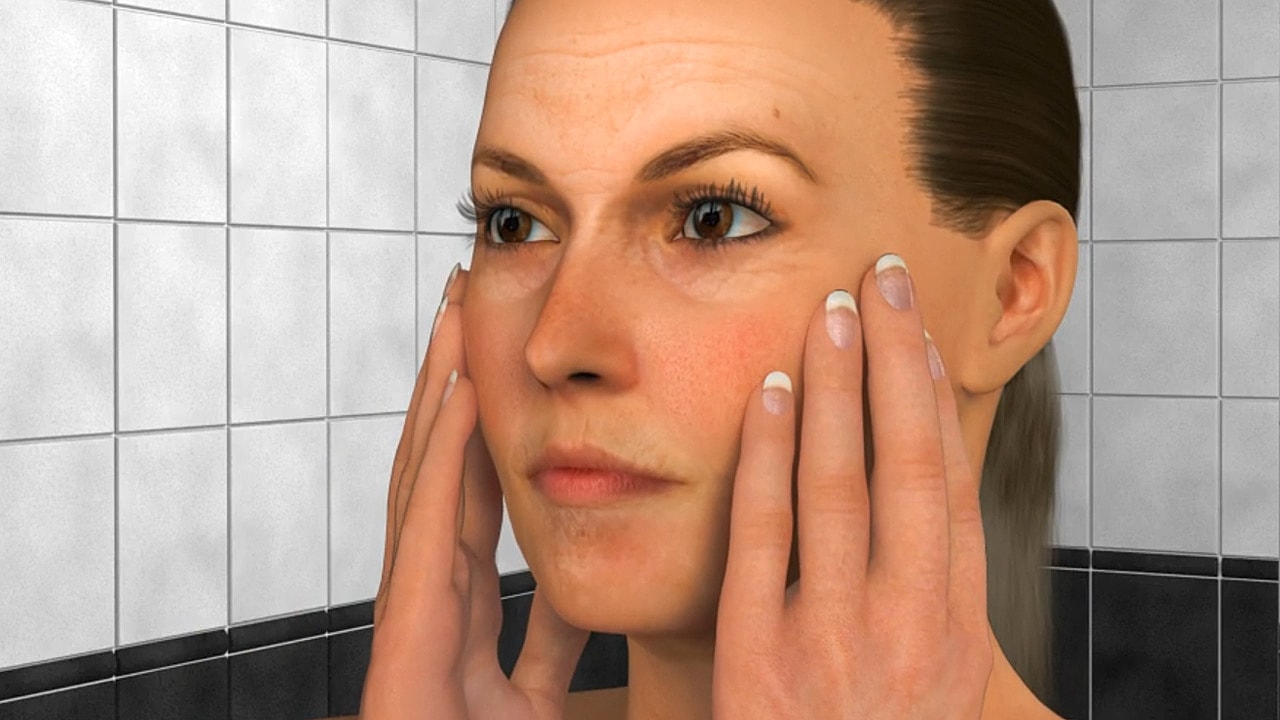
Gently lifting the loose skin along the jawline or cheek while looking in the mirror.
This “facelift finger test” is surprisingly informative. It provides a rough preview of how repositioning the underlying facial muscles can restore contour and definition. What is important to understand, however, is that this maneuver reflects only what happens at the surface.
With a multi-directional deep plane facelift, the correction occurs at a deeper level, within the superficial musculoaponeurotic system (SMAS), where the true structural changes of aging take place. By releasing and repositioning these deeper facial tissues along their natural vectors, the result is not simply a lifted appearance, but a more complete and natural restoration of facial balance, avoiding the "pulled" look sometimes associated with a traditional Orange County facelift.
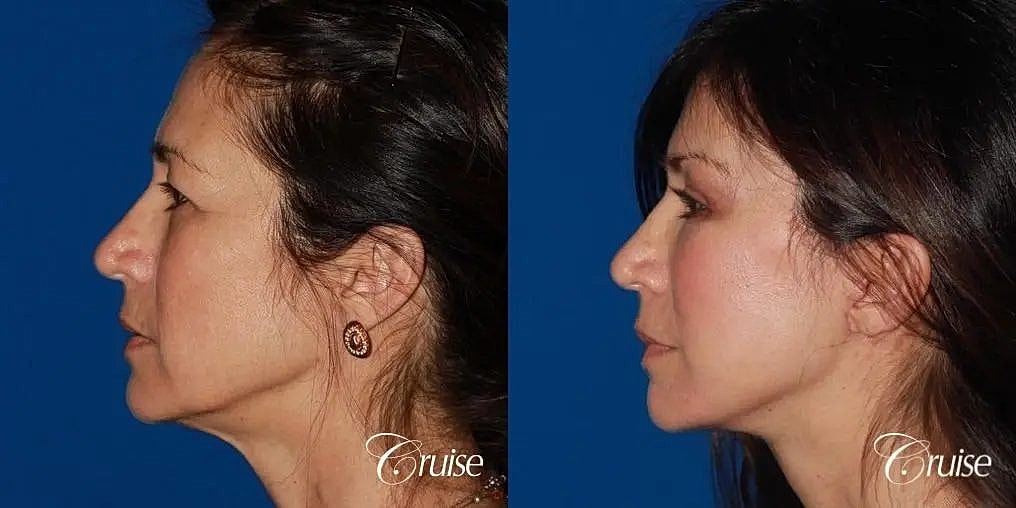
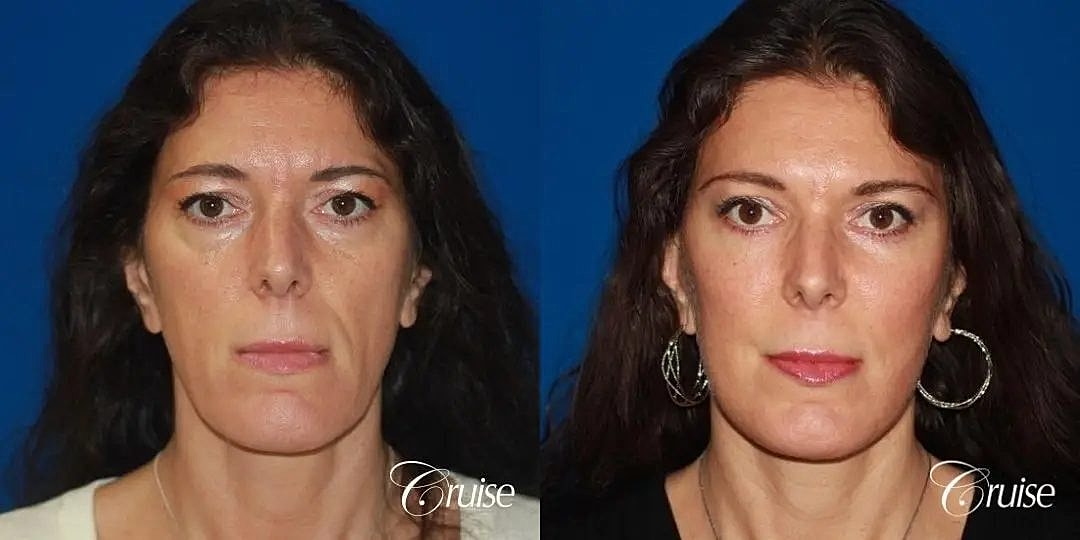
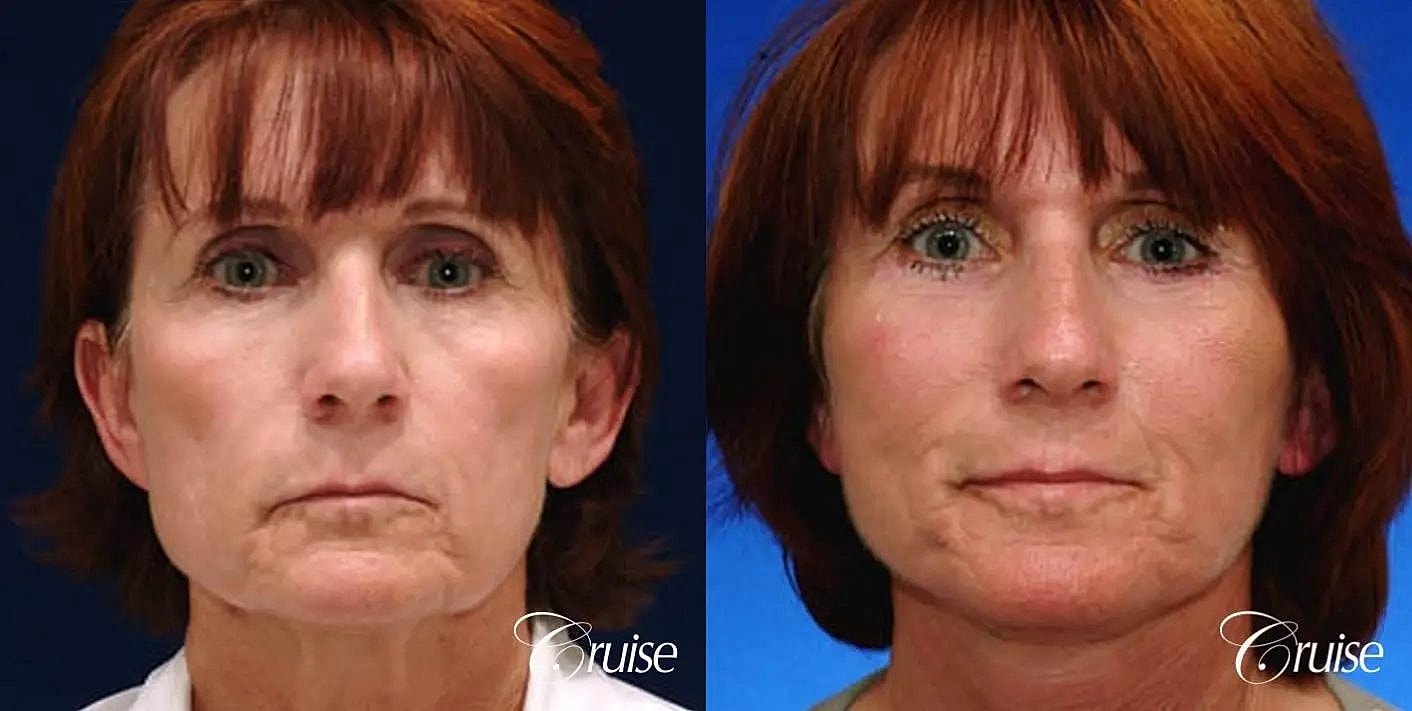
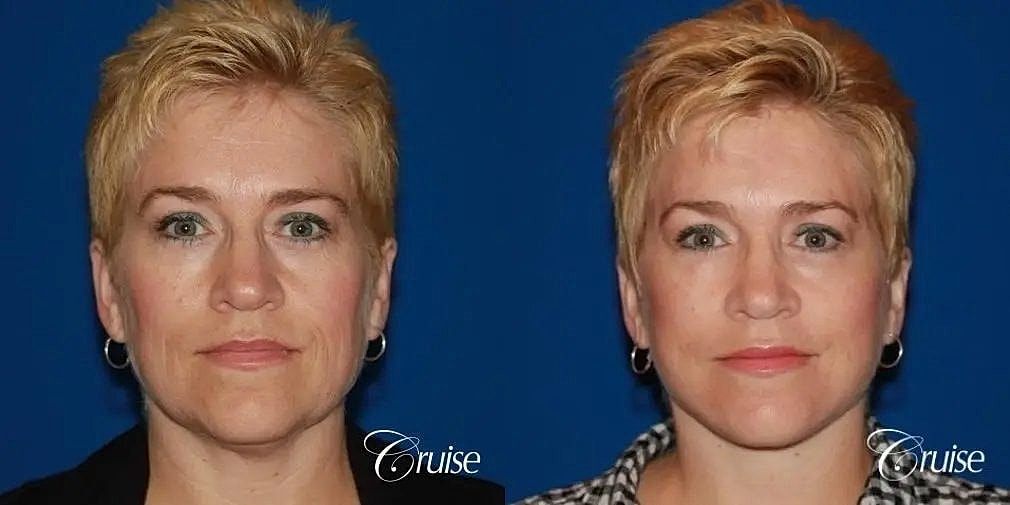
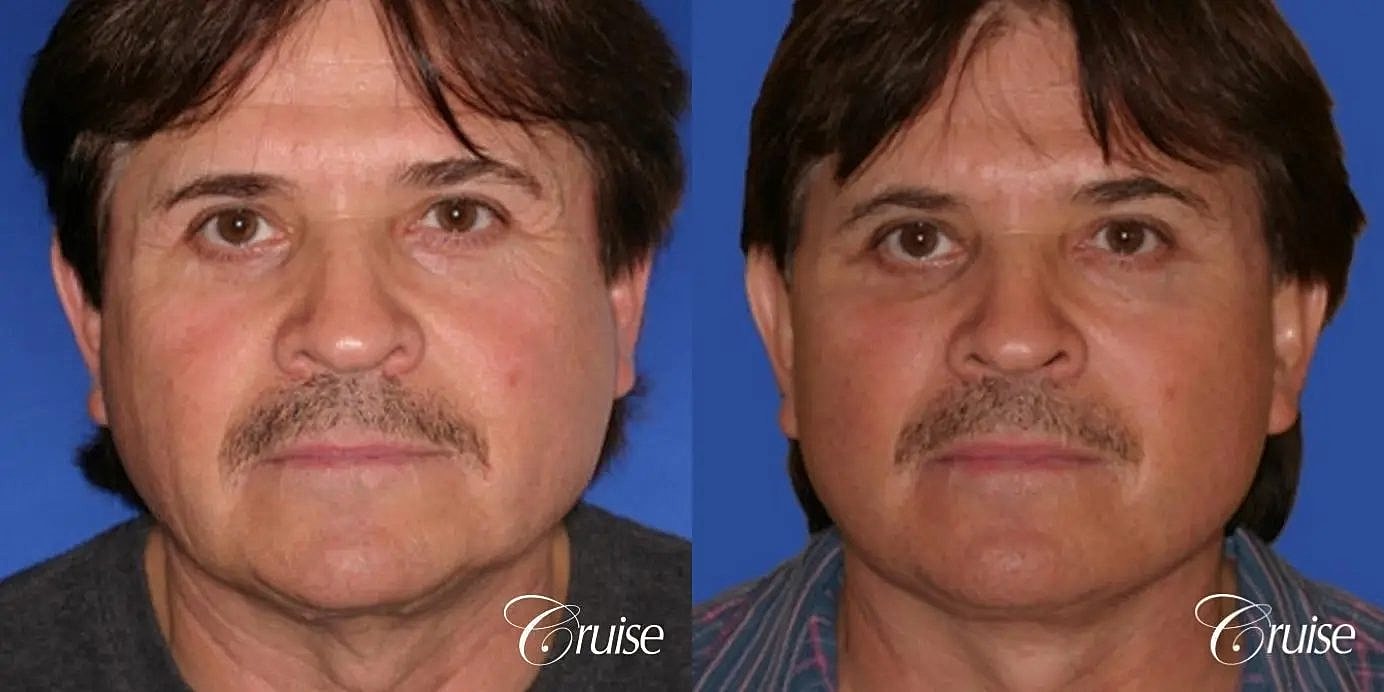
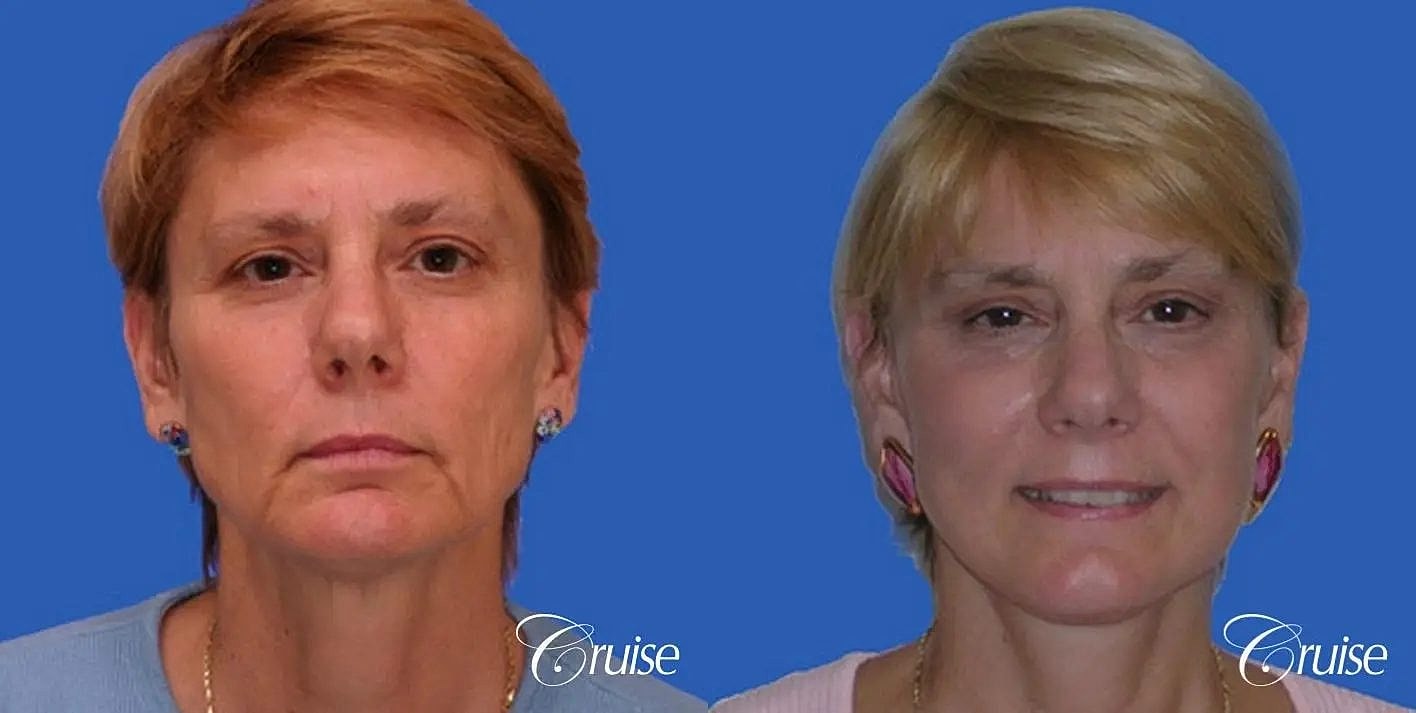
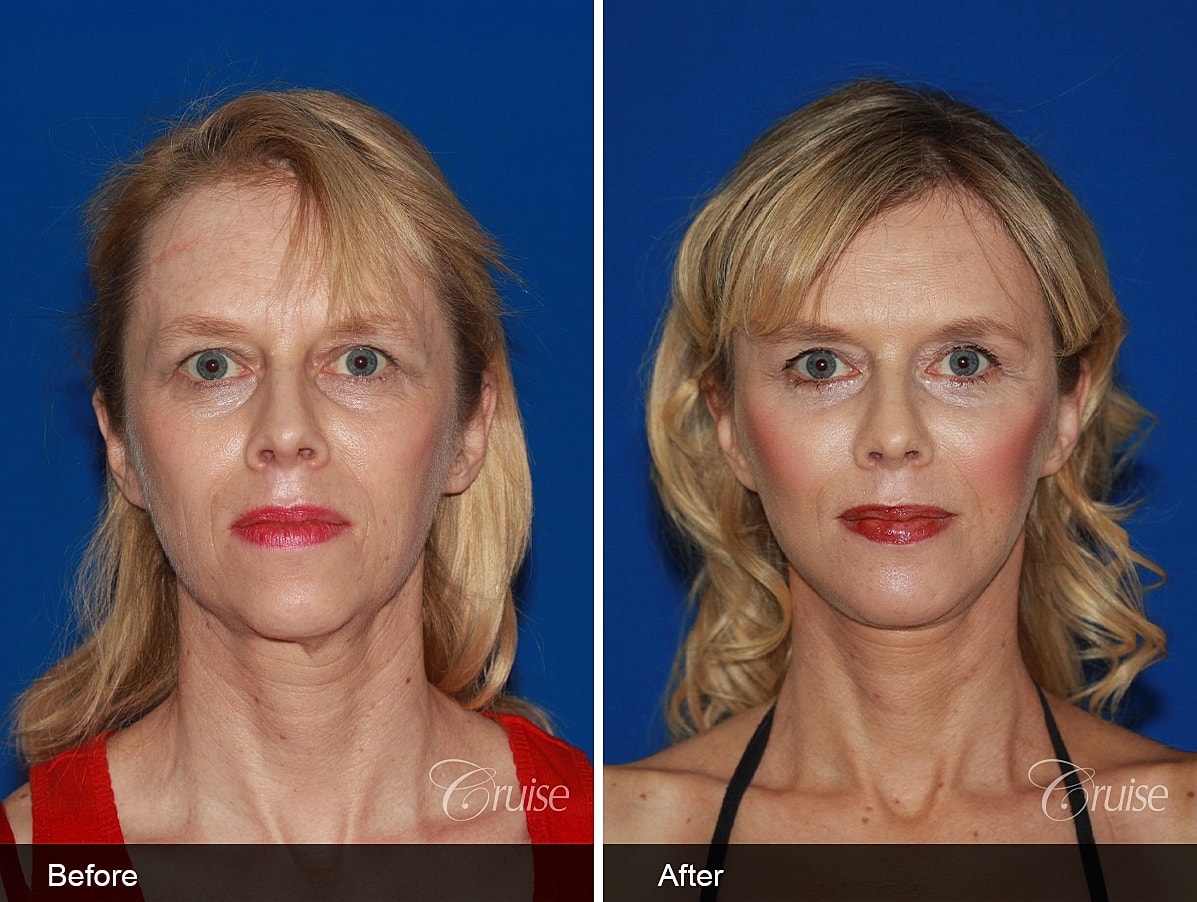
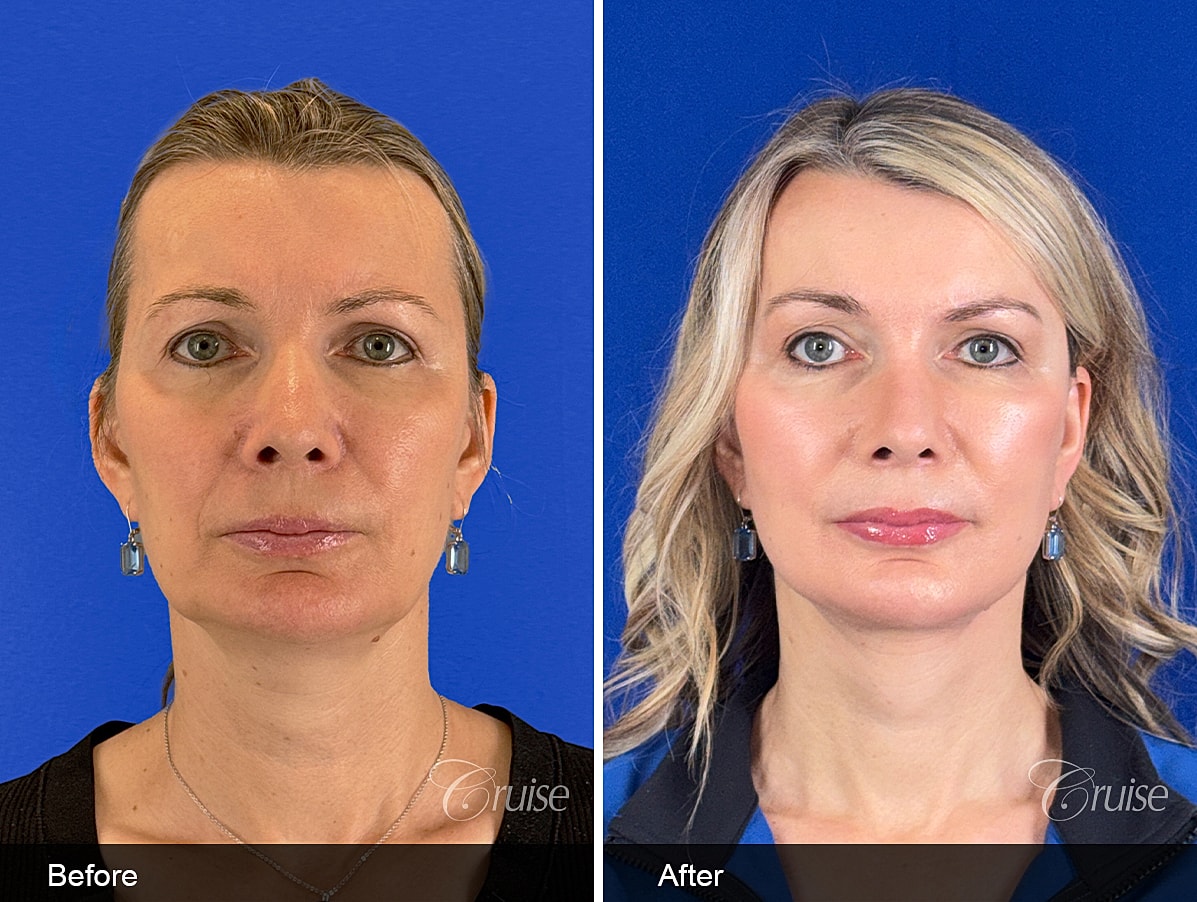
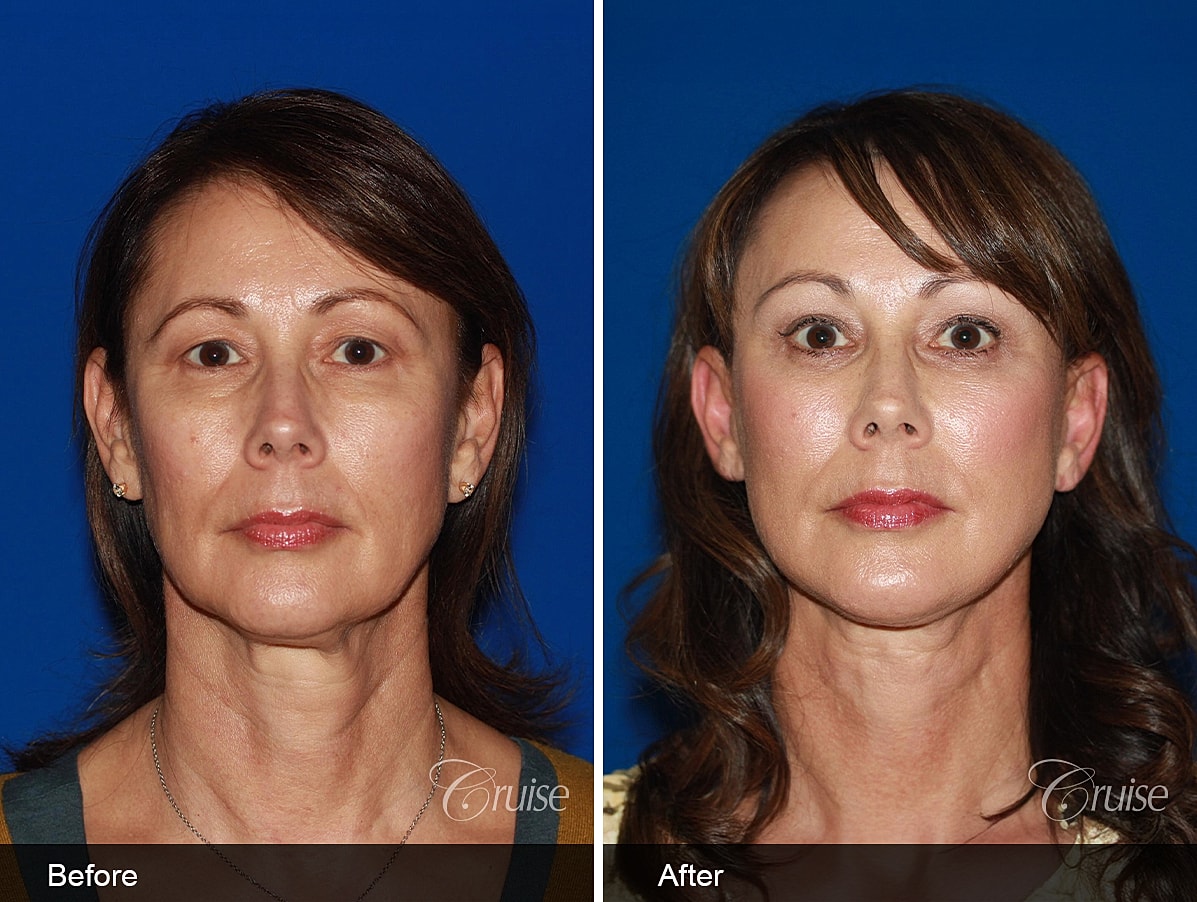
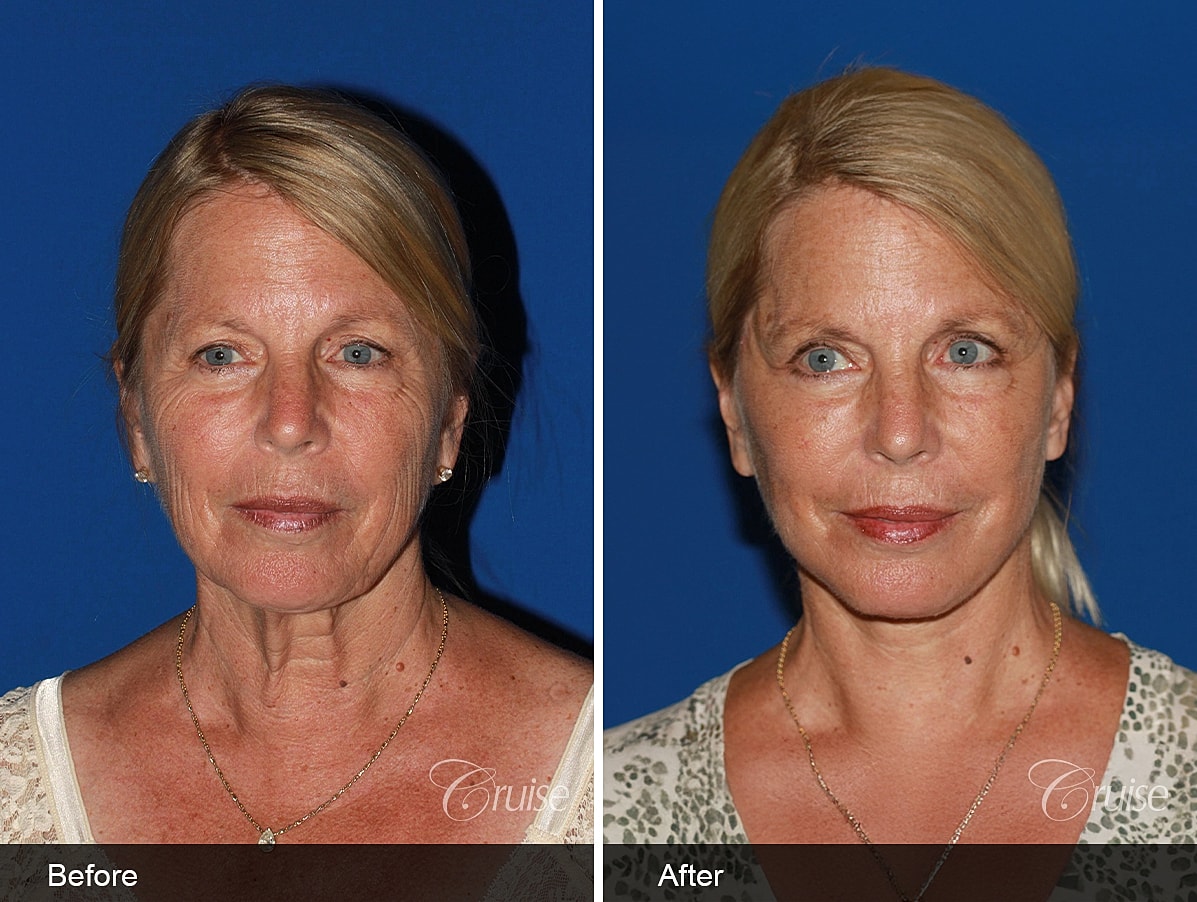
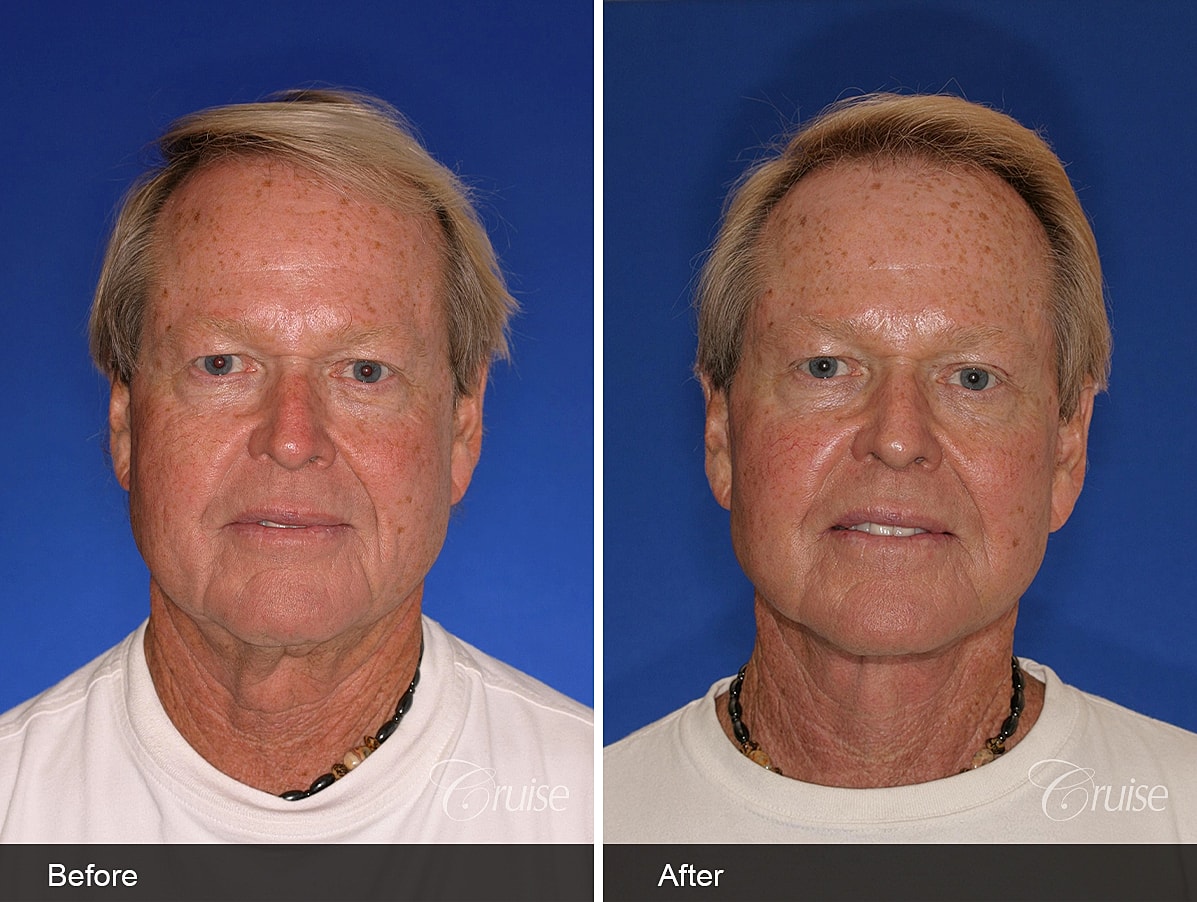
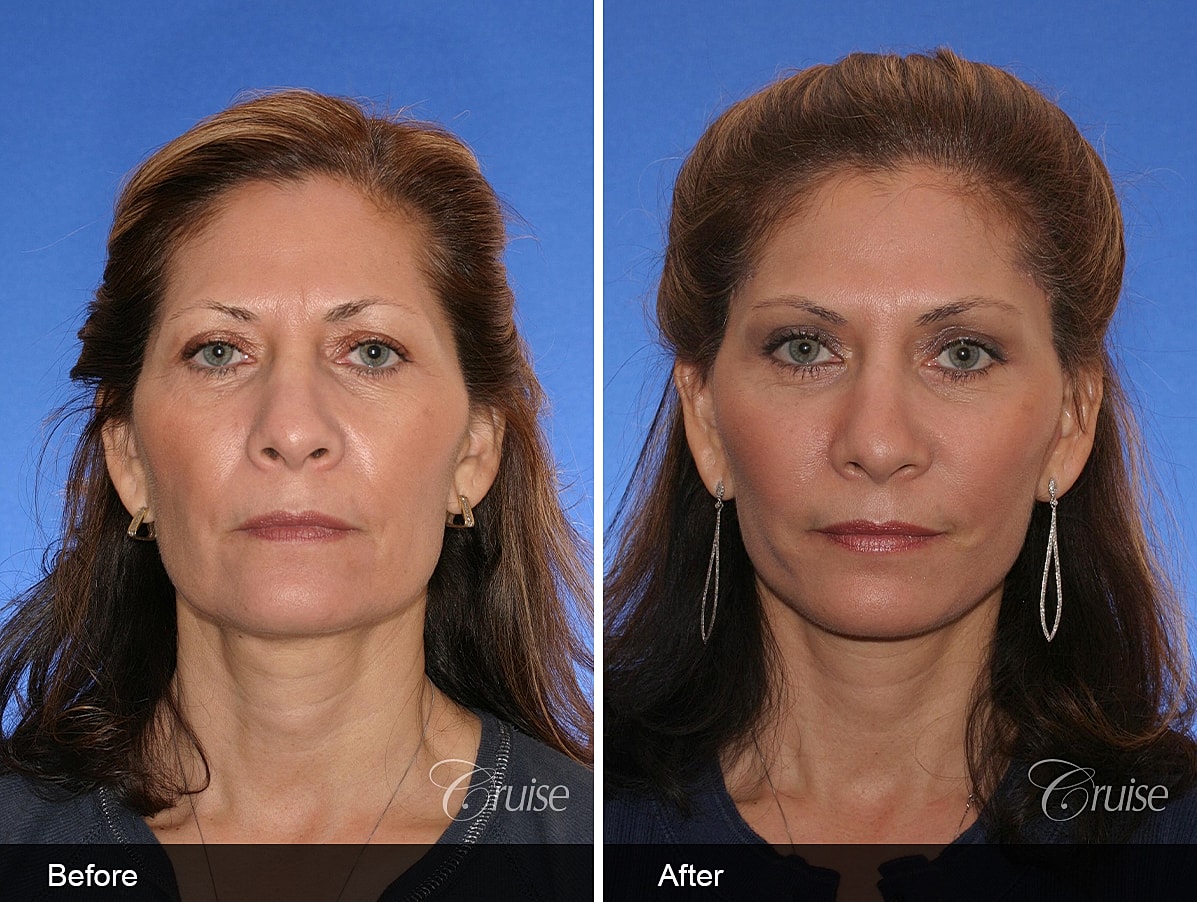
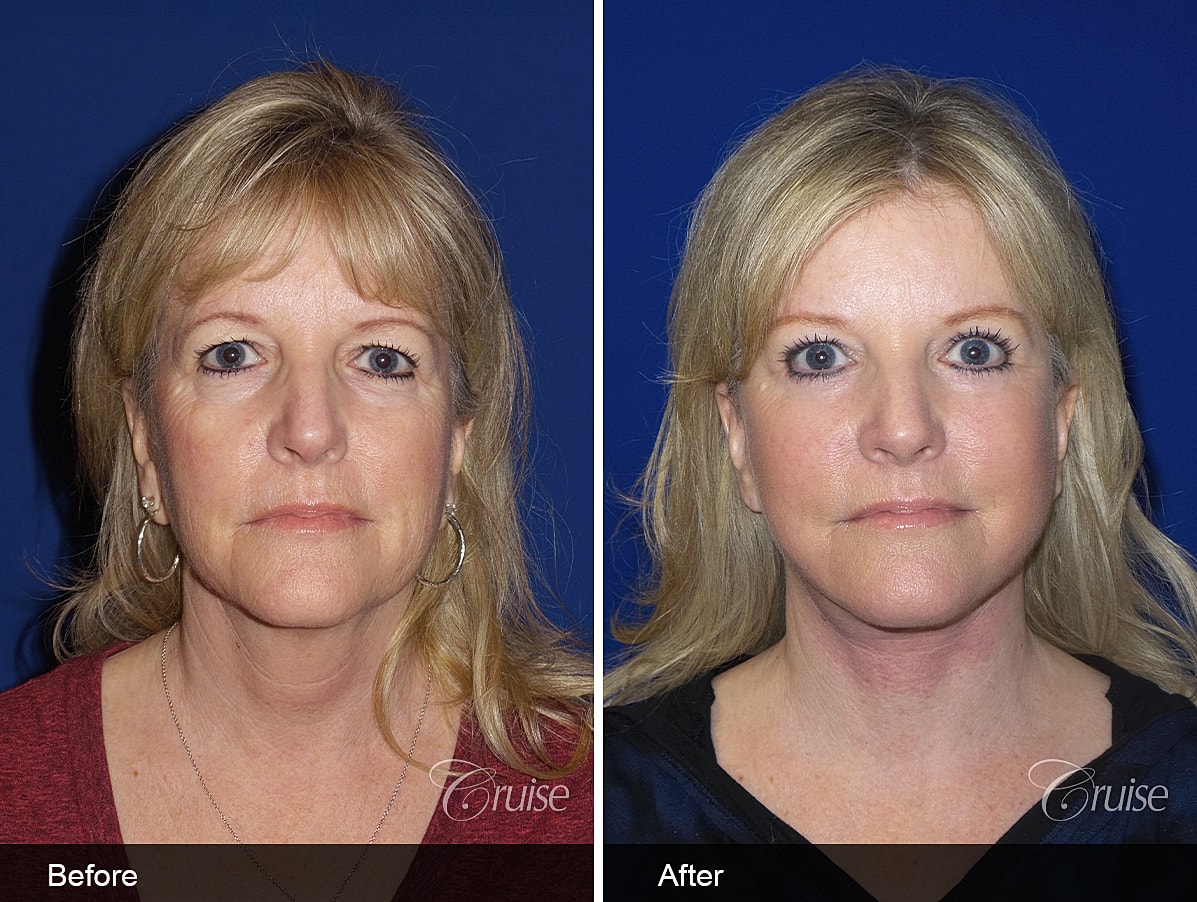
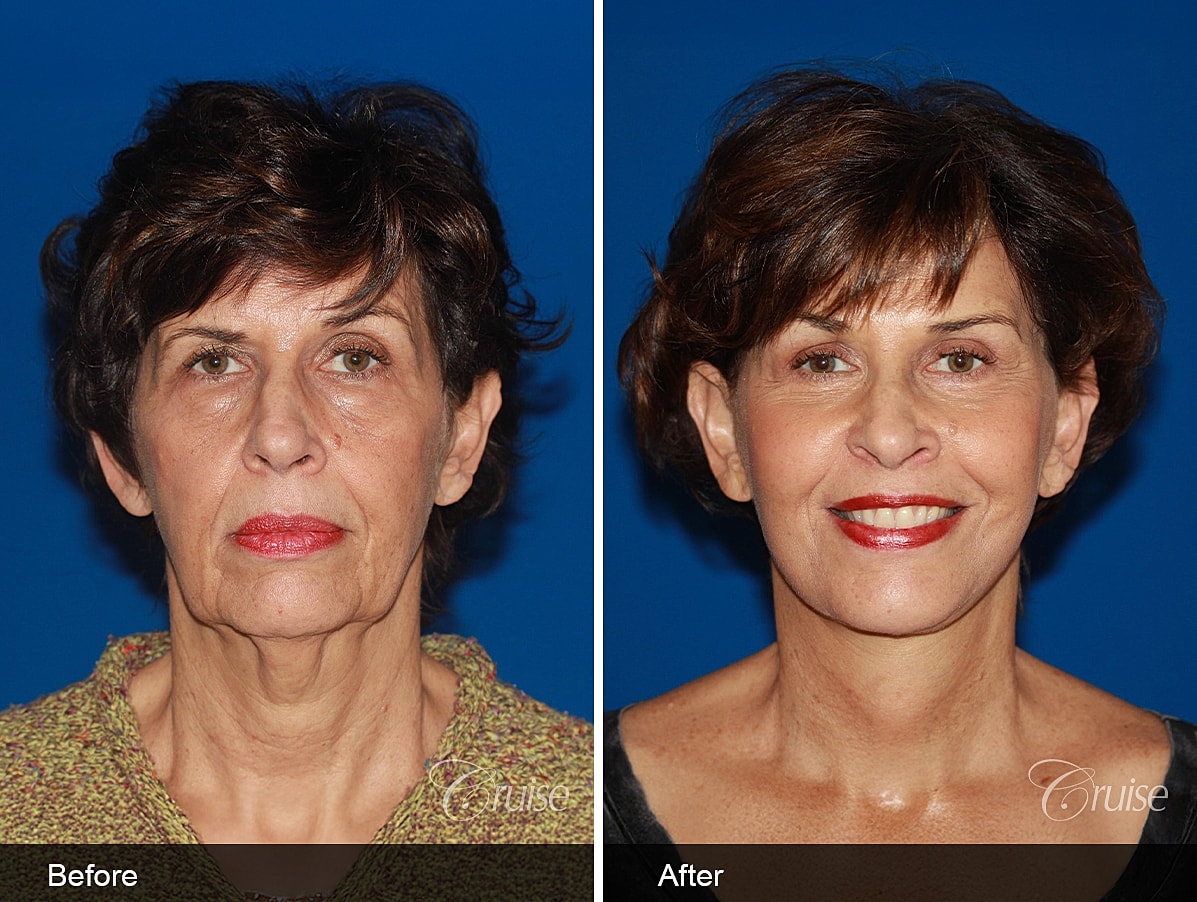
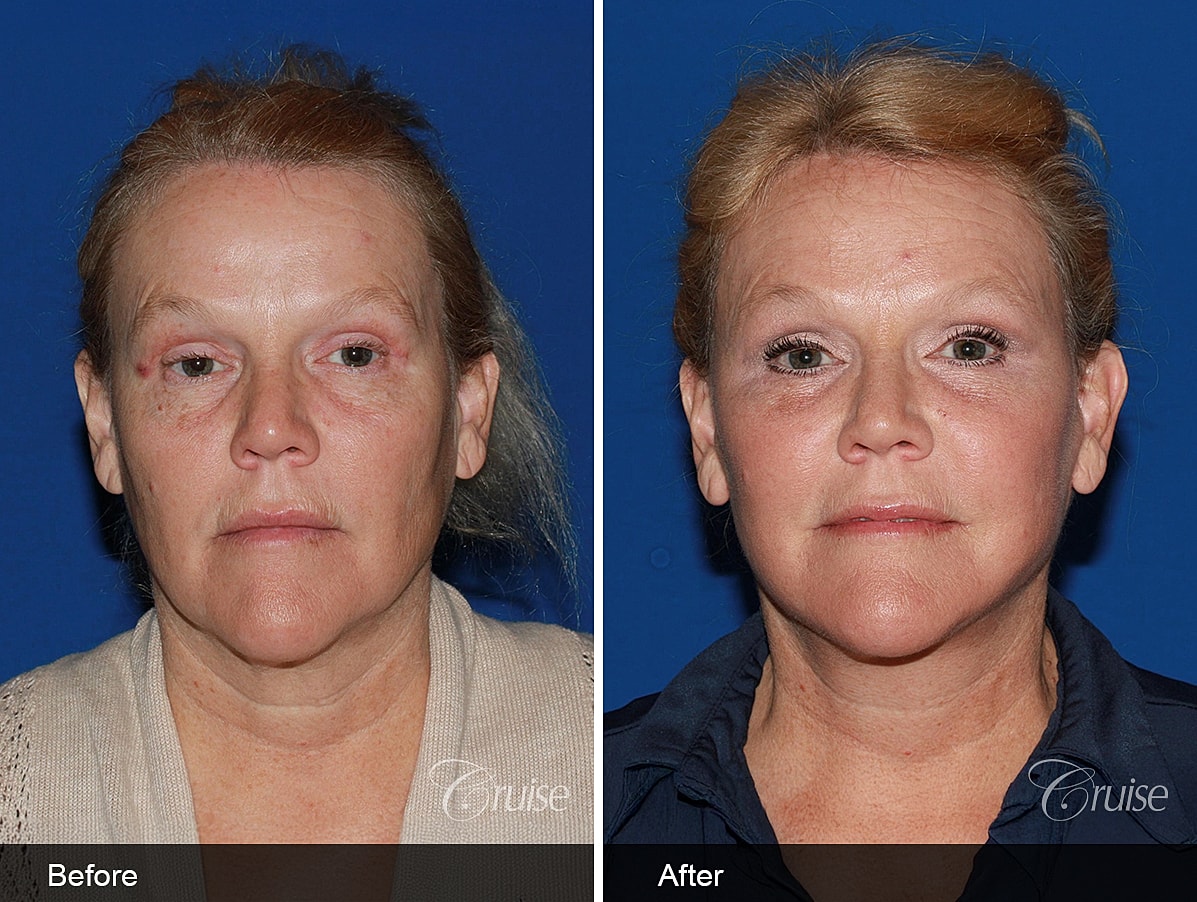
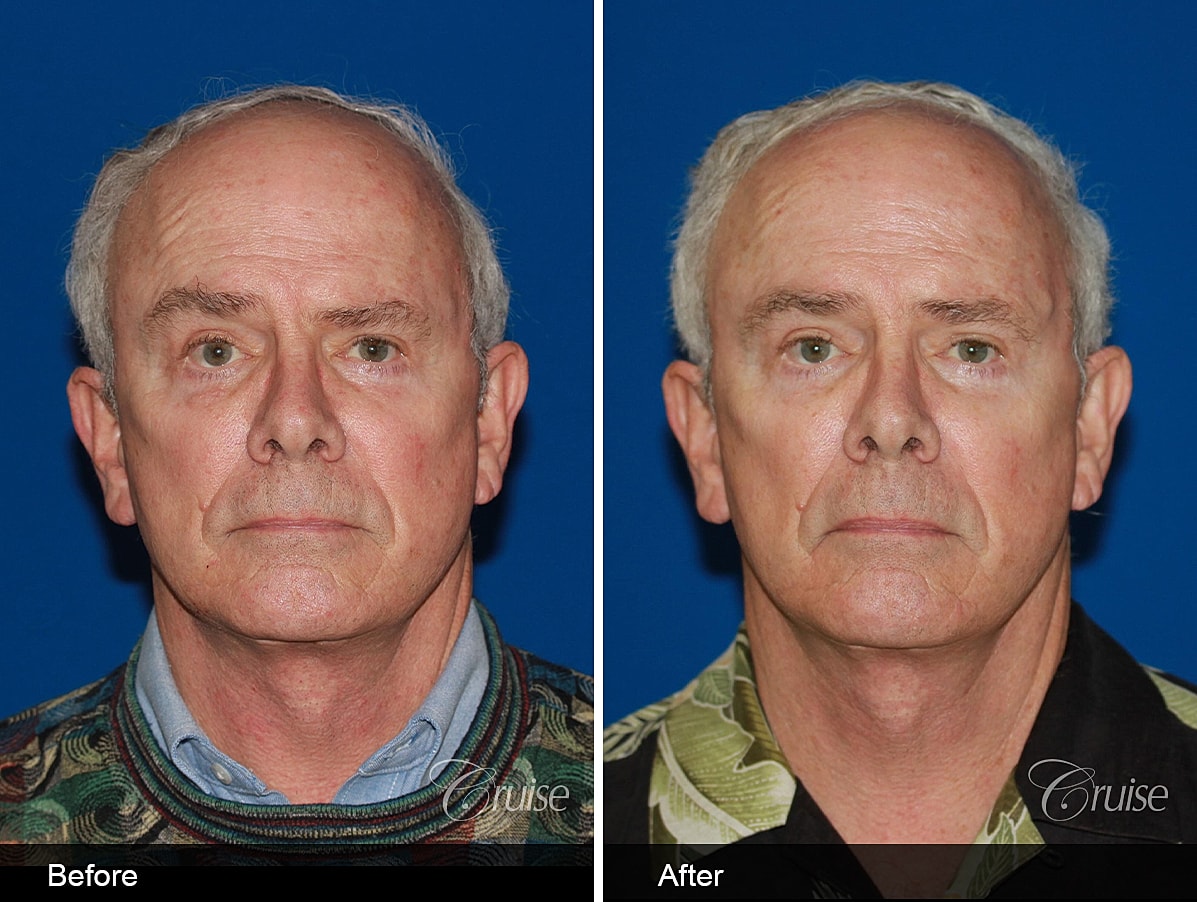
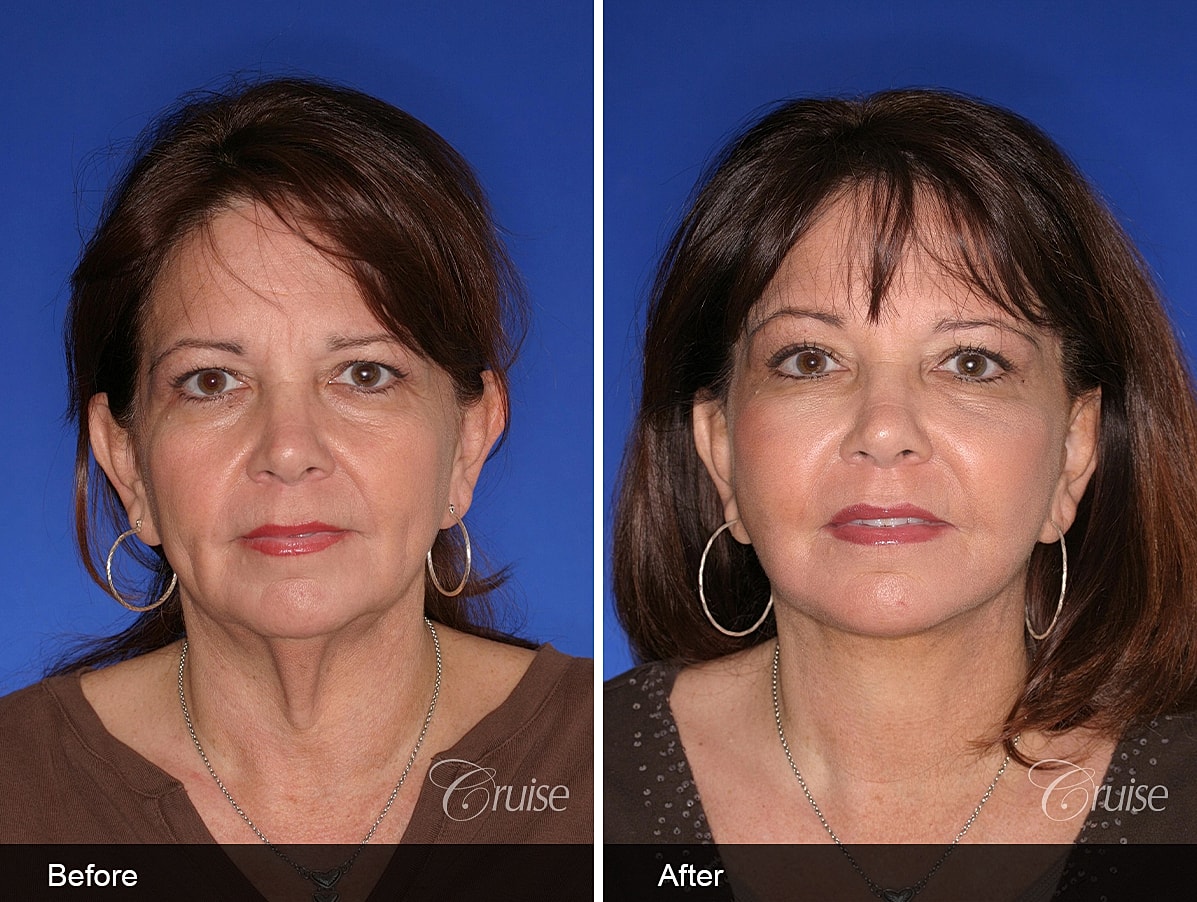
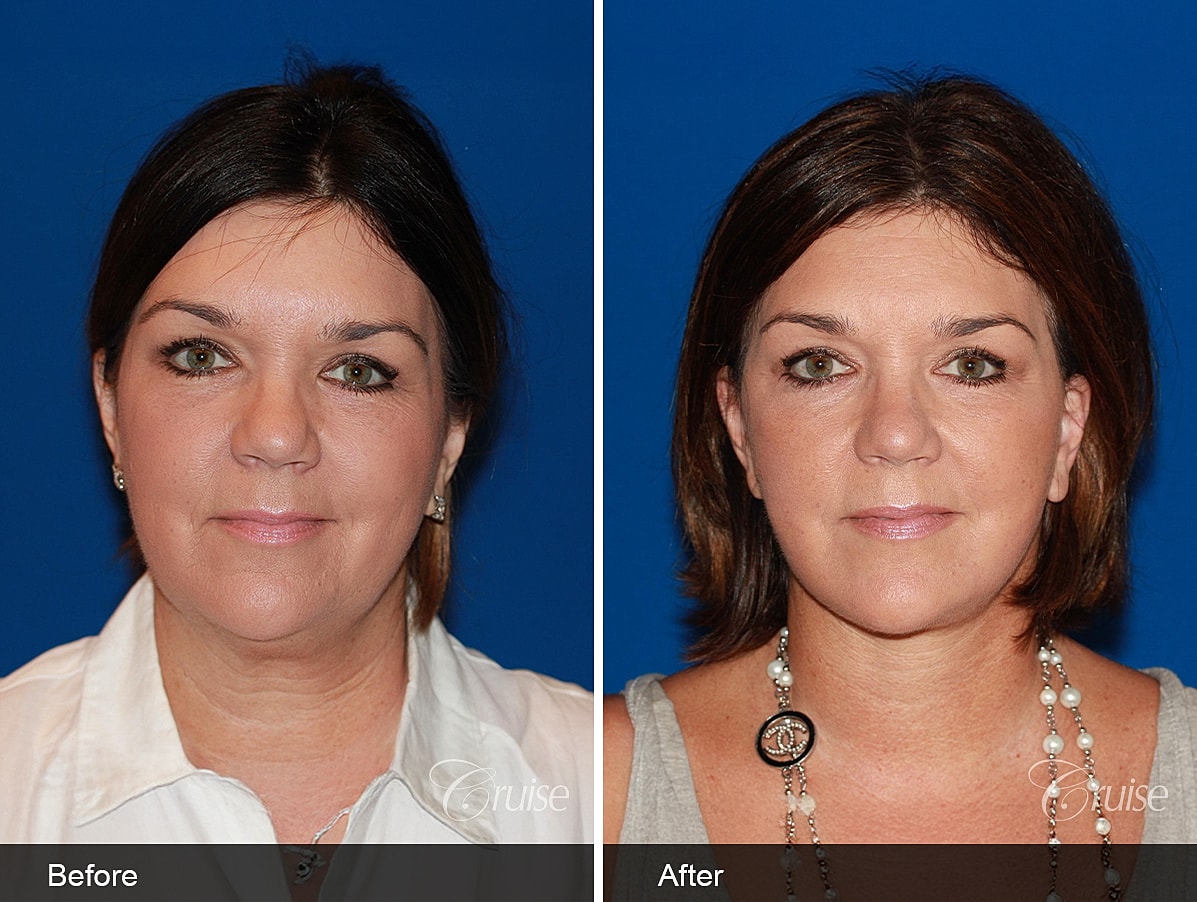
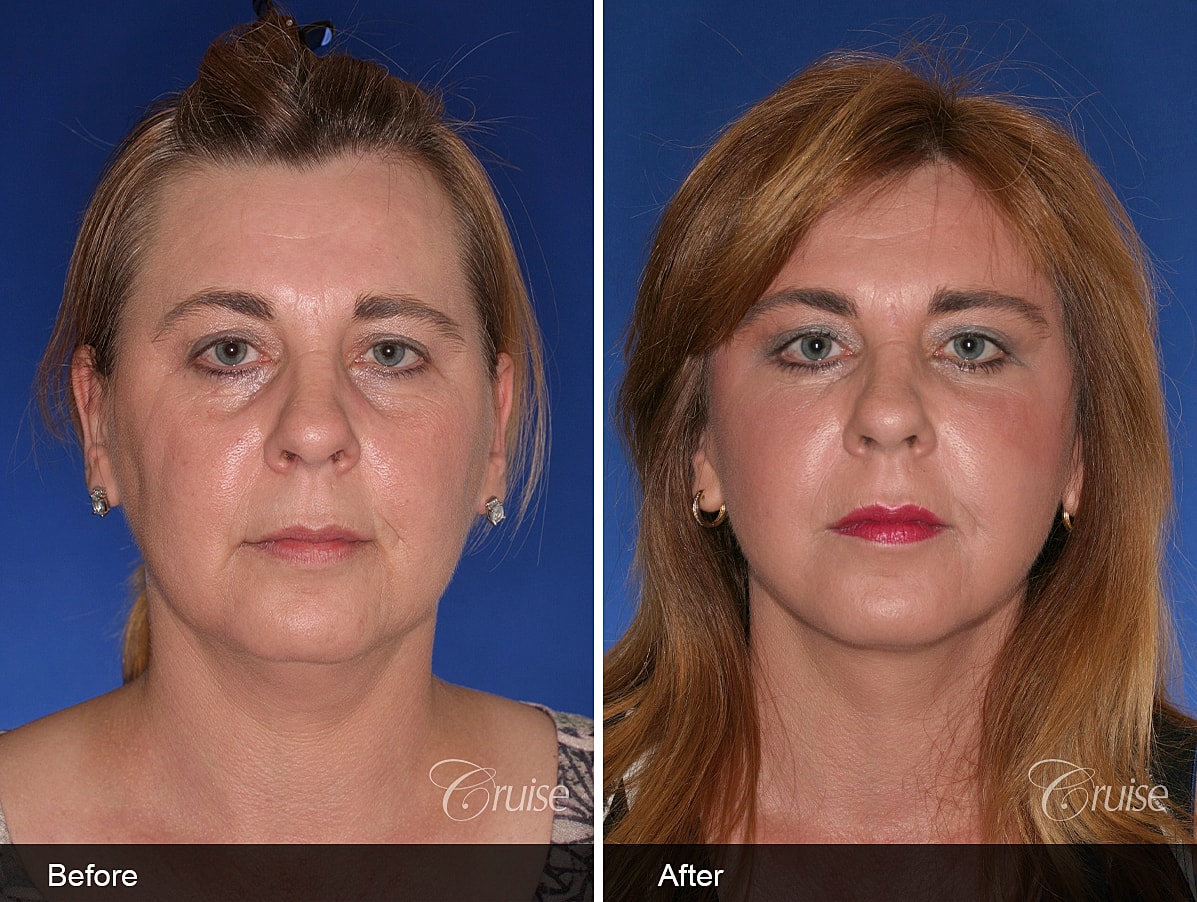
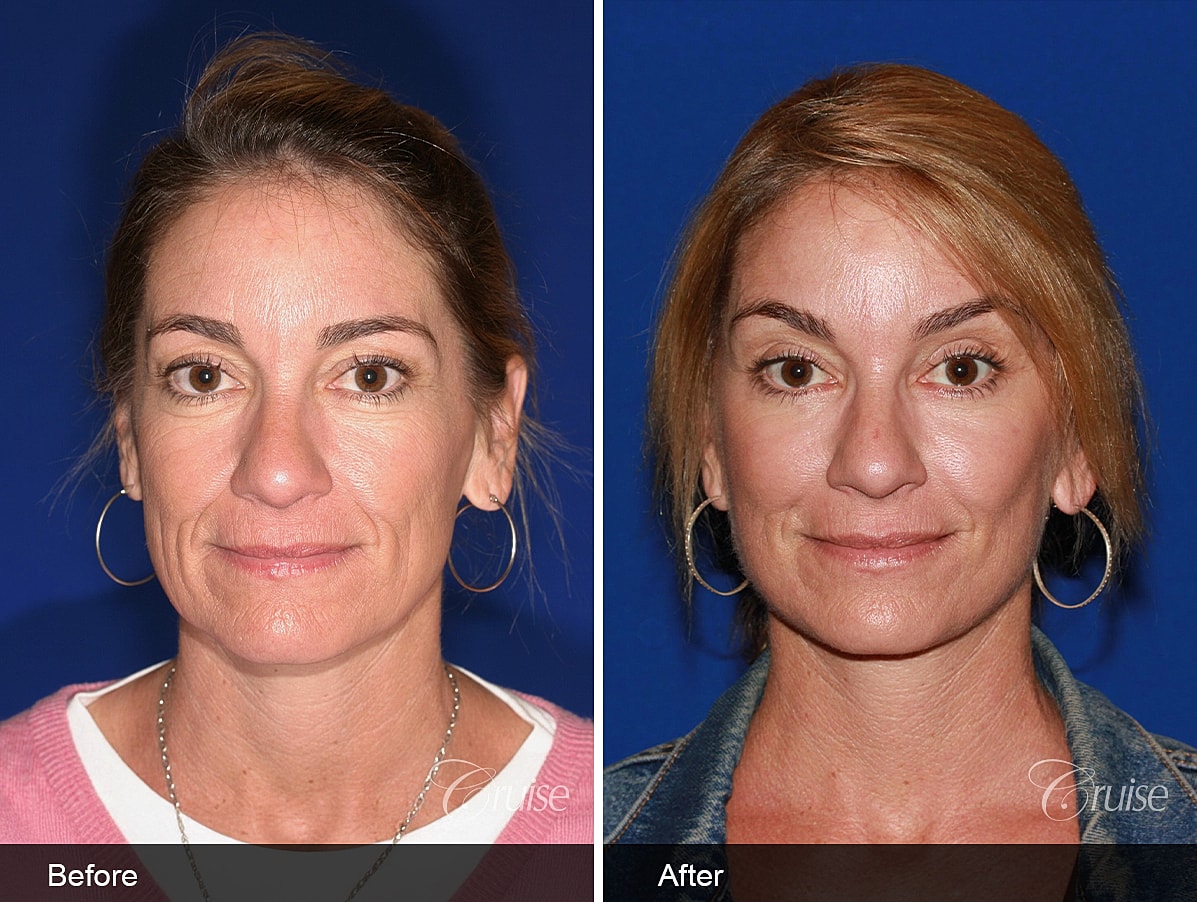
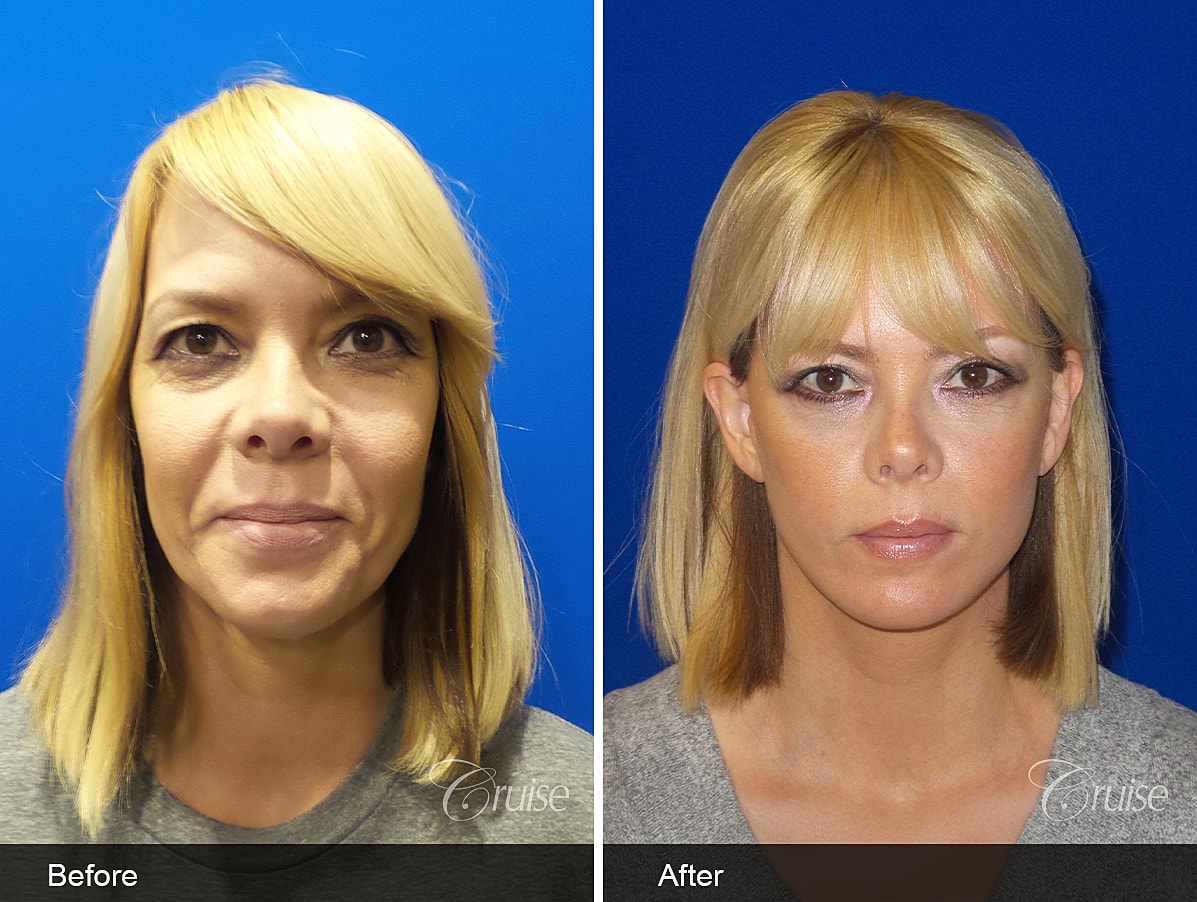
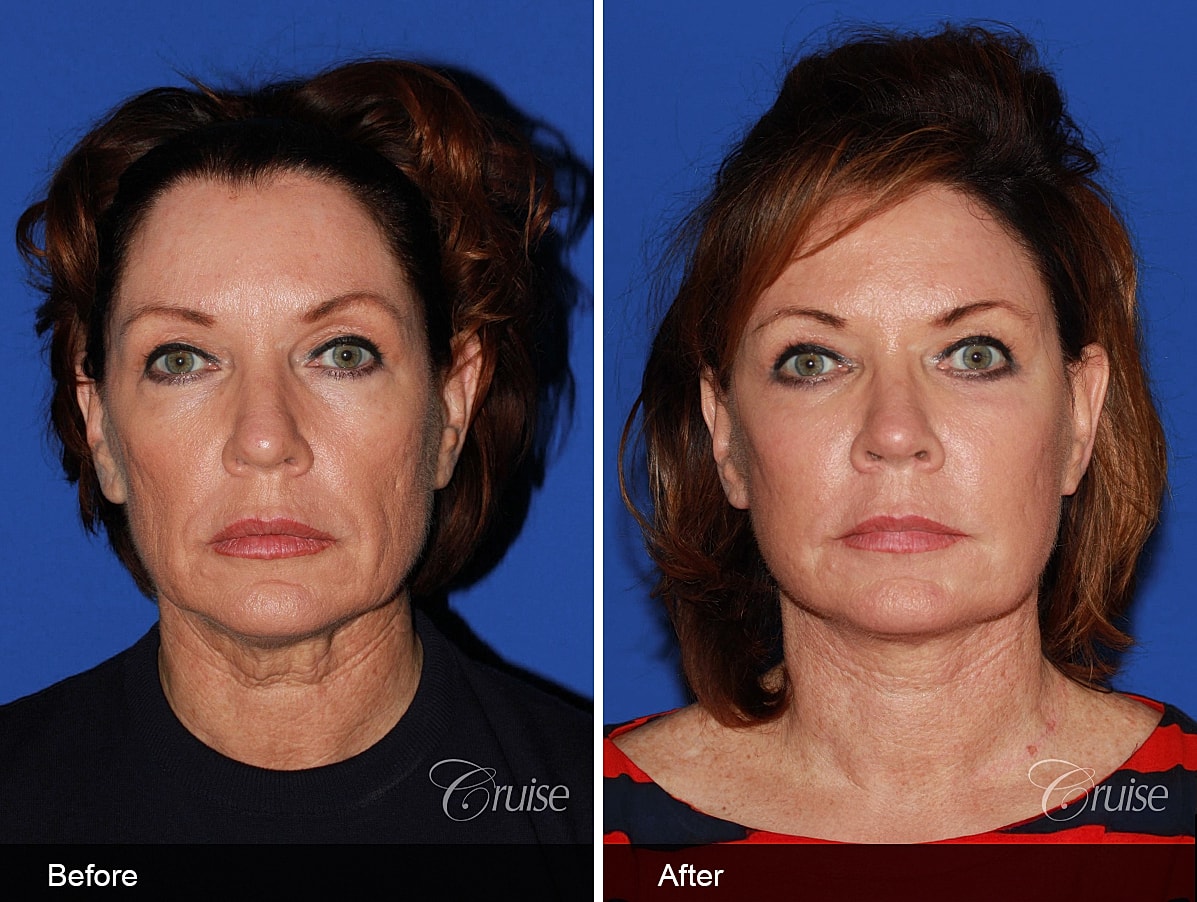
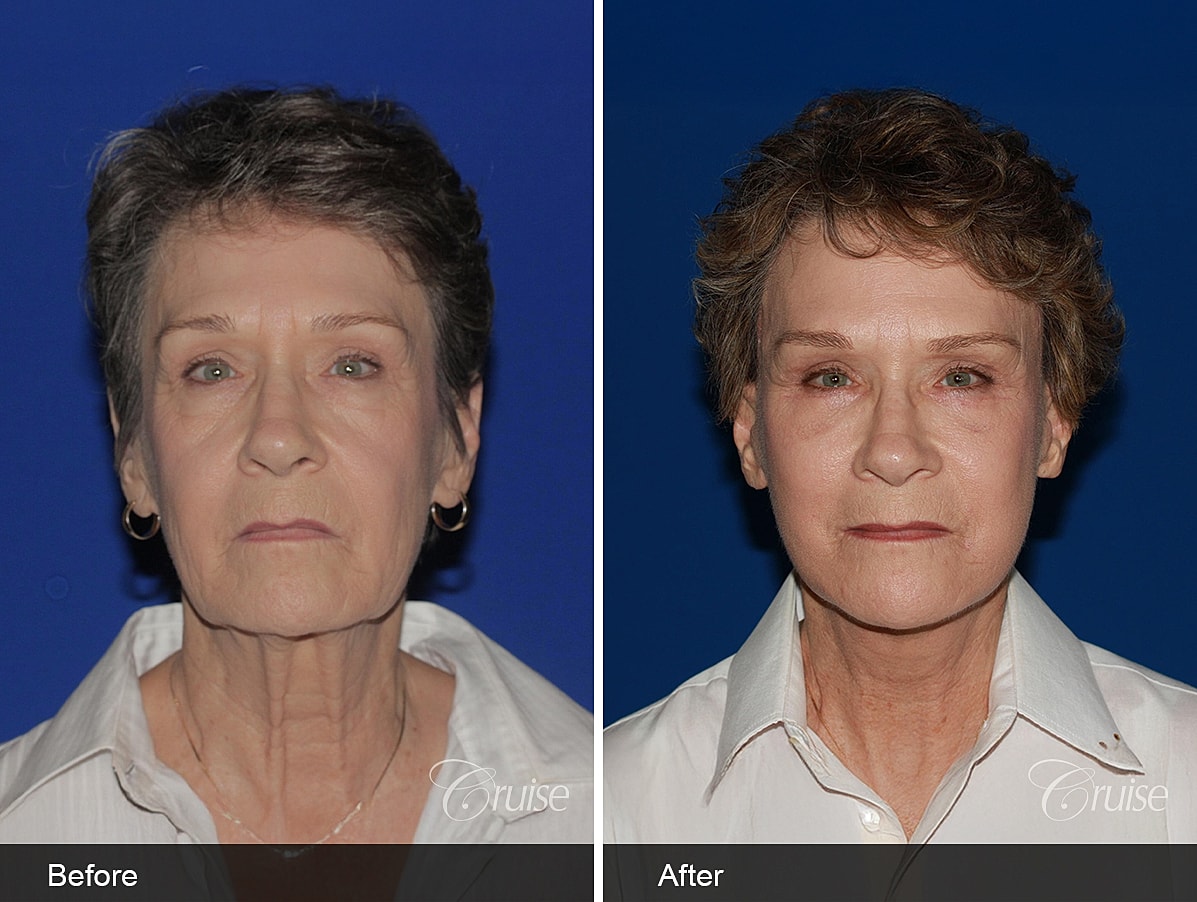
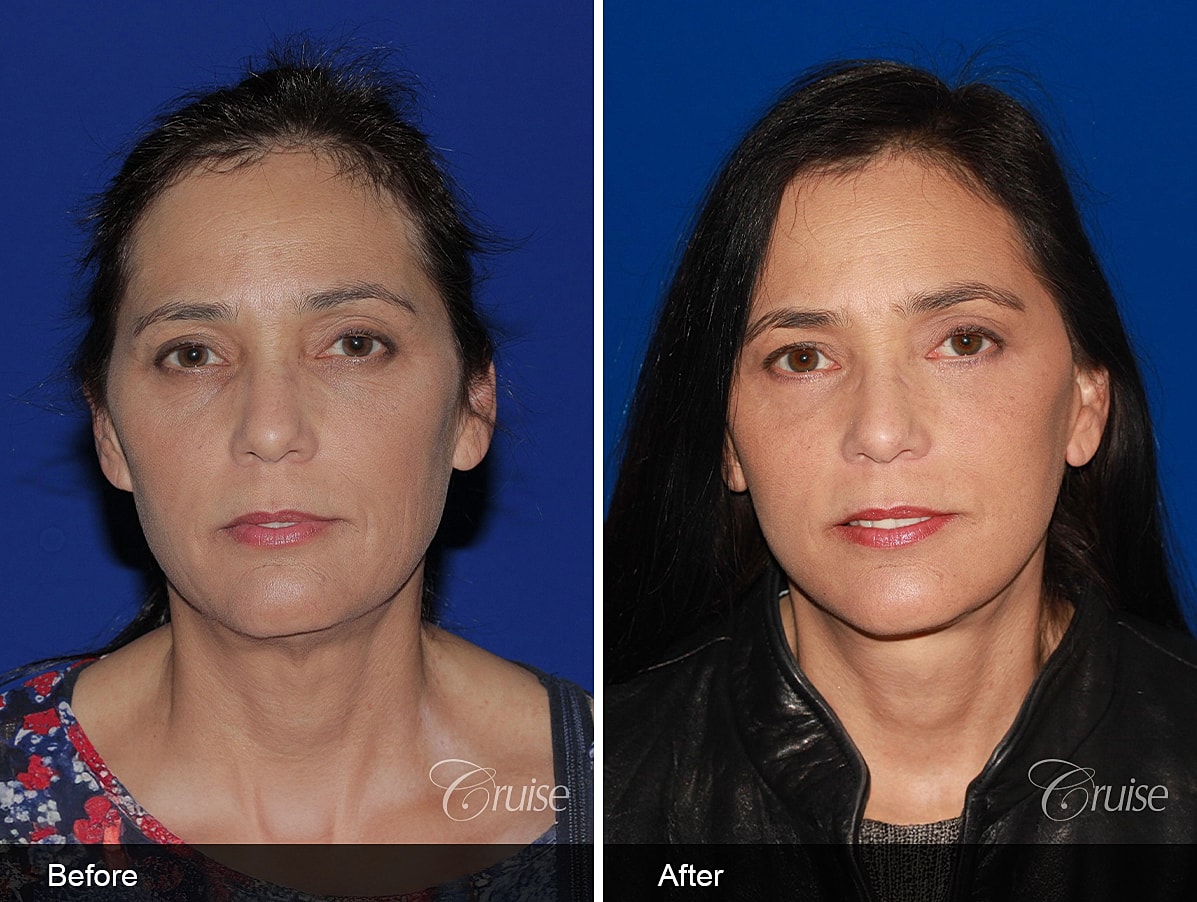
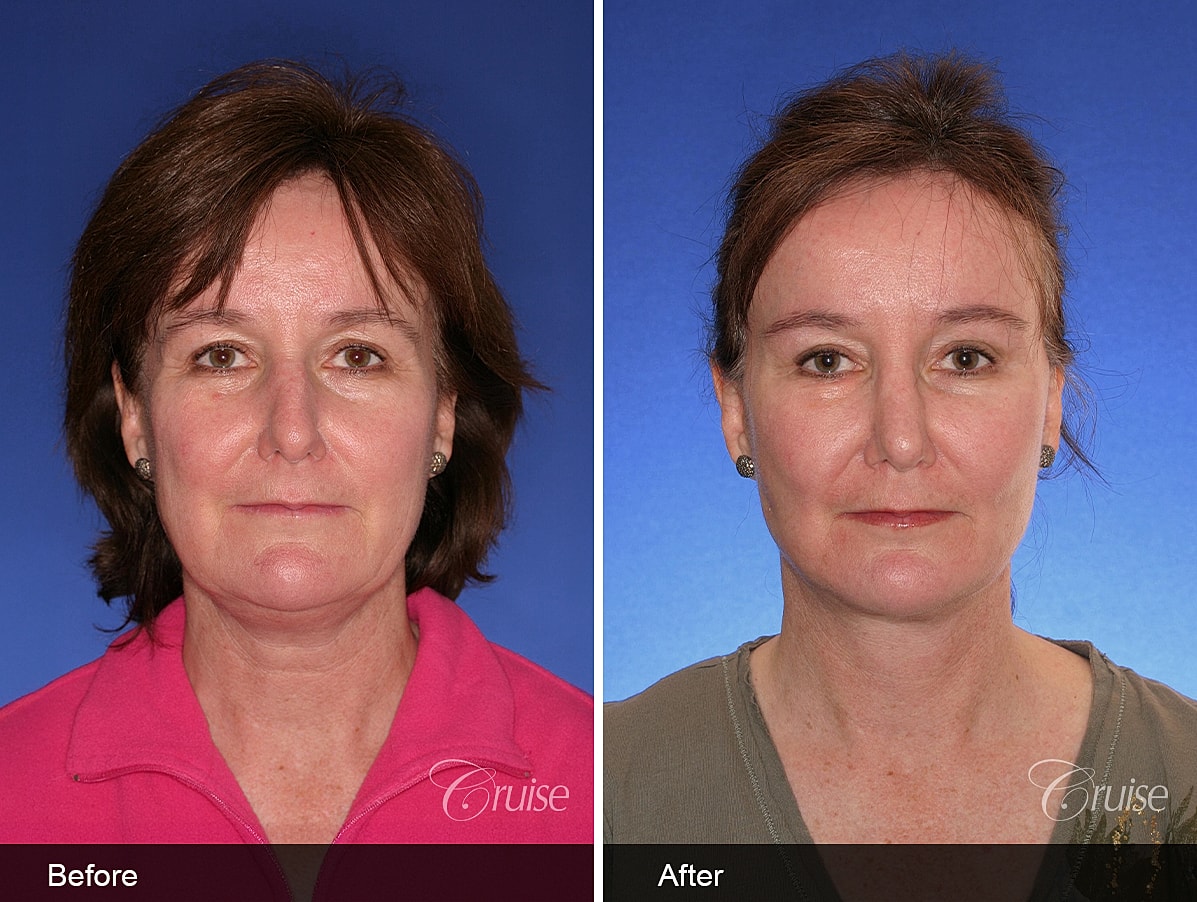
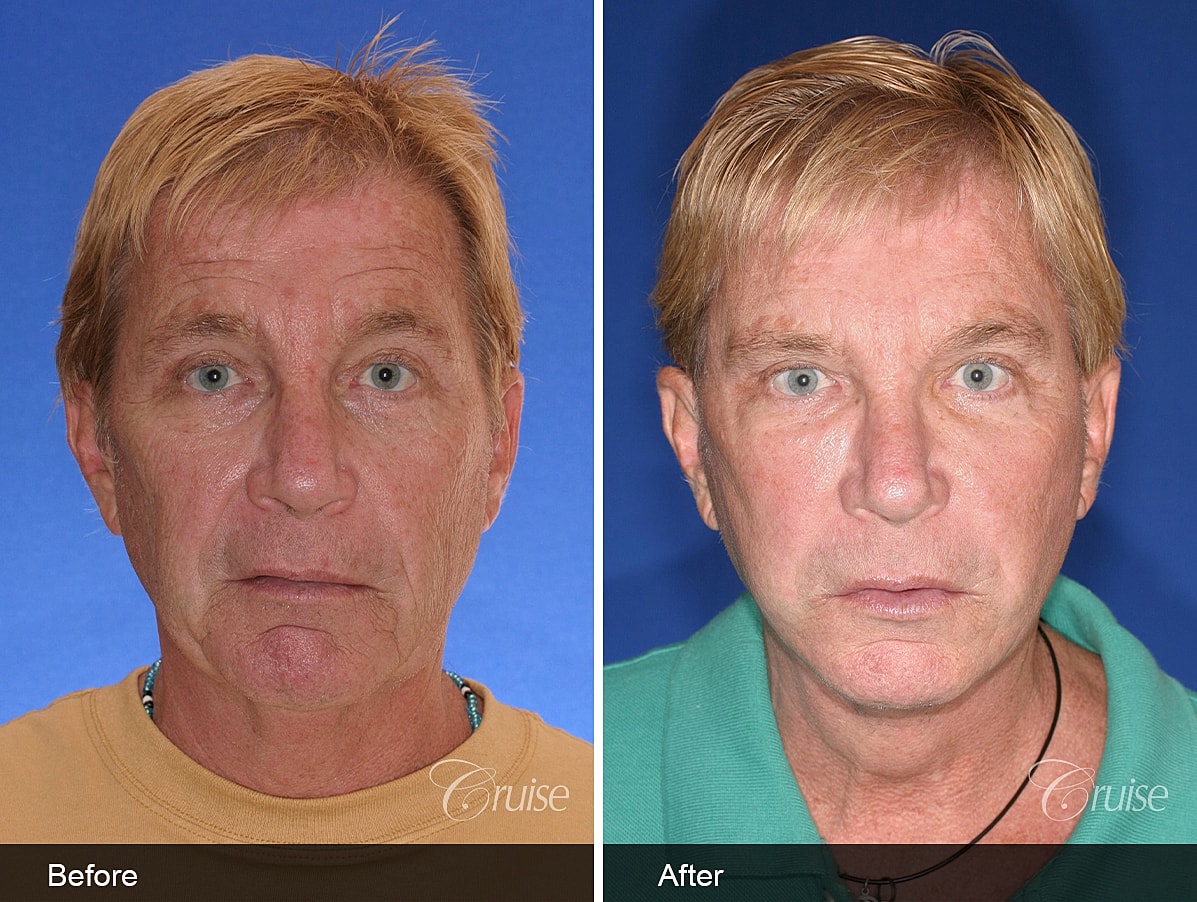
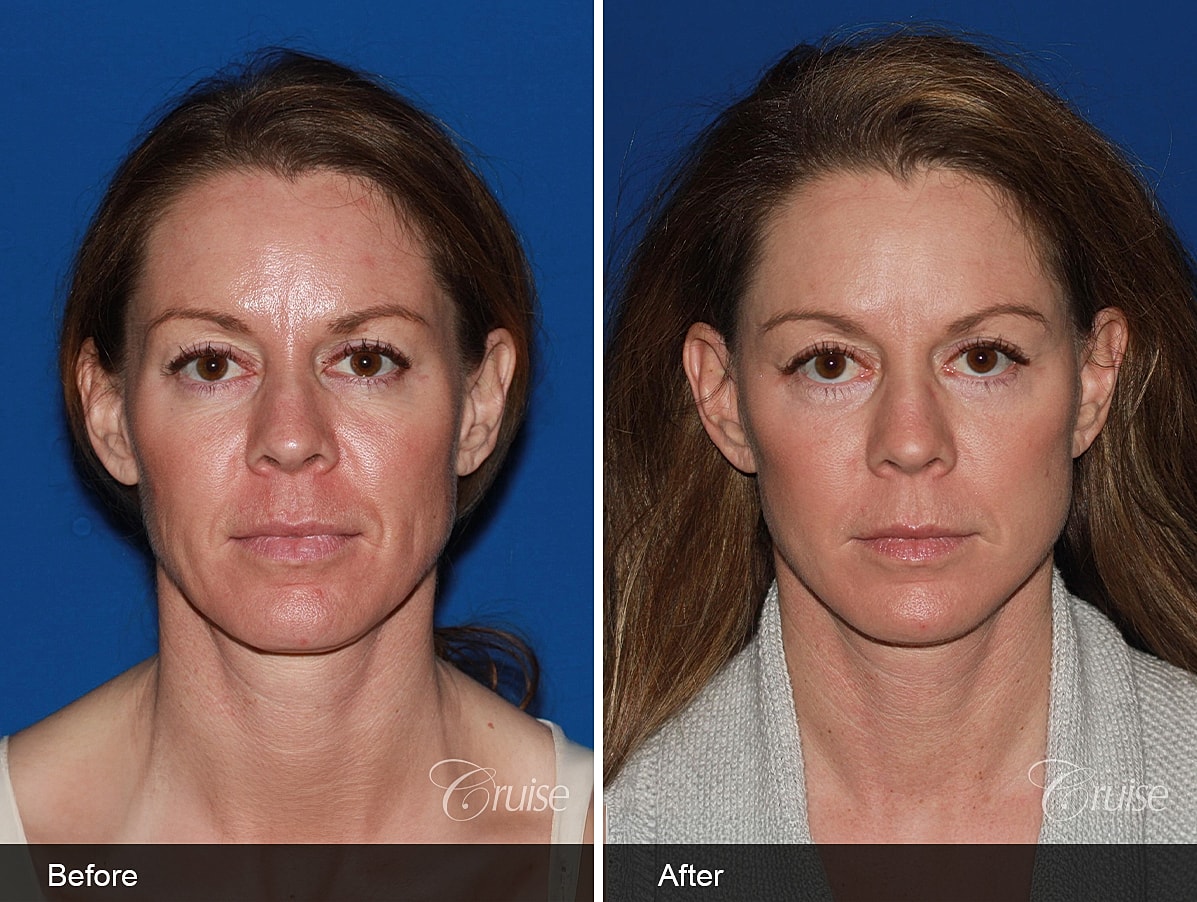
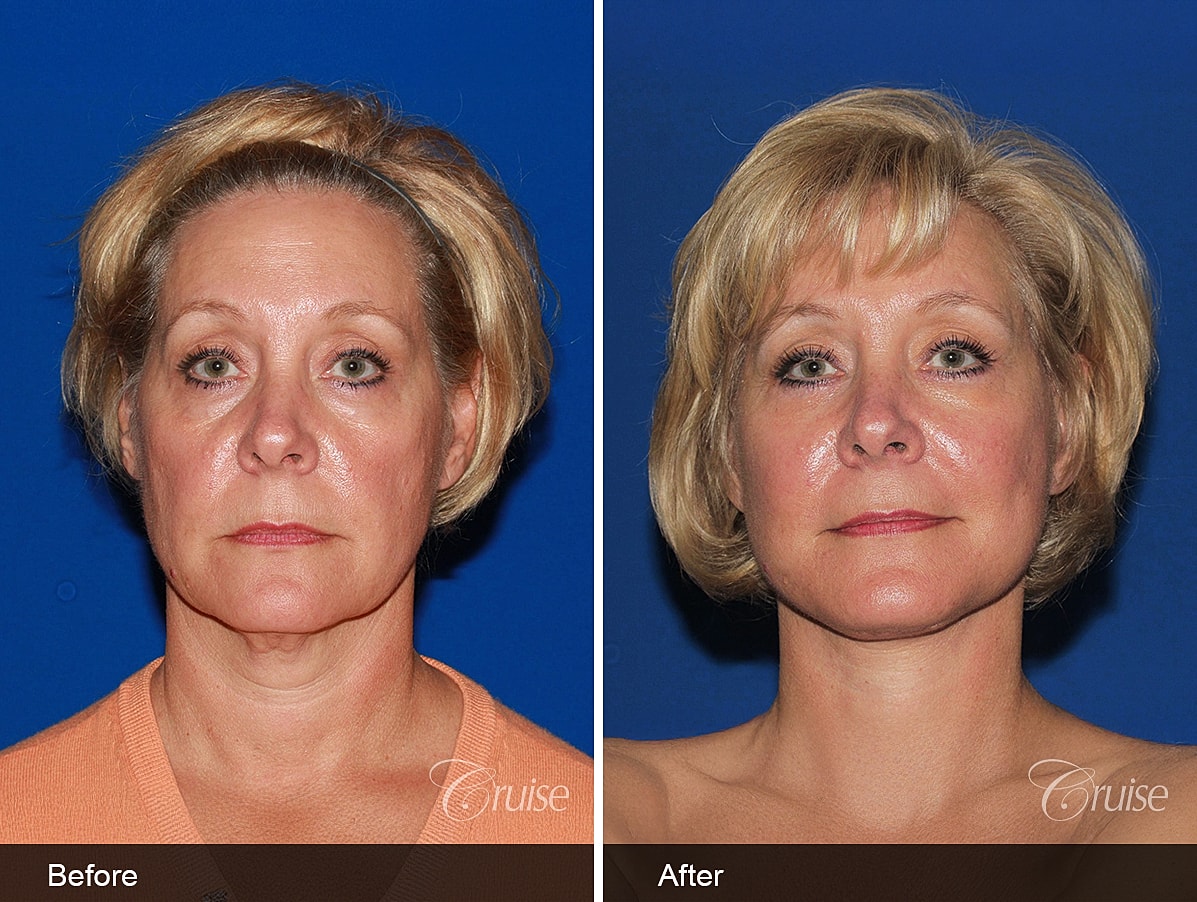
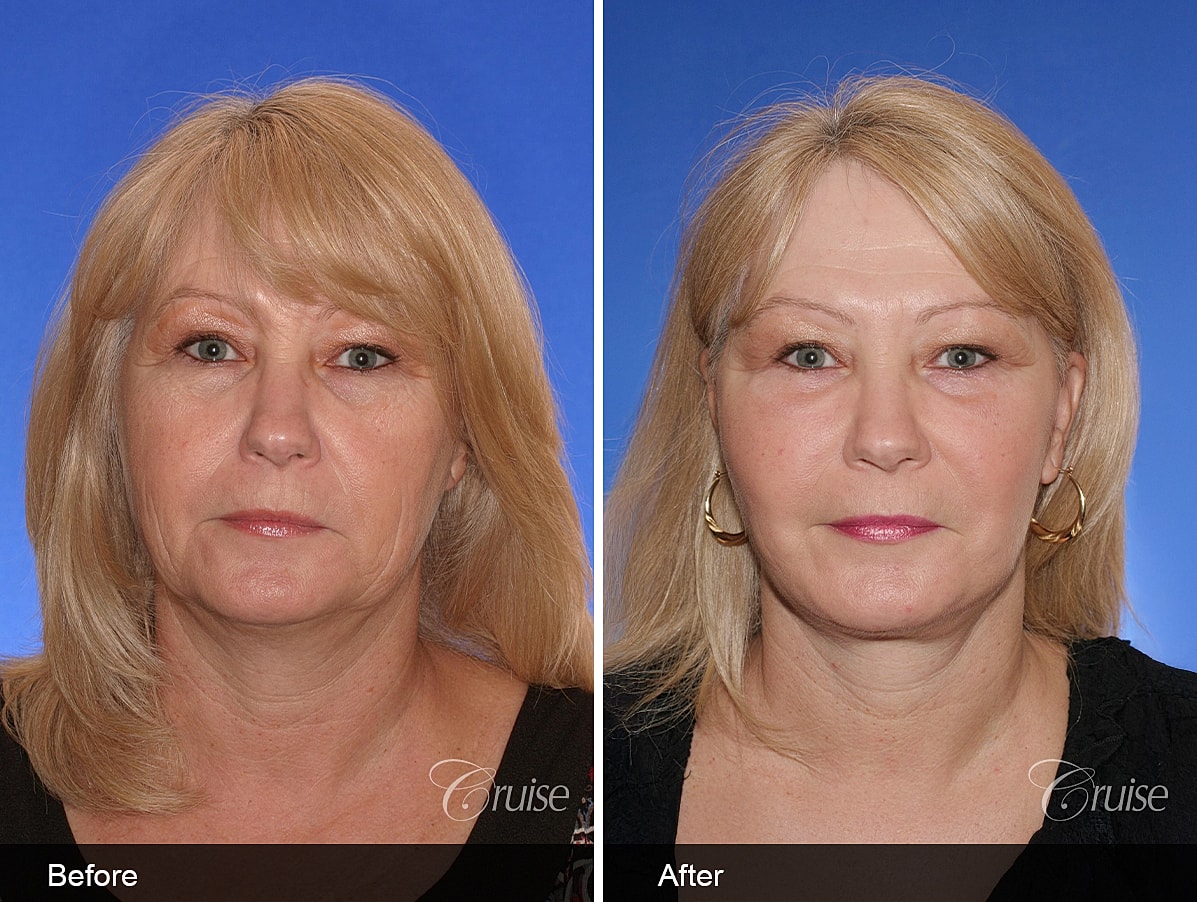
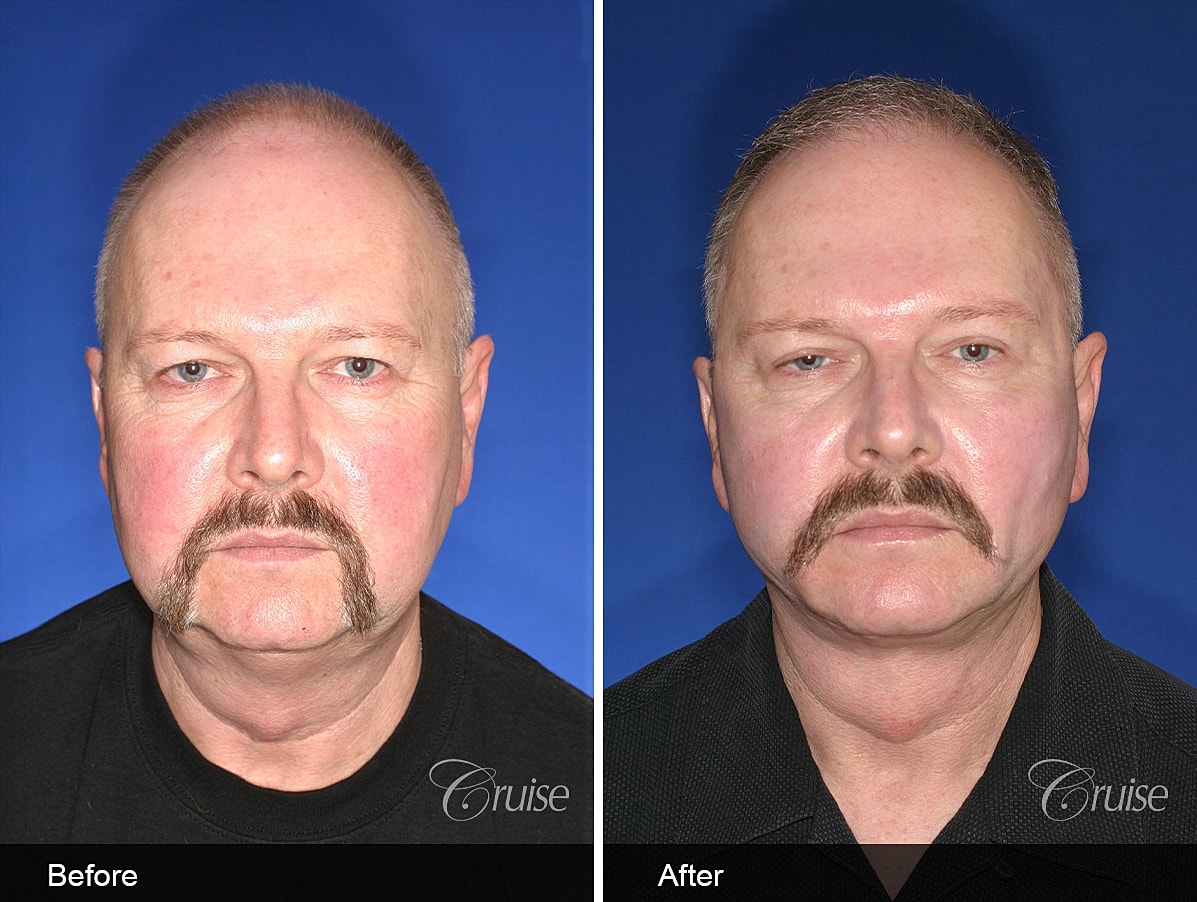
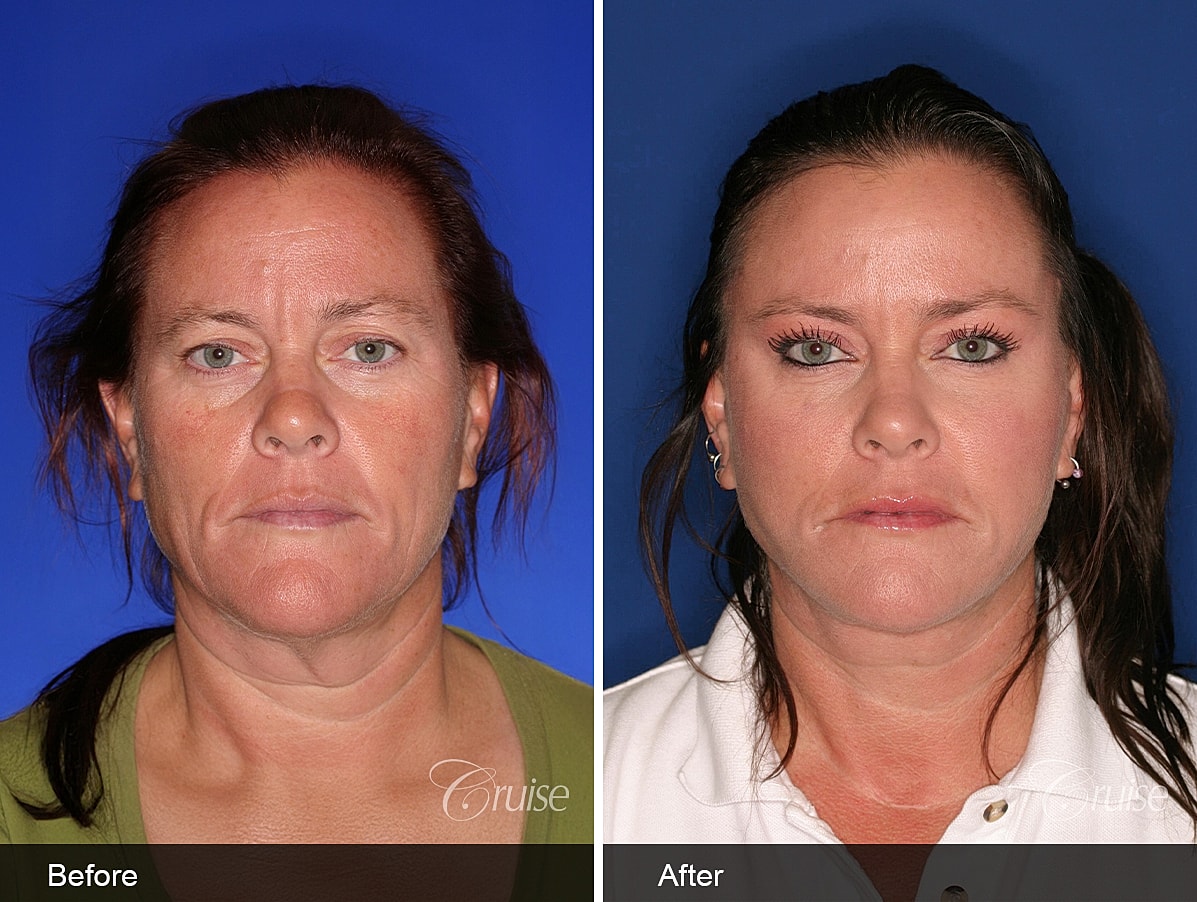
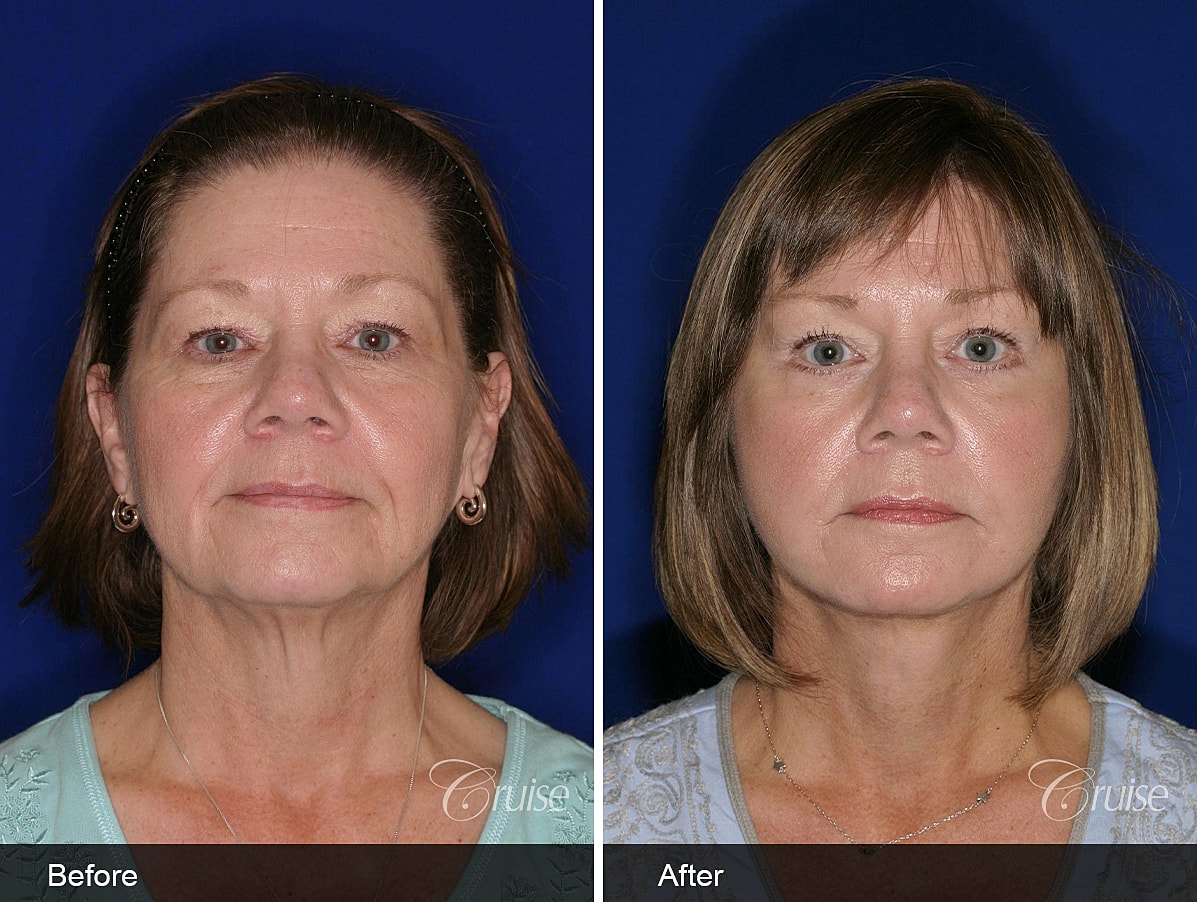
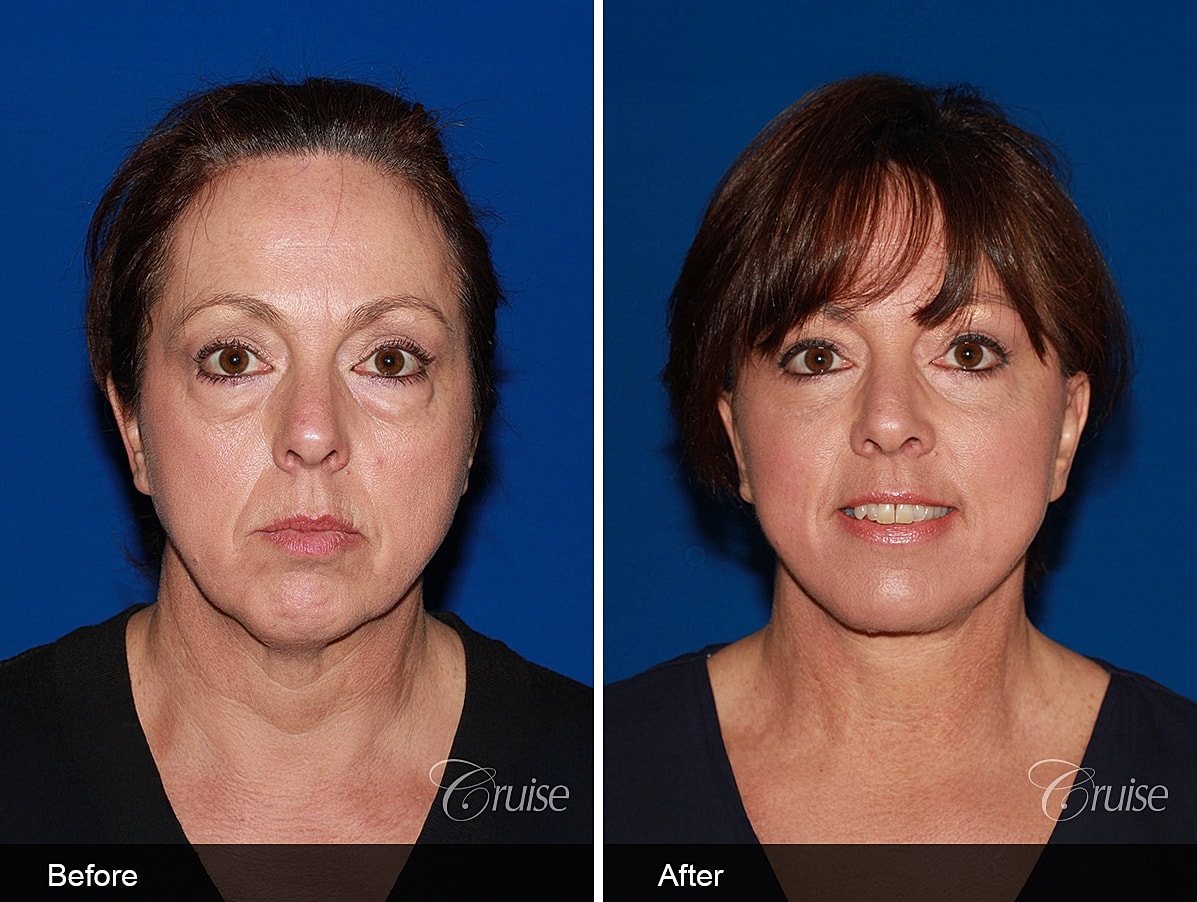
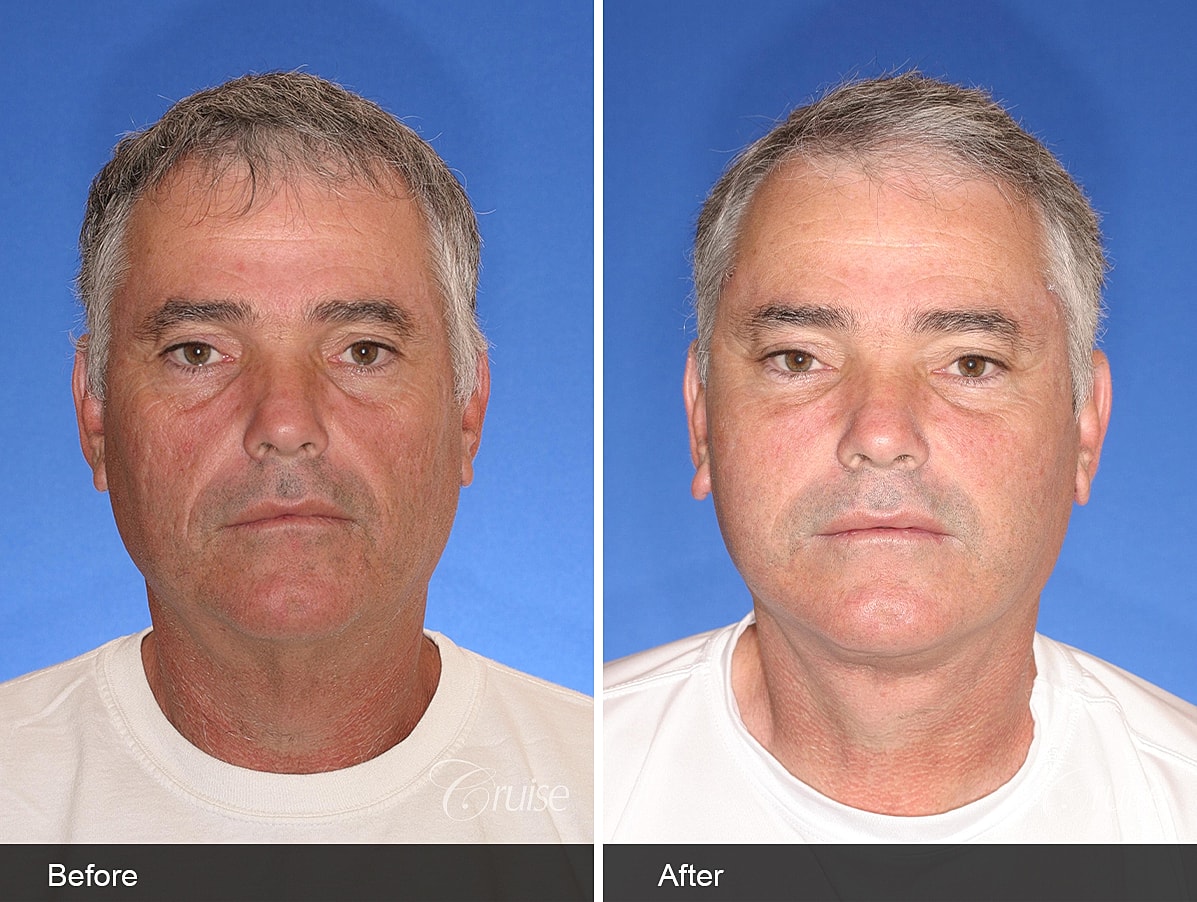
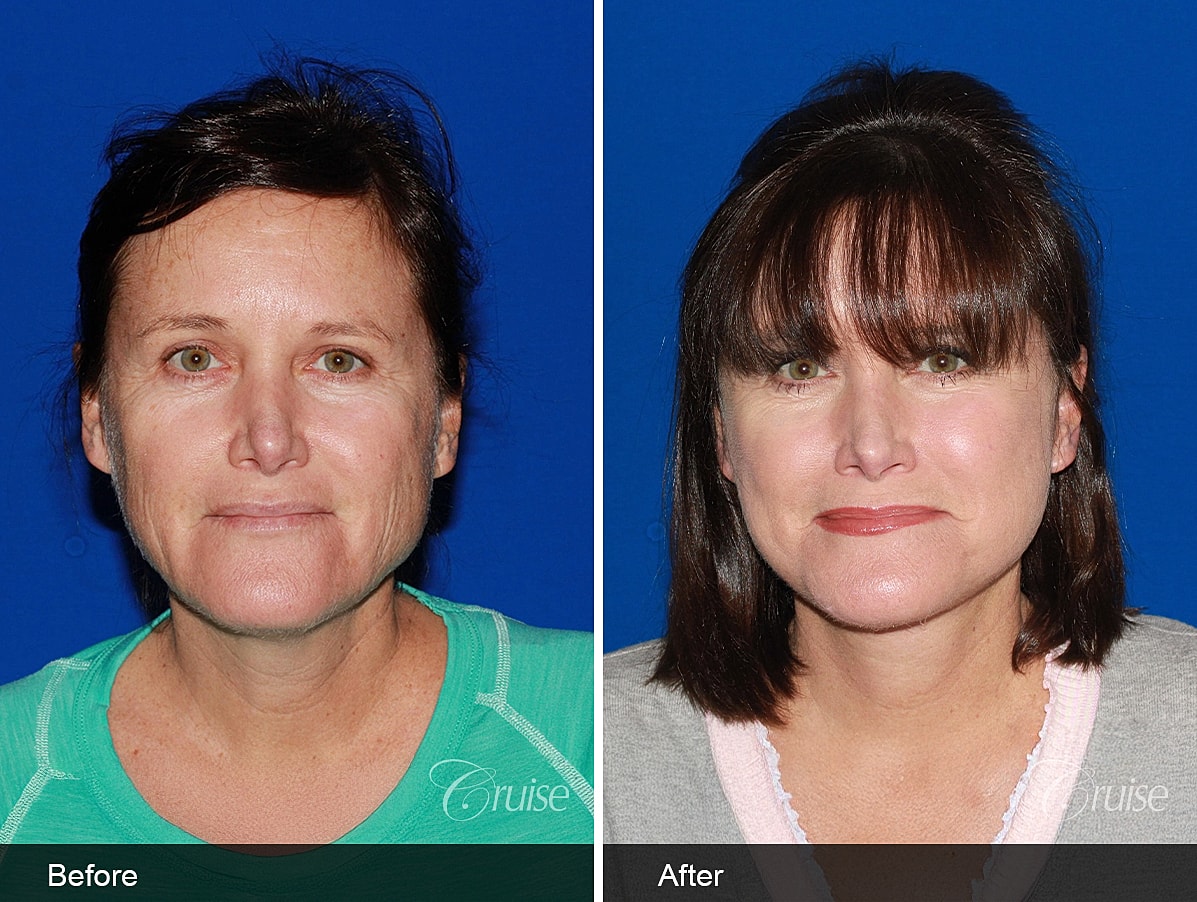
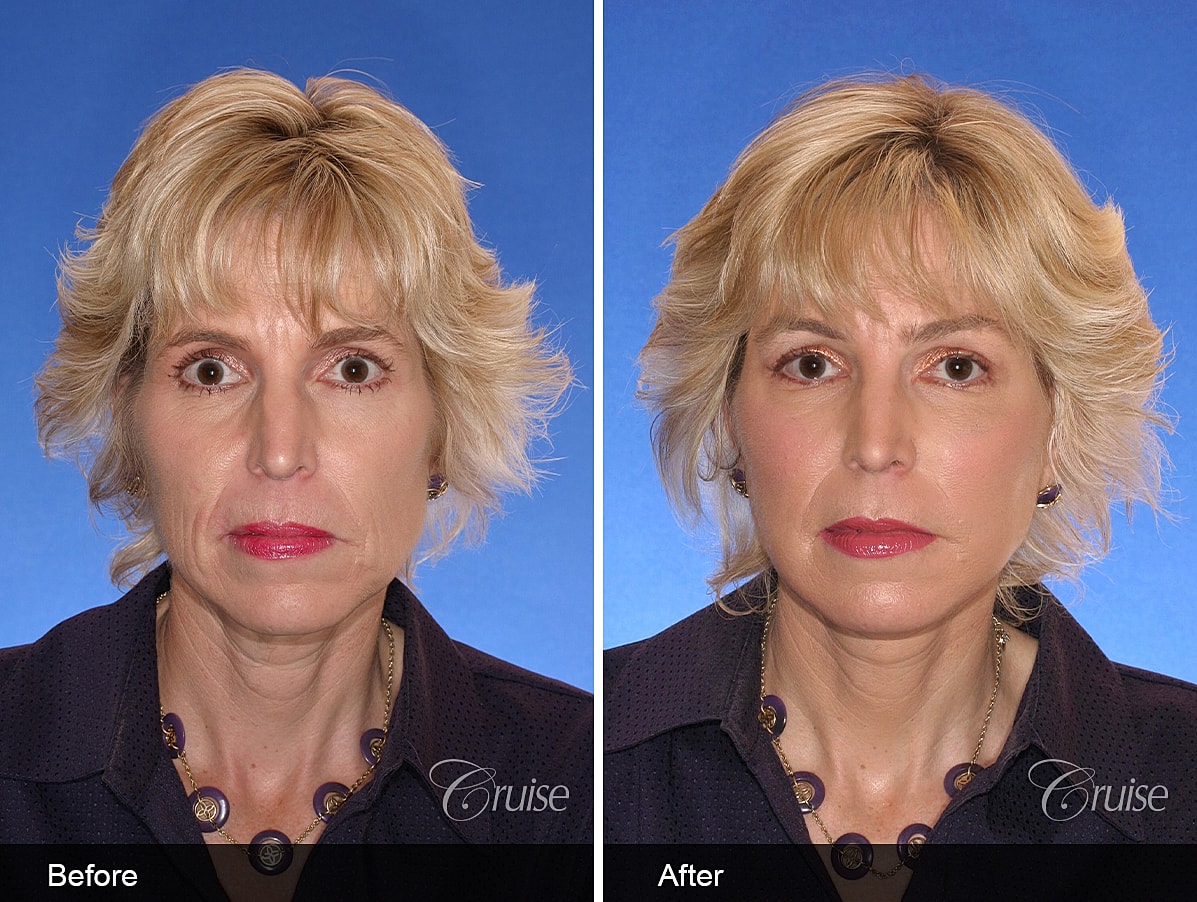
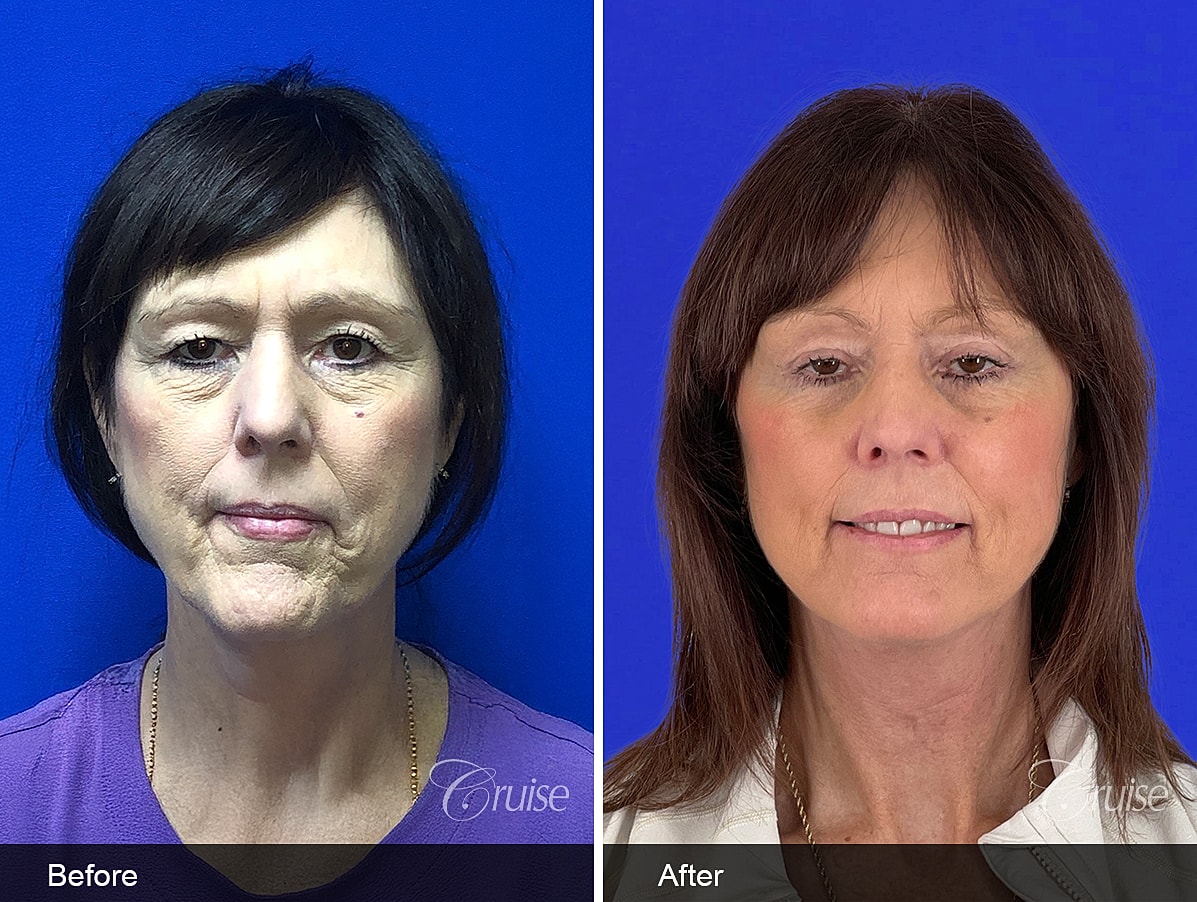
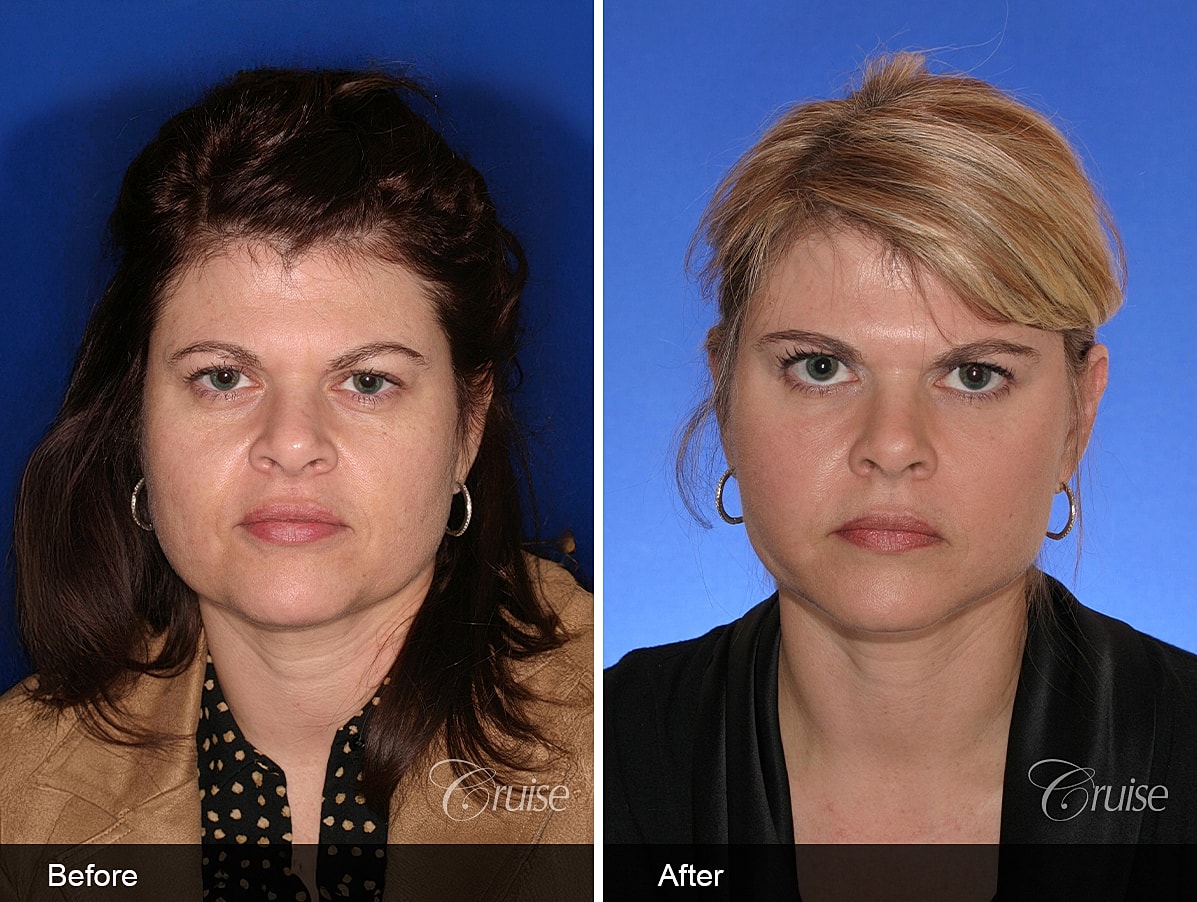
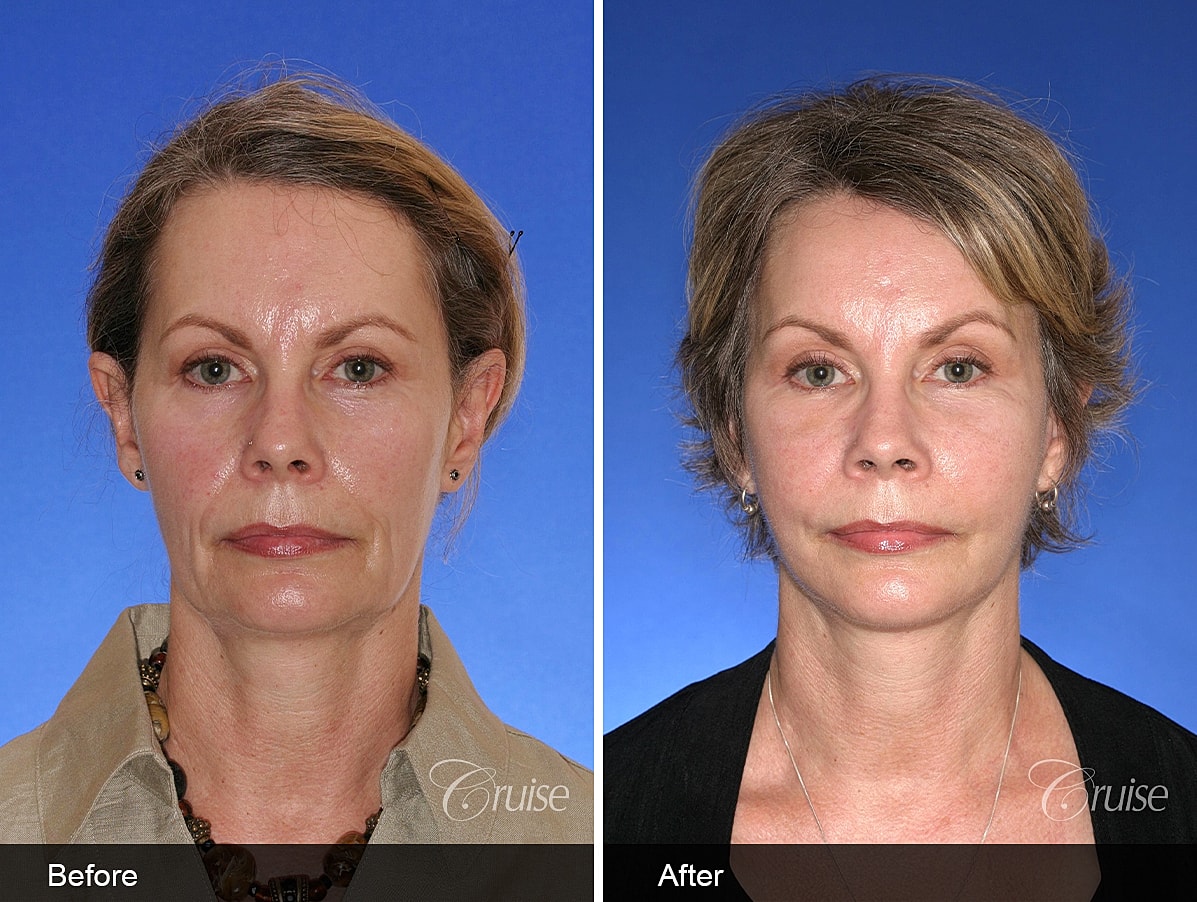
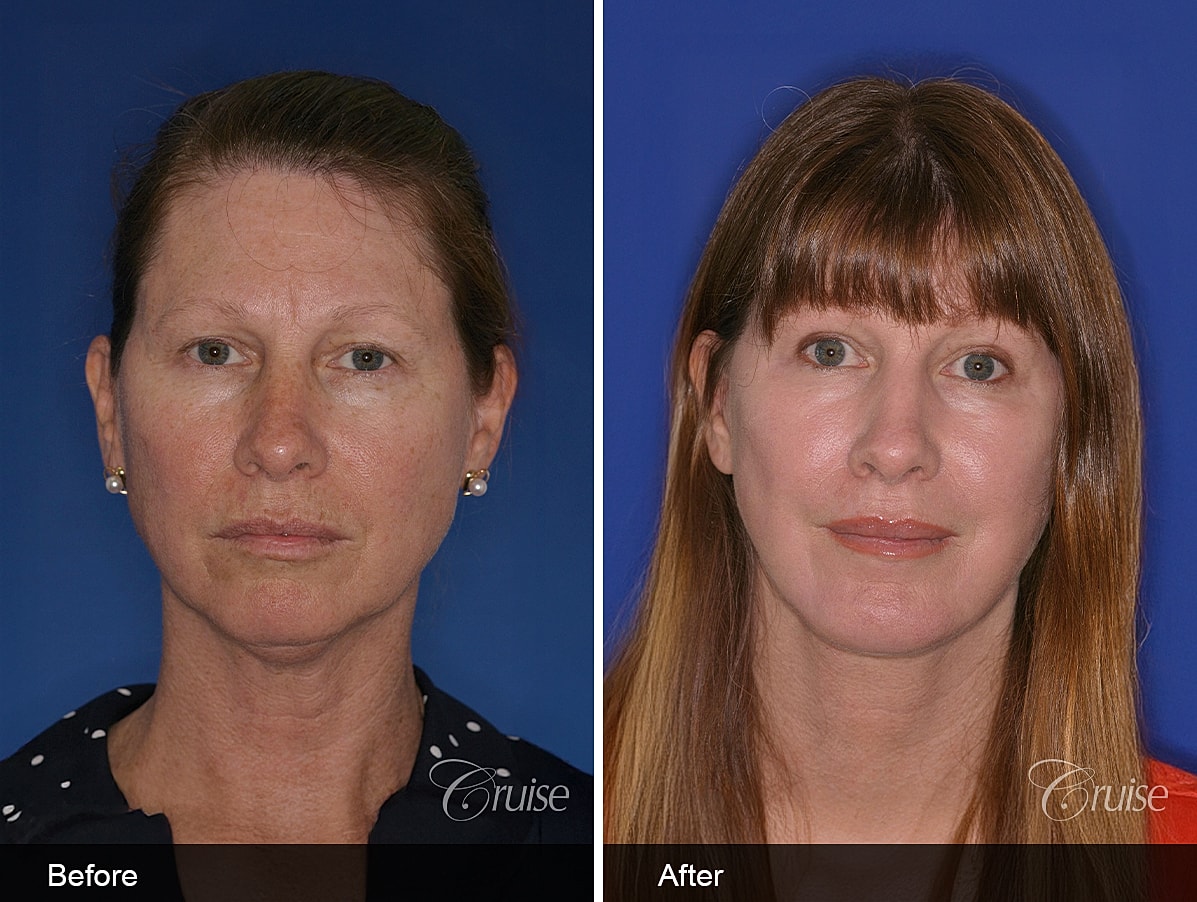
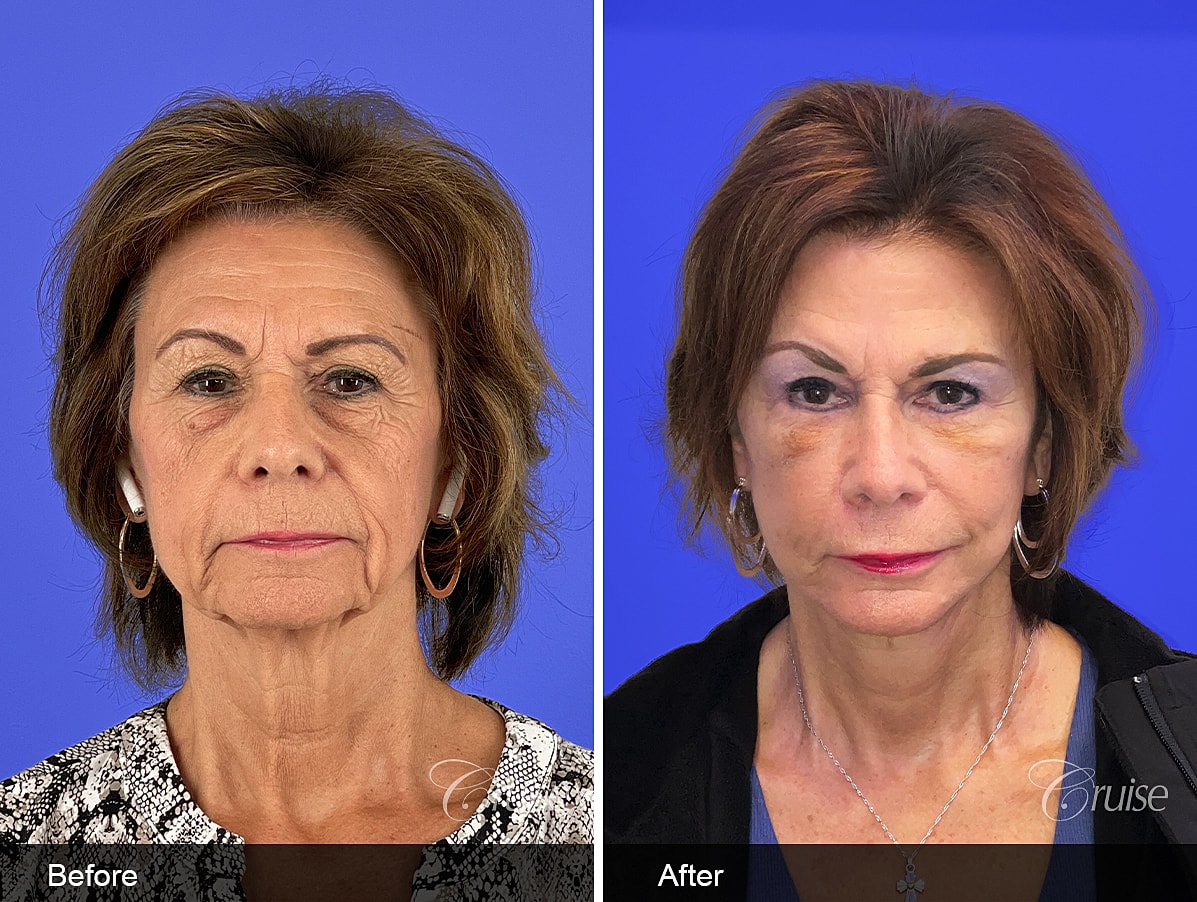
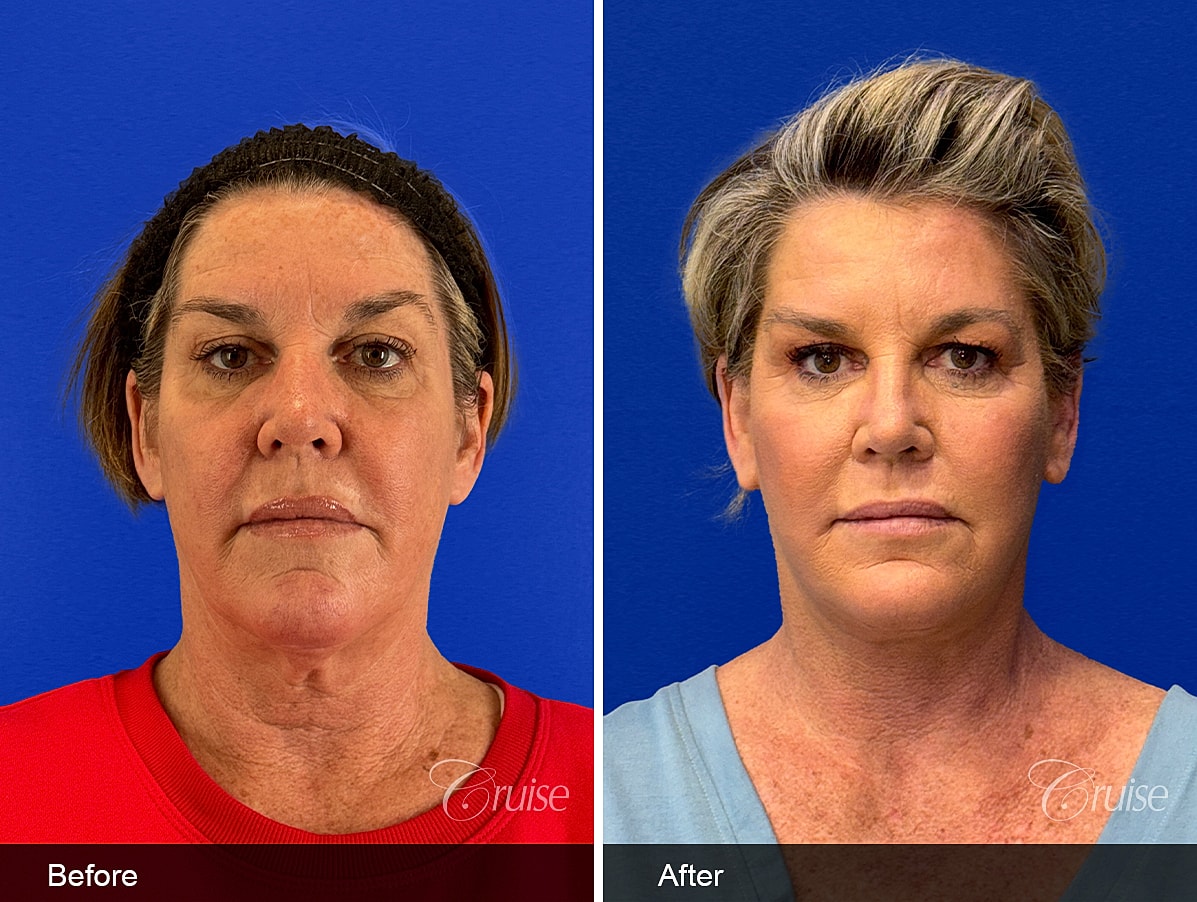
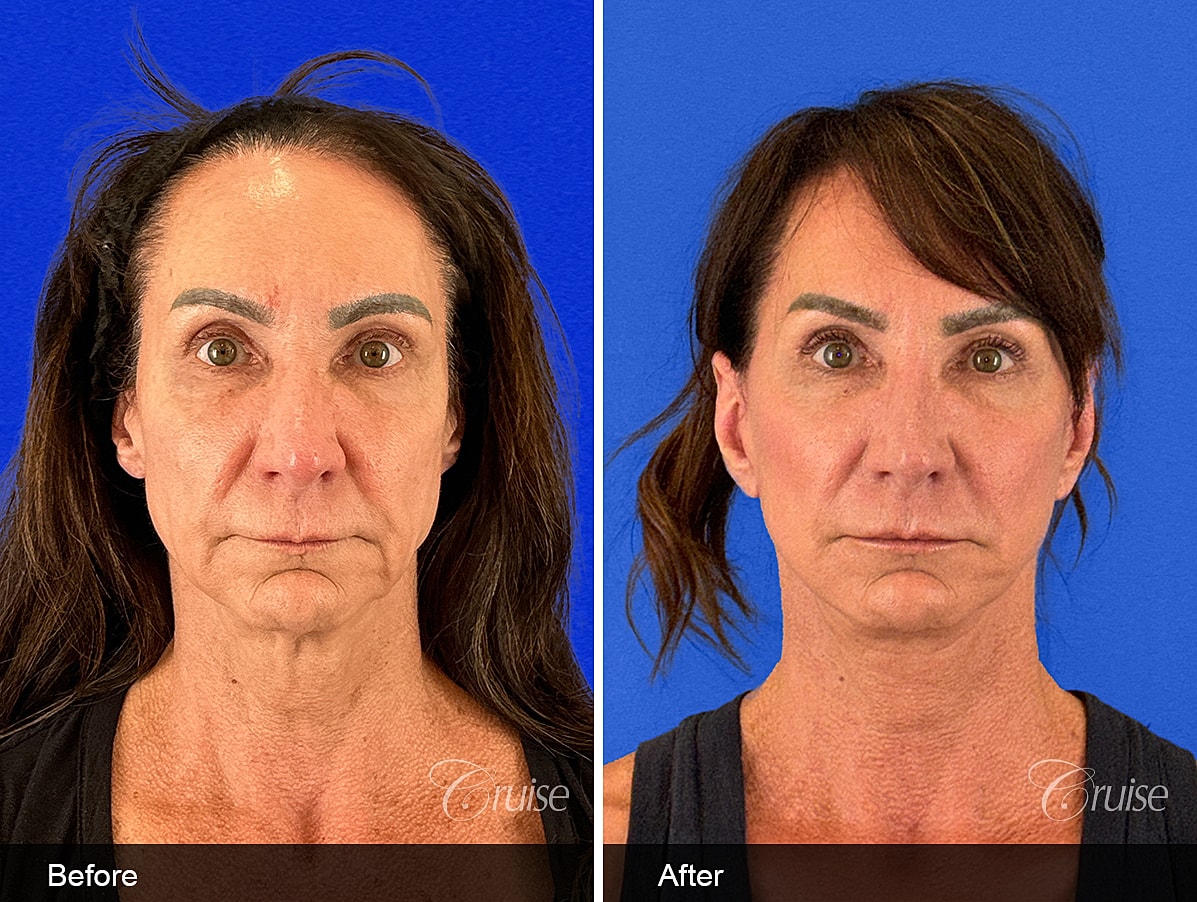
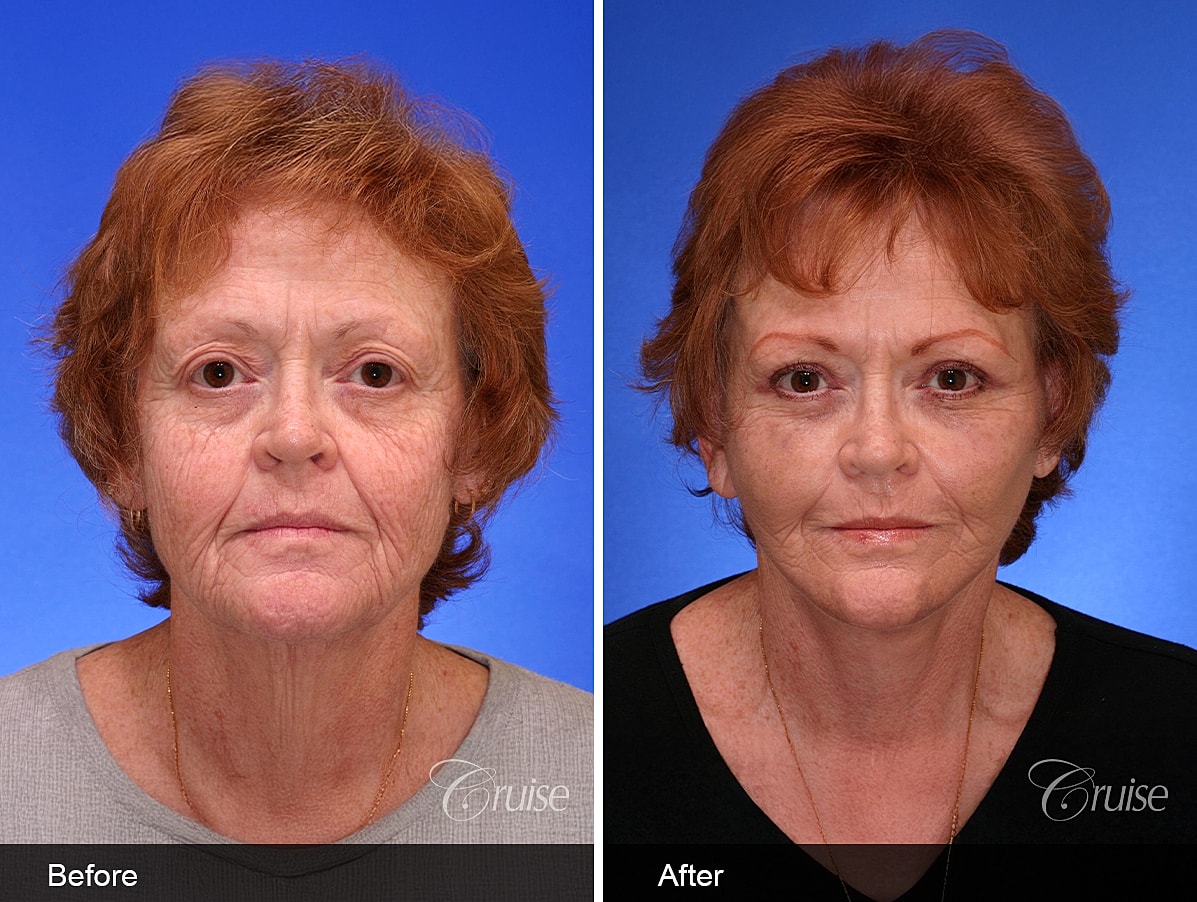
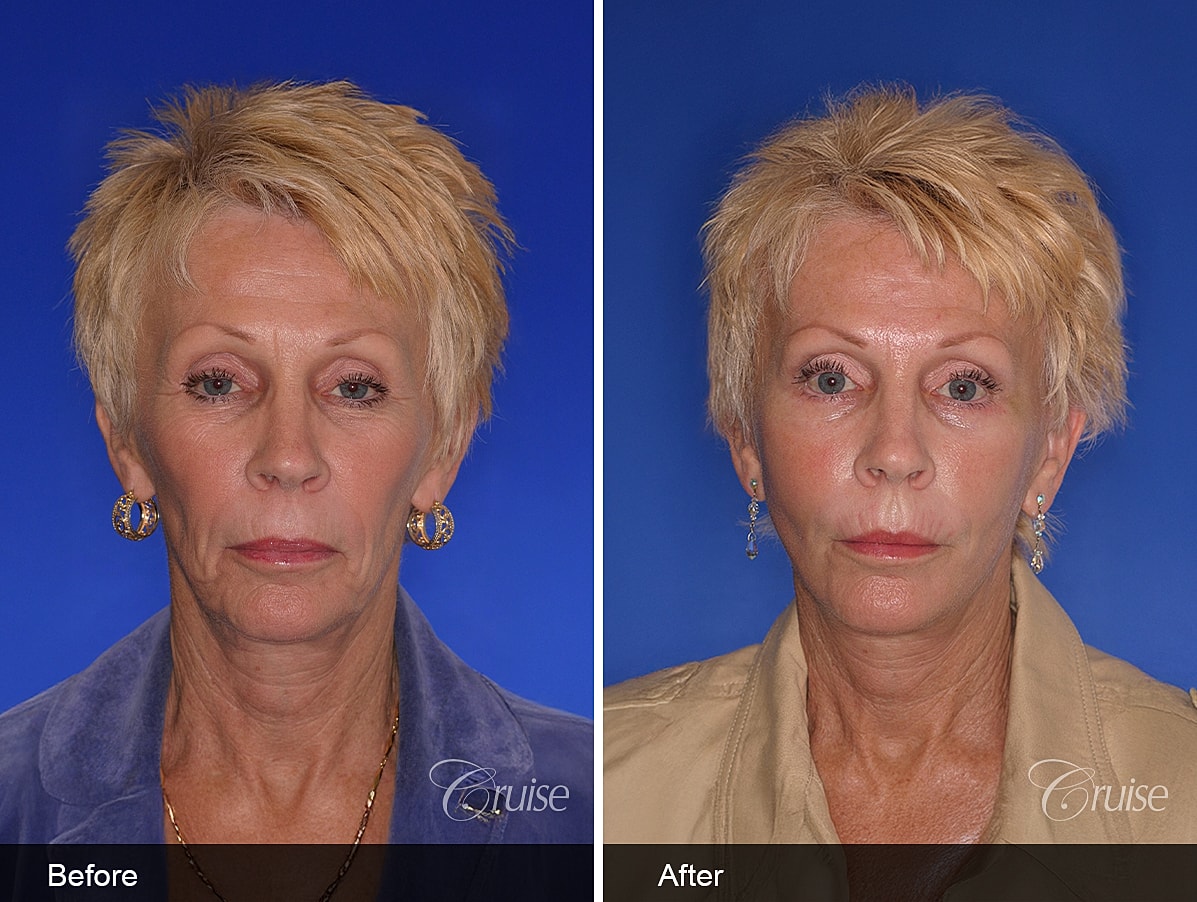
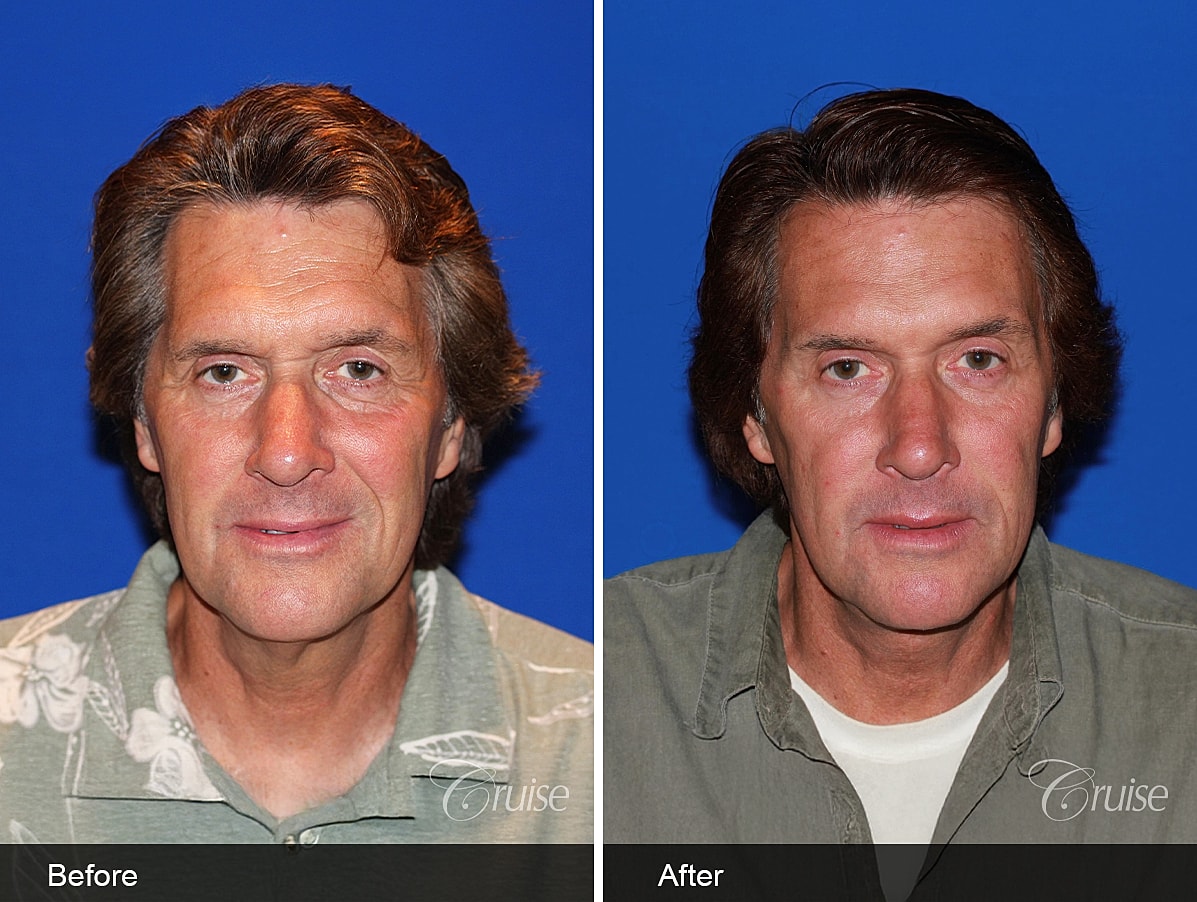
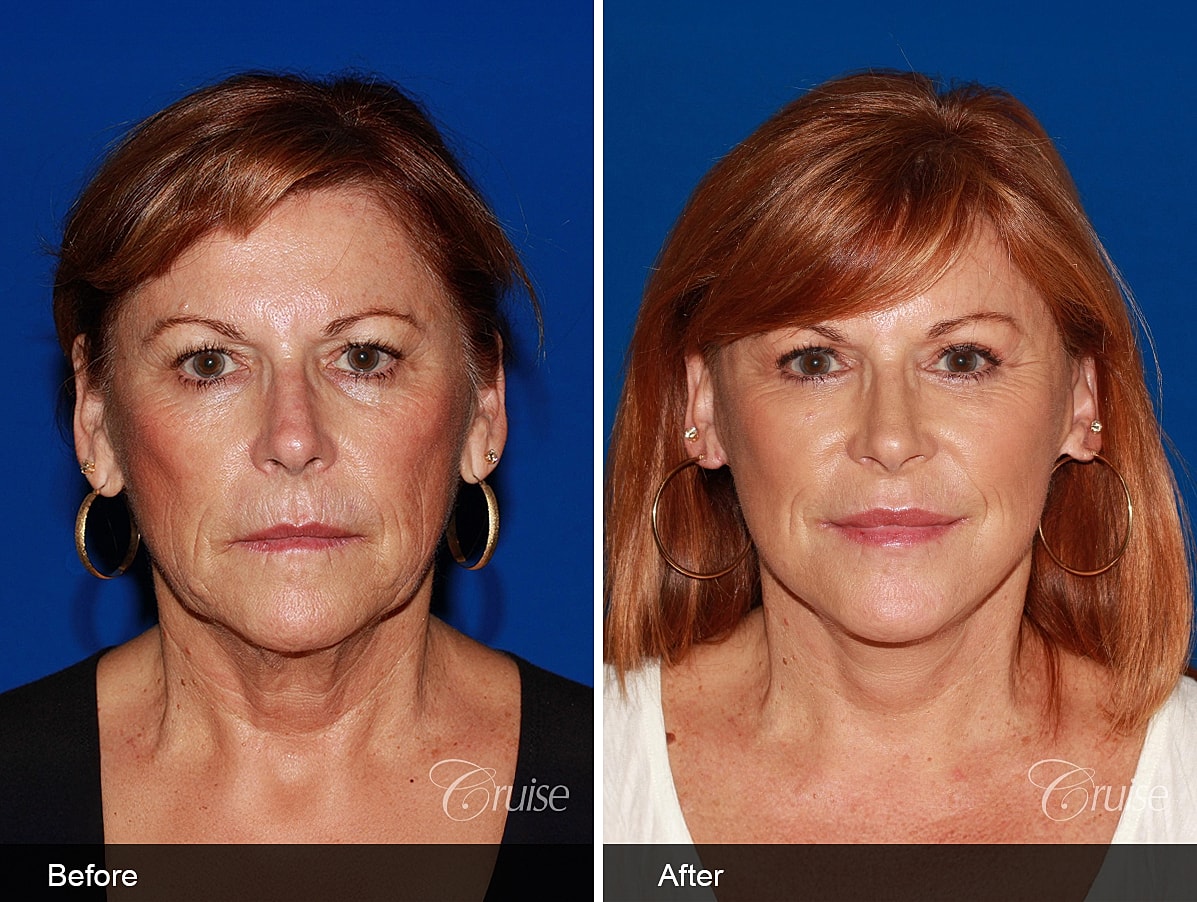
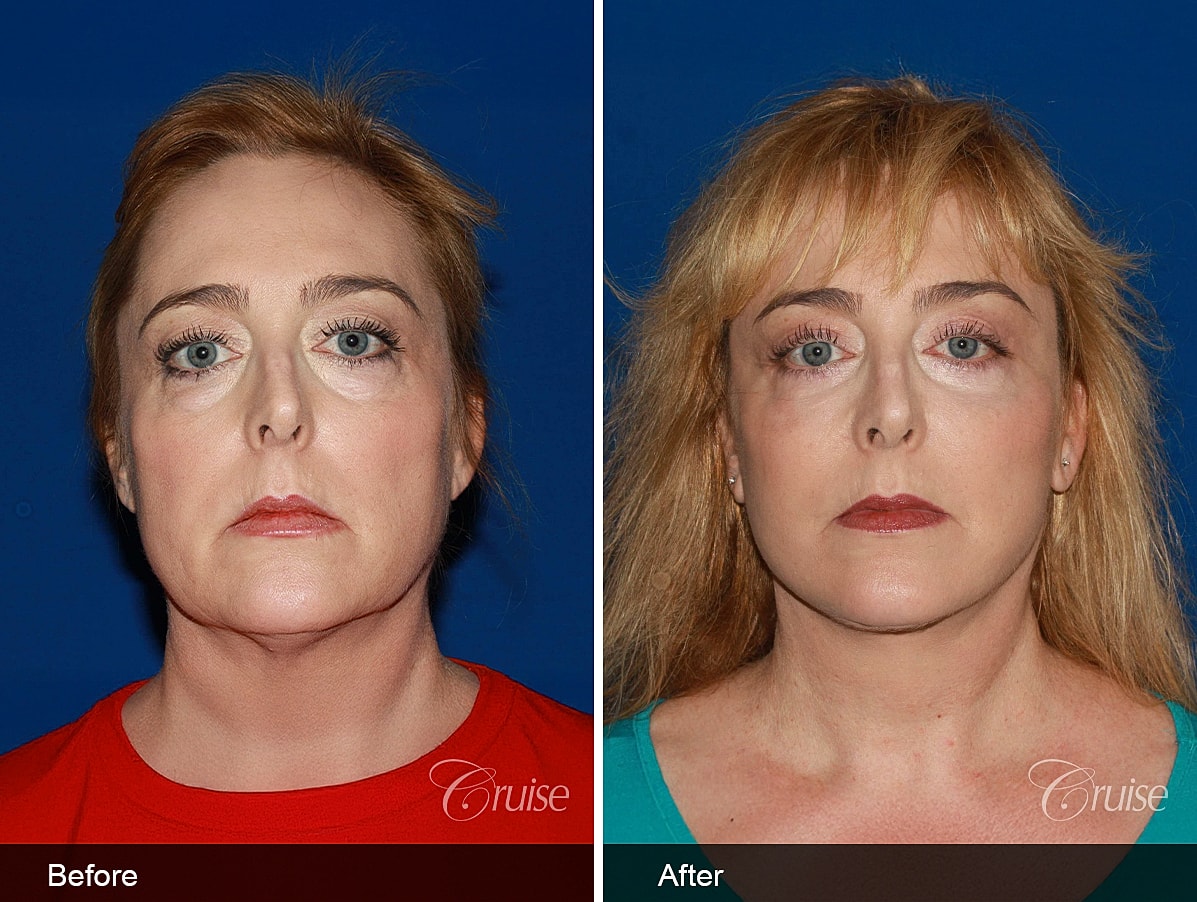
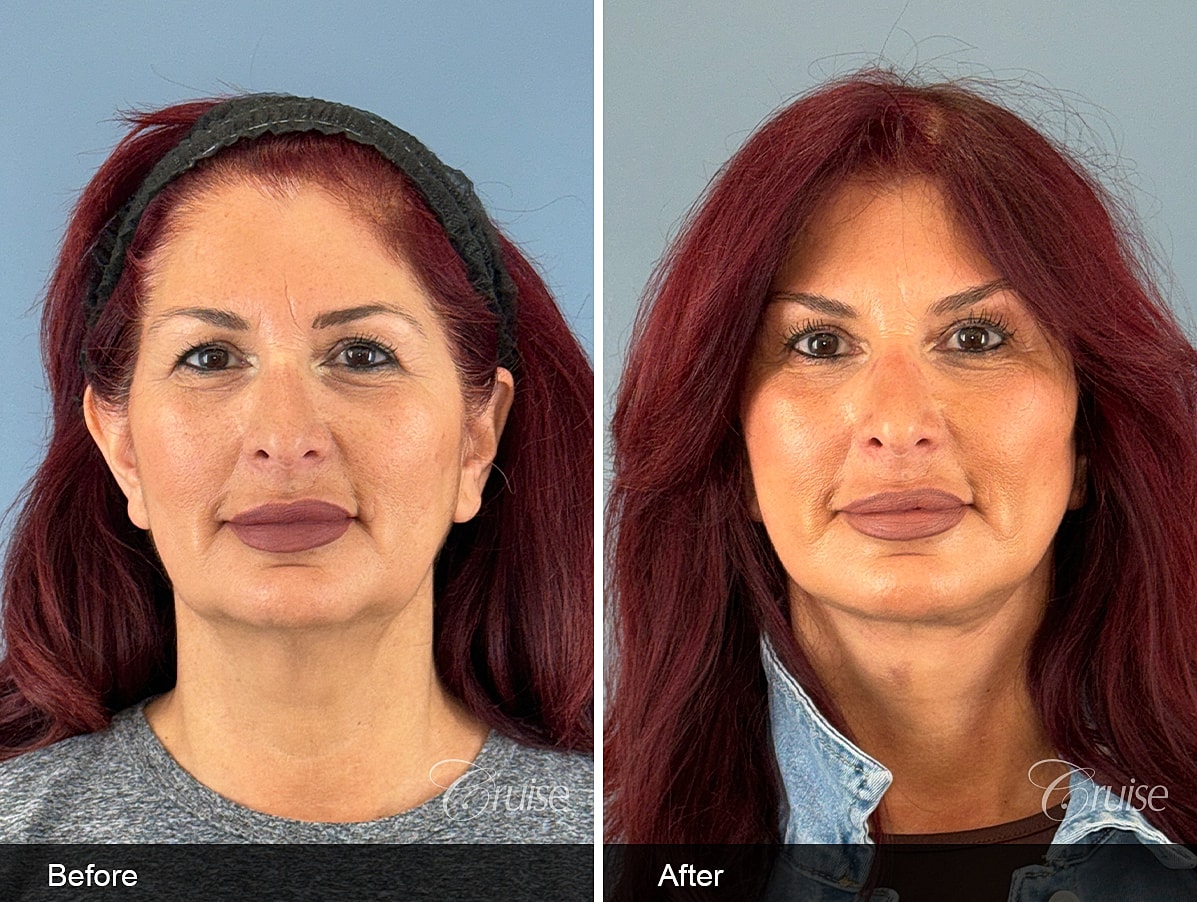
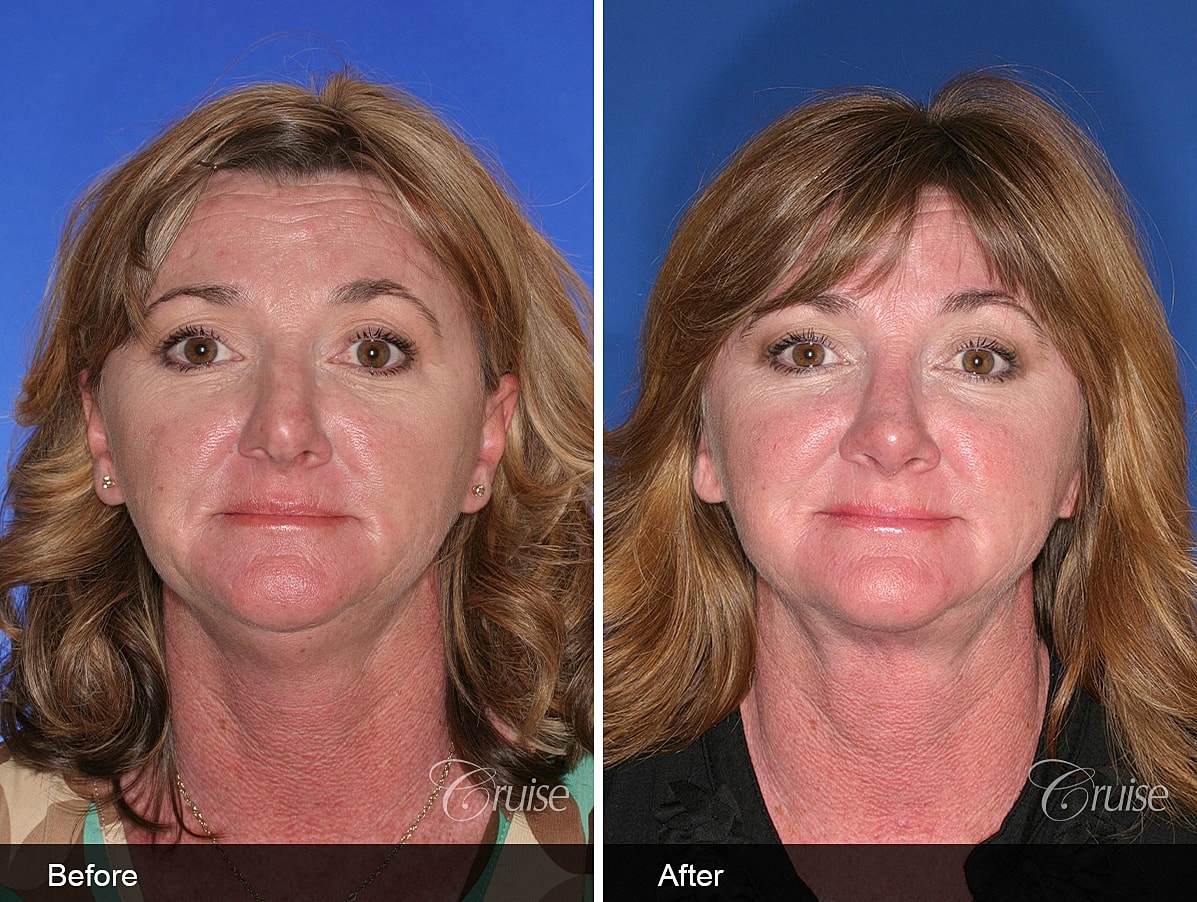
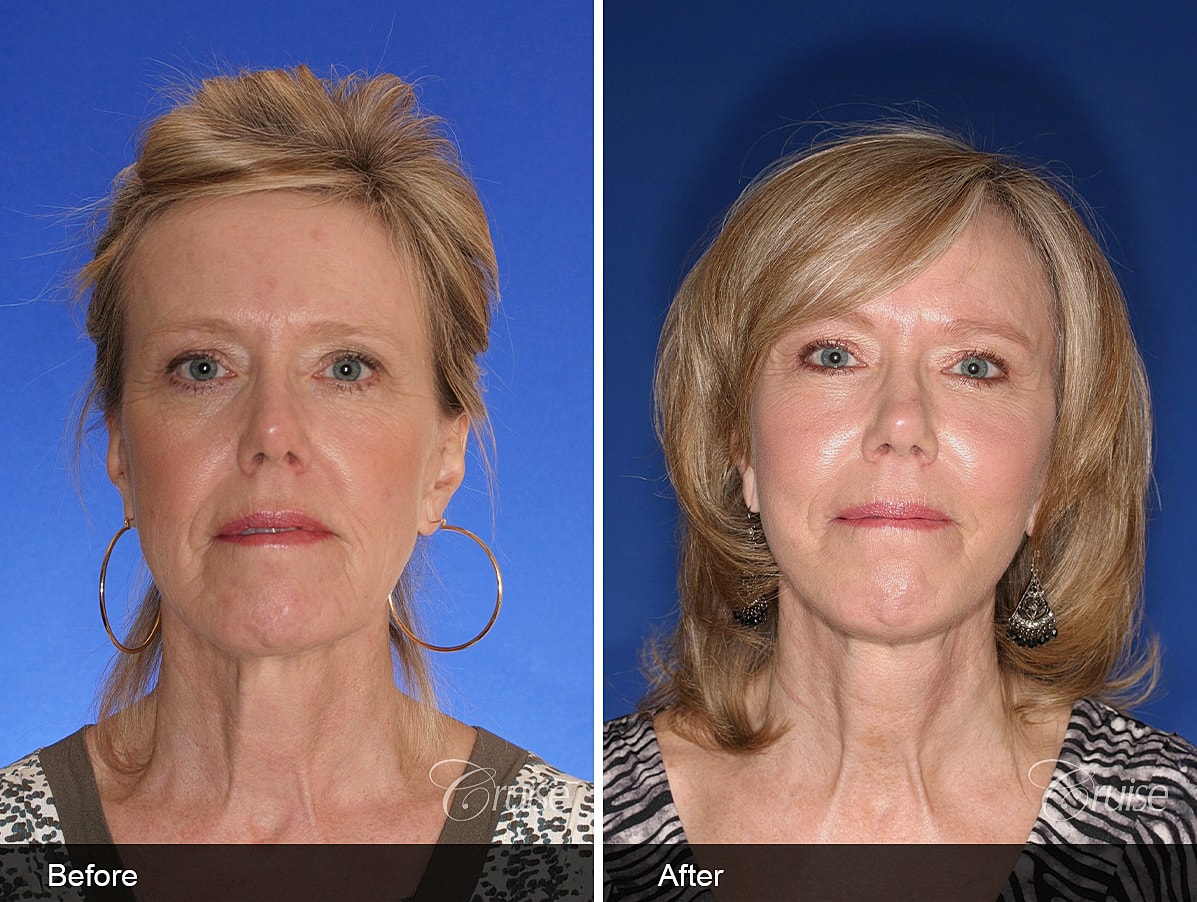
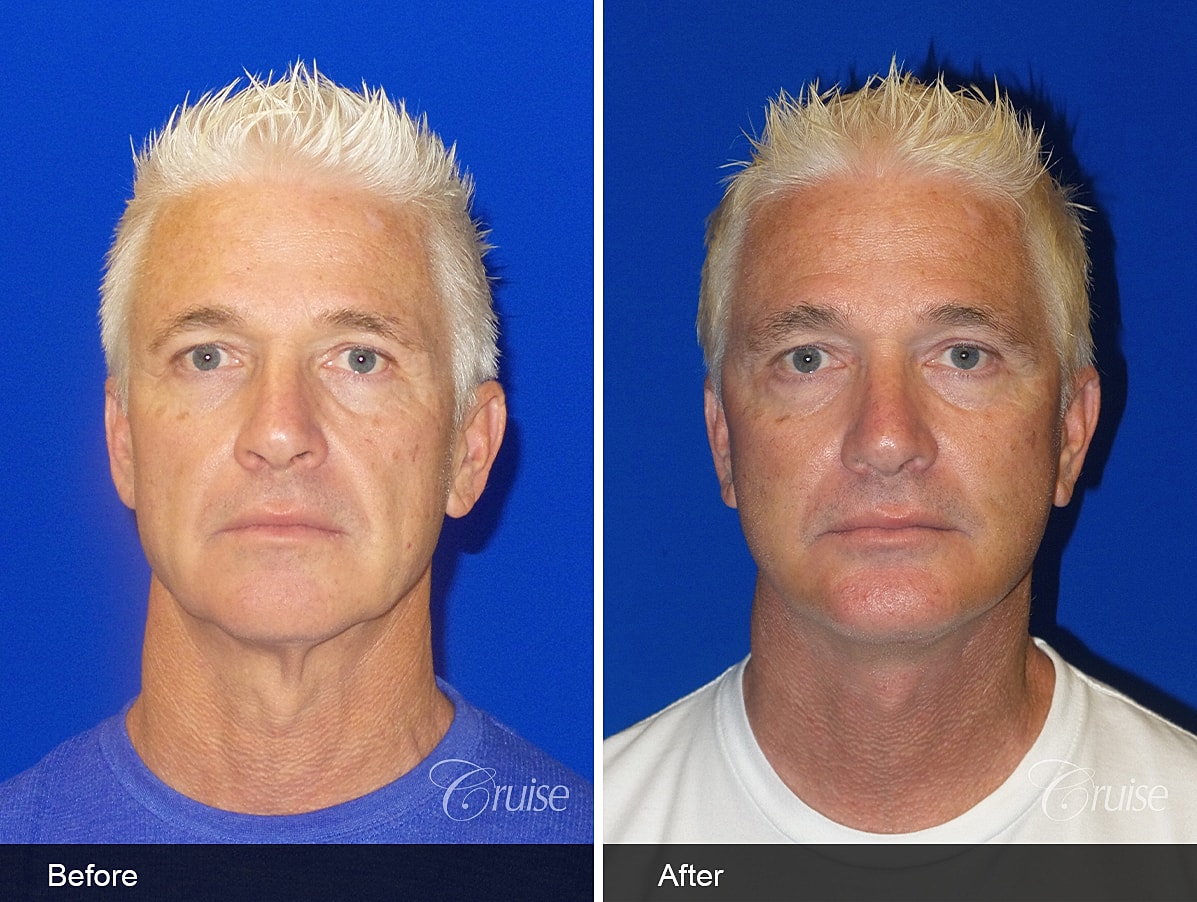
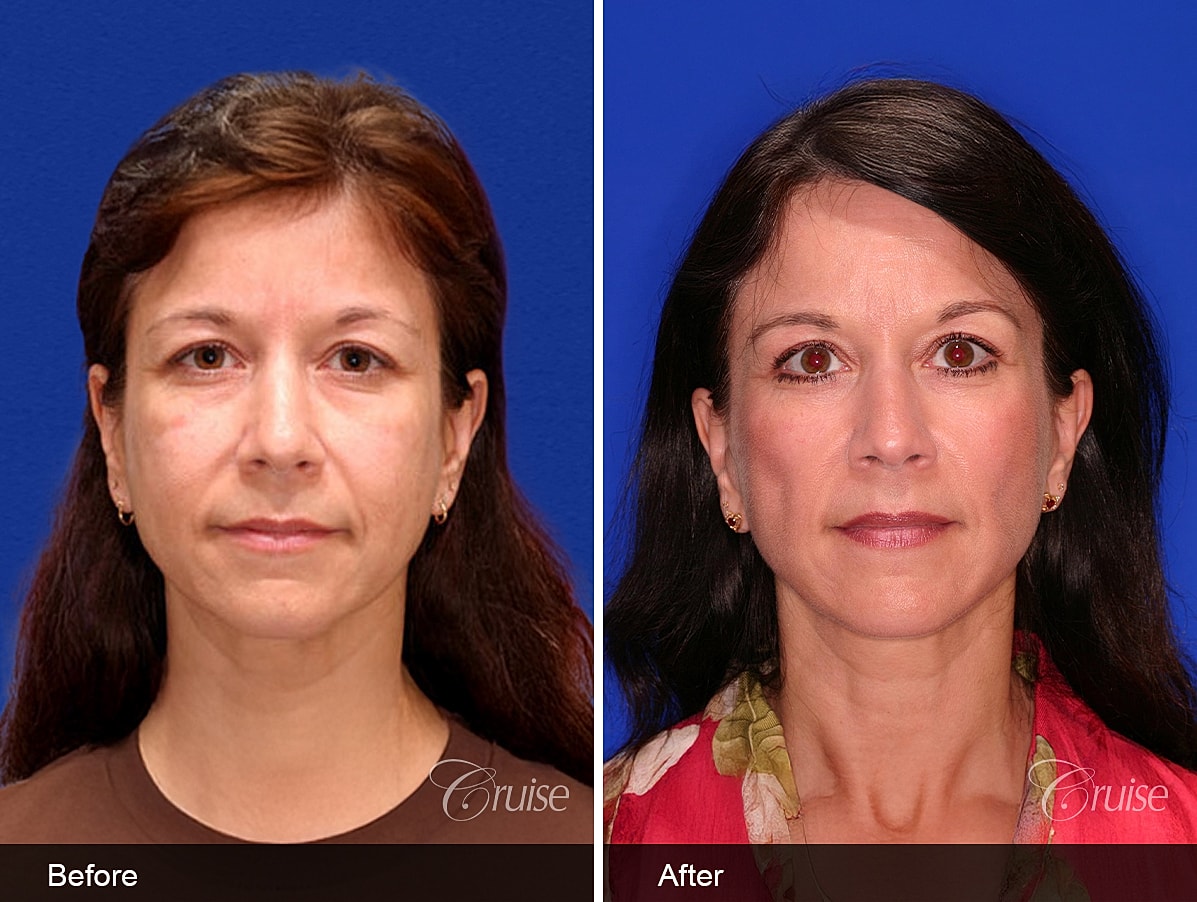
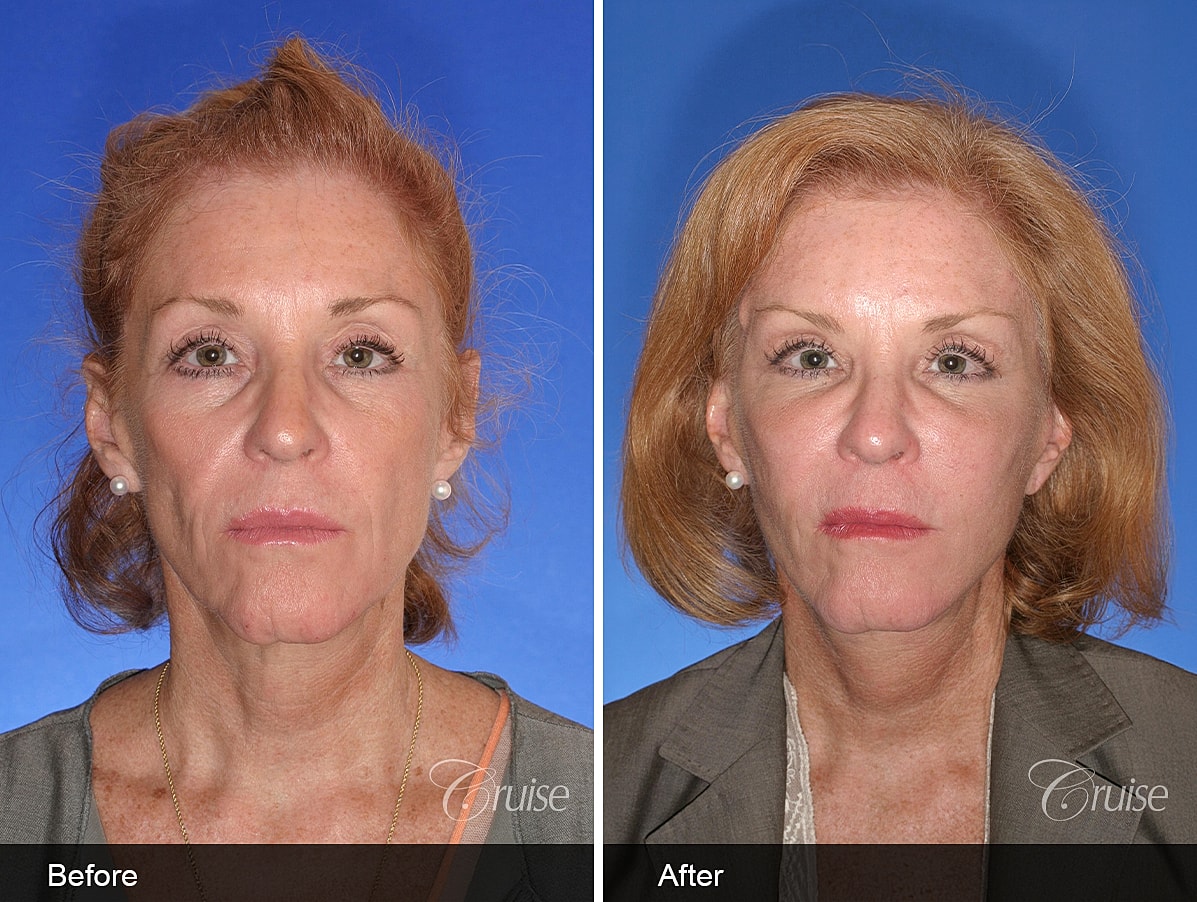
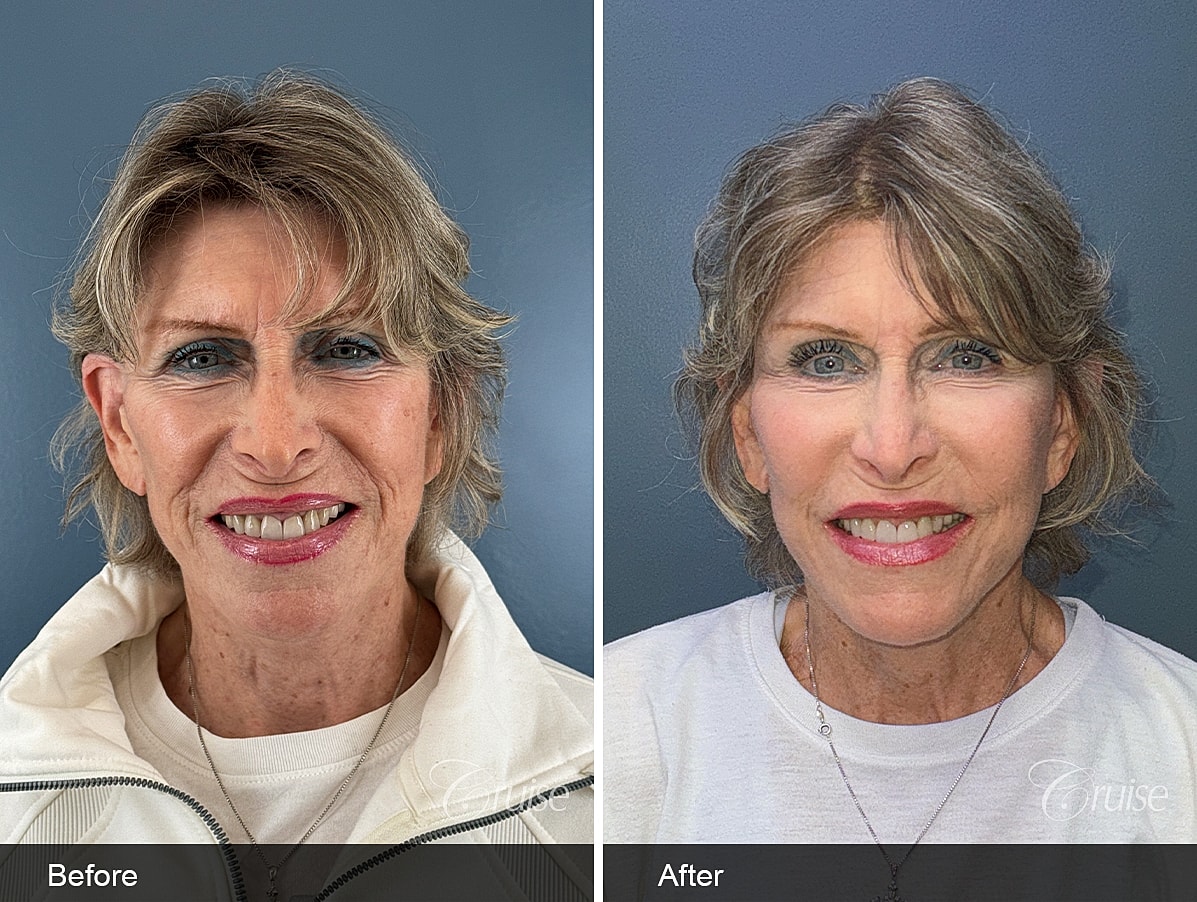
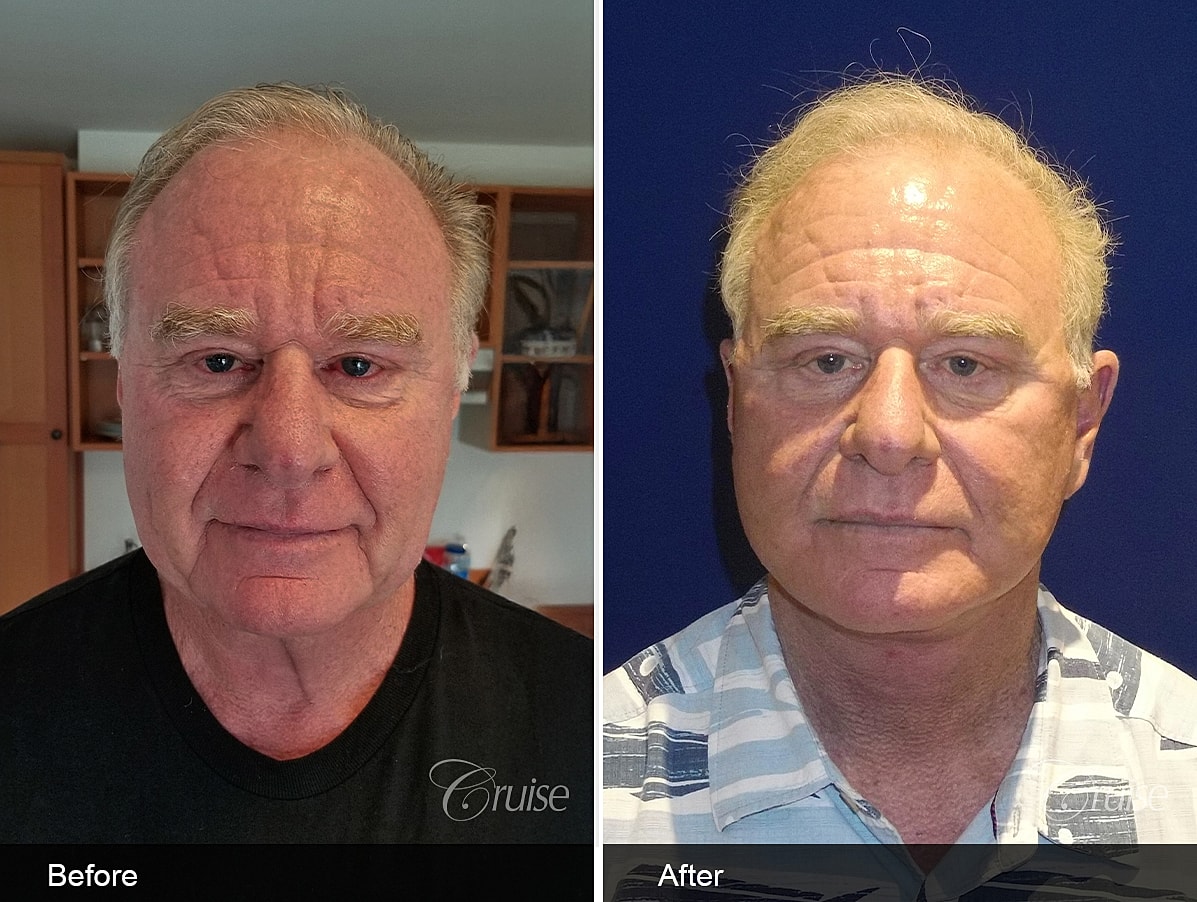
The most meaningful way to understand facelift surgery and set realistic expectations is to review our before-and-after photos.
Consistent, natural facelift results are not defined by how much change is created, but by how seamlessly the face is restored. The goal is not to look different, but to look like yourself with improved definition, contour, and vitality.
1 of 62
Choosing to undergo a facelift procedure offers lasting, structural benefits that extend far beyond simply removing excess skin:
A smooth healing process relies on straightforward pre-operative preparation. First, you will complete your medical clearance through a standard health evaluation, ensuring your body is in optimal shape for surgery and general anesthesia.
In the weeks leading up to your facelift Orange County patients will need to temporarily pause certain medications, such as aspirin, blood thinners, and specific herbal supplements, that can impact healthy blood flow to your facial tissue.
It is also essential to stop all nicotine use completely for four to six weeks prior to your procedure, as nicotine compromises circulation and increases the risk of poor wound healing.
Finally, prepare your resting space at home with plenty of firm pillows; keeping your head consistently elevated after surgery is the most effective way to minimize swelling and protect your newly refined, youthful contours.
Understanding the Experience
Choosing to undergo a facelift is not just about the result, it’s about the process.
In these videos, you’ll see how I approach cosmetic surgery, how decisions are made, and how patients experience the process, from consultation through recovery.
The Look You Have
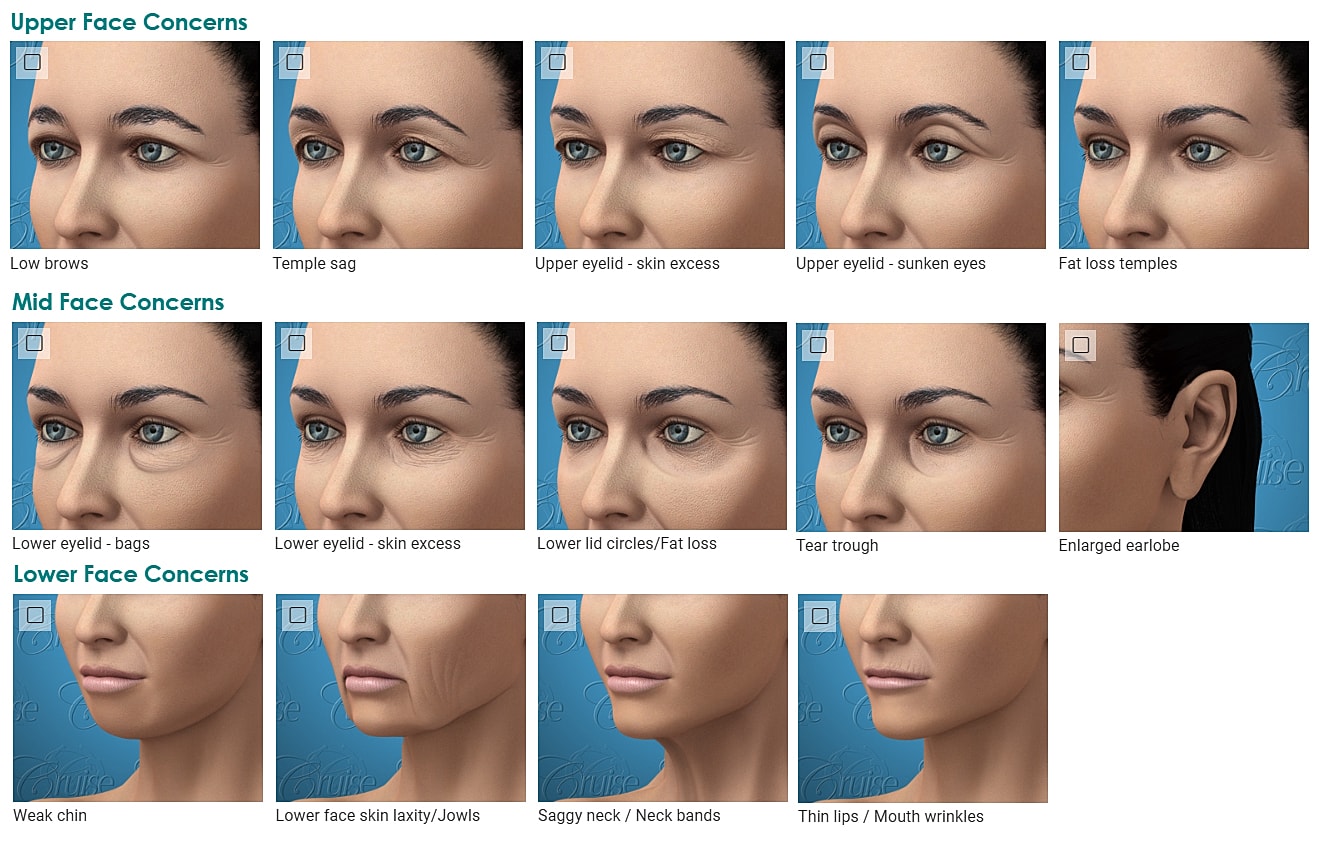
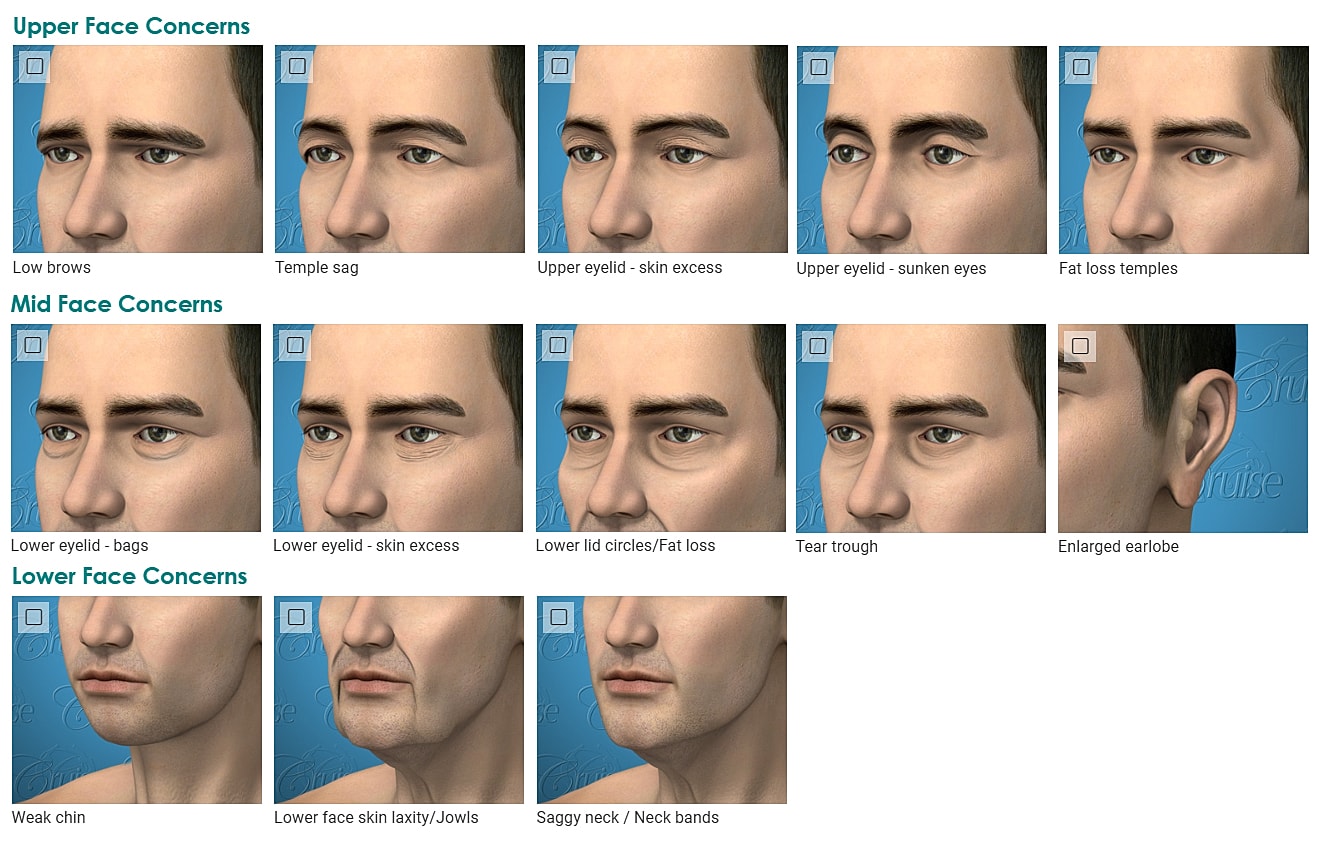
The interactive diagram below was created by Joseph T Cruise, MD, to help you identify what you don't like about your face now. This provides both you and Dr. Cruise a clear visual of what is bothering you and will help him formulate a customized treatment plan to address your concerns, whether they involve excess skin, deep nasolabial folds, or changes in the neck.
Click the images below to select your concerns in each category. If you would like to submit the form for review, one of Joseph T Cruise, MD's patient care coordinators will review your selections and contact you to discuss further.
The interactive diagram below was created by Joseph T Cruise, MD, to help you identify what you don't like about your face now. This provides both you and Dr. Cruise a clear visual of what is bothering you and will help him formulate a customized treatment plan to address your concerns, whether they involve excess skin, deep nasolabial folds, or changes in the neck.
Click the images below to select your concerns in each category. If you would like to submit the form for review, one of Joseph T Cruise, MD's patient care coordinators will review your selections and contact you to discuss further.
Our Orange County facelift (also known as rhytidectomy or facelift surgery) is a surgical procedure that lifts and repositions sagging facial tissues to rejuvenate the lower face, jawline, and neck. It addresses loose skin, deep wrinkles, and excess fat, restoring smoother contours and a more youthful appearance.
Many people think that facelift procedures simply tighten excess skin, and this was once the case. However, new research and progressive technological innovations have given plastic surgeons such as Joseph T Cruise, MD, a greater understanding of the underlying causes of facial aging and improved procedures to combat it. Unlike a traditional facelift that simply tightens skin, Dr. Cruise’s advanced technique targets the superficial musculoaponeurotic system (SMAS) and underlying facial muscles. This deeper approach produces natural-looking, lasting results without the stretched or “windswept” look sometimes seen with older techniques.
Joseph T Cruise, MD, addresses all facelift patients individually with a customized approach to evaluating the face.
Our custom facelift page outlines the specific effects of a number of common facial rejuvenation procedures, including upper and lower eyelid surgery, brow lift, fat transfer, neck lift, and chin implants. If you are seeking a personalized solution for your concerns, learn more about Joseph T Cruise, MD’s CustomLift® face lift. Full facial rejuvenation surgery results in pleasing, natural-looking results when all aspects of facial aging have been corrected.

Mastering the Art of Deep Rejuvenation
In order to achieve the best results from your facelift in Orange County, Joseph T Cruise, MD, and his dedicated patient care coordinators meet personally with each patient to discuss exactly what bothers them and what they are trying to achieve with facelift surgery. You will walk away feeling confident and empowered to make a decision about whether or not having a facelift is the right choice for you.
The staff at Cruise Plastic Surgery provides every patient with invaluable information before, during, and after the consultation, ensuring each person’s specific concerns are addressed. Proprietary software, developed by Joseph T Cruise, MD, provides in-depth information at every stage in the surgical process: decision making, consultation, scheduling, pre-op, surgery date, and recovery.
Facelift surgery is an outpatient procedure performed under general anesthesia or local anesthesia with sedation. The procedure generally takes 3 to 5 hours, depending on the extent of correction and any other procedures performed at the same time.
Incisions are created along natural creases, usually in front of the ear and extending into the lower scalp, where they are well-concealed. Through these incision sites, Dr. Cruise lifts and repositions the deeper tissues, including the SMAS layer, to support the facial skin naturally. Facial fat may be repositioned or facial fat grafting may be performed to rebuild lifted, youthful contours. This comprehensive approach avoids an over-pulled look, resulting in a refreshed, natural-looking appearance.
Dr. Cruise uses precision techniques to close the incisions, minimizing the risk of visible scarring. When surgery is complete, the patient is monitored in a recovery suite before being released to return home the same day.
Reversing the Visible Signs of Aging
Youthful facial skin has greater fullness because of facial fat and more elasticity because of supportive, stretchy ligaments that help hold the facial tissue in place. Loss of fullness and elasticity over time contributes to loose, sagging skin that causes many people to consider a surgical procedure to reverse these aging effects.
With a facelift Orange County patients get a highly customized procedure designed to address several common complaints of facial aging, such as:
Dr. Cruise’s advanced facelift technique considers the deeper structures of the facial anatomy to provide an elegant, natural-looking lift.
The interactive diagram below was created by Joseph T Cruise, MD, to help you identify what you don't like about your face now. This provides both you and Dr. Cruise a clear visual of what is bothering you and will help him formulate a customized treatment plan to address your concerns.
Click the images below to select your concerns in each category. If you would like to submit the form for review, one of Joseph T Cruise, MD's patient care coordinators will review your selections and contact you to discuss further.
Upper Face Concerns
The Aging Face Explained
It is important to understand the anatomy of the face and how it changes during the aging process. Joseph T Cruise, MD, addresses the face in four quadrants with a facelift. View each section below to see what procedures are available to treat the most common issues of facial aging.
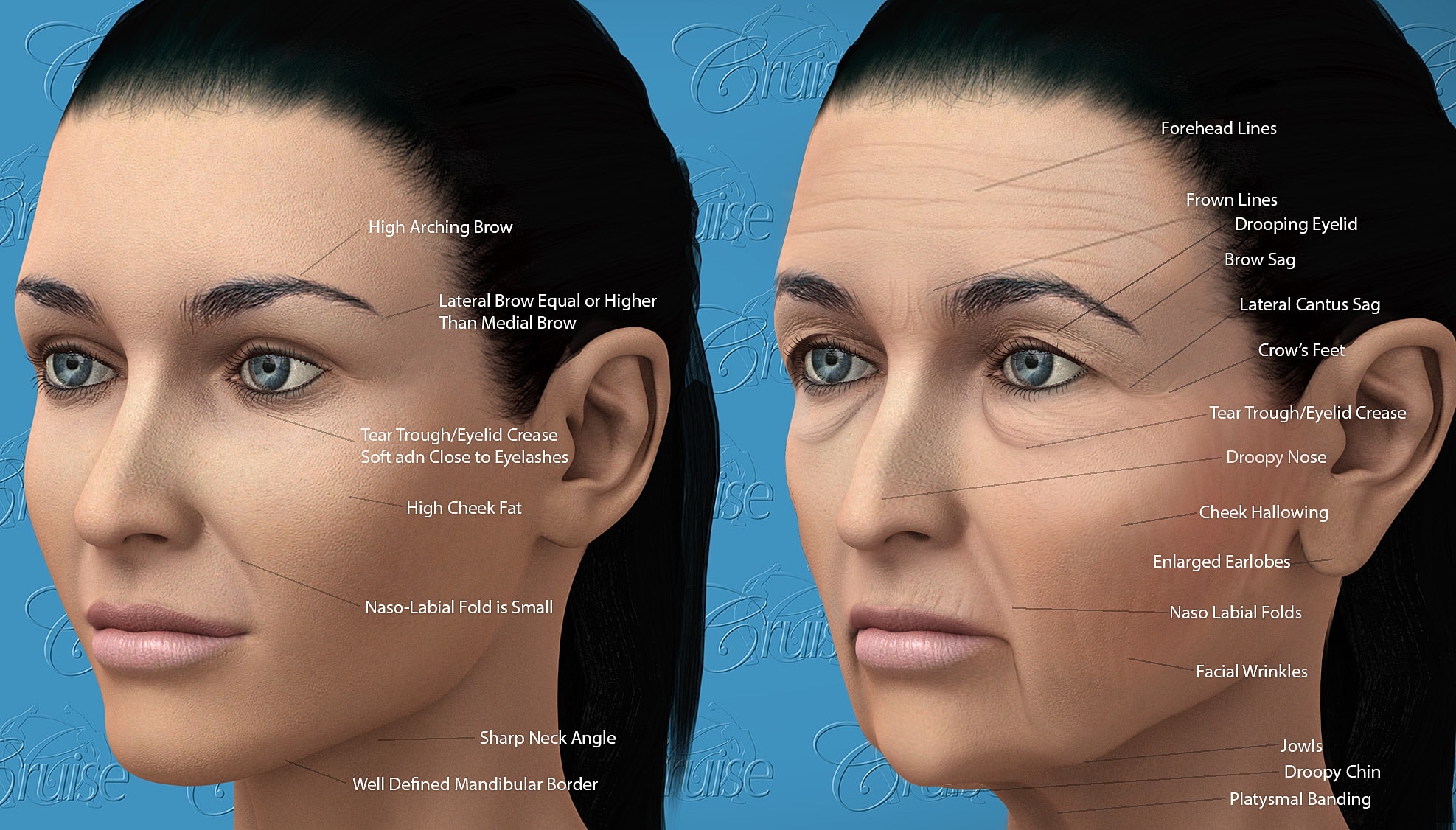
Tightening skin alone is not enough to correct all the potential causes of facial aging, such as saggy skin, crow’s feet, dropping eyes, and other concerns that cause people to wonder if facial plastic surgery may be right for them. As facial tissue loses its elasticity and facial fat either dissipates or descends, many people find that simply tightening skin is only a temporary solution, and later they choose to have additional cosmetic surgery to achieve the full results they desire from a face lift.
A simple and extreme explanation to demonstrate the importance of facial fat for a youthful, wrinkle-free face is to compare the chubby, rotund cheeks of a baby with the looser, thinner cheeks of a more mature face. Skin care treatments such as dermabrasion and chemical peels are part of the solution, but with fat transfer, you can reclaim the smooth, contoured facial features you enjoyed in your youth.
When facial fat descends out of the cheek and into the area around the lips, it not only affects the fullness of a person’s face but can make their eyes look hollow and gaunt and create jowls at their jaw line. When this occurs, some patients are interested in how a neck lift can extend the youthful look and feel to all parts of their neck, addressing all the concerns caused by aging. Dr. Cruise will carefully evaluate your concerns, skin quality, and facial anatomy to recommend the best approach for achieving your facial rejuvenation goals.
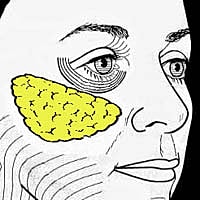
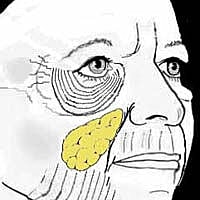
Not all facelifts are the same, and the differences are not subtle.

Superficial tightening only; quick recovery.
Correction Strength (0-5)
Jawline - 4
Jowls - 3
Marionette Lines - 3
Nasolabial - 1
Cheek Fat - 1
Eyelid Crease - 0
SMAS folded and sutured: subtle rejuvenation. Best for early aging when short recovery is essential.
Correction Strength (0-5)
Jawline - 4
Jowls - 3
Marionette Lines - 4
Nasolabial - 2
Cheek Fat - 1
Eyelid Crease - 0
Provides meaningful improvement of lower face and jawline. Does not address midface as effectively.
Correction Strength (0-5)
Jawline - 5
Jowls - 4
Marionette Lines - 4
Nasolabial - 4
Cheek Fat - 3
Eyelid Crease - 1
Addresses aging at a deeper structural level by releasing and repositioning underlying tissues. This allows for more natural movement and longer-lasting results.
Correction Strength (0-5)
Jawline - 5
Jowls - 5
Marionette Lines - 5
Nasolabial - 4
Cheek Fat - 5
Eyelid Crease - 4
Understanding these differences is essential, because the technique ultimately determines whether a result looks natural, or simply looks “done.”
Learn more about the Deep Plane Facelift
A surgical facelift restores structure, but facial aging rarely occurs in isolation.
Volume loss in the temples and midface, along with changes in skin quality, all contribute to the overall appearance. Addressing only one component can create imbalance.
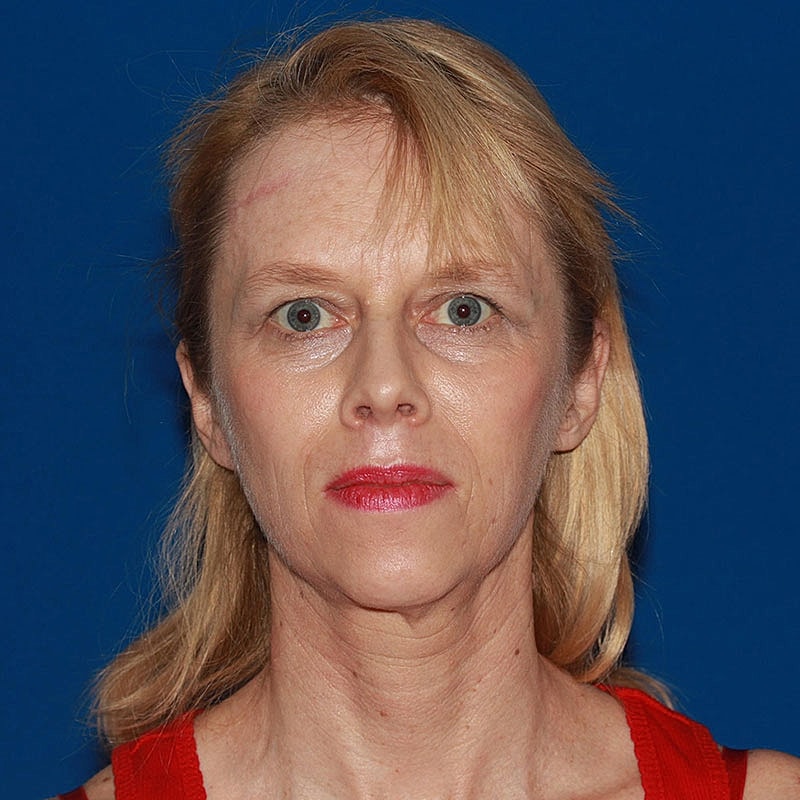
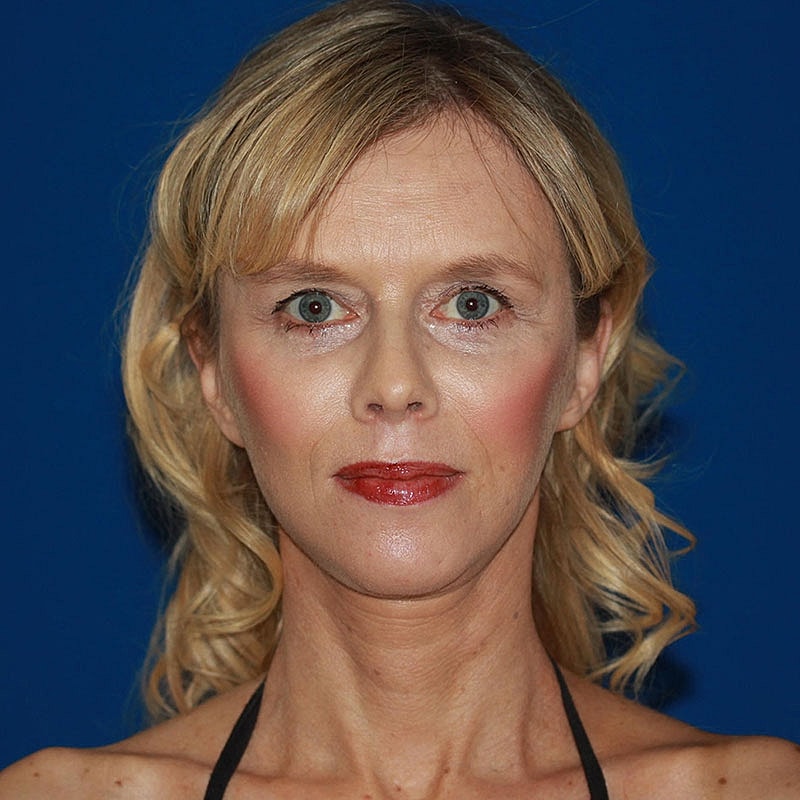
For many patients, optimal results are achieved through a thoughtful combination of:
When performed together, these elements restore harmony across the entire face.
Without this balance, improvements in one area can unintentionally highlight aging in another, what I often describe as a “room-to-room” effect.

Facelift recovery is a predictable and manageable process when performed with precise surgical techniques. Most patients undergo the procedure using general anesthesia or deep sedation, ensuring complete comfort.
Most patients can expect:
The goal is not only a natural result, but a recovery that is controlled, consistent, and aligned with your lifestyle.
Facelift recovery is highly manageable when you provide your body with a calm, supportive environment. Following these guidelines ensures your underlying connective tissue settles beautifully:
Aftercare Focus | Expert Guidelines for Optimal Healing |
|---|---|
| Rest & Elevation | Keep your head elevated at 30 to 45 degrees at all times to prevent fluid accumulation along your jawline and neck skin. |
| Incision Care | Follow our precise cleaning instructions to ensure your facelift scars heal beautifully flat and eventually fade to become virtually undetectable. |
| Activity Levels | Light walking is encouraged to promote circulation. Strictly avoid bending, heavy lifting, or workouts that raise your heart rate for at least four weeks to protect the deeper facial tissues. |

Choosing to undergo a facelift in Newport Beach is a significant decision, one that should be approached with clarity and confidence.
If you are considering facial rejuvenation to smooth out signs of facial aging and restore youthful contours, and you want to understand what is possible in your specific case, a consultation provides the opportunity to develop a plan tailored to your goals.
Because every face is entirely unique, the cost of a facelift in Orange County will vary based on your specific anatomical needs and customized surgical plan. The total investment encompasses the surgeon’s fee, specialized anesthesia, and the use of a private, accredited surgical facility.
During your consultation, we provide a fully transparent, personalized quote so you know exactly what to expect, especially if your facial rejuvenation includes complementary procedures like a neck lift or fat transfer.
It is completely normal to feel anxious about surgical pain, but most patients are pleasantly surprised by how comfortable the experience actually is. Rather than sharp pain, the recovery is almost always described as a sensation of tight pressure or mild soreness around the jaw and ears.
During the surgical procedure itself, you will be deeply asleep and completely comfortable. In the days following, any mild discomfort is easily managed with prescribed oral medications to ensure you can rest and focus entirely on your healing process.
If you are currently on an active weight loss journey, we generally recommend reaching your goal weight and maintaining it for three to six months before undergoing facial plastic surgery. Significant weight fluctuations after your procedure can create new skin laxity, which might compromise your beautifully refined results.
However, you absolutely do not need to be at a "perfect" weight to be a great candidate—just a healthy, stable one that allows you to feel vibrant and confident in your daily life.
Yes. While the underlying anatomy is similar, the surgical techniques must be carefully adapted to honor and preserve masculine facial features. For male patients, the goal is typically to restore a strong, chiseled jawline and reduce heavy tissue in the neck without softening the face's natural angularity.
A skilled board-certified plastic surgeon will meticulously plan the incision placement around natural facial hair, sideburns, and the beard line so that any resulting scars remain completely discreet.
A masterfully executed facelift should never leave you with an unnatural or pulled-back hairline. By utilizing advanced techniques, your surgeon will carefully design incisions that trace the natural curves of your ears and discreetly weave into your existing hair without shifting its border.
Because the tension is placed on the underlying facial muscles rather than the surface, the skin is softly draped back into place, ensuring your natural hairline and sideburns remain exactly where they belong.
Non-surgical options like thread lifts or a "liquid facelift" using dermal fillers are wonderful, minimally invasive tools for treating very early signs of aging. However, they cannot remove excess skin or permanently reposition heavy, descended facial fat.
If you are experiencing prominent jowls or significant sagging skin, trying to lift that weight with threads or large volumes of filler can actually distort your natural features. A surgical facelift provides a structural, foundational restoration that non-surgical treatments simply cannot replicate.
Patient safety and comfort are always our highest priorities. Depending on the extent of your facial rejuvenation and your personal health profile, your surgery will typically be performed using either general anesthesia or deep intravenous (IV) sedation paired with local anesthesia.
Both options ensure you are completely asleep, pain-free, and entirely unaware during the procedure. During your consultation, your board-certified plastic surgeon will clearly explain which approach is the safest and most comfortable fit for your customized treatment plan.
It is very common to experience temporary numbness or a slight tingling sensation, particularly around your cheeks, jawline, and ears, immediately following your procedure. This happens because the delicate sensory nerves are naturally disrupted when the deeper facial tissues are gently elevated and repositioned. Please know that this is an entirely normal, expected part of the healing process.
For most Orange County facelift patients, normal sensation gradually and predictably returns over the course of a few weeks to a few months as the face beautifully settles into its new, youthful contours.










.jpg)
.jpg)