Call Us
 Schedule Consultation

Patient Details
One side of the chest is often bigger because each side can develop a different amount of glandular tissue, the firm breast tissue behind the nipple. Natural differences in the chest wall, muscle, and nipple position can add to the imbalance. Diet and exercise do not change gland, so surgery treats each side for what it contains.
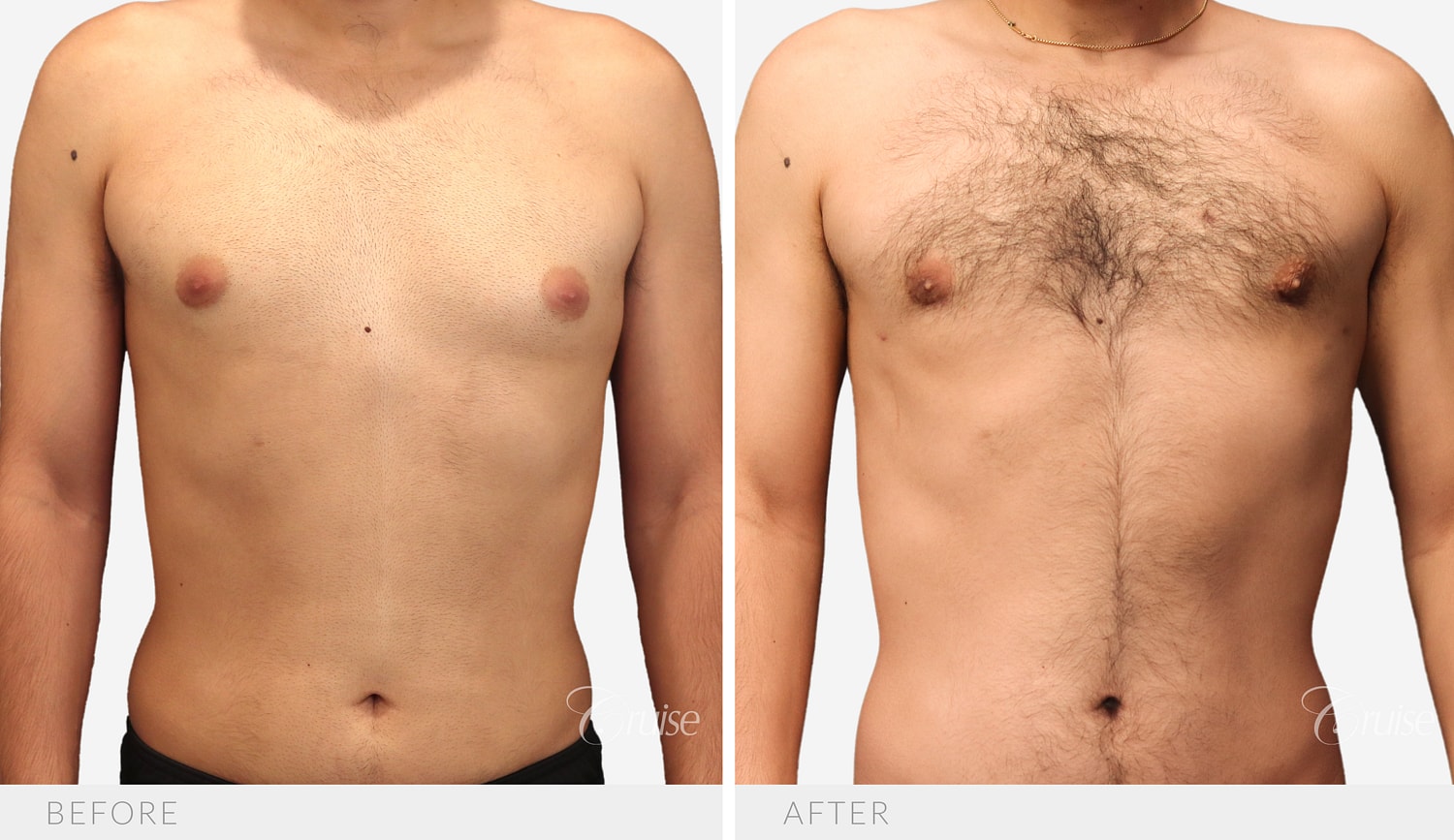
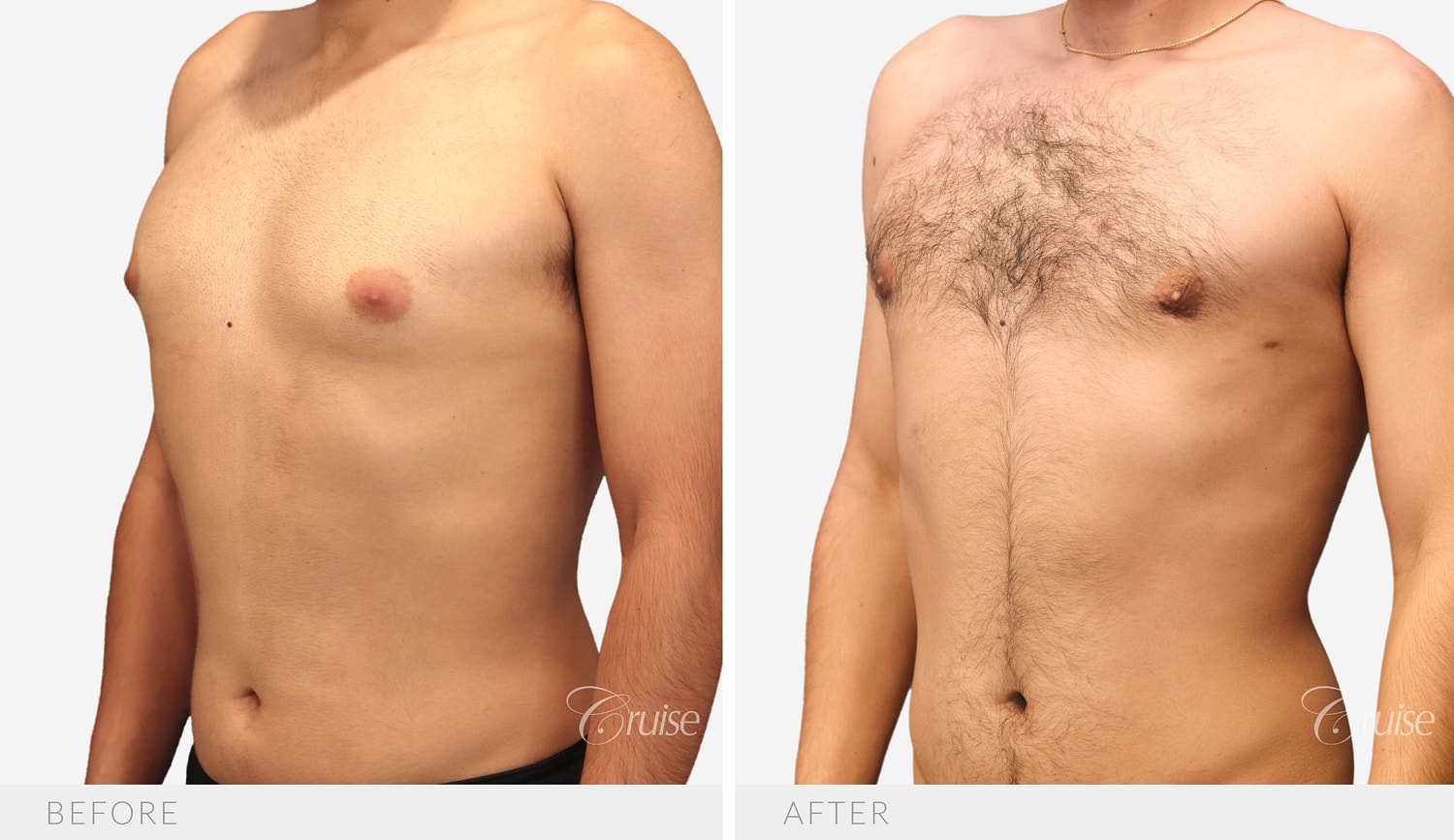
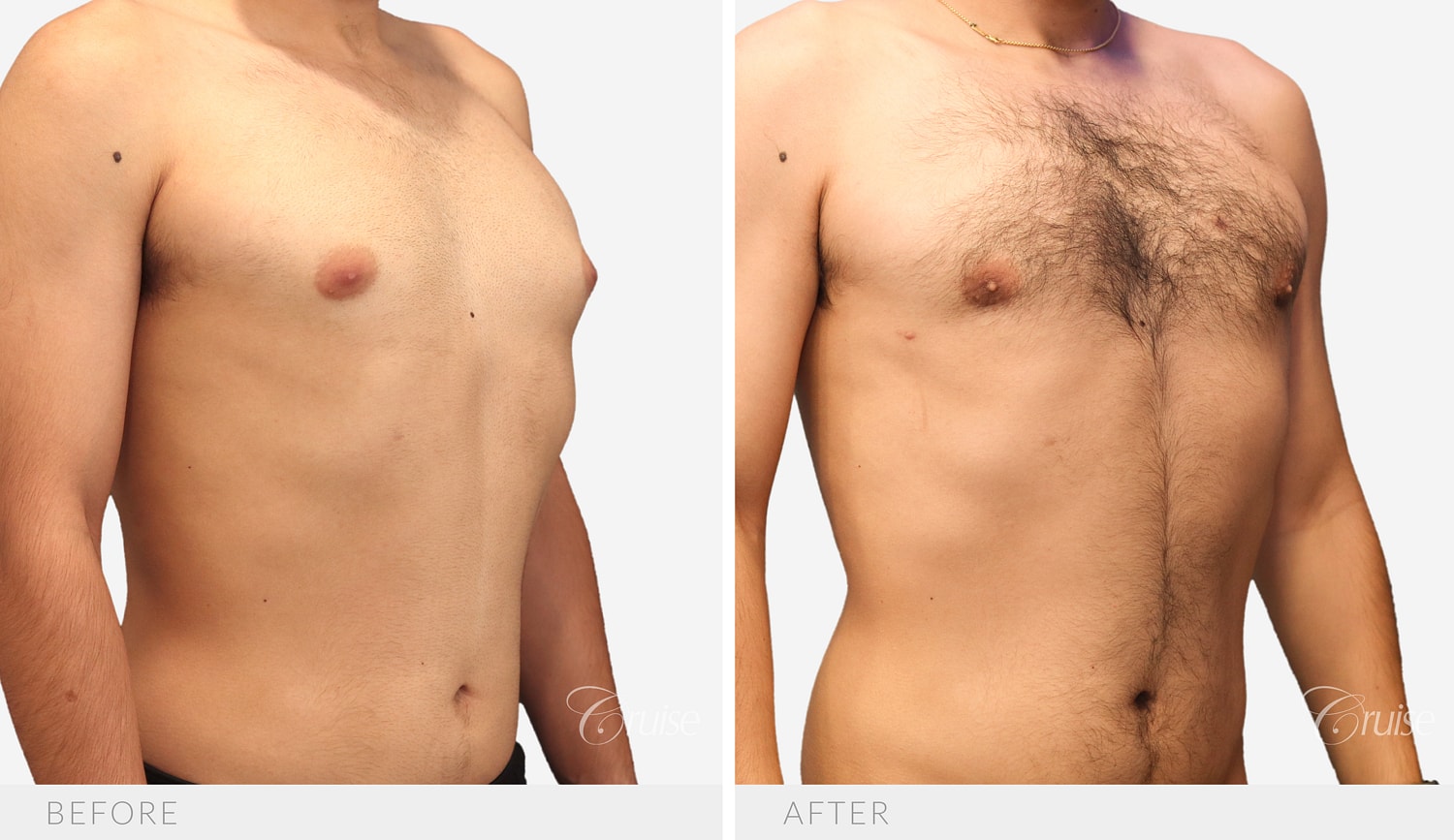
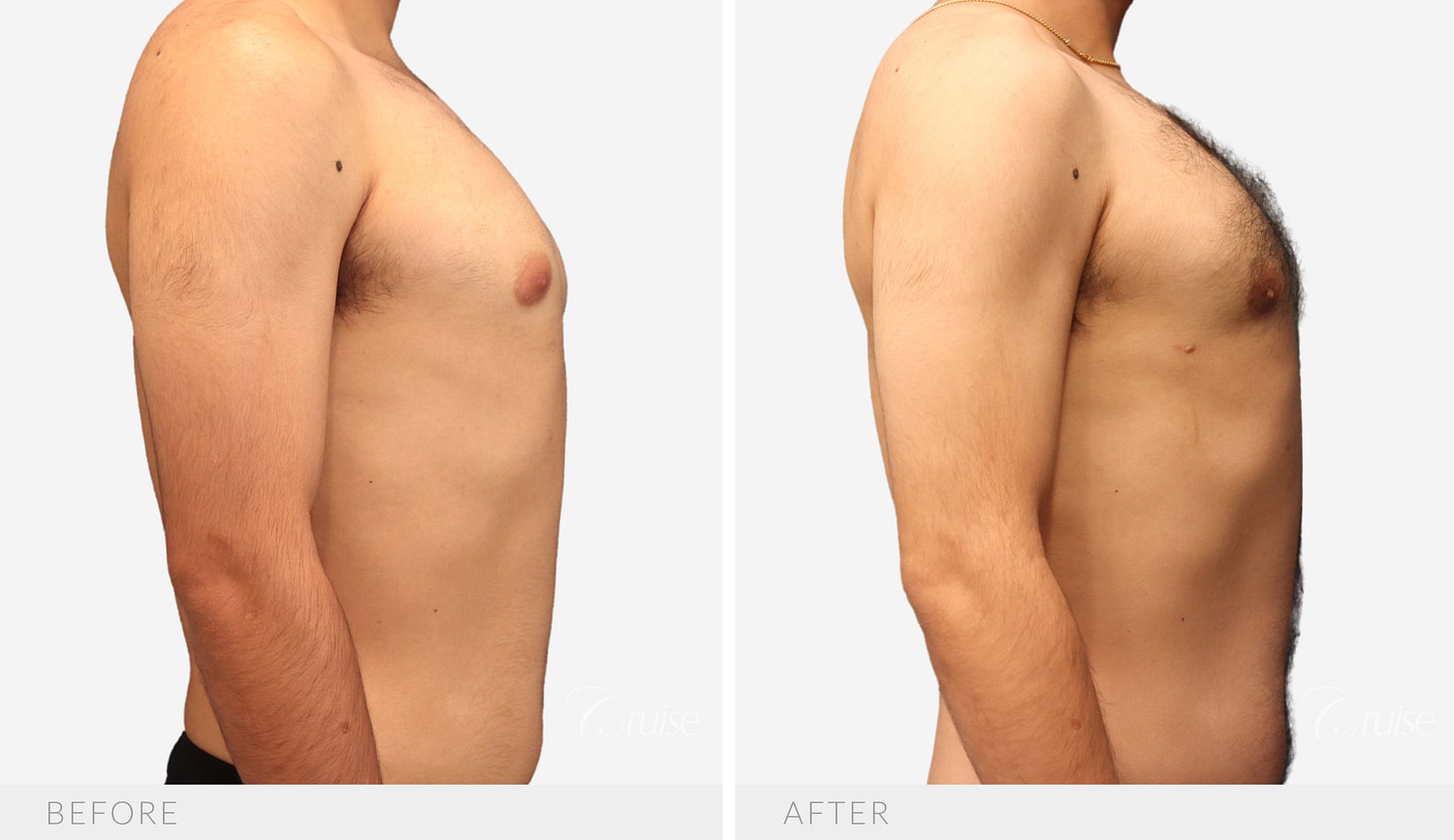
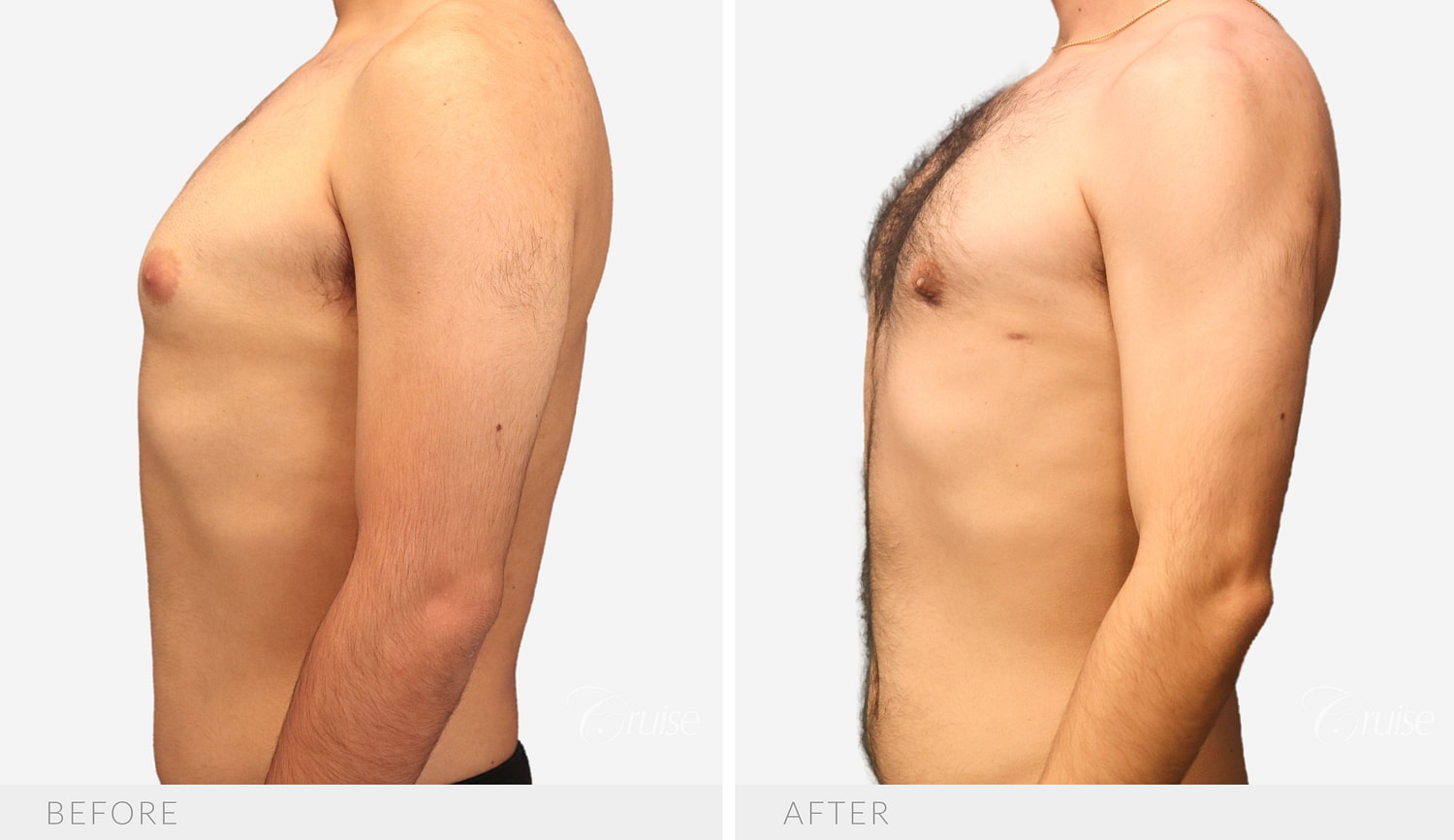
This 32-year-old had Type 1 gynecomastia on his right side, with extra tissue gathered under the nipple and areola (the darker skin around the nipple). His left side had Type 2, where the tissue reaches past the areola and across more of the chest.
Dr. Joseph Cruise removed the glandular tissue from each side through an inferior crescent incision, a small curved cut along the lower edge of the areola that blends into its natural border as it heals. Because the fullness was gland rather than fat, liposuction was not needed.
Before surgery, his nipples also sat at noticeably different heights. Differences like this often come from the chest wall itself, so surgery may soften them without fully erasing them. Four months after surgery, his chest looks flatter and more balanced, and the height difference is far less noticeable.
Dr. Cruise is a board-certified plastic surgeon with more than 5,000 gynecomastia cases, and patients travel from across the country and around the world for his care.
If one side of your chest has always looked bigger than the other, a gynecomastia diagnosis can show which type each side has and what it would take to bring them into better balance. Orange County patients can visit our Newport Beach office, and many start with a Zoom consultation.