Call Us
 Schedule Consultation

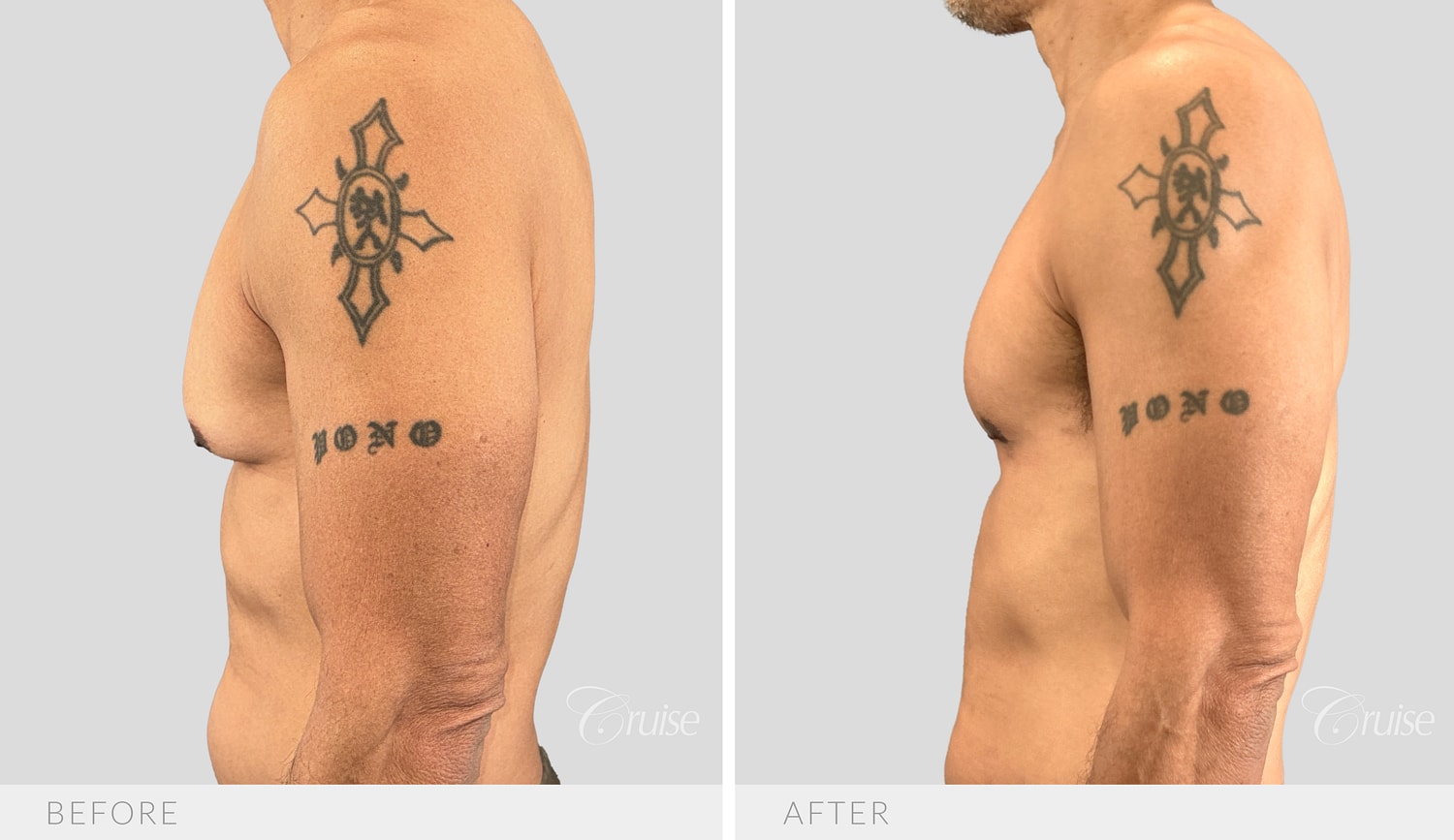
Patient Details
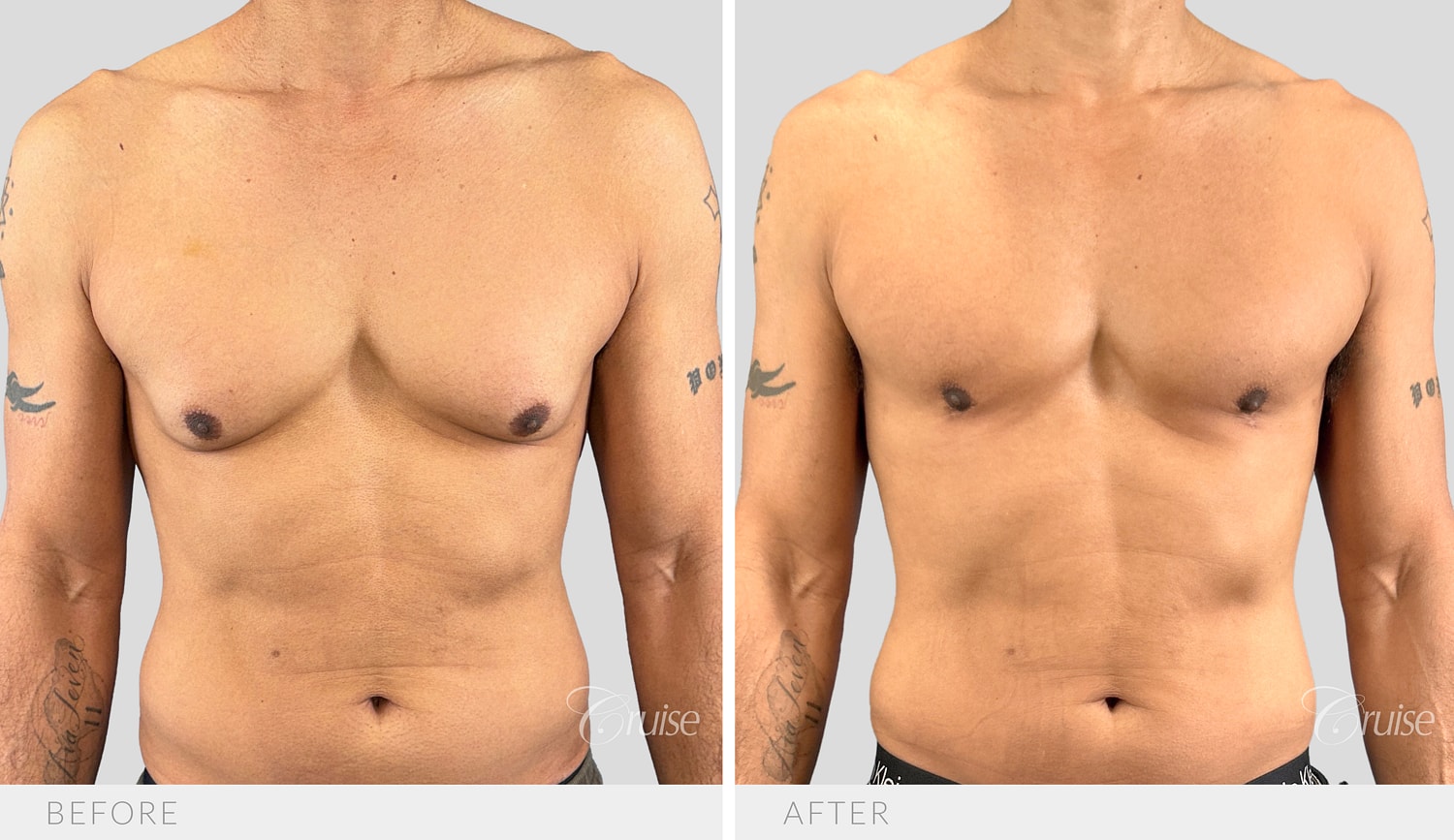
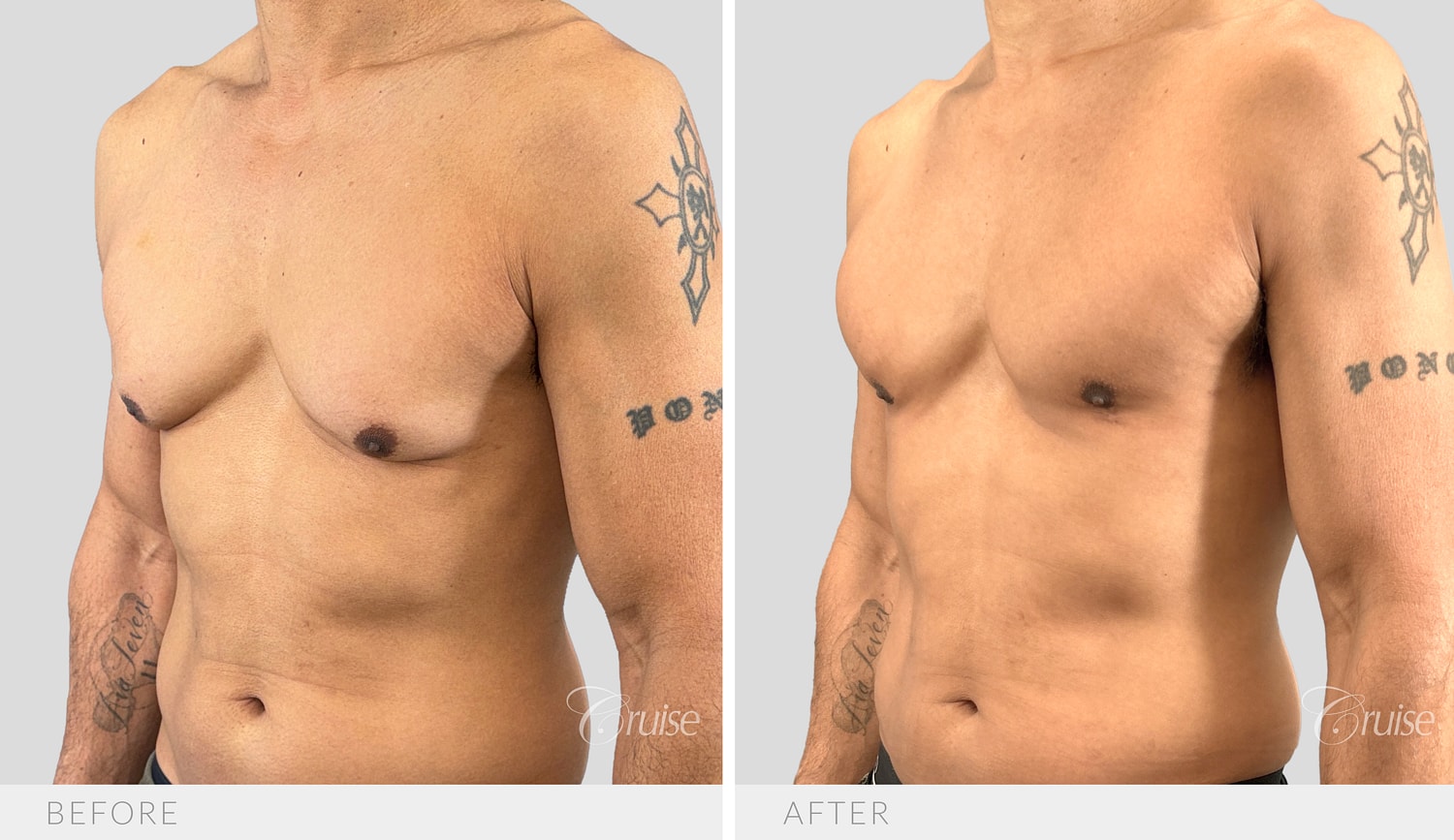
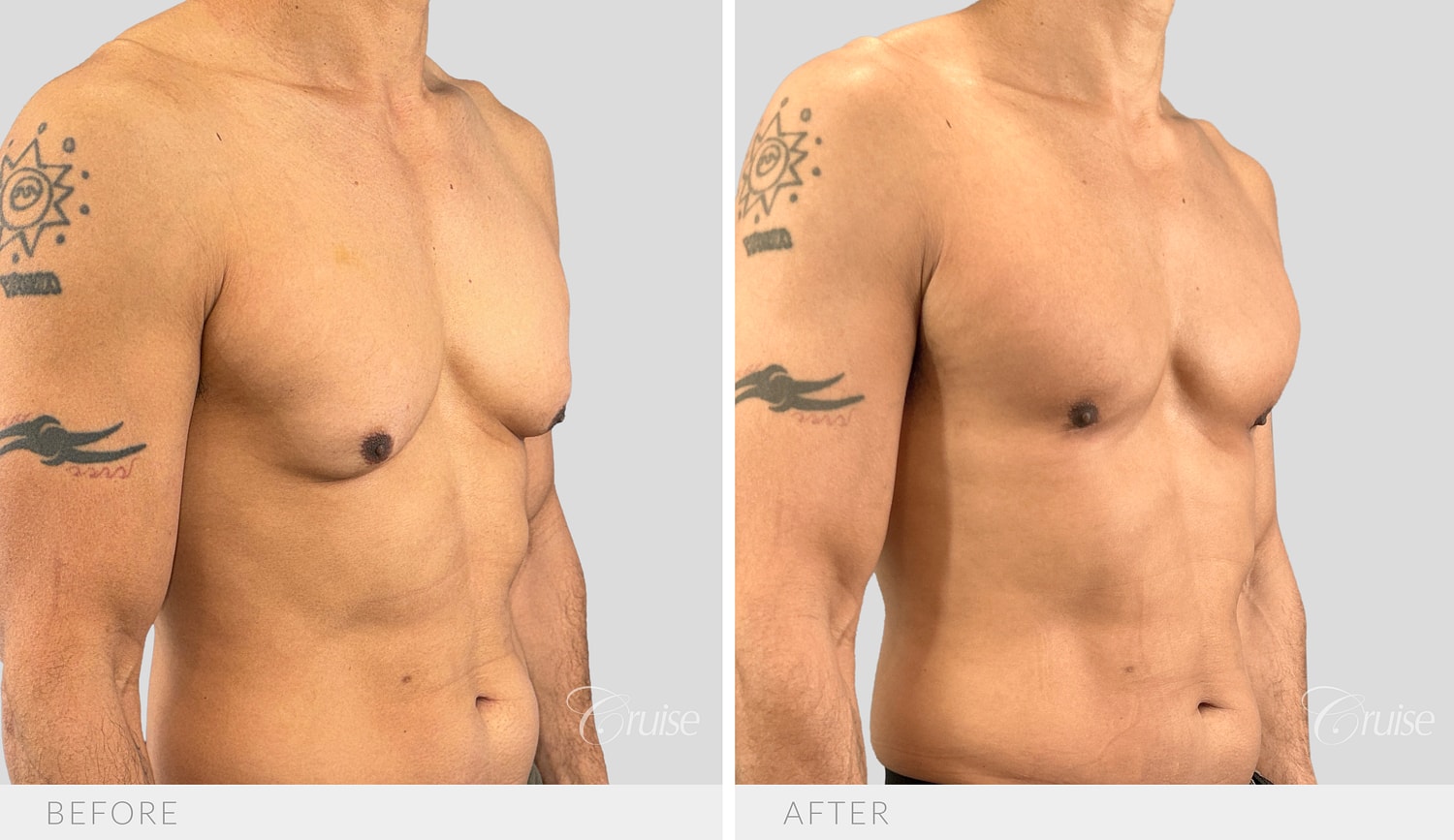
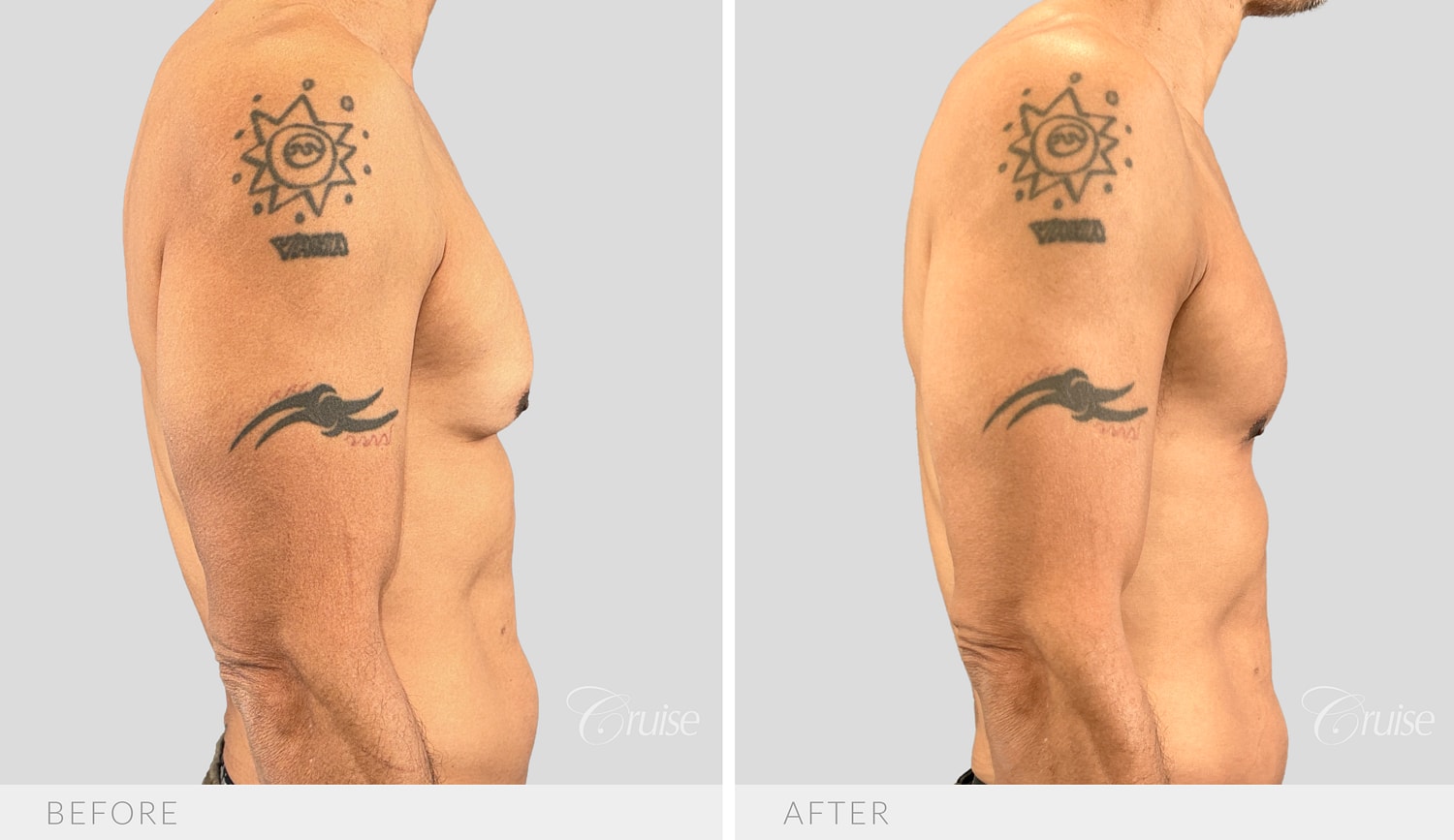
It can happen when too much tissue is removed, especially in muscular men. A volume preservation approach prevents it by taking out the gland while leaving a thin, even layer beneath the nipple and around the chest, so the area stays smooth instead of hollow or caved in. This 53-year-old’s Type 3 case shows the result.
With Type 3 gynecomastia, glandular tissue spreads across the chest and the skin has begun to loosen, which gives the lower chest a heavier, droopier look. On a muscular frame like his, the goal was a chest that looks naturally athletic, not one that looks operated on.
Dr. Cruise, creator of the Cruise Gynecomastia Classification system, performed the surgery under local anesthesia, which means only the chest was numbed and the patient stayed awake and comfortable without general anesthesia. He removed the glandular tissue through an inferior crescent incision, a small curved cut along the lower edge of the areola (the darker skin around the nipple) that blends into its natural border as it heals. Volume preservation kept the contour of the chest smooth and level with the surrounding muscle.
Patients travel to our Newport Beach practice in Orange County from across the country and around the world for gynecomastia surgery.
If you have put off surgery because you worry about ending up flat or sunken, ask about volume preservation at your consultation. Patients from Los Angeles, Orange County, and the Inland Empire come to our Newport Beach office, and many begin with a Zoom consultation.