Call Us
 Schedule Consultation

Patient Details
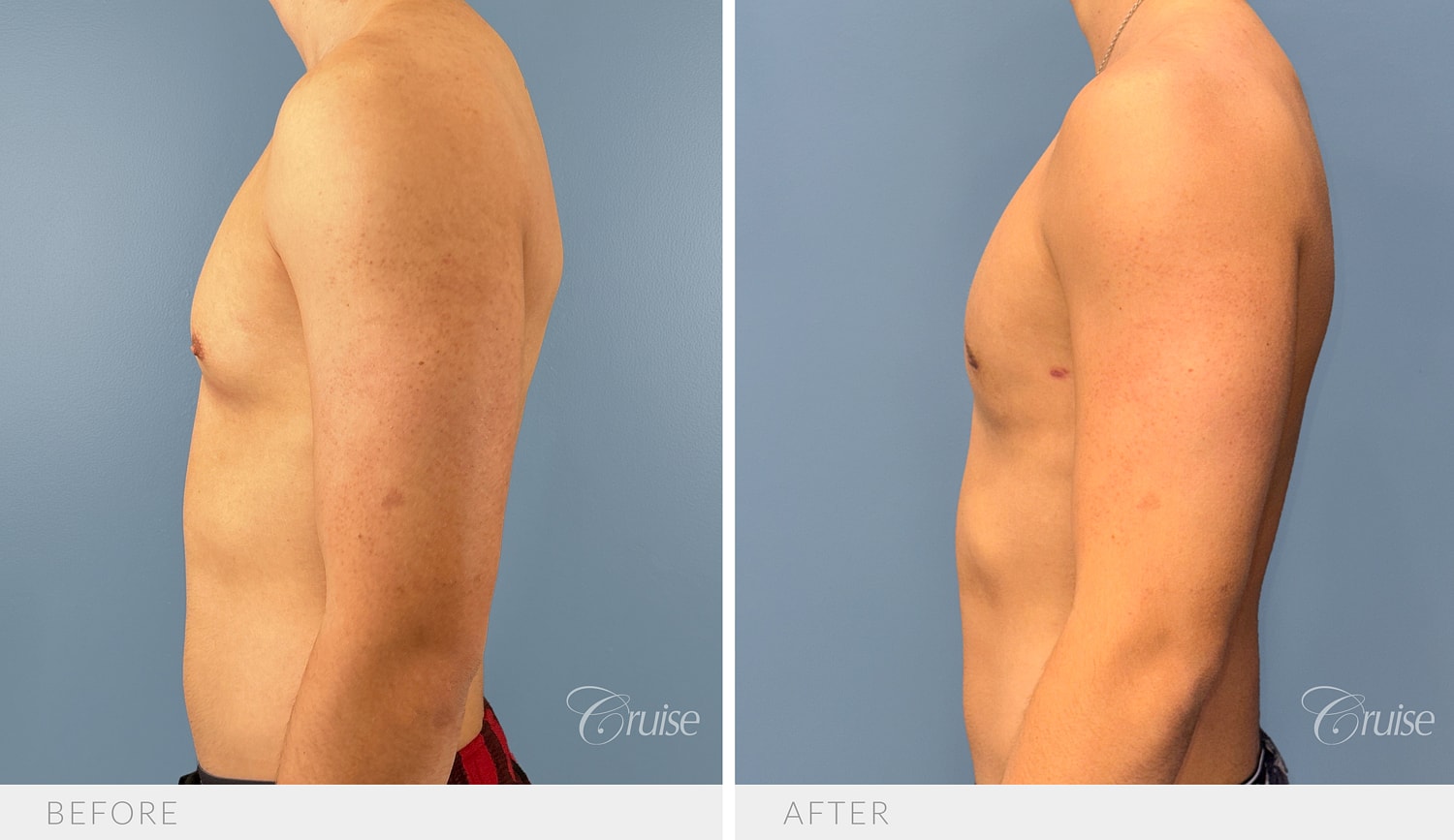
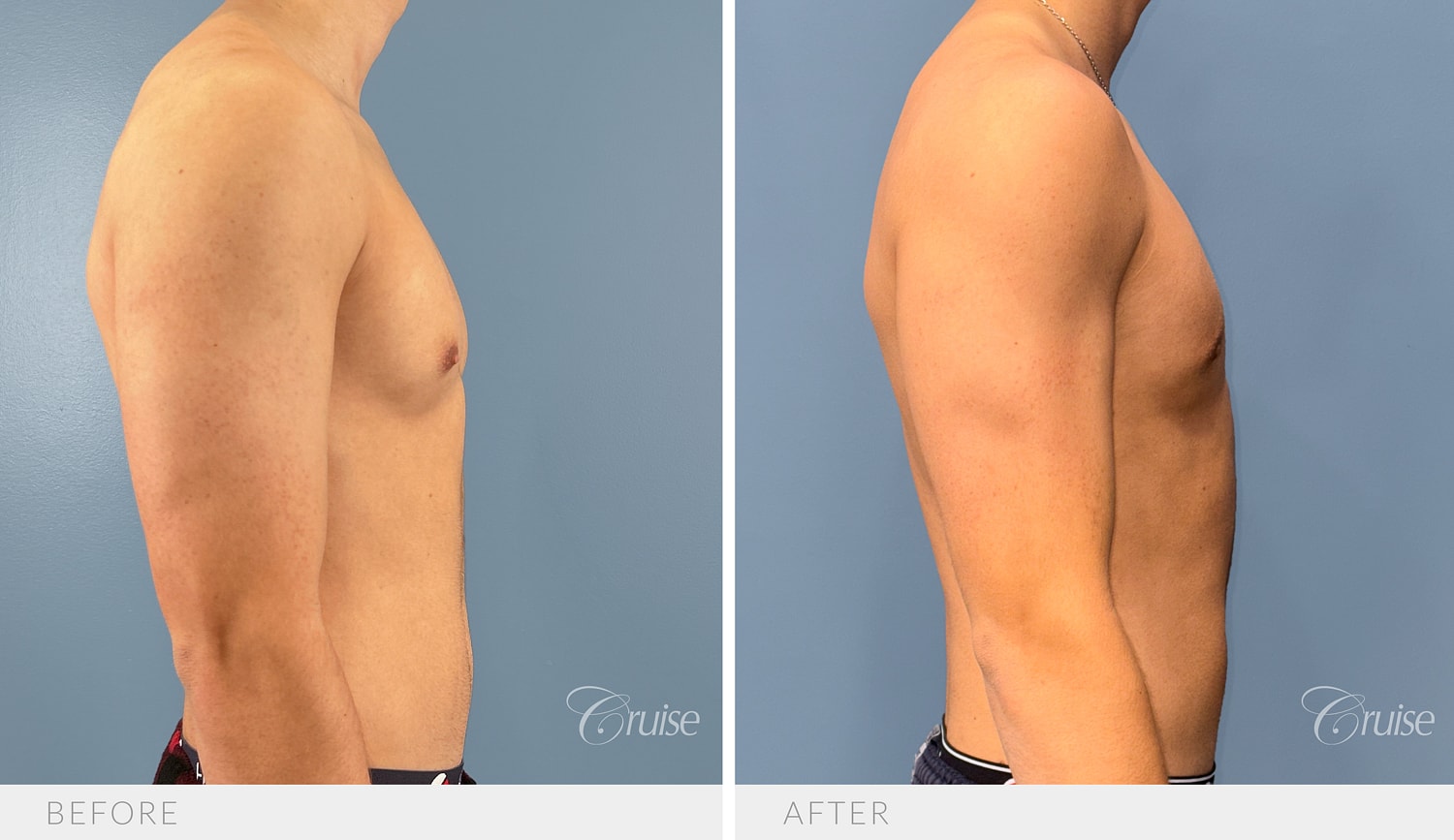
Puffy nipples are one of the most common forms of gynecomastia in teens. During puberty, hormone shifts can cause a small amount of glandular tissue to grow right behind the nipple and areola (the darker skin around the nipple), making them look raised or full instead of flat. When it lasts, removing that tissue lets the chest lie flat.
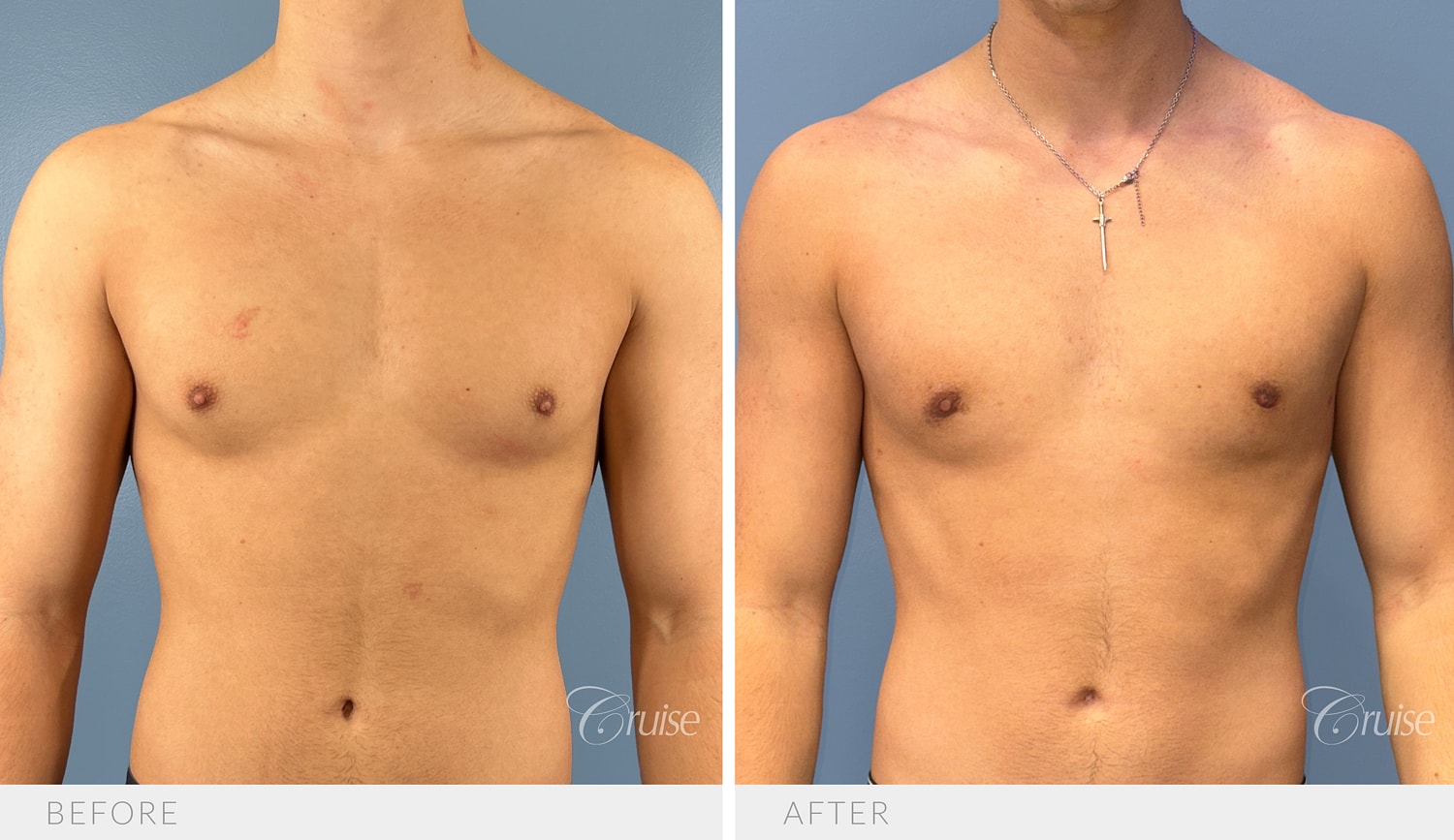
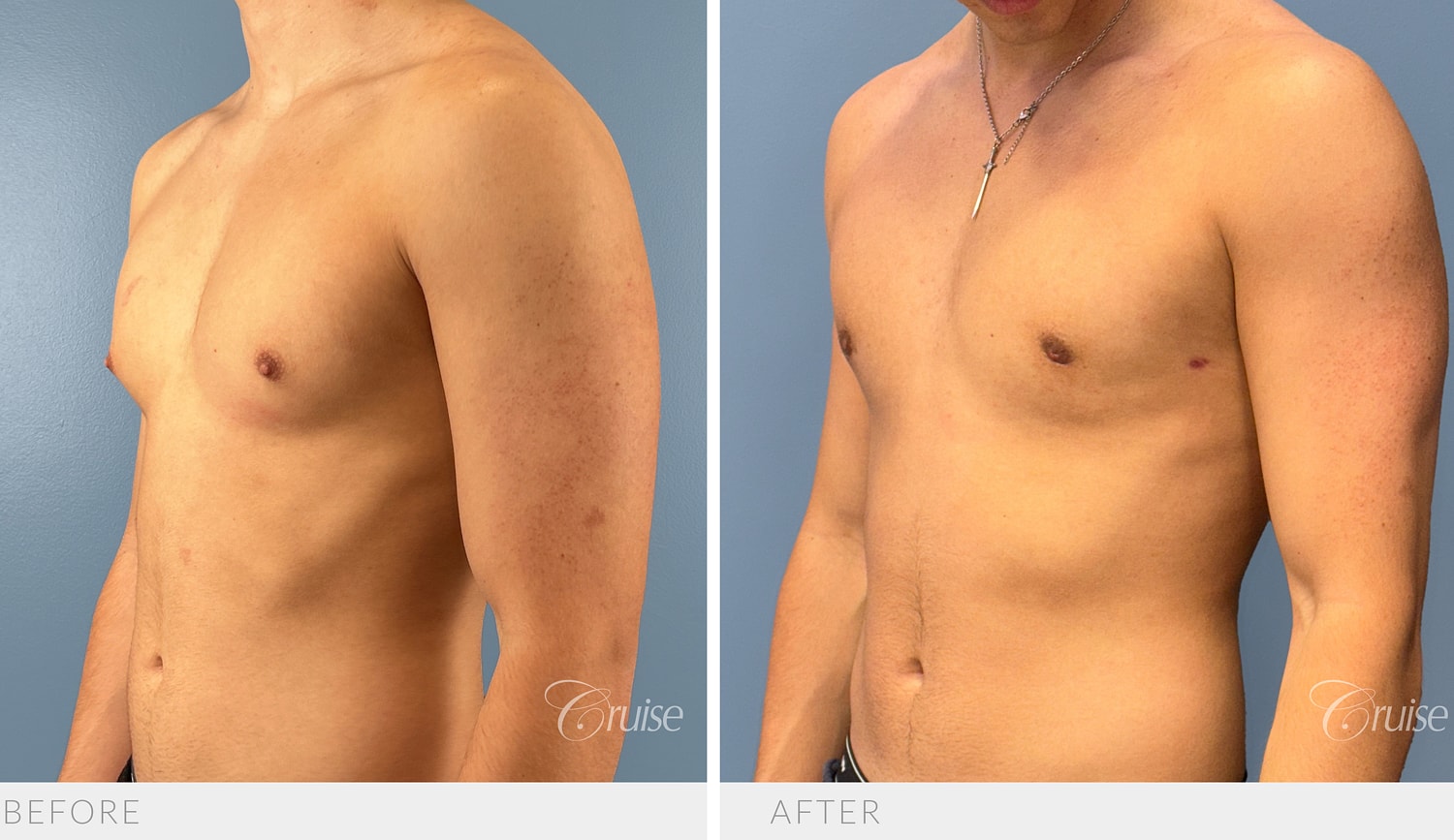
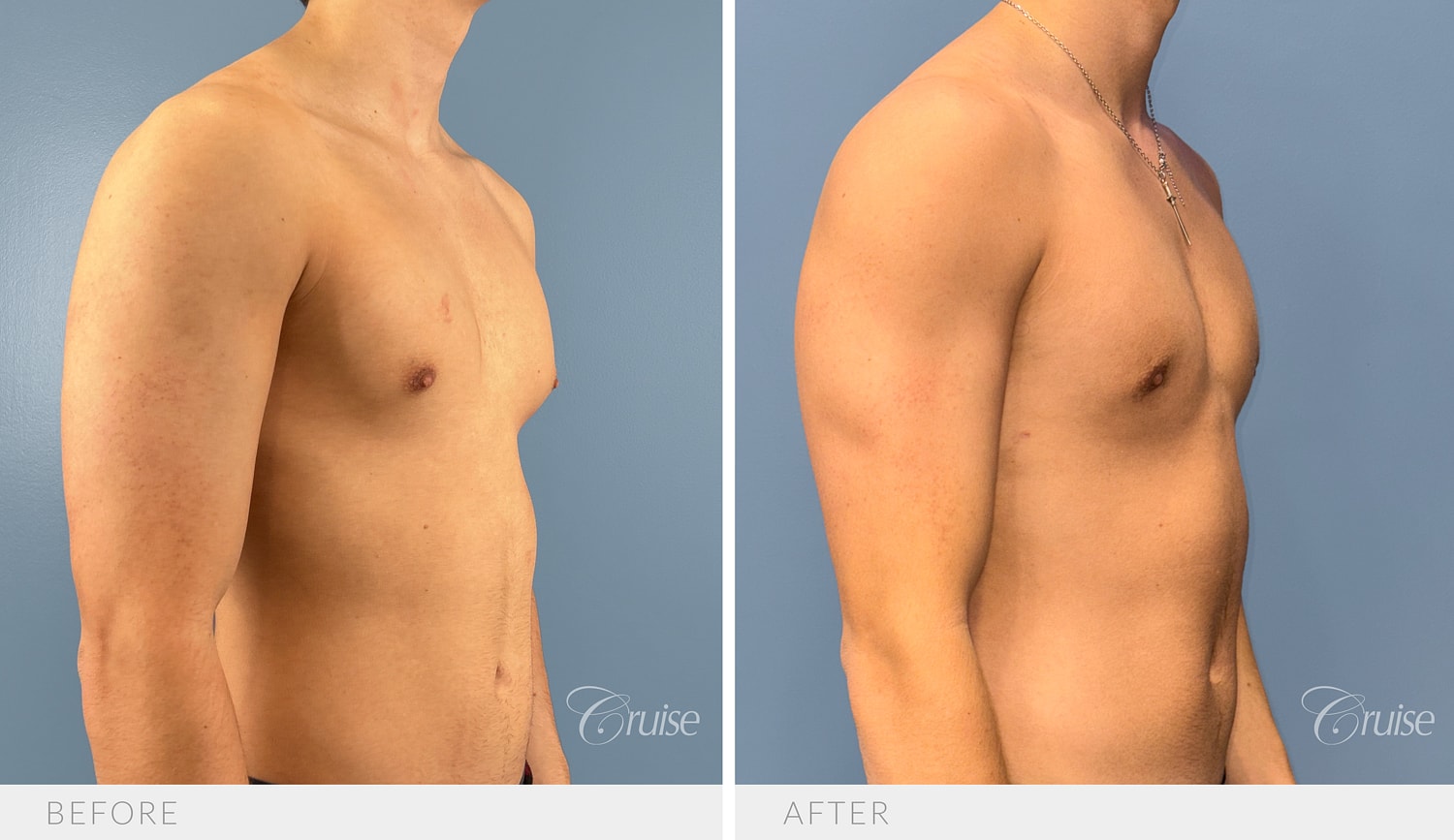
This 19-year-old had Type 1 gynecomastia, the mildest form in the Cruise classification, with the extra tissue gathered under the nipple and areola. His left side was slightly larger than his right. A small difference like this is common, and at this age the tissue rarely evens out by itself.
Dr. Cruise removed the glandular tissue through an inferior crescent incision, a small curved cut along the lower edge of the areola that blends into its natural border as it heals. Treating each side individually helps the chest settle evenly.
Six weeks after surgery, his nipples sit flatter and his chest already looks more natural, even this early in healing. Dr. Cruise had gynecomastia himself and had surgery for it, so he knows firsthand how much puffy nipples can weigh on a young man’s confidence.
If your puffy nipples started in your teens and haven’t gone away, book a consultation to talk through your options. Many patients from Orange County and around the world start with a Zoom consultation before visiting our Newport Beach office.