Call Us
 Schedule Consultation

Patient Details
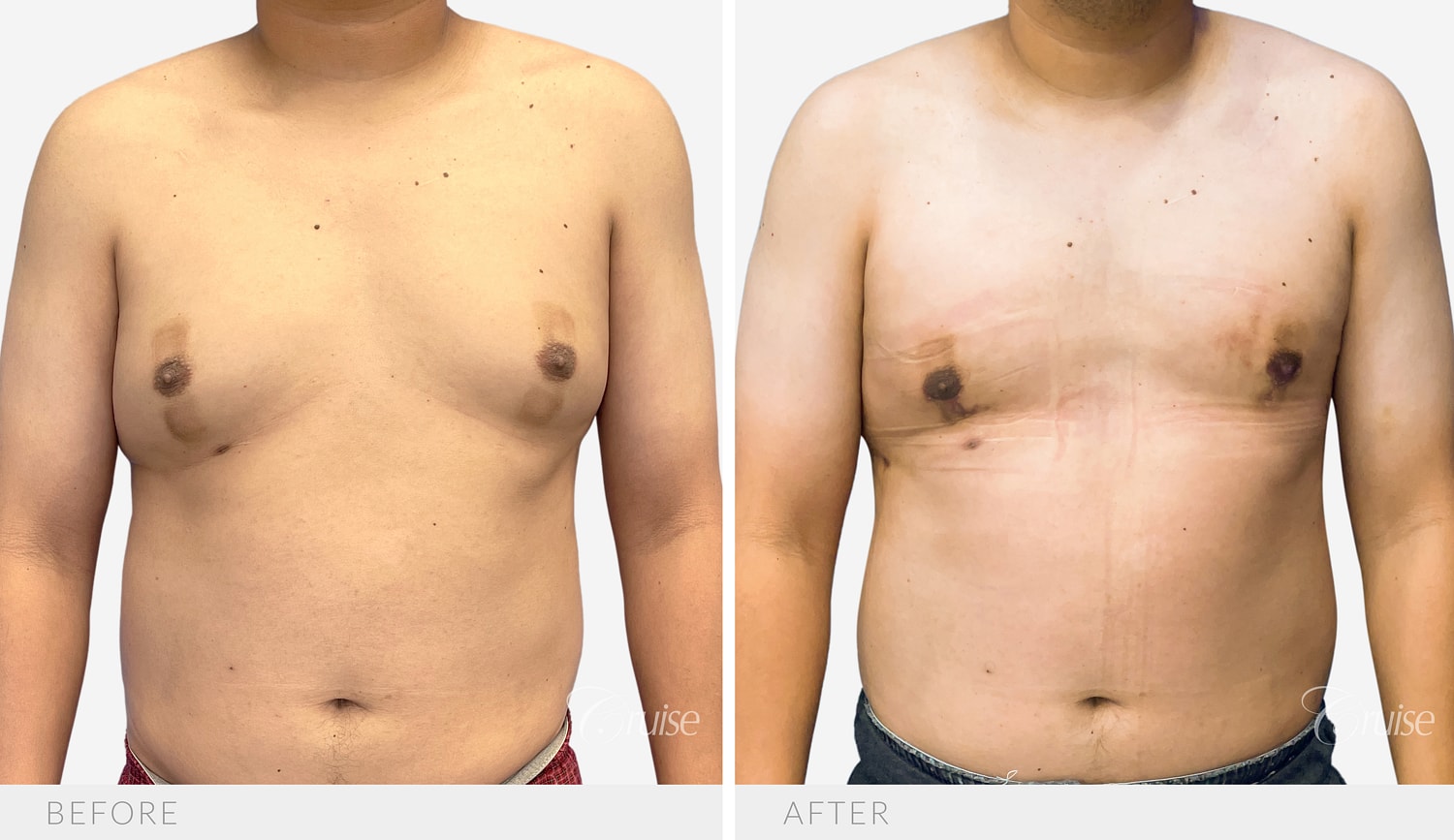
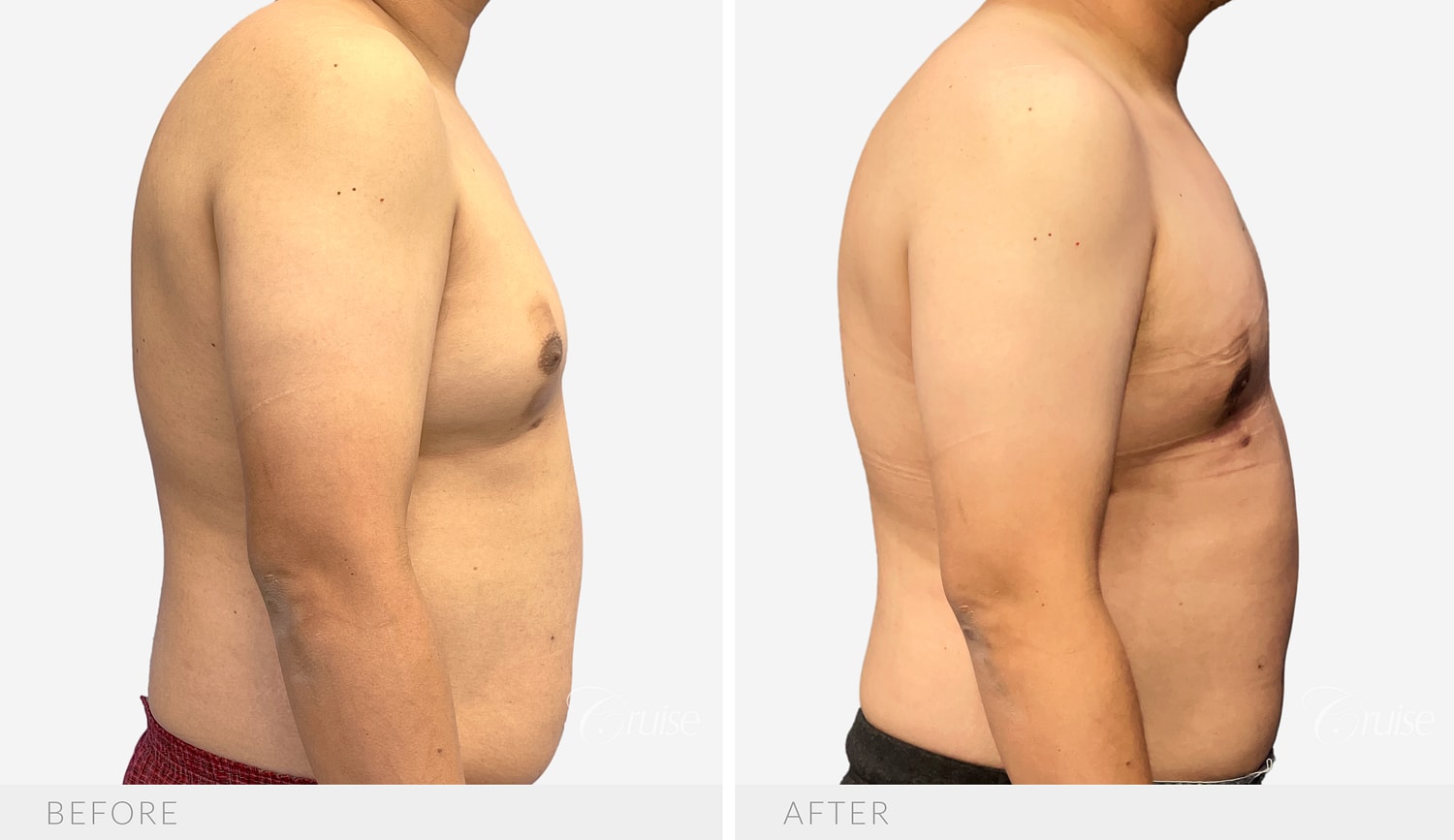
Tape can hide puffy nipples for a few hours, but it leaves the tissue underneath unchanged, and years of use can irritate or mark the skin. The fullness is glandular tissue, and only surgery removes it. This 36-year-old taped his chest for years before deciding on surgery.
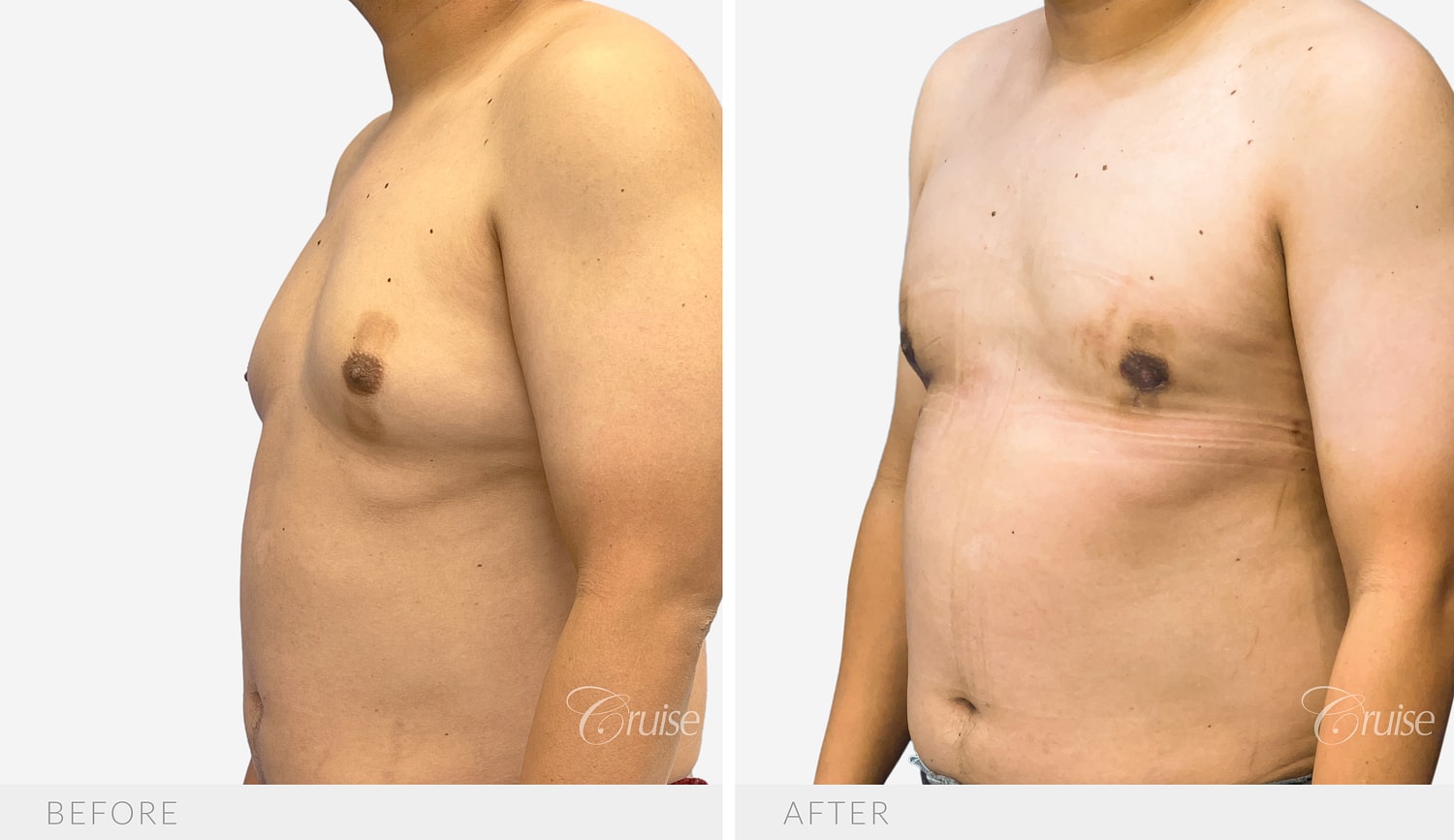
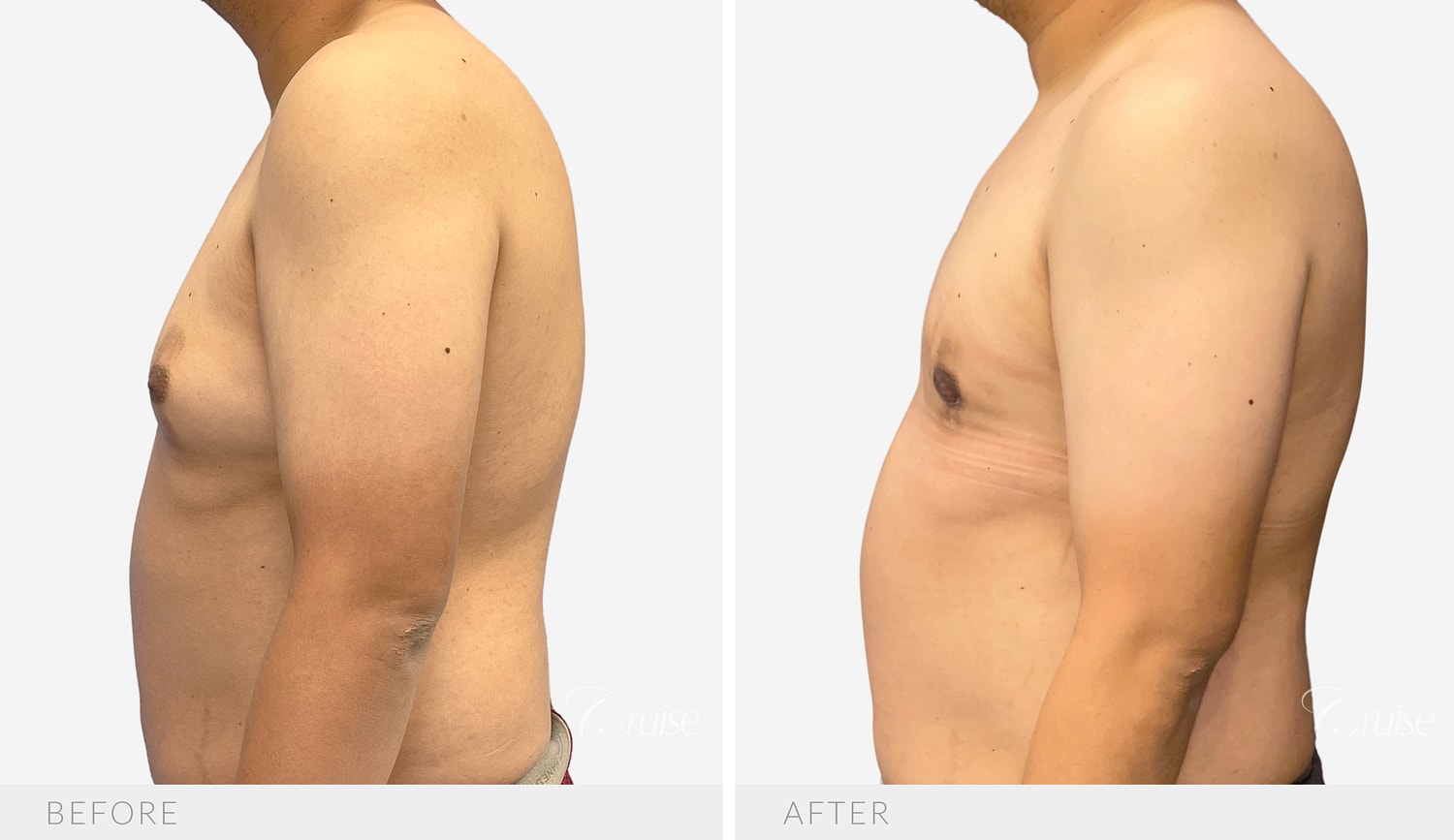
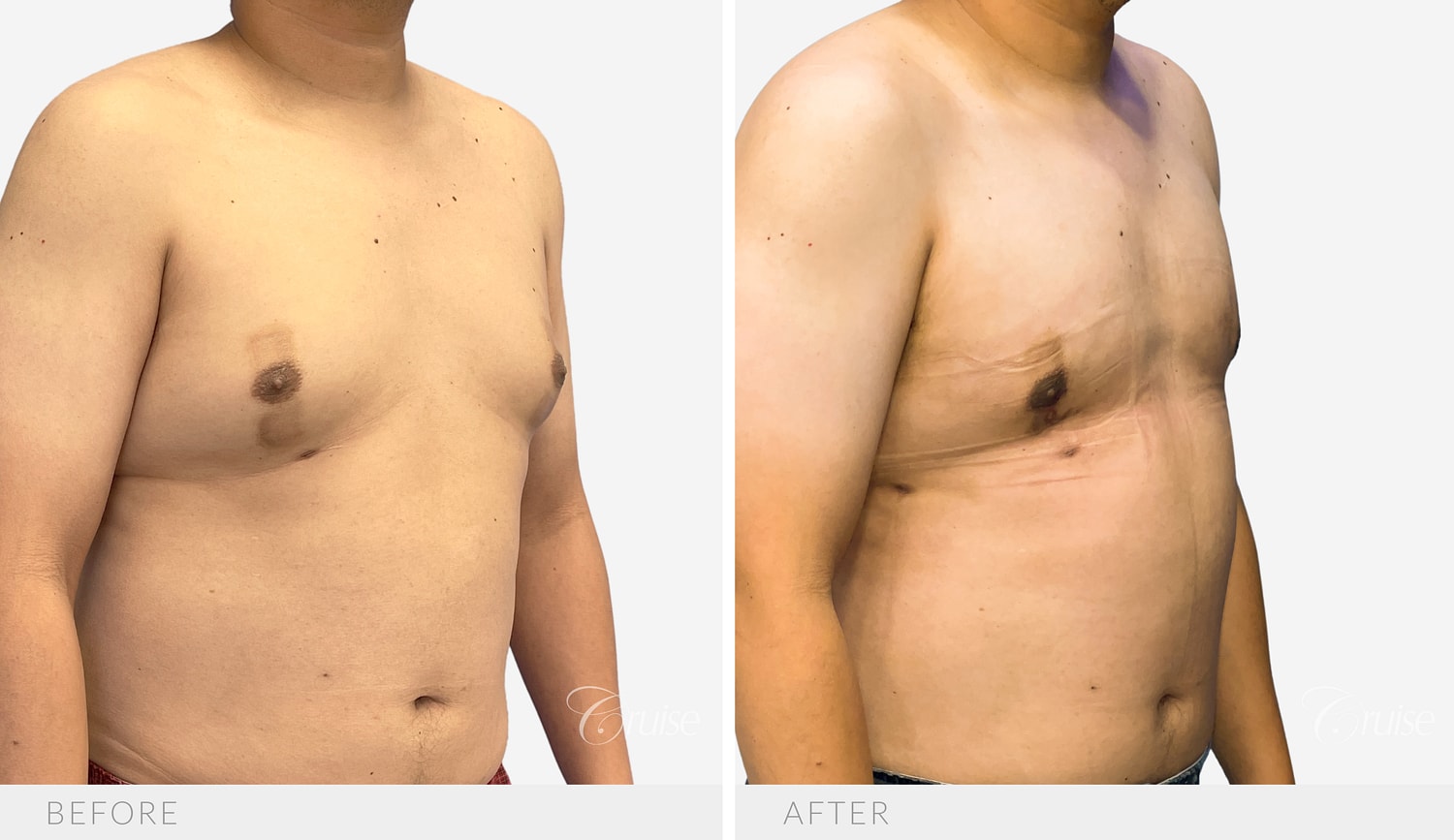
The tape marks are still visible in his photos, a sign of how long he worked to conceal his chest. He had Type 3 gynecomastia, where the tissue spreads across the chest and the skin has begun to loosen, plus a significant puffy nipple and fullness in the breast roll, the fold of tissue along the lower outer chest. Tape can cover the nipple, but not the fullness that reaches toward the underarm.
Dr. Cruise, creator of the Cruise Gynecomastia Classification system, performed the surgery under general anesthesia. He removed the glandular tissue through an inferior crescent incision, a small curved cut along the lower edge of the areola (the darker skin around the nipple), and made a small V to Y adjustment to refine the area below it. He then used liposuction, which clears fat through a thin tube, on the breast roll and axilla (the underarm area) so the chest blends smoothly into the sides.
Two months after surgery, his chest is flatter and his nipples sit naturally, with no tape needed. The faint lines across his lower chest come from his compression garment, which is normal at this stage of healing. Patients travel to our Newport Beach practice in Orange County from across the country and around the world for gynecomastia surgery.
If you tape, wear compression shirts, or layer clothing to hide your chest, there is a permanent option. Book a consultation to learn which type of gynecomastia you have. Patients from Los Angeles, Orange County, and the Inland Empire come to our Newport Beach office, and many begin with a Zoom consultation.