Call Us
 Schedule Consultation

Patient Details
Bodybuilders are more likely than most men to develop gynecomastia, because hormone shifts tied to training cycles, certain supplements, or performance enhancing substances can trigger gland growth. Low body fat also makes even a small amount of tissue easy to see. Surgery removes the gland, which sits above the chest muscle.
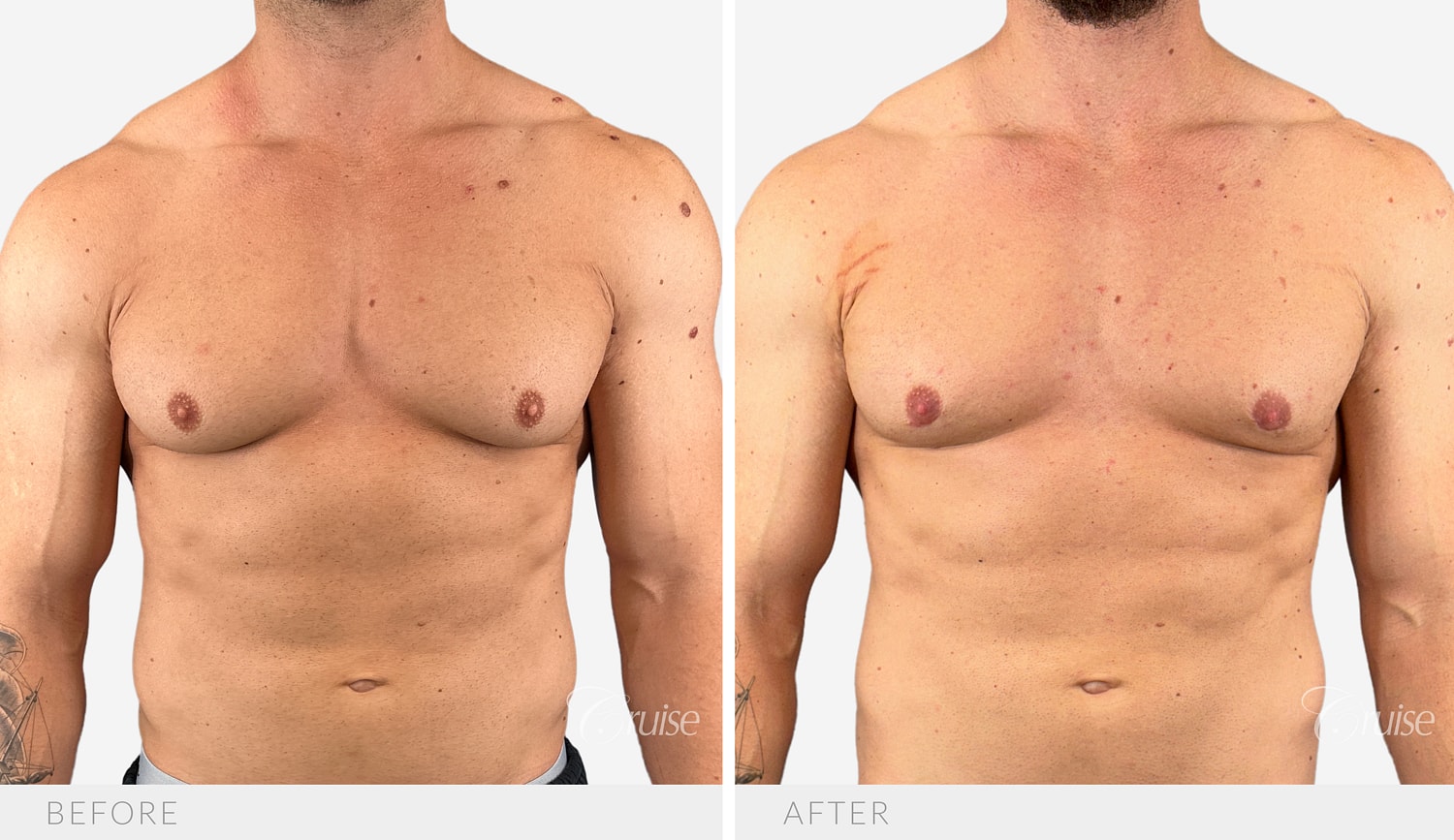
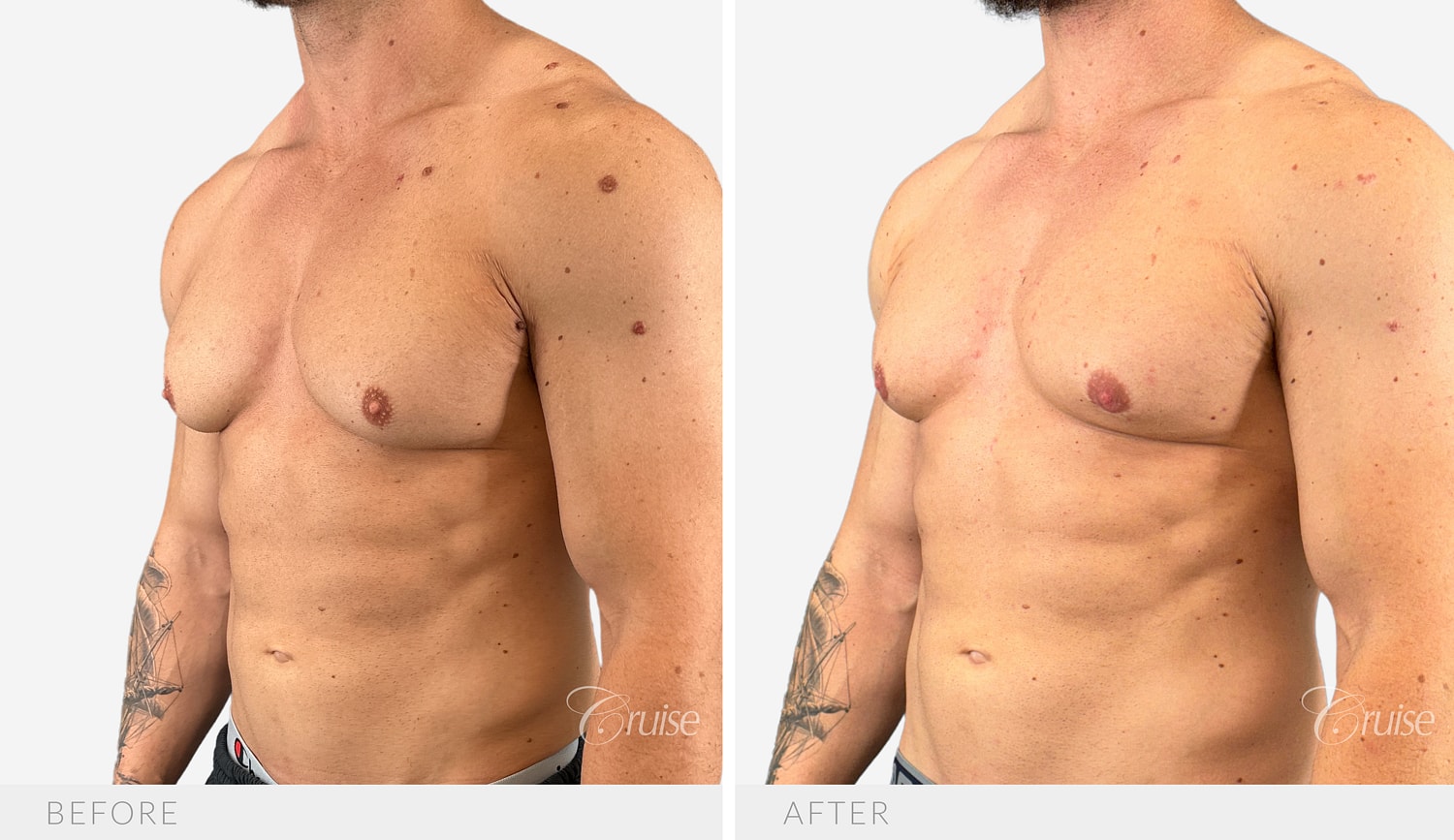
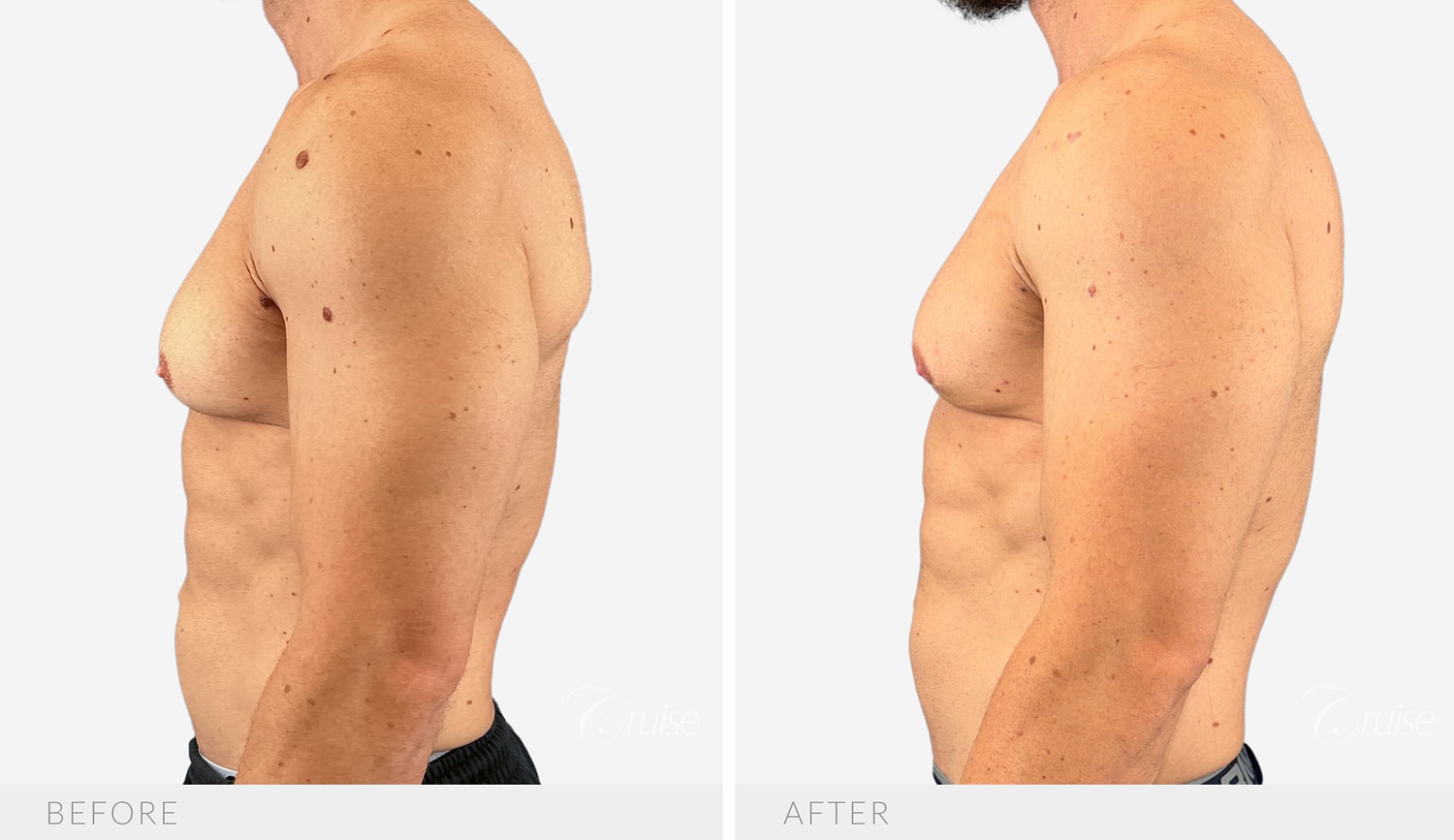
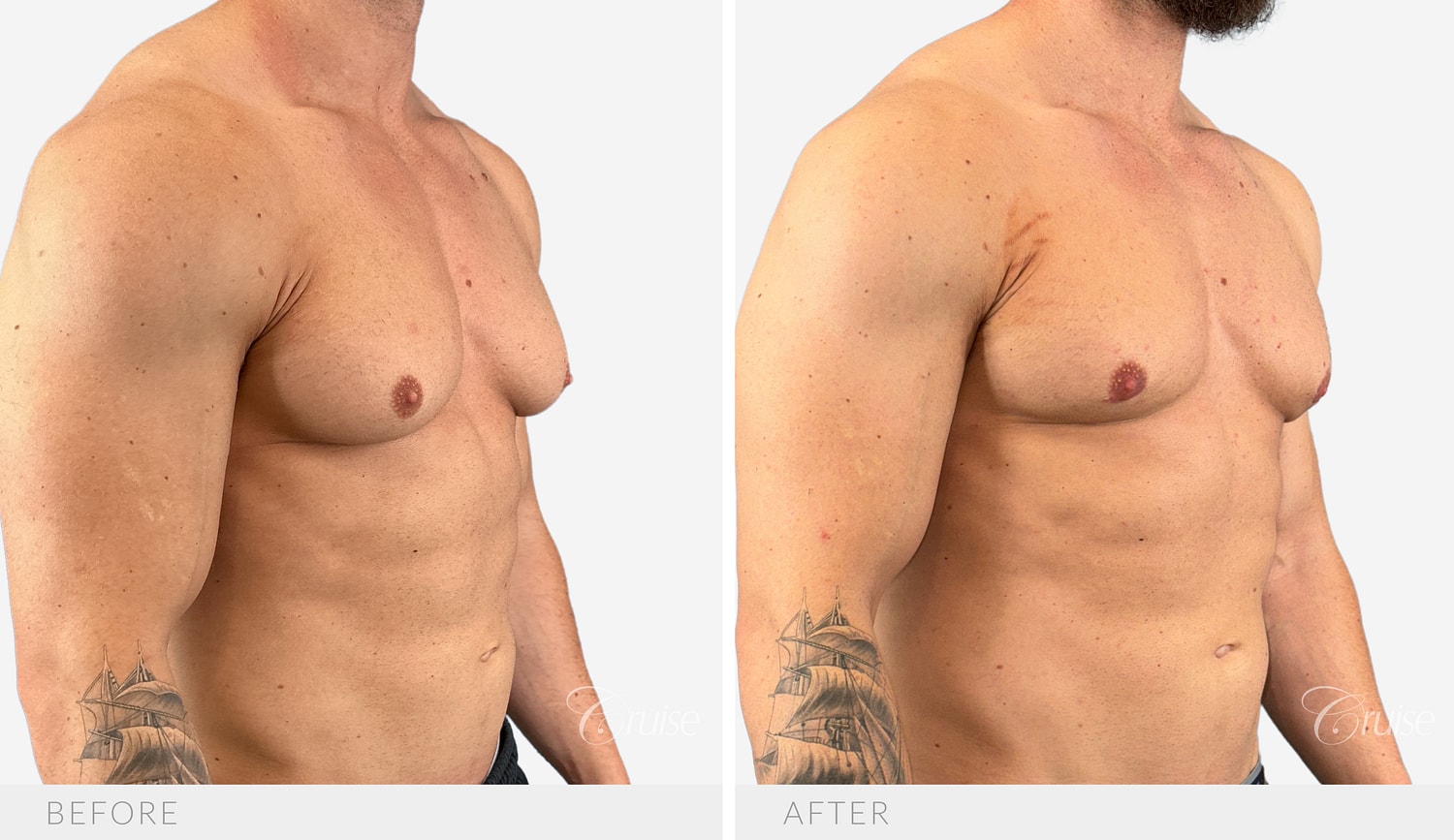
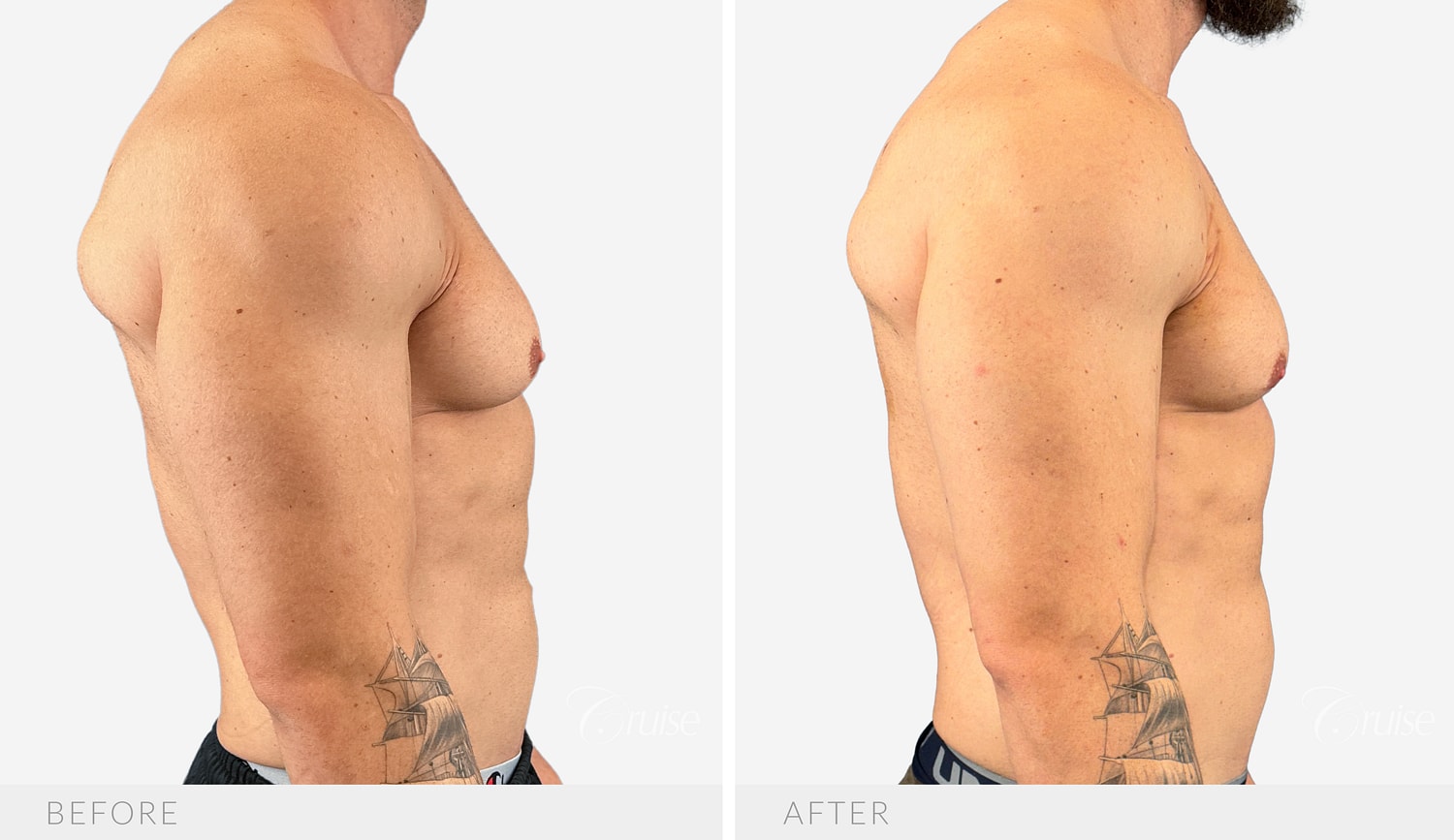
This 31-year-old bodybuilder had Type 2.5 gynecomastia, which falls between Type 2, where the tissue spreads past the areola (the darker skin around the nipple), and Type 3, where the skin has begun to loosen. On a chest this developed, the tissue under each nipple stood out despite years of training.
Dr. Cruise performed the surgery under local anesthesia, so only the chest was numbed and the patient stayed awake and comfortable. He removed the glandular tissue through an inferior crescent incision, a small curved cut along the lower edge of the areola that blends into its natural border as it heals.
Three months later, his chest has a flatter, more natural contour that suits his physique. Dr. Cruise was once a bodybuilder himself, so he understands what a lifter wants from his chest. He looks at the full chest, not just the gland, before choosing the approach that fits each patient best.
If you train hard and still notice puffiness under your nipples, it is likely gland, which training can’t reduce. Learn more about bodybuilder gynecomastia, and book a consultation to see what it would take to correct it. Men from all over the world come to our Newport Beach office for surgery, and many start with a Zoom consultation.